As I’ve been expanding our Scotland coverage for the upcoming Rick Steves Scotland guidebook, it’s been a pleasure to revisit some places that we now have enough space to cover in more depth. One of the best examples is Glasgow.
Up until now, our Glasgow chapter has focused on the downtown core, with just a bit of “by the way” information on its trendy West End residential zone. But for the new Scotland book, we wanted to dig deeper. I spent a day exploring Glasgow’s West End with an excellent local guide, Colin Mairs, and discovered that the area is even more worthwhile than we’d guessed. It will be prominently featured in the new book, but here’s a sneak preview.
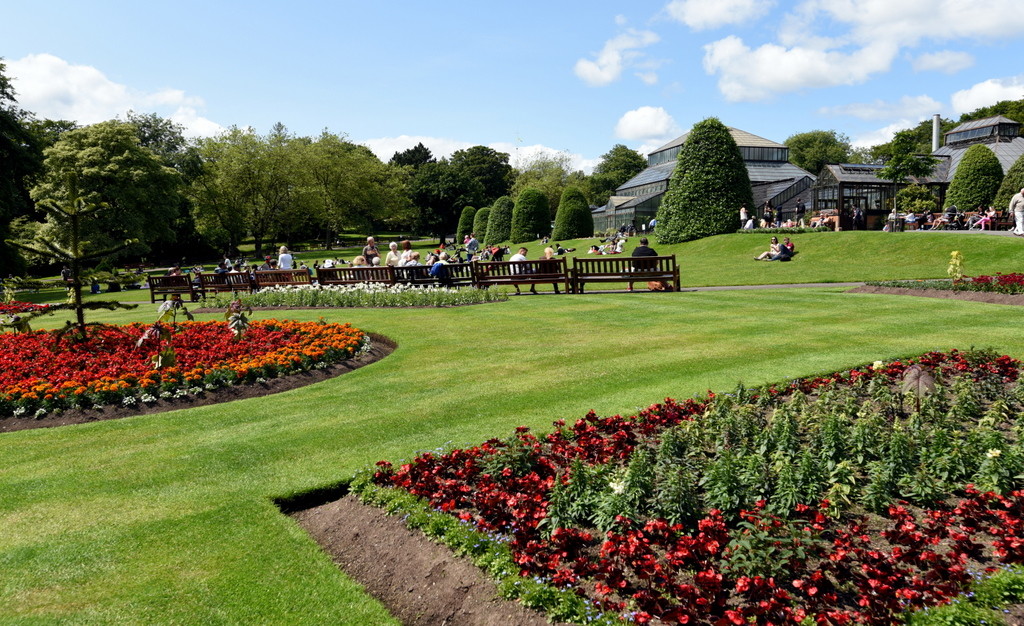
The Royal Botanic Gardens are Glaswegians’ favorite place to enjoy a wee break from the bustling city. And, like so many things in Glasgow, it’s free. When the sun’s out, it’s jammed with people enjoying some rare rays. Young lads wait all winter for the day when they can cry, “Sun’s oot, taps aff!” and pull off their shirts to make the most of it. Glaswegians brag about their many parks, claiming that — despite their industrial reputation — they have more green space per capita than any other city in Europe. And even the city’s name comes from the Gaelic for “the dear green place.”
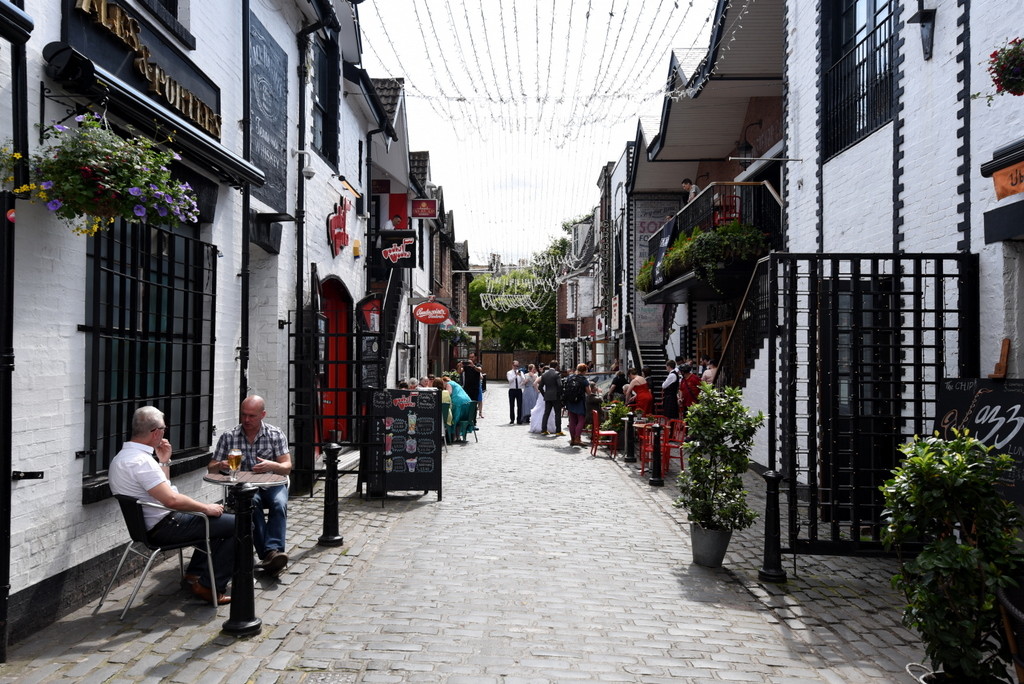
The little West End pedestrian zone called Ashton Lane is one of Glasgow’s most appealing dining, shopping, and nightlife areas. On this one wee street, you’ll find a staggering array of restaurants: the landmark Ubiquitous Chip pub/restaurant, Ketchup (American-style diner), Brel (Belgian beer bar), Vodka Wódka (Polish vodka bar), The Wee Curry Shop (Indian), and Jinty McGuinty’s (Irish pub and beer garden). There’s even a fine movie house, the Grosvenor Cinema, with cushy leather seats and a full bar…it was almost enough to convince me to abandon my research chores and catch up on some moviegoing.
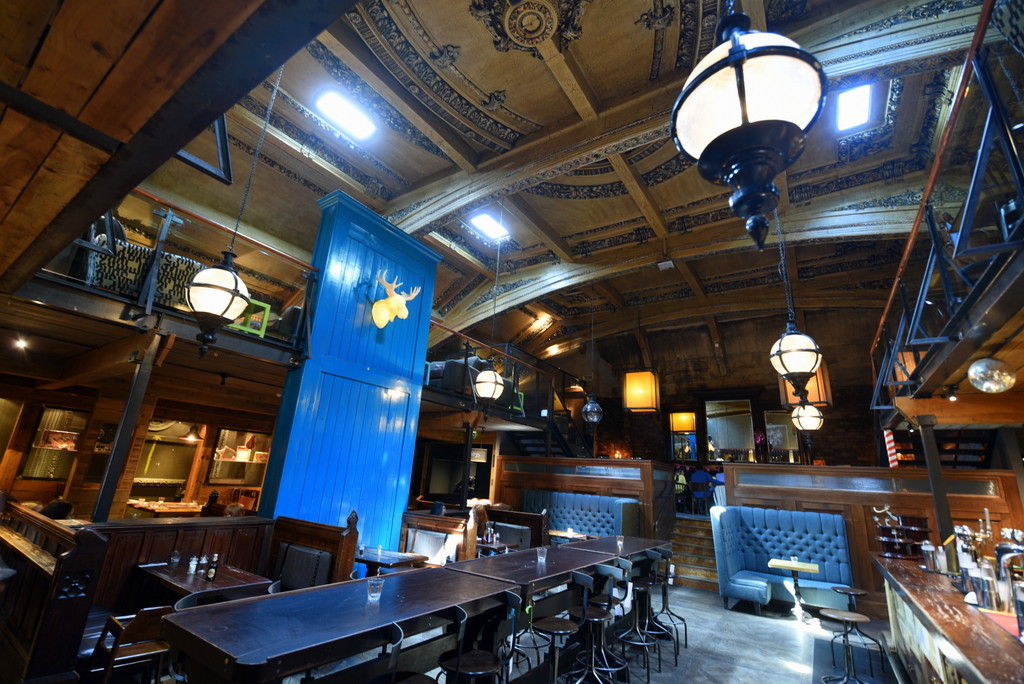
Speaking of cinema, the Hillhead Bookclub fills a former movie house with rustic tables, cheap food and drink, live music and DJs, and lots of students. While it was sleepy when I visited (and took this picture) at mid-day, in the evenings it’s an ideal place to feel the pulse of Glasgow’s youth.
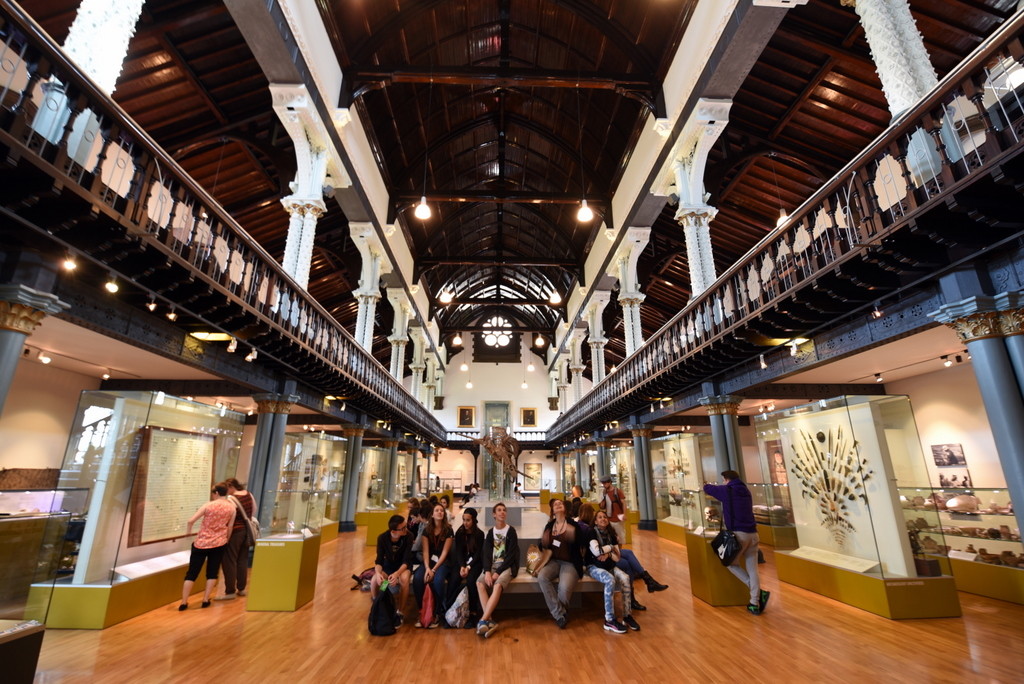
While Glasgow’s downtown has a variety of good museums, the West End has its own share as well. On the campus of the University of Glasgow (Scotland’s second-oldest, enrollment 24,000) are two excellent branches of The Hunterian, named for a prestigious alum who donated his scientific collections to the university to seed a great museum.
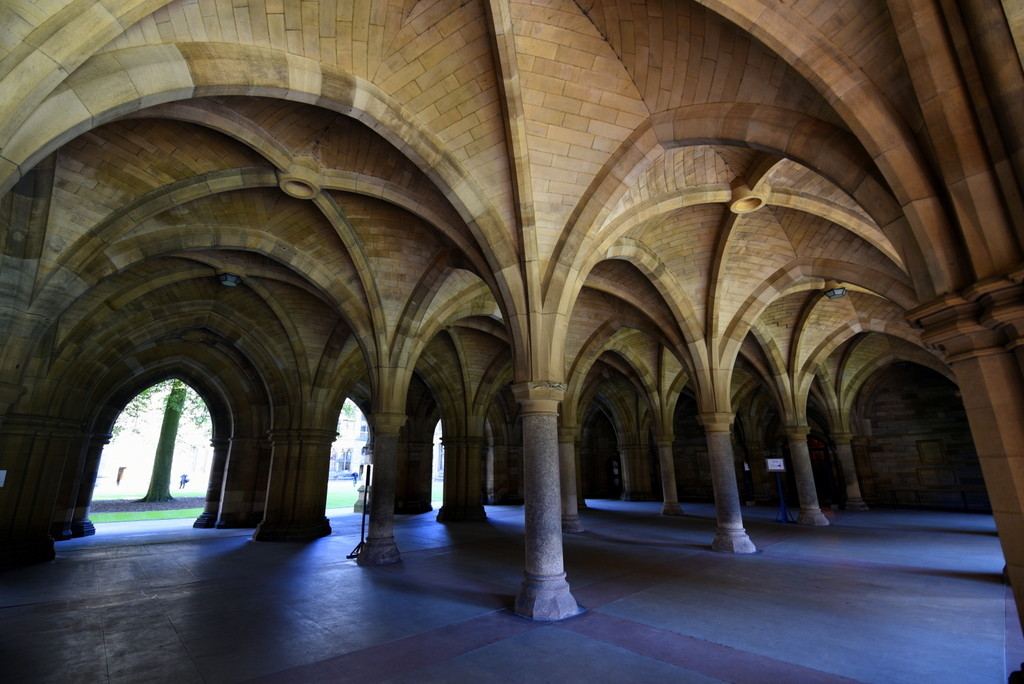
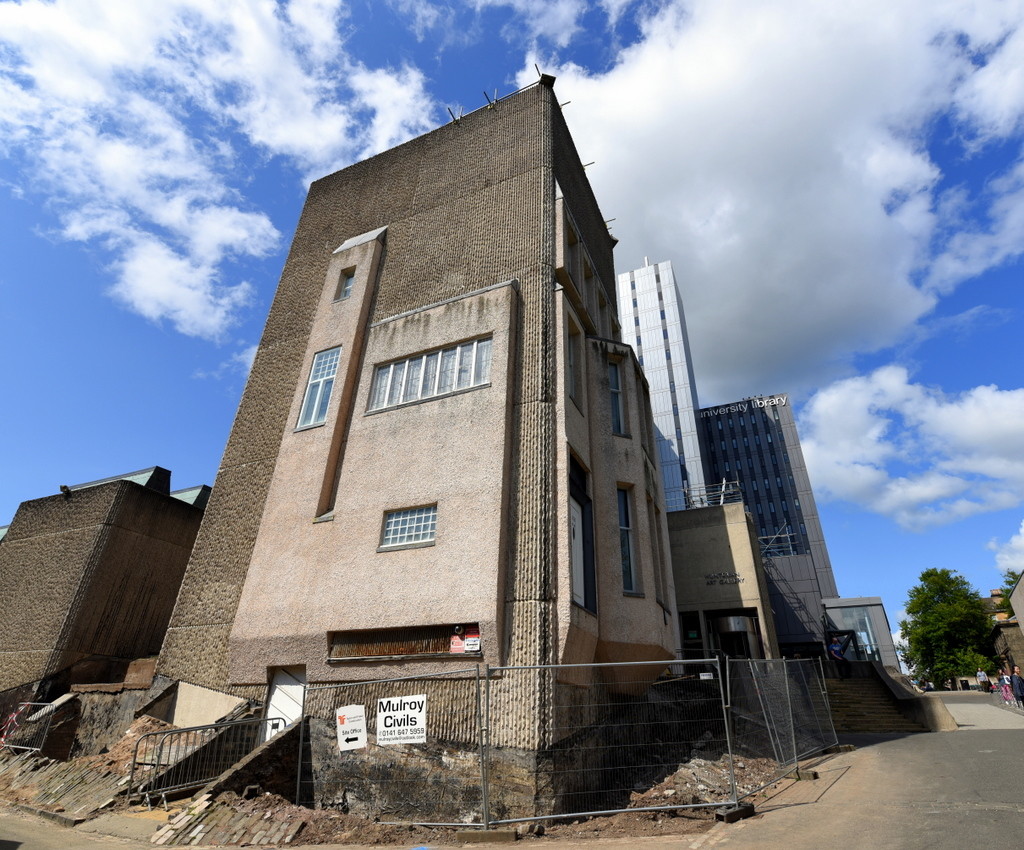
Right up there with Oxford, Cambridge, and St. Andrews, the University of Glasgow has several stately old buildings. This arcade connects the dual quads of the historic U. of G. headquarters.
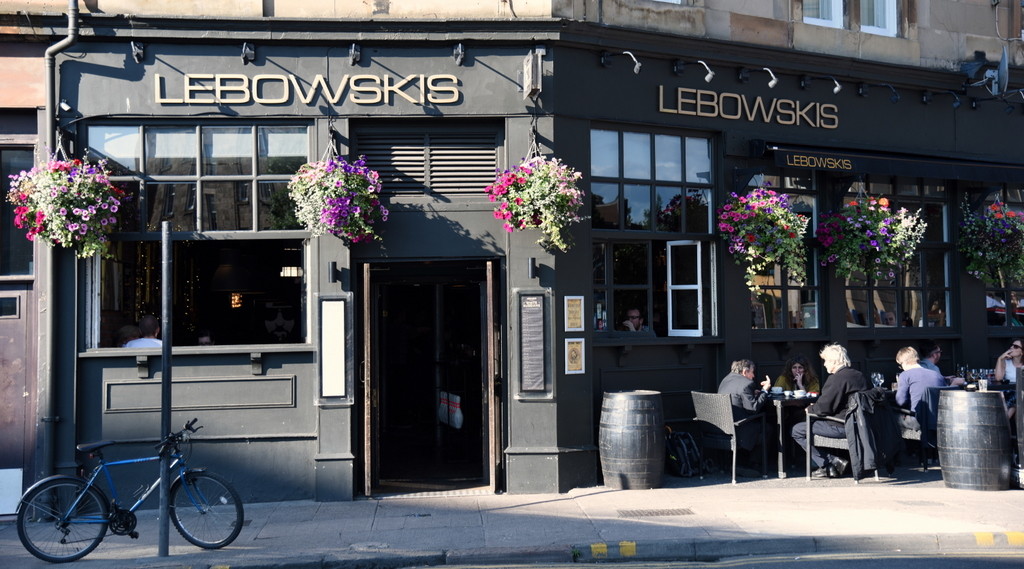
I’m always on the lookout for the emerging hipster neighborhoods in Europe’s cities. That’s almost invariably where you find the best restaurants, bars, design shops, and nightlife. The West End as a whole has that vibe, but it’s most concentrated in the neighborhood called Finnieston, just down the hill from campus. Here are my new restaurant listings in Finnieston, from the upcoming Rick Steves Scotland guidebook:
Brewdog Glasgow is a great place to sample Scottish microbrews — from their own brewery in Aberdeen, as well as guest brews — in an industrial-mod setting reminiscent of American brewpubs. Also American-style, they serve many their beers cold — unlike the room temp of most British brews (also £8-9 burgers and pub grub, daily 12:00-24:00 except Sun from 12:30, directly across the street from Kelvingrove Museum at 1397 Argyle Street, tel. 0141/334-7175, www.brewdog.com).
Butchershop Bar & Grill is a casual, rustic American-style steak house, but featuring Scottish produce — focusing on dry-aged Scottish steaks (£12-16 main courses and £18-29 steaks, lunch and early-bird deals, daily 12:00-22:00, 1055 Sauchiehall Street, tel. 0141/339-2999, www.butchershopglasgow.com).
Trendy Finnieston Eateries on and near Argyle Street: Crabshakk, specializing in fresh seafood, is a foodie favorite, with a very tight bar-and-mezzanine seating area and tables spilling out onto the sidewalk. It’s casual but still respectable, and well worth reserving ahead (£8-16 meals plus seafood splurges, Tue-Sun 12:00-22:00, closed Mon, 1114 Argyle Street, tel. 0141/334-6127, www.crabshakk.com). Crabshakk anchors a strip of copycat funky/foodie eateries. Survey the choices along here (which change from week to week), but pay special attention to these three: The Gannet has £5-8 small plates and £15-20 meals, emphasizing Scottish ingredients with a modern spin (Tue-Sun 12:00-14:00 & 17:00-21:30, closed Mon, 1155 Argyle Street, tel. 0141/204-2081, www.thegannetgla.com). Kelvingrove Café and Cocktails is an unpretentious, rustic-chic bar serving creative £8-10 cocktails and £10-13 Scottish comfort food (daily 10:00-24:00, 1161 Argyle Street, tel. 0141/221-8988, www.kelvingrovecafe.com). Ox and Finch, a block up toward the main drag, is another good choice serving £5-8 small plates in a more upscale, rustic-wood-meets-industrial atmosphere (daily 12:00-22:00, 920 Sauchiehall Street, tel. 0141/339-8627). Several other fun bars and eateries are in this area — browsing is a delight.
In general, Glasgow’s West End is a great place to home-base for your visit to the city. Here are some accommodations I just scouted to add to our new Rick Steves Scotland guidebook:
The Alamo Guest House, energetically run by Steve and Emma, faces a bowling green and tennis court in an inviting residential area near the Kelvingrove Gallery (not as handy to the subway, but still easy by bus). It has rich, lavishly decorated public spaces and 12 comfortable rooms, half of which have bathrooms on the hall (D-£69-79, Db-£89-109, 46 Gray Street, tel. 0141/339-2395, www.alamoguesthouse.com, email: info@alamoguesthouse.com).
Amadeus Guest House, a classy refuge overlooking the Kelvin River with nine modern rooms and artistic flourishes, is conveniently located near the Kelvinbridge subway stop — just a 10-minute walk or one subway stop from the restaurant zone (Db-£80, includes continental breakfast, 411 North Woodside Road, tel. 0141/339-8257, www.amadeusguesthouse.co.uk, email: reservations@amadeusguesthouse.co.uk, Alexandra).
The Alfred, run by the landmark Òran Mór restaurant/pub in the former church just up the street, brings a contemporary elegance to the neighborhood, with 12 new-feeling, stylish rooms (Db-£70, larger Db-£90, 1 Alfred Terrace, tel. 0141/357-3445, www.thealfredhotelglasgow.co.uk, email: alfred@thealfredhotelglasgow.co.uk).
Argyll Western, with 17 sleek and tartaned Scottish-themed rooms, feels modern, efficient, and a bit impersonal (Db-£70, breakfast-£5, 6 Buckingham Terrace, tel. 0141/339-2339, www.argyllwestern.co.uk, email: info@argyllwestern.co.uk).
The Heritage Hotel is a lesser value — it’s modern but characterless, and the 27 rooms are well-worn. But the location is convenient and the rates are reasonable (Db-£60, 4/5 Alfred Terrace, tel. 0141/339-6955, www.theheritagehotel.net, email: bookings@heritagehotel.fsbusiness.co.uk