Glasgow: No Respect, I Tell Ya, No Respect

Glasgow is the Rodney Dangerfield of British towns. Although it’s the biggest city in Scotland, it always seems to fall off the bottom of most people’s wish lists for a Scottish vacation. And that’s a shame, because the city has a lot to offer. Admittedly, if you’re chasing misty daydreams of bagpipes, kilts, mysterious lochs, and sweeping glens, Glasgow will disappoint. But to understand Scotland beyond the cliches, Glasgow is a must.

Maybe the biggest thing Glasgow has going for it are its people. The Glaswegians (rhymes with “Norwegians”) are the friendliest people in this exceptionally friendly country. Although it’s a hardworking city, shop clerks here seem in no hurry to do anything but chat. And their accent is a hoot to listen to. Most caricatures of “colorful Scots” have a thick Glaswegian accent — think Billy Connolly.

Glaswegian is one of the most impenetrable dialects of English (to my ear, only Belfast is harder). A few tips: Don’t worry about understanding every word. Just let the lovely lilting cadence wash over you, and grab onto any passing vocabulary you recognize. And don’t freeze up like a deer in headlights when they ask you a question you don’t understand: Just politely ask them to repeat. And repeat again. And again. And eventually you’ll get it.


Cameron Scotland Glasgow Buchanan Street

Like the centers of many other British (and American) industrial cities, Glasgow’s once-seedy and abandoned downtown has been reclaimed by developers. Buchanan Street is one of three streets (collectively called “The Golden Zed” or “Style Mile”) that have been pedestrianized and graced with big-ticket shops.


Cameron Scotland Glasgow Buchanan Street

Strollers and window-shoppers promenade along Glasgow’s Buchanan Street, soaking in some rare sunshine. (While most of Europe has suffered through record heat, this has been the coldest Scottish summer in 40 years. Or more to the point, as many Scots have told me, “We’re not really getting a summer at all this year.” My Glasgow visit has been one of the rare stretches of sun on my trip.)


Cameron Scotland Glasgow Royal Concert Hall Steps

It’s fun to see what could be a dreary eyesore become a vibrant people zone. The steps leading up to Glasgow’s Royal Concert Hall are jammed with office workers on their lunch break.
Cameron Scotland Glasgow Graffiti CollageAmericans struggle with the graffiti that tarnishes European cities. It helps to view at least some of the graffiti not as an eyesore, but as street art. Glasgow has a bold and progressive program to employ graffiti artists by commissioning huge murals on otherwise bare and ugly walls. Exploring the city, you stumble upon these everywhere — and you’ll soon find yourself appreciating the way that graffiti has been repurposed as a tool of urban beautification.

Stirling’s Top Side-Trips: A Time-Warp Village on the Firth of Forth

I’m wrapping up my series of sneak previews of new listings for sights within a 30-minute drive of Stirling (from our upcoming Rick Steves Scotland guidebook). This last one is ideal for anyone wanting a time warp to the 18th century, conveniently located on the way between Stirling and Edinburgh.

CH15JulCulross_031

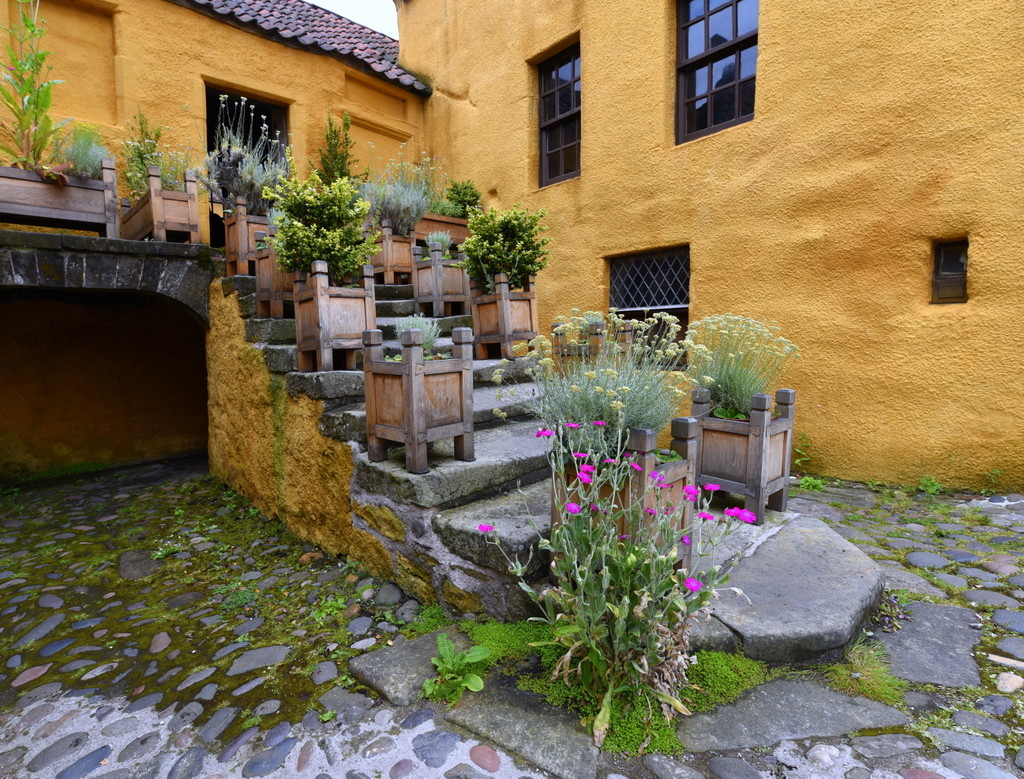
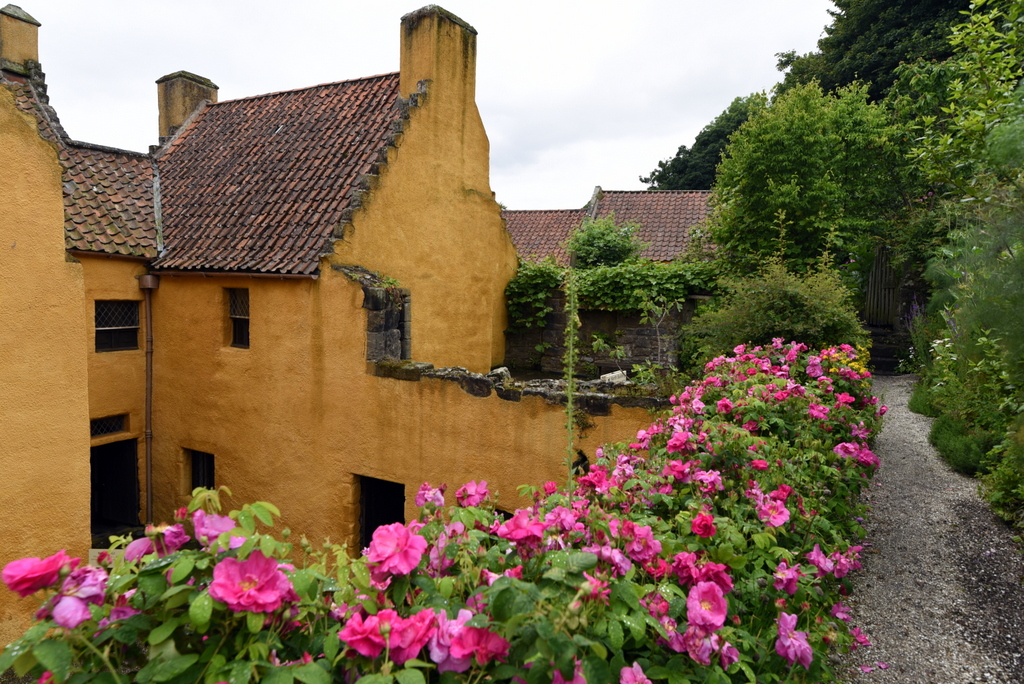
Culross — a time-warp of a village sitting across the Firth of Forth from Edinburgh  — is a perfectly preserved artifact from the 17th and 18th centuries. If you’re looking to let your pulse slow, stroll through a steep and sleepy hamlet, and tour a creaky old manor house, Culross is your place. Filmmakers use Culross to evoke Scottish villages of yore (you’ve seen it in everything from Captain America: The First Avenger to Outlander). While not worth a long detour, it’s a workable stop for drivers connecting Edinburgh to either the Stirling area or St. Andrews (free parking lots flank the town center — both an easy, five-minute waterfront stroll away).

The story of Culross (which locals pronounce KOO-russ) is the story of Sir George Bruce, who, in the late 16th century, figured out a way to build coalmines beneath the waters of the Firth of Forth. This hardworking town flourished, Bruce built a fine mansion, and the town was granted coveted “royal burgh” status by the king. But several decades later, with Bruce’s death and the flooding of the mines, the town’s fortunes tumbled — halting its development and trapping it in amber for centuries. Rescued and rehabilitated by the National Trust for Scotland, today the entire village feels like one big open-air folk museum.

CH15JulCulross_005

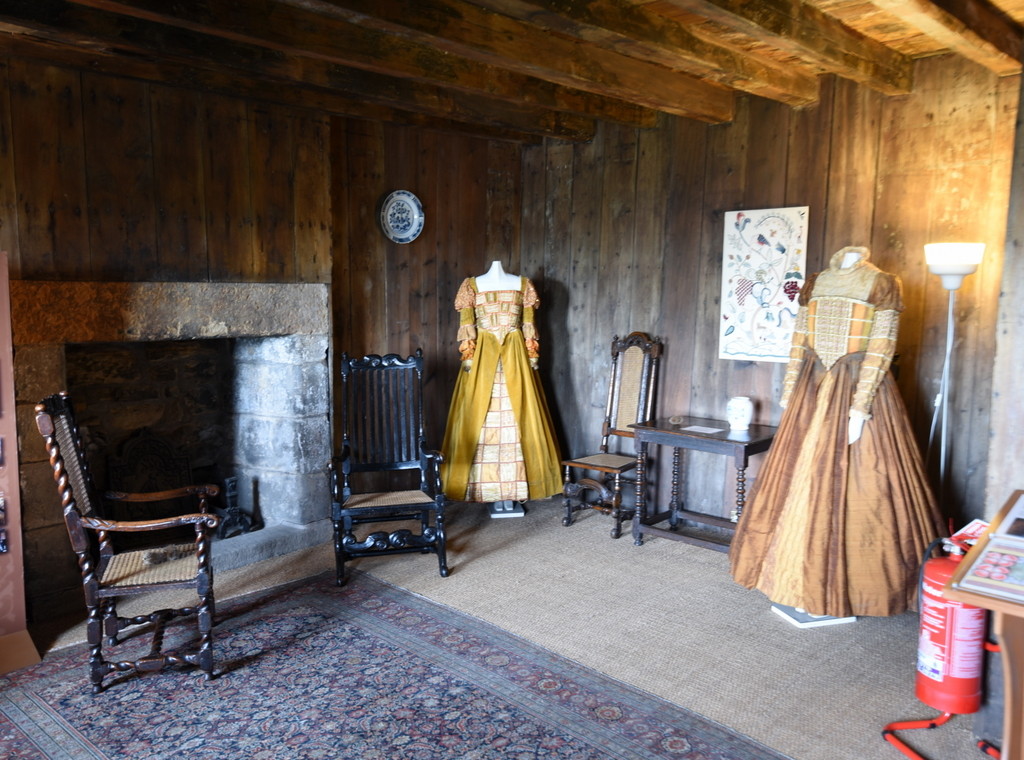
The main sightseeing attraction here is the misnamed Culross “Palace,” the big-but-creaky, half-timbered home of George Bruce (£10.50; June-Aug daily 12:00-17:00; April-May and Sept Thu-Mon 12:00-17:00, closed Tue-Wed; shorter hours in Oct and closed Nov-March, tel. 01383/880-359, www.nts.org.uk/culross). Buy your ticket at the office under the town hall’s clock tower, pick up your included audioguide, then head a few doors down to the ochre-colored palace itself. First you’ll watch a 10-minute orientation film, then walk through several creaky floors to see how a small town’s big shots lived four centuries ago.

CH15JulCulross_014

Docents in each room are happy to answer questions. You’ll see the great hall, the “principal stranger’s bedchamber” (guest room for VIPs), George Bruce’s bedroom and stone strongroom (where he stored precious — and flammable — financial documents), and the highlight, the painted chamber. The wood slats of its barrel-arched ceiling are painted with whimsical scenes illustrating Scottish virtues and pitfalls. You can also poke around the densely planted, lovingly tended garden out back. (They sell plants from a table in the front courtyard.)

CH15JulCulross_012

Your ticket also includes a 45-minute guided walk through the town itself (3/day, check website for schedule).

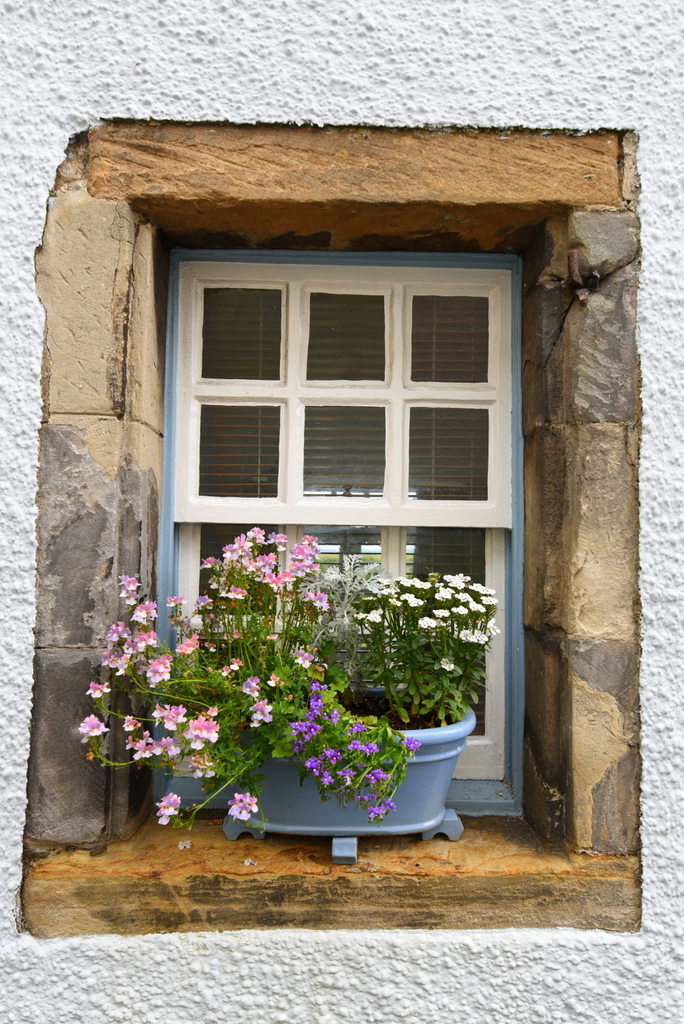
The only other real sight, a steep hike up the cobbled lanes to the top of town, is the partially ruined abbey. While there are far more evocative ruins in Scotland, it’s fun to poke into the stony, mysterious-feeling interior of the still-intact church. But the stroll up through the town’s cobbles and pastel houses, with their carefully tended flower boxes, is even better than the church itself.

CH15JulCulross_028

Stirling’s Top Side-Trips: The Unlikely Link between Monty Python and Outlander

I’ve already noted how pop culture can add to your appreciation of sightseeing in Scotland.  (I’ve also pointed out how sometimes pop culture is a rotten history teacher.) While traveling here, I keep hearing about Outlander — an adored series of novels by Diana Gabaldon, which has now been turned into a popular TV series on the Stars network. My sense is that Outlander pilgrims are helping to drive a recent boost in Scottish tourism. I’ve been watching the show as I travel through Scotland, and have enjoyed checking out a few places with Outlander ties.

CH15JulDoune_022

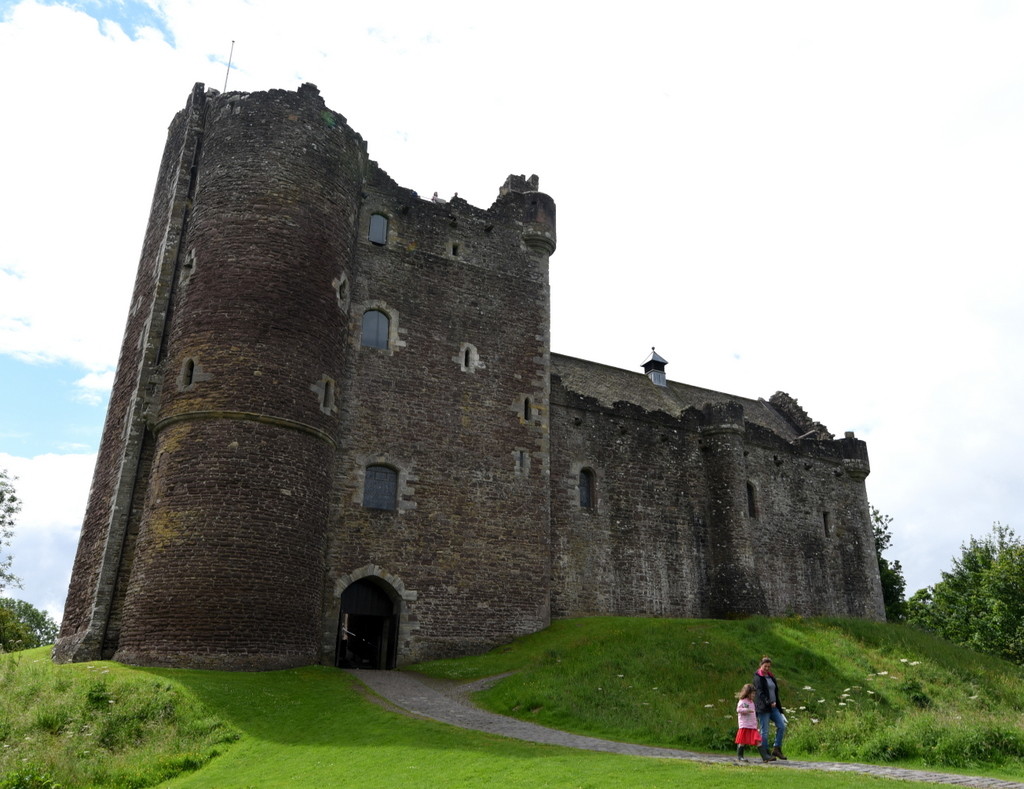
Doune Castle — the third in my series of sneak-preview listings from our upcoming Rick Steves Scotland guidebook — stars as “Castle Leoch” in Outlander. Driving to the castle (just 20 minutes from Stirling), I expected to find lots of Claire Randall tie-ins. But the castle management seems just a bit behind the curve: The only Outlander exhibit I saw was a hastily assembled cardboard cut-out, describing various shooting locations, hidden away in the castle cellar. My guess is that, if they can get the funding, this will be remedied in the future…or maybe they just don’t realize why so many people are visiting all of a sudden.

Castle Leoch

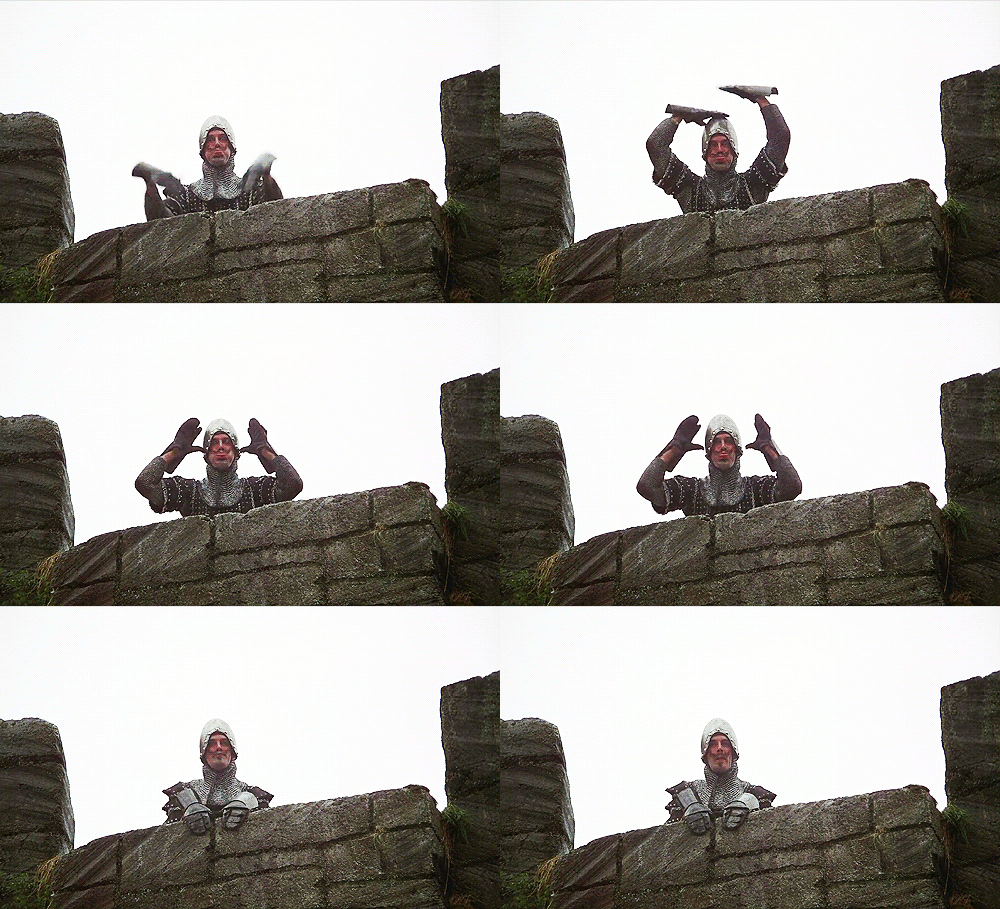
That said, as an even bigger fan of a certain British comedy sextet than I am of Outlander, I was ticked to learn the castle was also a filming location for Monty Python and the Holy Grail. Best of all, the audioguide is narrated by a Python: Terry Jones.

Holy Grail

My best advice: If you love Monty Python, see Doune Castle. If you love Outlander, consider a visit, but don’t expect much. And if you don’t know Graham Chapman from Dougal Mackenzie, skip it.

Here’s the listing from our new Scotland guidebook:

Doune Castle (pronounced “doon”) is worth considering for its pop culture connections: Most recently, Doune stands in for Castle Leoch in the TV series Outlander. But well before that, parts of Monty Python and the Holy Grail were filmed here. And, while the castle may underwhelm Outlander fans (only some exterior scenes were shot here, and currently there’s only one paltry display about the show on site), Python fans — and anyone who appreciates British comedy — will be tickled by the included audioguide, narrated by Terry Jones and featuring sound clips from the film. (If you’re not into Python or Outlander, Scotland has better castles for you to visit.)

Cost and Hours: £5.50, daily April-Sept 9:30-17:30, Oct-March 10:00-16:00, tel. 01786/841-742.

Visiting the Castle: Buy your ticket and pick up your 45-minute audioguide, which explains that the castle’s most important resident was not Claire Randall or the Knights who Say Ni, but Robert Stewart, the Duke of Albany (1340-1420) — a man so influential he was called the “uncrowned king of Scotland.” You’ll see the cellars, ogle the empty-feeling courtyard, then scramble through the two tall towers and the great hall that connects them. The castle rooms are almost entirely empty, but they’re brought to life by the audioguide. You’ll walk into the kitchen’s ox-sized fireplace to peer up the gigantic chimney, and visit the guest room’s privy to peer down the medieval toilet. You’ll finish your visit at the top of the main tower, with 360-degree views that allow you to fart in just about anyone’s general direction.

Stirling’s Top Side-Trips: A Ferris Wheel for Boats

I’m continuing my series of “sneak previews” for new listings near Stirling in our upcoming Rick Steves Scotland guidebook. Today we’re in Falkirk, ogling the remarkable Falkirk Wheel.

CH15JulFalkirkWl_010

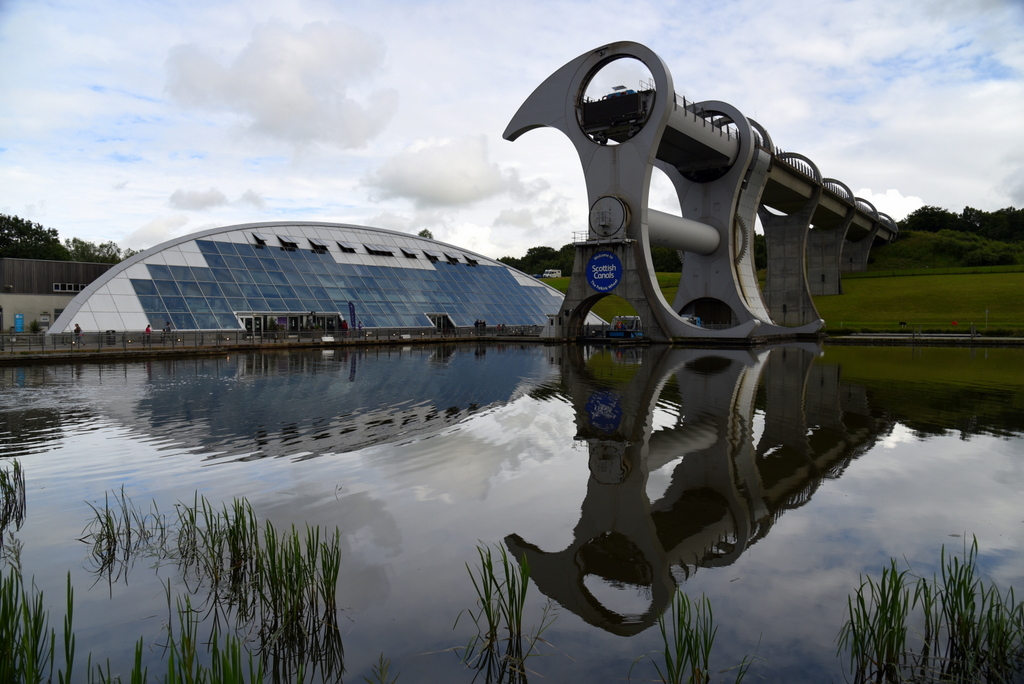
The Falkirk Wheel is a remarkable modern incarnation of Scottish technical know-how. You can watch the beautiful, slow-motion contraption as it spins — like a nautical ferris wheel — to efficiently shuttle ships between two canals separated by 80 vertical feet. With visitors center, boat trips, hands-on kids’ activity zone, and other amusements, the Falkirk Wheel makes engineering fun.

Cost and Hours: Wheel is free to view, visitors center open Mon-Fri 10:00-17:30, Sat-Sun 10:00-18:30, shorter hours Nov-mid-March, park open until 20:00, tel. 08700-500-208, www.thefalkirkwheel.co.uk.

Getting There: Drivers can exit the M-876 motorway for A-883/Falkirk/Denny, then follow brown The Falkirk Wheel signs from there. You’ll park in the huge, free lot, then stroll along a canal and across a bridge to reach the visitors center and wheel (about a 10-minute walk).

Background: Scotland was a big player in the Industrial Revolution thanks partly to its network of shipping canals (including the famous Caledonian Canal — see page *TK). Using dozens of locks to lift barges up across Scotland’s hilly spine, these canals were effective…but excruciatingly slow.

The 115-foot-tall Falkirk Wheel, opened in 2002, is a modern take on this classic engineering challenge: Linking the Forth and Clyde Canal below with the aqueduct of the Union Canal, 80 feet above. Rather than using rising and lowering water, the Wheel simply picks boats up and — ever so slowly — takes them where they need to go, like a giant waterborne elevator. In the 1930s, it took half a day to ascend or descend through 11 locks; now it takes only five minutes.

The Falkirk Wheel is the critical connection in the Millennium Link project, an ambitious £78 million initiative to restore the long-neglected Forth and Clyde and Union canals connecting Edinburgh and Glasgow. Today this 70-mile-long aquatic connection between Scotland’s leading cities is a leisurely traffic jam of pleasure craft, and canalside communities have been rejuvenated.

CH15JulFalkirkWl_003

Visiting the Wheel: Twice an hour, the Wheel springs (silently) to life: Gates rise up to seal off each of the water-filled gondolas, and then the entire structure slowly rotates a half-turn to swap the positions of the lower and upper boats — each of which stays comfortably upright. The towering structure is not only functional, but beautiful: The wheel’s elegantly sweeping shape — with graceful cogs and pointed tips that slice into the water as they spin — was inspired by the Celtic double-axe. Or maybe it’s a propeller, evoking Glasgow’s shipbuilding heritage.

The big, slick visitors center has food, souvenirs, free WCs, and a few (not enough) exhibits explaining the Wheel. The Falkirk TI, just steps away, has similar hours and free Wi-Fi. Kids love exploring the activity zone that sprawls across the lake from the visitors center, with plenty of hands-on activities that illustrate how human ingenuity has figured out how to move water from place to place (from the lock to the Archimedes screw to the piston pump). Around the far side of the basin, you can rent electric boats and canoes, or go “waterwalking” (stroll — or stumble — in inflated plastic balls across the water’s surface).

Cruises: While it’s fun just to watch the wheel in action, for a complete experience consider taking a one-hour boat trip. These begin at the basin in front of the visitors center, and include a ride up and down the wheel with a short boat trip on either end — all narrated by your skipper (£8.95, about hourly in summer, call visitors center or check their website to confirm schedule and book ahead).

Stirling’s Top Side-Trips: Giant Horse Heads Tower over the Motorway

The town of Stirling is a sleepy place to spend time, with few big sights beyond its impressive castle. But it’s perfectly situated for side-trips to a wide variety of other worthwhile destinations in Central Scotland. For the next few days, I’ll offer a sneak preview of some of the new listings we’re adding for the upcoming Rick Steves Scotland guidebook (available next spring). All of these are within a 30-minute drive of Stirling.

First up: The Kelpies.

CH15JulKelpies_009


Unveiled in 2014 and standing over a hundred feet tall (“the largest equine sculptures in the world”), these two giant, steel horse heads have quickly become a symbol of this town and region. They may seem whimsical, but they’re rooted in a mix of mythology and real history: Kelpies are magical, waterborne, shape-shifting sprites of Scottish lore, who often took the form of a horse. And historically, horses were used as beasts of burden — the ancestors of today’s Budweiser Clydesdales — to power Scotland’s industrial output. In fact, the statues stand over old canals where hardworking horses would tow heavily laden barges. But if you prefer, you can just forget all that and ogle the dramatic, energy-charged statues (particularly thrilling to Denver Broncos fans). A café nearby sells drinks and light meals, and a visitors center is due to open by late 2015. You can also take a 45-minute guided tour through the inside of one of the great beasts, to see how they’re supported by a sleek steel skeleton: 300 tons of steel apiece, sitting upon a foundation of 1,200 tons of steel-reinforced concrete, and gleaming with 990 steel panels.

CH15JulKelpies_003

Cost and Hours: Always open and free to view (£2 to park at the horse heads, free to park elsewhere). Tours-£6.95, daily at the bottom of every hour 10:30-16:30, reduced schedule Oct-March, tel. 01324/506-850, www.thehelix.co.uk.

Getting There: They’re in the park called The Helix, just off the M-9 motorway — you’ll spot them as you zip past. For a closer look, you can exit the M-9 for the A-905 (Falkirk/Grangemouth), then follow Falkirk/A-904 and brown Helix Park & Kelpies signs from there.