Money in Cuba

The ongoing American embargo has a crippling impact on the Cuban economy. As is the case with most embargos, rather than bring about the overthrow of the government we don’t like, it just bolsters that government’s case that the USA is evil and that defiance is a matter of national sovereignty — deserving whatever tactics are available. (And like most embargoes, it’s more damaging to the daily lives of people than to the government.)

For now, because of our embargo, US credit cards don’t work. So — for the time being — for the American traveler, it’s cash only. (Europeans and Canadians are free to use local ATMs — just not Yankees.) Estimate the cash you’ll need, and then bring more — as there are plenty of temptations, surprise expenses, and locals who know what Americans can really afford. This was my major stress point for this vacation, as I underestimated how much cash I’d need and had to scramble to cover expenses to the end. To keep a little extra hard cash, I ended up paying my guide after getting home via Western Union. (Guides are in the tourist economy and charge far more than the local standards. I paid $100 a day — still a great value.)
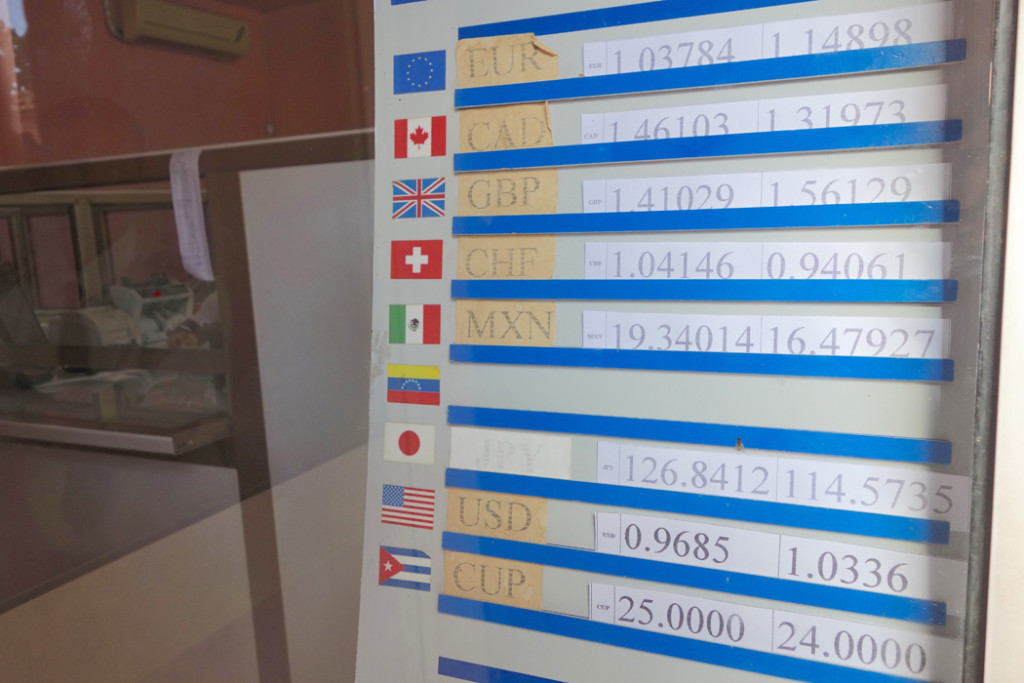
money change chart

Changing money is easy, as government-sanctioned exchange offices are plentiful and rates are strictly regulated. US dollars are nicked for about a 10 percent surcharge, so you’ll save a little money if you bring in Canadian dollars or euros. But I had no problem with the 10 percent loss, as I figured it would help the local economy — as if I were paying a little extra in Cuban taxes. (In fact, Americans who feel personally responsible for the deprivation aggravated by the US embargo can take solace in paying extra expenses — like being nicked at the bank or otherwise overcharged or scammed — which happens a lot.)
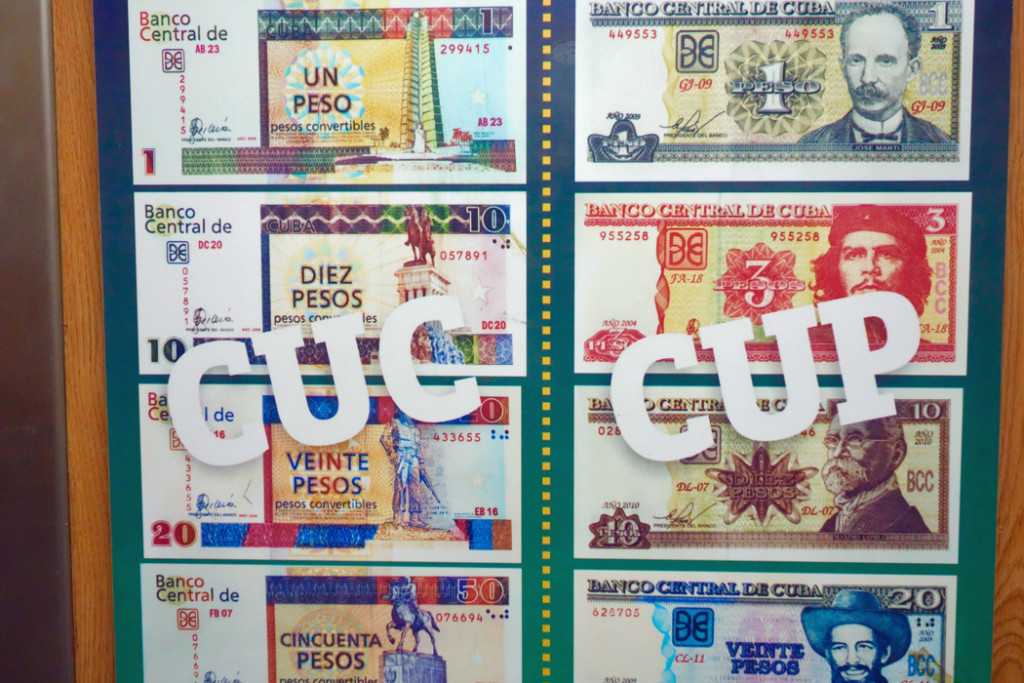
Cuban pesos

Locals use national currency (Cuban pesos, CUP), and things are extremely cheap by rich world standards. But American tourists are not generally permitted to get or use CUP, so anything a typical tourist might want is sold in Cuban convertible pesos (a.k.a. CUC, pronounced “cuke,” worth about $1) — and when paying in CUC, things get pricey quick. While there are much cheaper alternatives, rich world tourists who insist on rich world standards generally pay rich world prices: 200 CUC for a hotel room, 10 CUC for a taxi ride, 20 CUC for a dinner. At a bus stop, a truck with a canopy over long, wooden benches unloads people paying nickels for the ride next to a comfortable (if well-worn) modern bus loading up those paying dollars for the same ride. A local worker earns about $30 a month (plus the basics the government provides to all citizens, such as health care, education, and subsidized utilities, housing, and some food). But knowing that an American can earn as much in an hour as they do in a month makes it appealing for the Cuban on the street to charge foreigners heavily inflated prices.
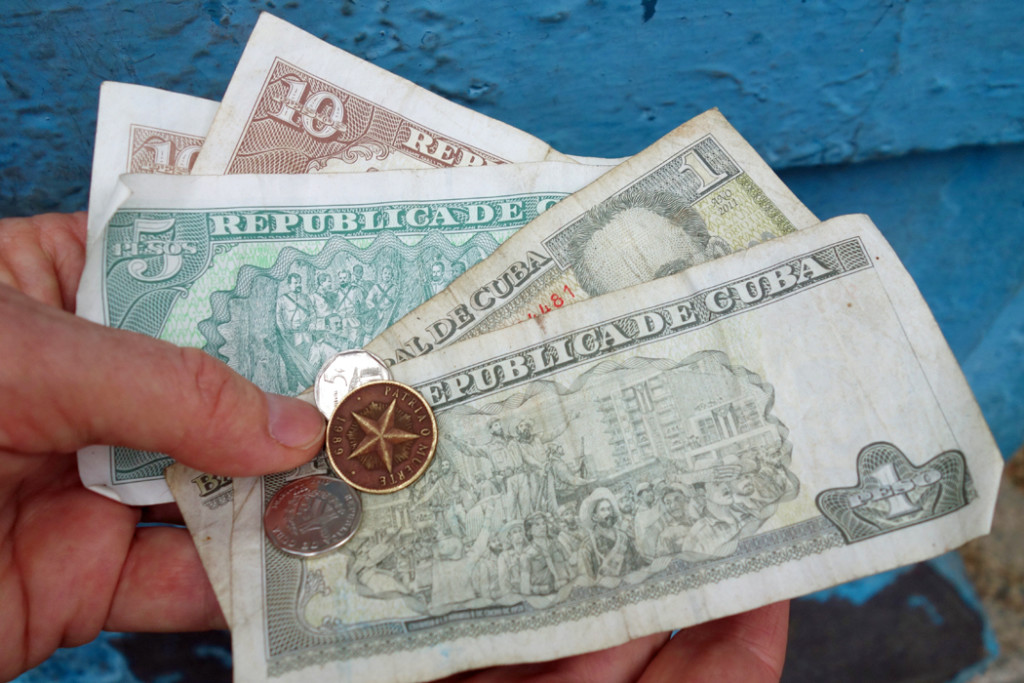
Peso bills

Photo: The Travelphile

Cuban paper money celebrates heroes and great events of their Revolution.
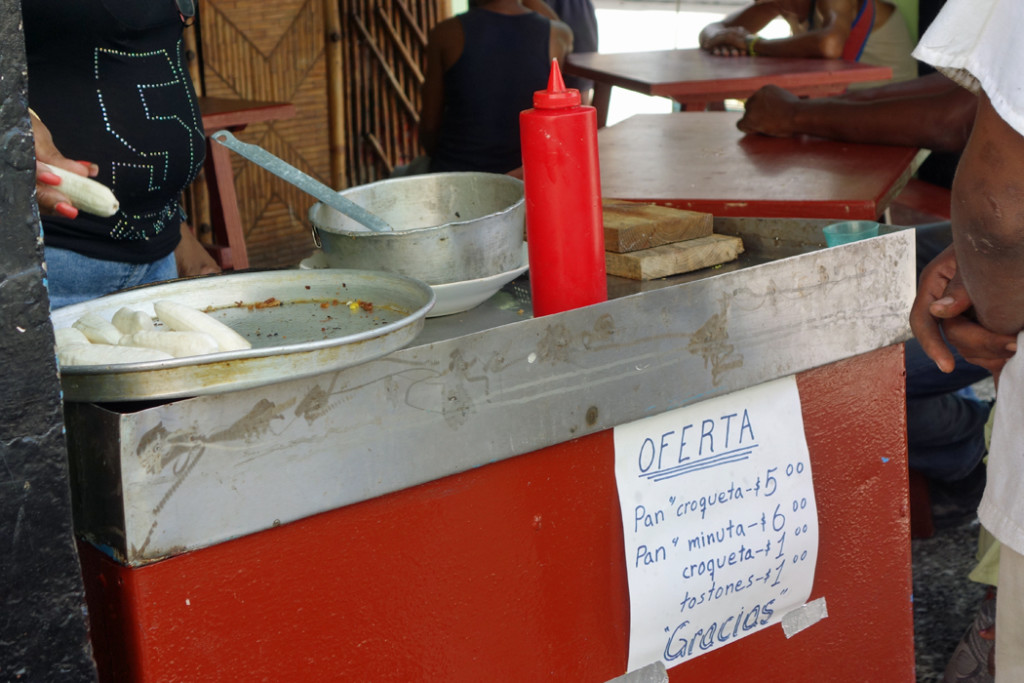
Cuban menu

This little streetside eatery caters to locals and has a menu in the local pesos — 24 to a dollar. A tourist would generally not eat here.

An Evening at the Tropicana

Any rich tourist in Havana seems to spend an evening at the Tropicana, where — for about $100 (a small fortune in local terms) — you’ll enjoy the wildest cabaret show in the Caribbean. With a live orchestra, old-fashioned crooners, acrobats, contortionists, and a razzle-dazzle troupe of outlandishly clad dancers with peacock tails, whirling tassels, and towering hats of fruit and feathers — and a bottle of good rum and local cola at each table — it’s a fun evening.

Tropicana show Tropicana dancers Tropicana dancers


A Cuban Reality Tour

When traveling in Central America, I like to have the help of guides from Augsburg College’s Center for Global Education and Experience (CGEE), which offers what I call “Reality Tours.” These tours connect travelers with locals in government and non-governmental organizations to sort out confusing issues of the day by hearing both narratives of difficult issues. I’ve been on four CGEE tours — and hired CGEE guides for private tours on two other trips — and it always enriches the experience hugely. On this trip, we had visits set up by CGEE’s Havana partner, the Martin Luther King Center, and we enjoyed the services of guide Reinier Menéndez. Reinier took us to Afro-Cuban Santeria priests, to communal organic farms, and to a local medical clinic to talk to — and learn directly from — the locals.

Rick Steves and Reinier Menendez

Simply traveling through a country like Cuba for a week comes with a constant barrage of thought-provoking experiences. The American capitalist notices lots of people just sitting around staring at traffic (but perhaps it’s no greater than the percentage of Americans just sitting around staring at daytime TV). While religion is entirely legal in Cuba, locals in this secular state are thankful that the Church doesn’t have the political clout it enjoys in other Latin American societies. To the average Cuban, the Church means the Roman Catholic Church. They view the Church as being a barrier standing in the way of gay rights and the pro-choice movement. And they think of it as an institution historically friendly to the oppressive government, providing that notorious-in-communist-ideology “opiate of the masses” encouragement not to feel the pain of structural poverty.

Group on farm

As a confirmed believer in capitalism (if not the “savage capitalism” that Pope Francis warned against during his recent visit to Cuba), I am struck by the Cuban “work ethic.”  Pay is low…and so is productivity. As locals like to say, “They pretend to pay us, and we pretend to work.” Any foreman knows that if a tree needs trimming on the farm, an incentive of 200 pesos will get no reaction. But a promise that workers can go home early when the job is done works powerfully, as people just want to get back to their families and enjoy a nap. We were told that, for Cubans, the priorities are: #1 party; #2 rest; and then, only if you have energy, #3 work. But things are changing. Older Cubans I met seemed to strive for social goals over personal goals, while younger ones are gaining an appetite for Western materialism and consumption. Everyone sees the siren of capitalism fast approaching — and threatening the laid-back Cuban soul.

Cuban doctor

Meeting with a community doctor, we learned of the passion to have good health care available to all and the trend toward teaching wellness and prevention to the general populace. Chatting with this doctor, who happily took home a paycheck of $50 a month, we learned that Cuba is proud of its ability to export doctors and help other poor countries. Today there are 50,000 Cuban doctors working outside of Cuba.

Getting Online in Cuba

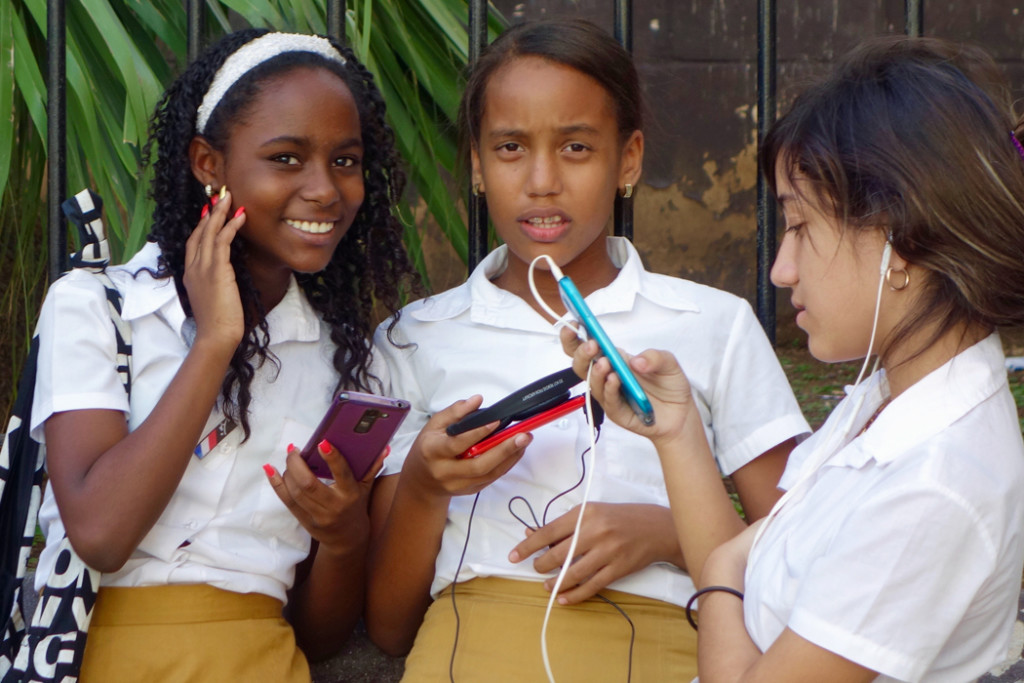
Traveling through Cuba, you often feel as if you’re hanging out with people still living in the 20th century. But there’s clearly a huge appetite for the Internet. People — young and old, poor and less poor — go to great lengths to get online. The capacity is meager, and surfing freely can be a challenge — but, clearly, the hunger for the Internet will not be stymied.  At night, many public zones with Wi-Fi become community living rooms. As few can afford to be online at home, certain corners — where Wi-Fi is available — glow with the screens of smartphones. Government control of Internet access seems not very determined…except for the websites of anti-Castro forces in Florida.

Students on phones People online Women online People looking at smart phones