A first stop for any sightseer in Havana is the fort. Peering across its rusty old cannon to see how a tiny and easily protected strait of water led to a calm and secure harbor, and hearing stories of how the Caribbean-European trading vessels would gather here before crossing the Atlantic in a safety-in-numbers convoy, I could understand how Havana was the mightiest port in the Caribbean 500 years ago.
Welcome to Havana
Flying into Havana after dark, I was struck by how dimly lit the city was. Touching down, it was the darkest airstrip I’d ever landed on. For such a big and important city, the airport felt provincial — a hint at the economic struggles that plague this island just 90 miles south of Florida, with a population of 11 million that’s both shrinking and aging.
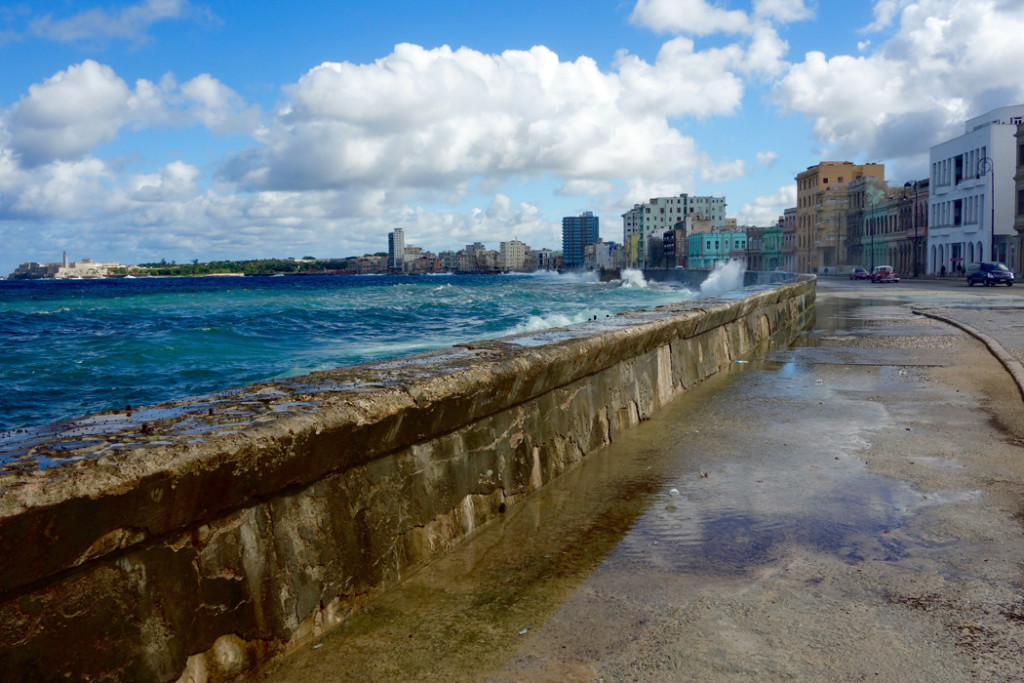
The Malecón, a five-mile-long embankment built a century ago to keep out waves, is an iconic feature of Havana. Tough as it feels, storms do overwhelm it, and the adjacent district endures regular floods. Between storms, the stark Malecón — with no landscaping and six lanes of traffic separating it from any buildings — is a beloved concrete promenade. It’s a popular place to go — to fish, hang out with a lover, strum your guitar, and make the scene. Every tourist should spend part of an evening strolling Havana’s waterfront strip.
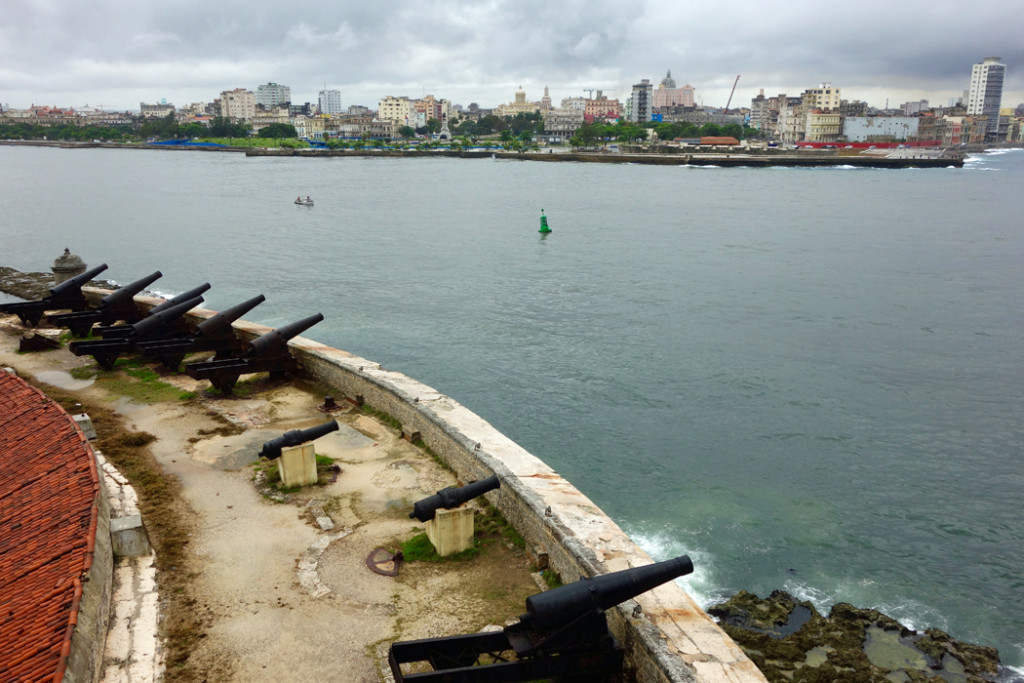
Havana’s fort features barren rooms, a few humble and boring exhibits, and grand views of the strategic harbor — so easy to protect with a few cannons. A skinny stretch of water leads past a mighty fortress to the easy-to-defend harbor. Havana was the obvious spot for those Spanish conquistadors to establish a safe and thriving port to serve the needs of colonial trading ships. To sail to Europe safe from pirates, ships from throughout the Caribbean would gather here into a huge convoy for the twice-annual crossing of the Atlantic. Sipping the local Bucanero beer in a stone building constructed after pirates burned the original wooden town (back in the 16th century), I was reminded that Havana’s heritage is hard-fought and goes way, way back.
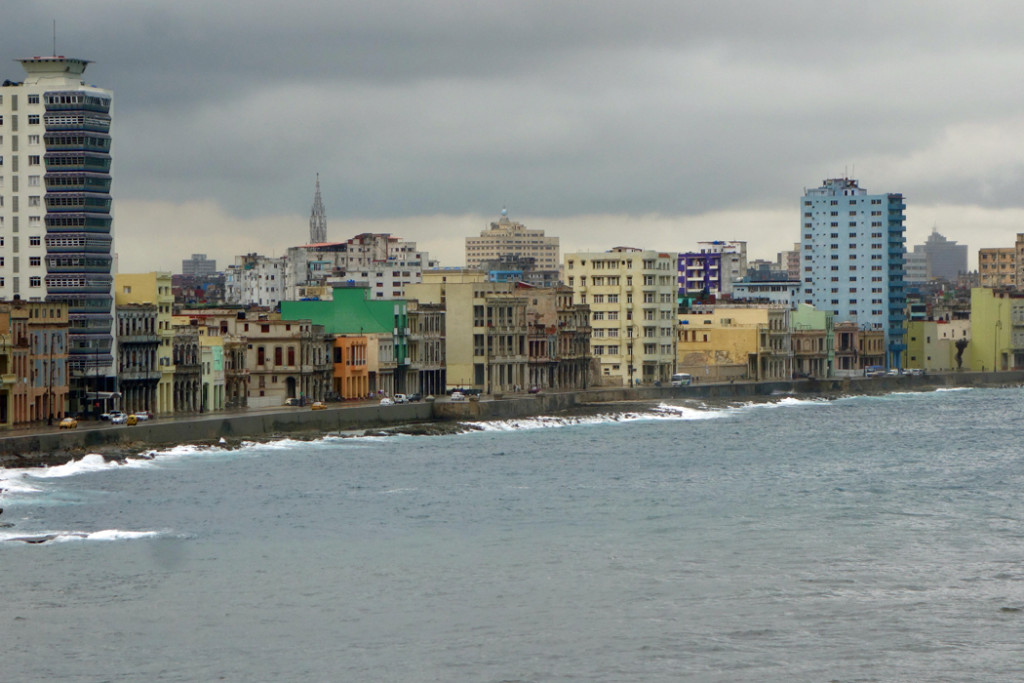
Havana, with about 2 million people, has a stubborn and neglected little skyline facing its Malecón promenade and the open sea.
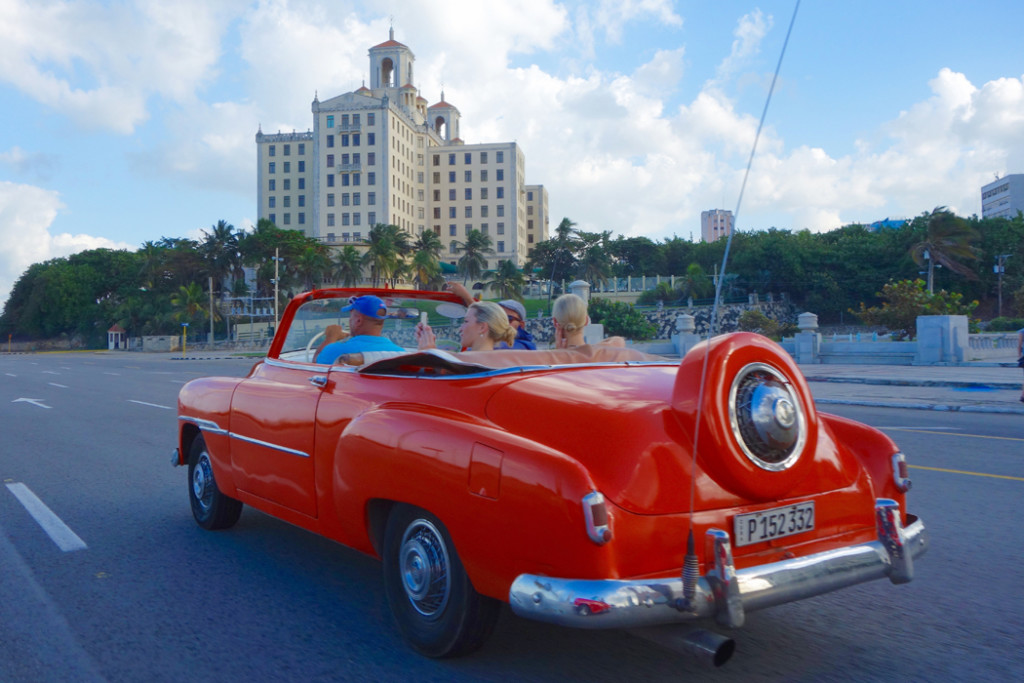
As expected, Havana traffic was sparse, and many of the cars were American classics from the 1950s. Once Cuba and the USA became enemies back in 1960, the American embargo locked the country into a 1950s time warp. Before the Revolution, Havana was a playground of the rich and famous. A few vestiges of those Sinatra and Hemingway days survive — like the stately Hotel Nacional de Cuba.
Rick Steves’ Cuba Report
One of the hottest topics among American travelers lately is Cuba. Can we visit now? Is it legal? How does it work? I just got back from a (fully legal) trip to Cuba, and I’m excited to share the answers to these questions — and much more — over the next two weeks. It will be the most up-to-date report on Cuba for American travelers available anywhere.

Soon the Castros will be gone, and Dunkin’ Donuts and all of the international chain stores will arrive, heralding a tsunami of change that will submerge the time-warp, idealistic charms of this mysterious island 90 miles off the coast of Florida. I just had to visit now and share my experience.
If you have any friends dreaming of seeing Cuba — for so long forbidden to American travelers — please share my Facebook page with them. This promises to be an exciting ride!

Visiting Cuba comes with a unique set of travel experiences, challenges, and joys. As an American, you don’t know quite where the line of legality is. I booked my flight to Mexico City as I normally would, but needed to use a London-based service to buy my Mexico City-to-Havana connection. Because US credit cards don’t work in Cuba, I booked my accommodations through a company in Canada. In order to do either, I needed to have a “general license” to travel by declaring I was one of a dozen permissible kinds of travelers (family visit, educational, journalistic, and so on). “Professional research” made me legal. Every American tourist here checked one of these boxes…and no one seems to care after that. Traveling in Cuba, you have a feeling that everything — including the red tape involved to get there — is on the verge of an avalanche of change.

I was joined on this trip by my partner (Trish), my son (Andy), and my daughter (Jackie). Each winter, we enjoy a little travel adventure together. For Cuba, I hired a local guide for our first four days to be sure we were in good hands. Our guide was Reinier Menéndez, who works for the Martin Luther King Center (the Cuban partner organization for Augsburg College’s Center for Global Education — more on that later).

I’ve long heard that the great joy of visiting Cuba is being with its people. From day one, the truth of that statement was clear. Whether poor or…less poor, the Cubans we met were friendly, good-humored, smart, and buoyed with self-respect and national pride.