Tourism in Havana

Havana Vieja (Old Havana) is polished, nicely cobbled, and touristy. Rather than beggars, you find jaunty old men with giant cigars eager to pose for a dollar. Rather than begging, panhandlers find an excuse to make business. The old center is built around five Colonial Age plazas. The most historic square, Plaza de Armas, celebrates the founding of the city in 1519. These squares are decorated with modern art and ringed by inviting bars with tables spilling out onto the cobbles. Signs and furniture feel like everything just opened up last year (which is often the case). This is the tourist-friendly zone — appealing and fun, but not giving an honest look at the character and economic metabolism of Havana.

Cuban man with cigar Rick Steves and Cuban man with cigars Modern art Plaza de Armas Cuban musician

As is the case in many developing countries, Western tourists gather in the most Western-friendly hotel, where they can get online, arrange tours, enjoy food that feels safe to eat, and interact with well-dressed, English-speaking locals. The Hotel Inglaterra, across the street from the iconic capitol building, is the favorite — constantly filled with tourists struggling to catch a little of the fleeting local Wi-Fi.

Dancers

Our guide walked us to the obvious tourist attractions, which included colorful Afro-Cuban culture expressed by joyful dancing and religious sects that mix Christianity with African religions that came over with the slaves.

Tourist bus

Tourism is ramping up in Havana, and in a few major stops in Cuba beyond the capital city. This hop-on, hop-off bus tour ($5 for a two-hour loop with a live guide, runs three per hour) is like any you’d find in Europe — but at a fifth the price.

Blockade, Bureaucracy, and Groceries

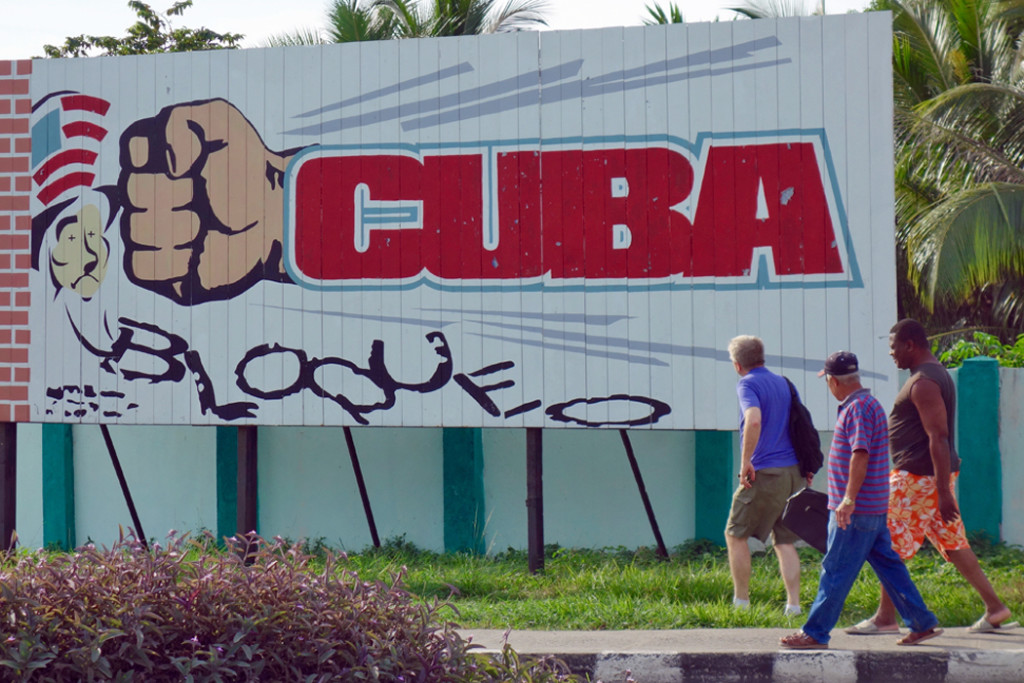
During my time in Cuba, I encountered no animosity toward Americans. There are plenty of pro-Revolution billboards, but no anti-USA or anti-Imperialism messages. A few posters were anti-US embargo, and one person said, after learning that I was American, “Oh, you start the wars.” But mostly I heard one predictable refrain: We Cubans love the American people. (Another added, “And if we don’t get our American movie at the theater each week, we complain loudly.”)

Billboard

Photo: The Travelphile

Bureaucracy in Cuba is maddening — especially without computers. It takes half an hour (with fancy papers to fill out in duplicate and passports to photocopy) to buy a simple SIM card for your phone. At the bank, a policeman lets people in a few at a time as customers leave. Then, at the counter, the teller holds each $20 bill up to the window to check for tears and watermarks.

A tenet of the Revolution has always been that everyone should own their own home. But to protect workers from tycoons who might amass lots of real estate, there has been no sale of property. The notion of real estate sales is just starting, and mortgages remain a foreign concept. As getting wealthy is discouraged, if you have lots of money, you’re wise to stow it safely at home rather than in the bank.

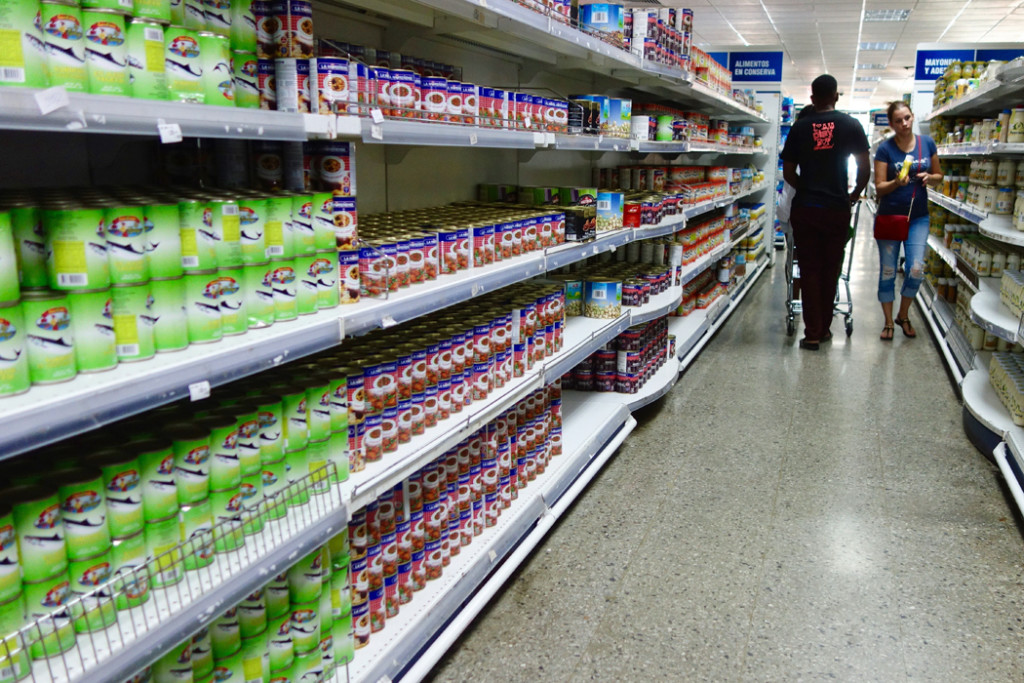
Regular Cubans shop at street markets, at carts in the street, and at places where food rations are distributed. Grocery stores are for those with more money — as the prices here are not that much different from in the USA. Still, a stroll through a grocery store gives a fascinating insight into a society without a free market, where advertising is discouraged, and where supply and demand are often ignored.

grocery aisle

The store reminded me of similar stores in the USSR 30 years ago: almost no variety…just long rows of very basic products with labels seemingly produced by some tasteless government bureaucrat. Milk was milk — there wasn’t a hint of any varieties of milk.

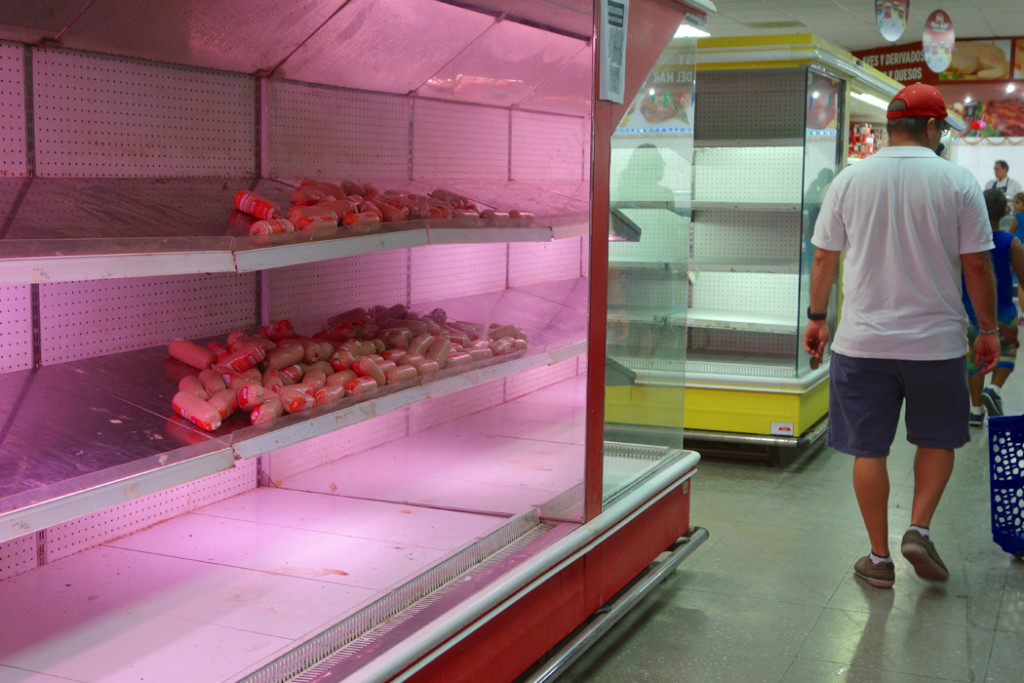
empty meat aisle

The meat section consisted of long, empty shelves, with just a few baloney sausages at the end.

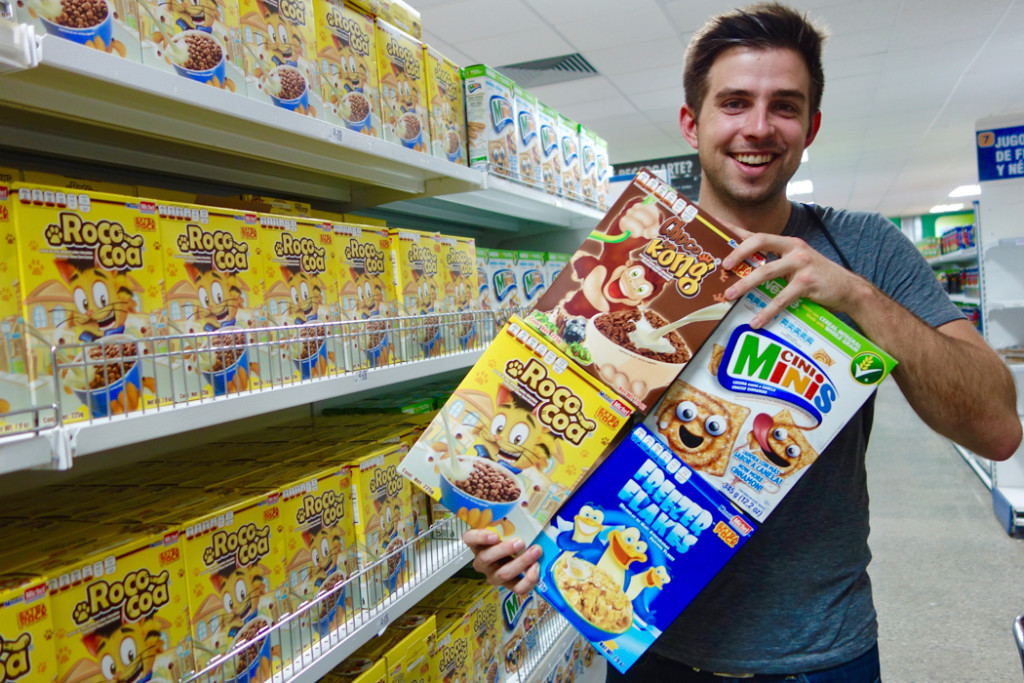
Andy Steves holding four cereal boxes

The cereal lane had four different brands, each more sugary than Lucky Charms.

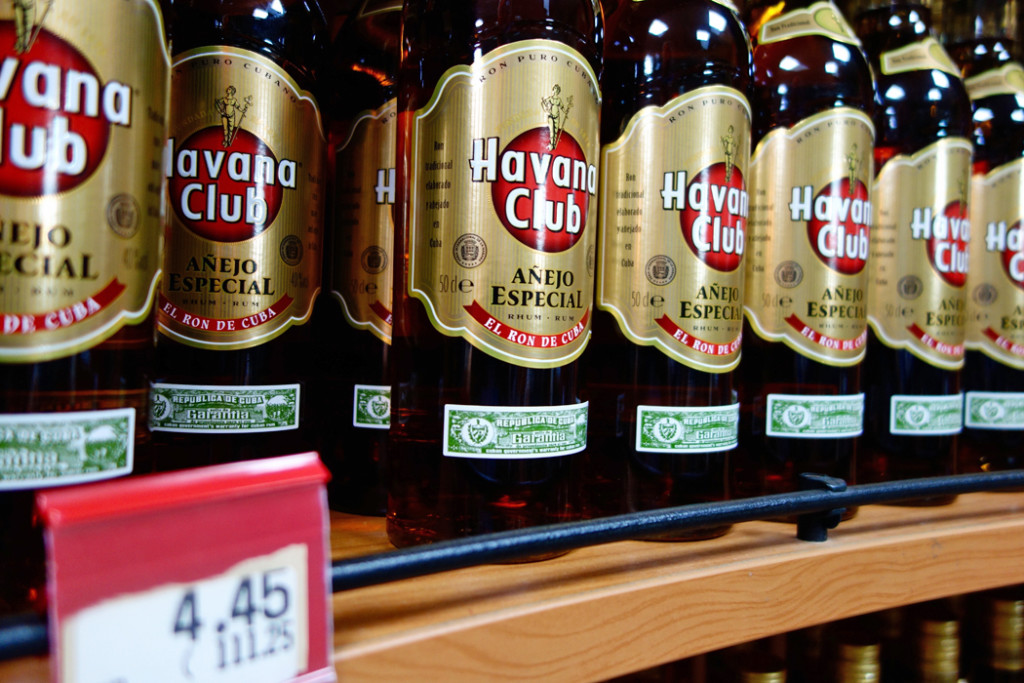
Rum bottles

The only impressive selection was in the liquor corner, where rum was plentiful, varied, and cheap (at $5 for a top-end bottle).

The USA, the USSR, and Cuba

Two of the most striking buildings in Havana are the embassies of Russia and the USA. Immediately after Castro’s victory in 1960, there was hope of a friendly relationship between Cuba and the United States. But after a battle of wills over issues of Cuban independence, neither party blinked, and Cuba saw little choice but to jump into the USSR’s sphere of influence.

Russian embassy

Soviet aid came with pressure to become more communist, and Cuba became both radicalized and addicted to Moscow’s support. When the USSR fell apart, Cuba was abandoned economically.

In the 1990s, with no help from Russia and the USA hell-bent on Cuba’s economic ruin, Cuba entered an era of extreme austerity called the “Special Period.” A lack of fuel made many forms of farming impossible. Locals survived mostly on basic produce — with almost no access to protein or sugar (some people resorted to eating cats). Today people recall how there was no traffic in the streets of Havana…just starving people walking like aimless skeletons down empty, unlit lanes.

Cuban woman

While the Cuban people have little money, I sensed no angry edge to the poverty and felt safe on the streets. While Havana is as poor as other Latin American capitals, after dark I’d much rather be walking there than in Guatemala City, Managua, or San Salvador (where I felt very unsafe).

There was something strikingly proud and dignified about the Cuban people I met. They earn about $30 a month beyond all of their government entitlements (subsidized housing, utilities, food, education, and health care), and they seem to accept that. Communism has trained them to look to the state for handouts…and has demoralized any interest in working hard to get ahead. As I’ve noted, rather than compare their lot to workers in the USA, it seems fair to compare Cuba to other Central American countries where workers are just as poor (but in dangerous worlds without health care or education). The situation depressed me (as all of Latin America does in this regard), but it was clearly different. It was confusing and perplexing…and maddening.

Hugo Chavez poster

Hugo Chávez is a hero to the Cuban people. The late leader of oil-rich Venezuela kept the Cuban economy afloat with cheap oil and financial aid. Cuba would return the favor as best it could with its most valuable resource: well-trained doctors and nurses. To this day, you see lots of billboards expressing gratitude for Venezuelan aid.

American embassy

Photo: The Travelphile

Strolling along Havana’s harborfront promenade, the Malecón, you reach the new US Embassy (formerly known as the US Interests Section). It opened in 2015 with President Obama’s softening of relations. The finest (and seemingly most fortified) building in town flies the Stars and Stripes and faces a plaza of flagpoles. When I was there, of the dozens of poles, only one sported a flag: Cuba’s, with the same red, white, and blue…but just one big star. The symbolism is clear: Cuba stands alone. (Depending on your view, they’ve either opted out of the global rat race, or have been excluded by the American embargo.) It’s as if the two flags just don’t know what to do: Is this a showdown at the OK Corral? Or perhaps two awkward potential partners on a dance floor?

American embassy worker

On the plaza facing the US embassy, the wall read Patria o Muerte (“Fatherland or Death”) and Venceremos (“We will overcome”). As in other Latin American countries, the shiny new embassy is designed to instill fear and respect among locals. (My local guide waited with our taxi four blocks away while I went up to chat with the embassy guard.)

A Havana Neighborhood Farmers Market

Although it’s a huge city, Havana feels like a collection of neighborhoods — each with its own small-town character and vibrant market. And a delightful experience is to simply wander through a neighborhood farmers market. Taxis are so inexpensive, we’d just hire one and hand the driver a list of places we wanted to visit (gleaned from our guidebook and advice from our B&B hosts), then enjoy a stop-and-go morning.

(By the way, I’m just starting a two-week series of posts from Cuba. This promises to be a great adventure through a mysterious-to-most-Americans island that’s just now opening up to regular tourism. I hope to post twice a day for the next two weeks here on my blog and on Facebook. Please share this with any traveling friends interested in venturing to Cuba.)

Communism in Cuba

Part of being a tourist in Cuba is sorting out the puzzle of its ideology and its struggling economy. With the country opening up to tourism, softening its controls on society, and preparing for the inevitable end of the Castro era, traveling here is filled with fun and curious insights.

Fidel Castro is beloved by many for winning Cuba’s independence from the dictatorship of Batista, and loathed by many for keeping the country out of the global economic and political mainstream. Visiting Americans who may be inclined to criticize Cuban policies compare the economy and civil liberties to their reality in the USA, and find it horrible. Others compare the economic reality of workers here to workers anywhere else in Latin America, and find it roughly the same (from a material wealth point of view) — and note Cuba’s comparative advantage in health care, education, stability, and safety. When it comes to crime, drugs, and gang-related violence, communist Cuba is far safer than capitalist Latin American countries. But this is not a democracy, and being a dissident here can land you in jail. While other countries have their economic elites in business, Cuba has its economic elites in high government posts.

RS15Cuba_064.jpg

In 1956, Fidel Castro and a few dozen fellow Cuban Revolutionaries motored a yacht from Mexico to Cuba intent on overthrowing the Batista dictatorship. (Batista was friendly with the big American corporations that dominated the Cuban economy. He also stripped Cuban people of many rights and arrested anyone who took a stand against him.) With a mix of heartless brutality, political brilliance, and liberty-or-death courage and idealism, Castro and his gang inspired Cubans to rise up and overthrow their government. And in 1960, Castro — now the leader of the island — found himself in Havana speaking to the masses who filled what was later renamed “Revolution Square.”

TF15Cuba_003.jpg

Photo: The Travelphile

The Museum of the Revolution tells that amazing story from a Cuban point of view. It shows off the good ship Granma, in which Fidel Castro and the original band of 82 Revolutionaries cruised from Mexico to gain a toehold on the island and eventually rally the people to overthrow their corrupt dictator, Batista. The museum also displays, with simple typed descriptions in old-school glass cases, the humble artifacts of that stirring Revolution.

RS15Cuba_037.jpg

Castro’s right-hand man was Che Guevara. While you see lots of monuments to Che and the revolutionary hero from a century earlier (José Martí), you rarely see Fidel Castro’s image on monuments. But he looms large in many Cuban hearts.

RS15Cuba_218.jpg

Che Guevara is the classic dashing Revolutionary, and a big seller from souvenir shops to tattoo parlors. While a charismatic leader, he was also a brutal killer. I resist the temptation to celebrate Che.

TF15Cuba_033.jpg

Photo: The Travelphile

In Cuba, you see very little advertising beyond simple store signs. But there are plenty of billboards with political messages. The propaganda I saw was not anti-Imperialism or anti-American (except for anti-embargo messages), but rather pro-Cuban Revolution and pro-Cuban dignity and independence. Many of them tied Castro and the Cuban Revolution to two newer world figures: the late Venezuelan strongman Hugo Chávez (Venezuela provides Cuba with critical economic support — desperately needed considering the US embargo and the fall of the USSR, which propped up the Cuban economy for so long) and Nelson Mandela (a fellow hero of the “non-aligned world” — developing nations that refused to formally align with the big powers during the Cold War).