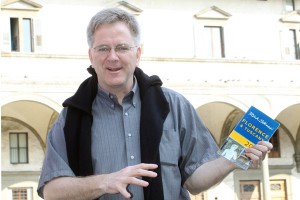
You know I love Italy. And because of that, its exasperating bureaucracy and inability to purge corruption from its civil servants “cuts my heart” (as people say here). The current scandal rocking the Cinque Terre National Park is a good example of persistent corruption. (I’ll talk bureaucracy in my next post.) Here’s a sidebar I just added to the next edition of my guidebook on the region:
Since its creation in 1999, the Cinque Terre National Marine Park has brought lots of good things to the area: money (visitors pay about €5 a day to hike the trails), new regulations to protect wildlife, and improved walkways, trails, beaches, breakwaters, and docks. There are park-sponsored information centers and even tiny folk museums.
The vision of the park was exciting ‘ everyone united and thinking creatively for the good of nature, the local communities, and their many visitors. The park administrators were well on their way to creating something truly unique in Europe. But, as is so often the case in Italy, the men entrusted to lead were corrupted by power and money. And, rather than stop them, many of those under the park leaders scrambled to win their favor and get in on the job security and easy money. The result is a vision in shambles and a park in disarray.
The park was run by its president, Franco Bonanini, a powerful man ‘ nicknamed “The Pharaoh” for his grandiose visions. In a personal visit a couple years ago, he conned me into thinking he really was a visionary committed to the region and its precious park.
But Bonanini created a medieval-style system of favorites and enemies, with the help of Riomaggiore’s mayor, and others. Starting and stopping construction projects, funneling money here and there, and extorting people to preserve their power, this cabal derailed the park vision. In 2011 they were removed from power, but the damage had been done. The good ideas of the park (info offices, baggage deposits, mountain-bike opportunities, little museums, elevators for the infirm, and even maintenance of the trails) have been scuttled.
Today, Bonanini is out of power, and the park’s run by a man from the central government whose vision for a fix, it seems, is to run the park as a business. But a park is a park, not a business. Ironically ‘ and sadly, for the residents ‘ using the park to wring money out of visitors while giving little back is not good for the livelihoods of the region’s hard-working residents. So, for 2012, no one knows exactly how the park will or will not be functioning. Thankfully, the villages and dramatic land between them are bigger than any corrupt modern-day pharaoh. For the latest on the park, see www.parconazionale5terre.it.
What does all this mean to the visitor? Not much. The Cinque Terre is still my favorite stretch of Mediterranean coastline. The people are endearing. The food, culture, and nature are uniquely enjoyable. I just thrill at the thought of people working together for a grand and noble vision that helps a community’s economy by wisely treating a park as a park, rather than making a park a business. And so far, the Cinque Terre has failed in that regard.