Germany’s Chilling Fascist Memorabilia

At the end, people did what they could to destroy any evidence that they were part of the Third Reich. A lot was just squirreled away and forgotten. In the last decade, as old Nazis have died, their children — exploring old boxes hidden away in attics — have found lots of memorabilia from those times. They donate it to the big state museums, which then store it away. I asked the curator at the great German History Museum in Berlin why there was so little of the excessive pomp and grandeur of the Nazi regime on display. He said that they keep the vast majority of artifacts that might inspire neo-Nazi groups warehoused and out of sight.

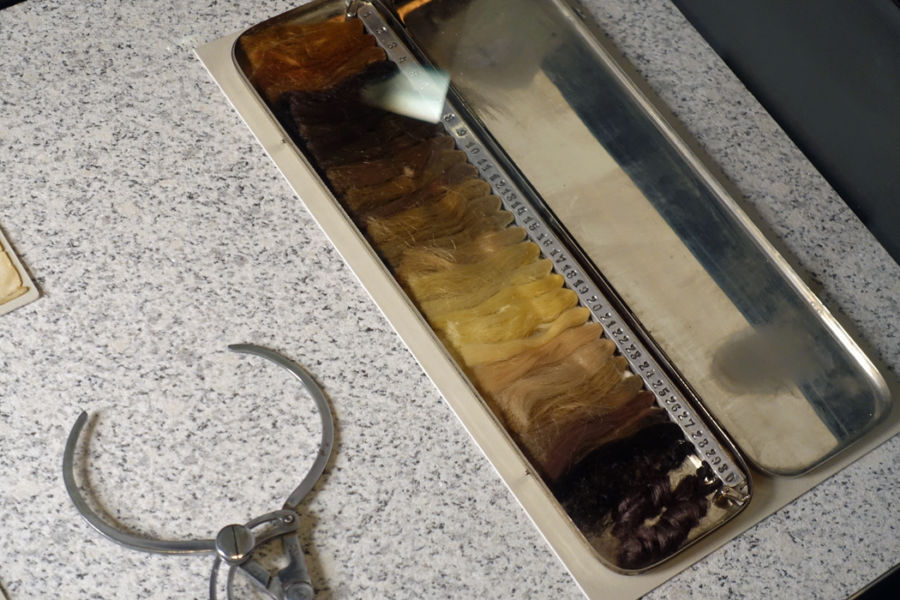
Museum visitors can, however, get a glimpse of Germany in the 1930s through exhibits which display the darkest side of the Nazi regime. A poster shows the facial features of people who were part of what was considered “the master race” (and those that didn’t belong). Calipers and hair samples help government officials determine who was of the proper racial stock to be a German citizen. And a huge hall with a dome that would house 180,000 people was envisioned to celebrate a world where the individual is sacrificed for the greatness of the state.

Master Race poster

Nazi hair chart and caliper

Volkshalle model

It’s all chilling…and with angry, populist, nativist political movements on the rise in many countries — and with images like those from the deadly white-supremacist rally in Charlottesville in our own country — it’s even more chilling.
Germany on Edge as Far-Right Rises in Europe

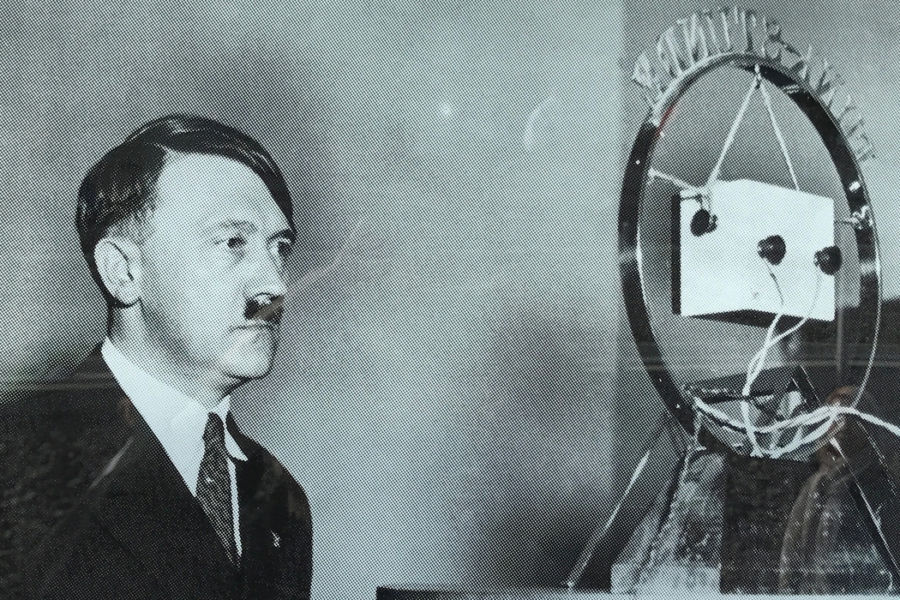
Hitler with microphone

Hitler ready to give his first major radio address — a medium he would go on to use very effectively to rule his nation.

Germany is a bit on edge these days, with the rise of white-supremacist groups, neo-Nazi groups, and right wing political parties around Europe, which seem to sanitize the tactics Hitler used to come to power in the early 1930s. In Poland, the nationalist, anti-refugee government has actually taken control of the new WWII museum in Gdańsk because it gives the “wrong” spin to that history (a spin not friendly to its right-wing ideology). And in Hungary and Poland, the electorate is so fiercely split, it’s reminding people of the tense two-political-camps feeling during the 1930s when oftentimes families couldn’t even talk to each other.

My German friends explain that conventional conservative political powers supported Hitler in the early 1930s because they thought he would mobilize a certain political base, but then could be tamed or controlled once in power. They believed many Germans voted for Hitler because they didn’t take his promises seriously and just thought he’d shake things up.

Hitler and his government

Today in Berlin, there is a small but powerful monument remembering how, after the last free vote in the German parliament, the members of parliament who voted against Hitler were arrested and sent to concentration camps, where they died.

Memorial to Politicians Who Opposed Hitler

The Memorial to the Politicians Who Opposed Hitler (Mahnmal für die ermordeten Reichstagsabgeordneten)

When asked what Germany is doing to protect its democracy, my friend explained, “Today in Germany, the media always agrees on the facts. Truth still rules. From these facts, people with different politics can then editorialize and debate. This makes it difficult for populist factions to spread their message. Right-wing populist movements in Germany have to get and share their ‘news’ on Facebook because the media doesn’t give them a platform.”

Fascism in Germany

notes

I’m in Germany with my TV crew, filming a new one-hour special about 20th-century fascism in Europe that will air next September on public television. Over the next several days, I’ll be sharing photos and videos from behind the scenes.

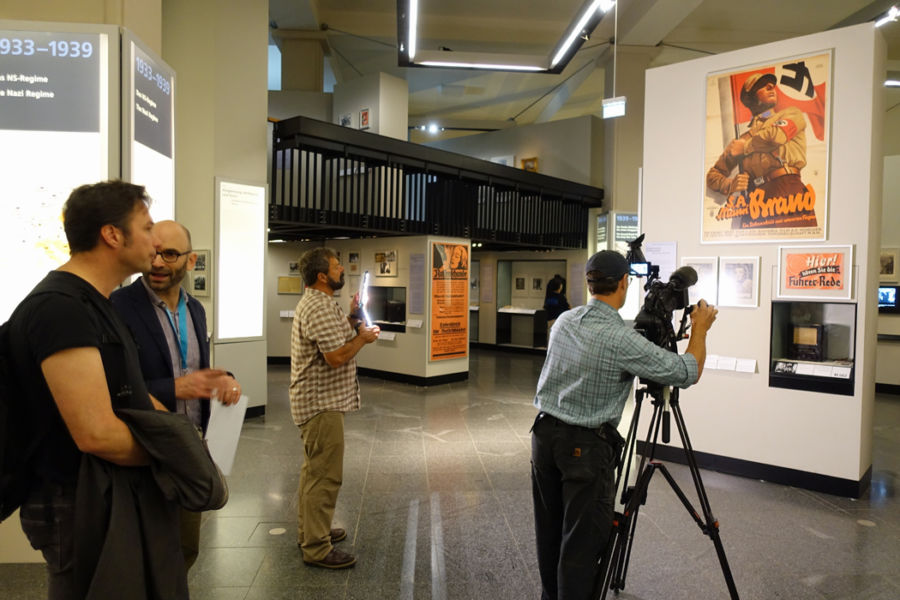
Here’s a look at the powerful propaganda art on display in Berlin’s Museum of German History (which has the best artifacts from the Hitler years I’ve seen anywhere in Germany):

filming in german history museum

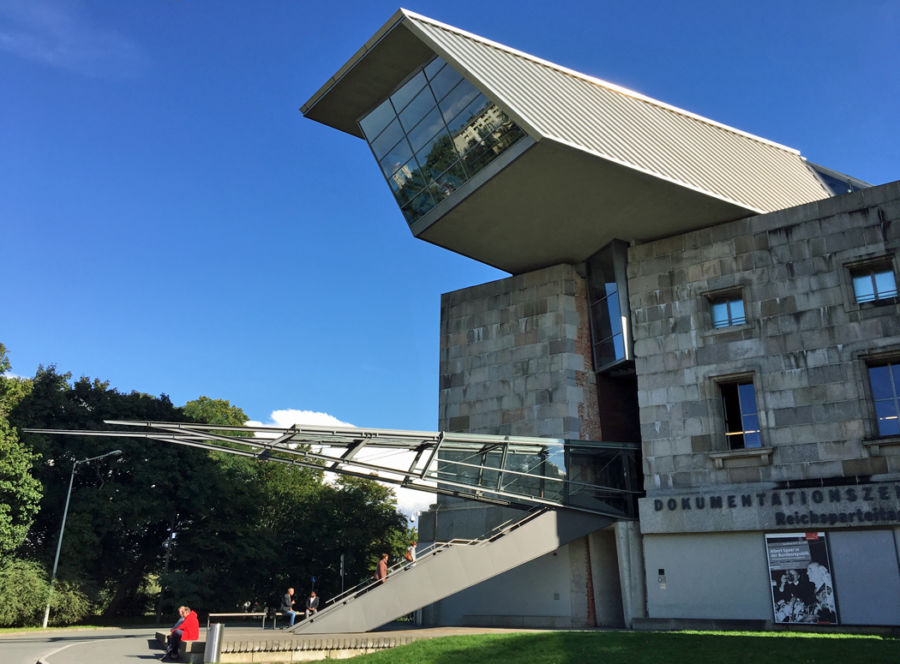
The entry of the Documentation Center in Nürnberg architecturally cuts like a dagger through Hitler’s massive, yet unfinished, Nazi Congress Hall:

nazi documentation center

A famous statue evokes the human suffering at Hitler’s first concentration camp, Dachau:

rick steves filming at dachau

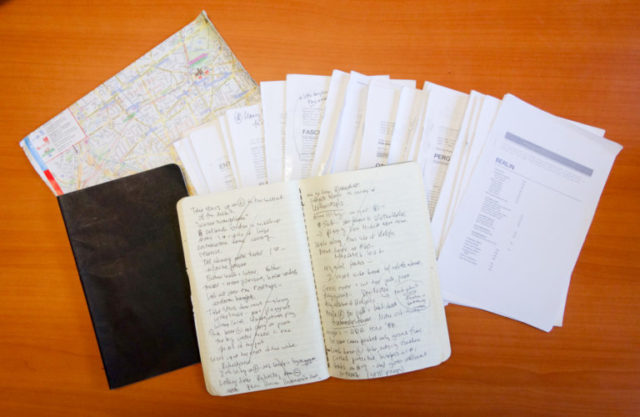
Berlin: A Rick Steves Guidebook is Born — The Backstory from Cameron Hewitt

Cameron Hewitt's notebooks

Photo: Cameron Hewitt

I am so thankful to have talented people to collaborate with. My lead co-author and Content Manager, Cameron Hewitt, has dedicated lots of energy to spearheading the production of a guidebook to a city we are both really passionate about: Berlin. Cameron sets a high bar when it comes to quality. He’s amazingly prolific. And he’s just written a fascinating blog entry telling what goes into a new Rick Steves guidebook. Reading it, I’m reminded what a talented team of guides, writers, and editors we’ve assembled — both in our Seattle headquarters and in Europe. I’m also reminded that we couldn’t lavish all this talent on these guidebooks without the support of you, our loyal traveling public. Thanks for buying our guidebooks, enjoying our work, and making it all possible. And enjoy Cameron’s behind-the-scenes peek at creating a new guidebook.

My Thoughts on Today’s Violence in Berlin

dont-be-terrorized-2

After today’s horrifying events at a Berlin Christmas market, as we keep the victims and their families in our prayers, it’s natural for Americans to wonder what is the correct response. Let me share my thoughts.

I believe we owe it to today’s victims to not be terrorized by this event – and to not let our fears get the best of us. Especially given the impact of sensational media coverage and opportunistic fear-mongers, we need to respond intelligently and rationally.

I imagine many Americans will cancel their trips to Berlin (a city of 3.5 million people) or the rest of Europe (a continent of more than 700 million people), because of an event that killed a dozen people. As a result, ironically, they’ll be staying home in a country of 320 million people that loses 30 people every day, on average, in gun homicides.

It is simply not rational for Americans to stop traveling to Europe because of safety fears.

I also want to remind you that there are 1.6 billion Muslims worldwide, making it the planet’s second-largest religion (after Christianity). Some German media are reporting that a refugee has been arrested in connection to this event. In the coming days, you will likely hear sweeping generalizations about people of the Islamic faith. Please remember that judging Islam based on a small minority of Islamic people is like judging Christianity based on Timothy McVeigh and the Ku Klux Klan.

To honor the victims rather than empower the forces of violence, it is important that we do not confuse fear with risk, that we do not overreact, and that we strive to build understanding between people. Keep on travelin’.