 I used to do everything on the cheap. It’s only recently that I’ve started to splurge (occasionally) on meals and a few other indulgences while traveling. How important is it to you to travel on the cheap? Do you want more budget tips? If you’ve traveled, what are your top budget tips?
Comments
I’m more concerned that I’m not wasting my money, than that I do everything as cheaply as possible. So I really appreciate it when you say a site isn’t worth the money, and why.
My splurges are more likely to be on activities, and a few special purchases, than on food.
I think a meal and hotel splurge is a nice diversion from cheap.
I found when traveling in Germany and Austria, that gas was much cheaper in Austria than Germany, thus when in Southern Germany I made it a point to fill up while in Austria.
A note that the ticket you are issued when using the WC on the AutoBann in Germany can be used at face value when purchasing items in the convience store.
More information about the different Envirmental requirements for auto’s in Germany maybe other cunrtries too, if the Hotel I used in Munich, hadn’t listed it on their web site, I could have gotten a very expensive ticket, as the leased car I had didn’t come with an envirmental badge but a local Renualt dealer in Frankfurt issued me one free.
Don’t nit-pick the small stuff. Save your money on the tiings that don’t really effect your trip. Get your deals on airfare, good hotel & B&B deals, and ground travel. If you can save hundreds on the big 2(transportation & lodging), you’ll have the money to spend on a romantic meal, a boat ride, or a fine bottle of wine. Budget traveling isn’t about being cheap, it’s about paying reasonable prices for the goods you buy & the services that are rendered. Don’t let cheap get in your way, let it lead you to that fine pilsner at the castle wall!
Travelling on a budget means I can see more cities and stay longer. I’m a fan of couchsurfing.com, staying at campings (which are AMAZING in Europe), and knowing where/when the local markets are open. Funny enough, all of these simple things surround you with locals, and not many tourists. I’d love to see, in a guidebook, a checklist of simple and cheap activities that many of us backpackers look for in towns… is it easy to walk from site to site, when/where the markets are, are there campings, are there hostels, and when the festivals are for that city. Good luck!
I would want to know some of the reasonable places to eat like the locals, and to sleep in B&B’s, or Gasthof’s, or Hotels that most locals sleep in for a reasonable amount of Euro. These places don’t have to be fancy, but clean and well kept, with honest staff. Like most people, must budget for eating and spending for other items, or keepsakes from the trip. The transportation is somewhat already taken care of, with the train pass, or the hotels that have been reserved before hand.
I think you have a good balance now between cheap and splurges. Your books give a range of sleeping options, including one or two splurges. I’d hate to see you give any more than that as two and three star accommodations are what I look for. With your eating choices, I like the day you give a range of options, from inexpensive to one or two splurges. Don’t change! I like your budget focus with a few splurges mixed in. I can’t think of any new budget tips right now but please keep that focus on budget so we can afford the occasional splurge.
If traveling by auto between Belgium, northern France and Germany… fill up the tank in Luxembourg.
I agree that finding value is not the same as being cheap.
Here are some basic ways we have used many times:
1-arrange itinerary with cities at beginning and end and get a car only for middle part… saves rental costs and parking hassles.
2-book [love airbnb.com] places with kitchen for three days minimum and buy food to cook where the locals buy theirs.
3-if time and driving skills allow, set GPS for “no toll roads”.
4-rent a diesel car as long as not charged a big premium over gasoline car.
5-buy fuel at super store [like Carrefour] stations
6-consider intermediate flight stops [like Iceland or Ireland] and/or alternate initial destinations for savings and added adventures.
7-always do homework [via Rick] on best public transport cards/tickets.
8-wander into churches during free concerts or rehearsals.
All help increase the keeping on of “keep on traveling”
Our splurges are always on food, an occasional hotel if we stay near the sea or the center of town in a quaint area. We enjoy information about B&B’s and local small hotels. While in Europe, we are looking for clean and reasonably priced food and lodging by local standards. What the locals consider a treat for a night out, most of the time is the very best of what a city/town has to offer. Enjoying local food and wine is one of the reasons we like to travel. There is more cash for food/wine if the hotel meets the above standards.
Traveling on the cheap (inexpensive) or budget is the only way I can afford to travel Europe, but looking back I don’t regret any choices or wish I had spent more during my last trip to Europe this past summer. Most of my tips, I gained from your books or web site. A few I learned was to always ask for other options (ex: in Halstatt I asked for my son and I to stay in single/Junior room – advertised as small for one, but pic on web looked ok for 2 with 2 twins/ side by side – they gave me the room for a much lower price than the double :) and do homework before leaving of cheaper resturants to eat in each area get several options. I appreciated all your tips. Please do not stop giving advice.
I sleep cheap so I can eat well (I check guide books, forums and sites like chowhound for recs). Although I know it’s cheaper to eat well at lunch time and picnic at night, I do it the other way round, as dinner is usually my night-time entertainment. I also economize by visiting expensive (and crowded) places off season. For instance, I love Nice in early April, but wouldn’t go near it in July. On my last trip I arrived in Budapest in early November, after the hotel rates came down, and stayed in an absolutely lovely little apartment I could never have afforded in the summer.
I’m also traveling to cheaper countries these days. Of course, it helps that I’ve already been to the more expensive ones (aside from Scandinavia). Sometimes this works well (Macedonia on my last trip), sometimes not so much (Albania), but it’s always interesting.
I enjoy researching my trips and have saved money by finding out what sites are on a town’s City Pass. If they are sites I’m going to see and I can save money, I know to purchase them when I arrive because often they include some free transportation options also. Some list a lot of sites but most are not ones you have time to go to and you realize you’d save money if you buy the tickets at the sites themselves. And sometimes we save money at the sites we want and see bonus sites because they are free with the card.
This *may* only pertain to the UK, and part of it needs you to have someone in the country you’re visiting, but there’s got to be quite a number that travel to Europe to see friends and relatives.
Anyway, two tips if you’re going to hire a car.
1) Under NO circumstances go with one of the big chains. I got my brother to set me up with a car from his local car hire firm, and saved more than half of what the big boys wanted to charge me. For two weeks hire, that was a lot of money.
2) Always ask for a diesel, unless you’re heading up into the Highlands of Scotland (diesels are a little underpowered for serious hills). You’ll save an absolute packet on fuel if you’re doing significant mileage. At least in the UK, you will get a petrol (gas) model by default.
One other thing which occurs to me – hotels, particularly around Heathrow, are little better than licensed clip joints. Find accommodation on the day you fly home (or fly in?) some distance away if you possibly can, even Central London can be much cheaper than places like the Sheraton at Heathrow (if that’s what it’s still called, it’s been a few years).
Brian.
for us, europe is the land of the picnic. fresh bread, abundant meats, and wide variety of cheeses means great sandwiches. and we are usually there for the scenery so, your view while munching is usually great.
Budget tips are really important. It’s pretty easy to find a splurge, and finding the best value among $300/night hotels is of no interest. I regret the emphasis on rental car travel as it is isolating and expensive. I would like to see more public transportation. I would like to see more on the natural budget alternative of staying put in one village for a week or two and making day trips to cities as desired. I’m not really fond of 3 days in that citey and then two in the next, etc.
I think it is important to include a variety of choices. We no longer look for the cheapest place to stay or eat. But in the middle of a busy sightseeing day, popping in to a recommended local place for a quick bite on the cheap is an option we may choose. The next day in the same location, we may opt for a white-tablecloth kind of place with 5 courses and a bottle of wine. We can affort the second because we opted for the first the previous day.
Each traveler needs to find out what brings them joy when traveling. And put your money there! For some it is food and wine; for others climbing every tower in each Tuscan hill town. It really is different for each person. So to me the most important thing is to discover yourself: look deep within at the travel experiences that mean the most to you and optimize the use of money to allow those things while not spending money needlessly on things you don’t care about. There are times for a limo and times for a subway. There are times for 5 star luxury hotels and there are times for hostels. Different times, circumstances, and people. Find what brings you joy and pursue it exuberantly!
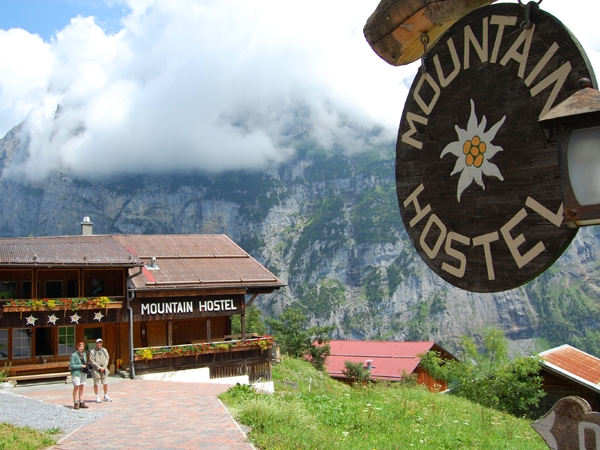
No matter whether you are poor or rich, young or old, travel alone or with a friend or loved one, or are introverted or extroverted, stay in a hostel at least once on every trip to Europe. I first traveled to Europe in my mid-30s in 1985 for six months and, in spite of a limited budget, I stayed in single accommodations the entire time because I thought I was too old to stay in hostels. When I began to read Rick Steves’ books in the early 1990s, I saw the error of my ways. When I traveled in Europe in 1997 for 10 months, I stayed in group accommodations 1/3 of the time and I had a blast. You will meet an amazing number and array of like-minded travelers of all ages and persuasions. Forget everything you have heard about the lack of security, privacy, cleanliness, blah, blah, blah. It is mostly rubbish. But if you don’t like meeting people, well…
Absolutely keep the budget tips. Traveling on a fairly tight budget is the only way my husband and I can afford traveling to Europe. We stay in private apartments mostly, and do not splurge on meals. That being said, we don’t eat at fast food, or starve, but we don’t dine at white table cloth restaurants either. We feel that the compromise is worth it, as it allows us to travel. Besides, staying at apartments doesn’t feel like being cheap anyway. All have been very nice, much bigger than a hotel room, and we like living more like “locals”. We always use your “budget” travel trips.
I really like your website and your writing style.