After traveling to Europe for 30 years, things that seem obvious to me may not be to newer travelers. If you’ve traveled to Europe, what do you wish you’d been warned about? If you haven’t traveled to Europe, what are your biggest concerns about going? What would you like advice on?
Comments
A few random thoughts:
1. Before going, I was worried about travelling with my 4yr old. Turns out that Europeans also have kids and there are tons of playgrounds all over, even in downtown Prague. Travelling with a child also is a great ice breaker and you meet people easily.
2. I wish I would have been warned about the crowded subways. You just need to make sure to give yourself some extra time in case you need to wait through a few trains before you can cram onto one.
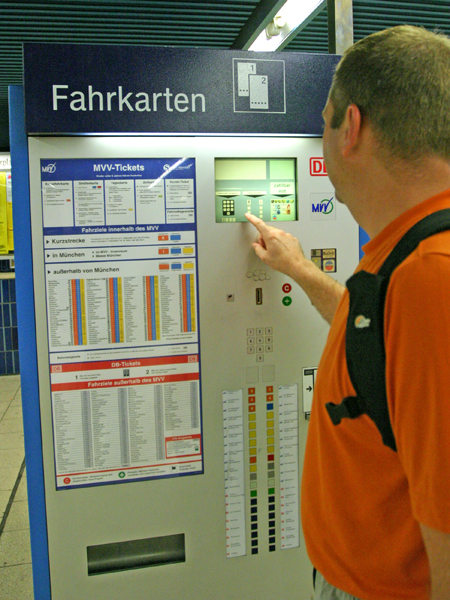
3. I never could figure out how to buy train tickets from Schipol to Centraal Station. I think you need a “chip and PIN” card to use the machines. It was late at night and I finally gave up and got a cab. Hate to do that in Amsterdam!
4. I was pleasantly surprised with how many places our child was free or reduced fare. From half-price Paris subway tix to museums all over, it saved us a lot of euros!
In general, we have saved a ton of time and money by reading the RS books. Pays for itself in one avoided mistake.
Our biggest concern is how accessible a European nation is for disabled travelers. Depending on the country, it’s hard to get accurate information, or any information at all, and places aren’t as accessible as you were told on Web sites and at tourist centers. I think Rick should hire a person who could specialize in just this issue and help expand his book for disabled and elderly travelers.
I think more basic information on the subway and train systems would be helpful. Most people in this country have little or no exposure to trains and subways except for those living in the east coast urban centers. For instance, it can make a tremendous difference which end of the subway station you exit. You may end up blocks from where you want to be and thoroughly confused. Along with Packing Light 101, I would have Trains and Tubes 101! But all in all, Rick, there isn’t much I would add to you books – they are the best.
Another concern I have is up-to-date information about ATM cards – I understand most US cards no longer work in their system. I realize this is changing quickly, but ready cash is always a concern.
Diane — My wife and I have been in Europe once or more a year for a number of years now, and never had a problem with an ATM card, except when we needed more cash than the daily limit (now we carry two ATM cards, one bank, one credit union). I think you have heard about the credit card difficulties — US cards are not compatible with the new cards in Europe, and that causes difficulties. So far, however, we’ve been able to use US cards everywhere BUT machines — no problems in museums, restaurants, etc.
In answer to Rick: Even as long-time experienced travelers we have been ripped off in new and exciting ways. The thieves often are pros and we are simply amateurs. Losing important things remains our main concern when traveling.
In response to concern about cards not working…Wells Fargo now has a pilot program underway to supply credit cards with both a magnetic stripe [for US and Europe] and a chip [when needed in Europe… e.g., gasoline dispensers]. Ours arrived a few months ago after returning, so will try in Europe next year. To be clear, it is a replacement card with all the same account connections and number. Cheers.
I agree that more information on the transit would be helpful. We had a difficult time booking legs of our train journey with the rail pass in both London and Paris. The lines at the train stations were very long and the ticket people were sending us on train legs that weren’t necessary at all or telling us they weren’t available. We also (luckily) remembered we had to activate our rail pass before the first trip and the line was very long. Other than that our trip was great and we loved having RS (Rick Steves) on our journey with us! We especially loved the audio tours of major sites. Maybe you could include some information in the book about which are available.
We feel europe’s merchants gouge Americans.
Finding a comfortable, clean, quiet, and safe place to sleep and keep our stuff while we go out. Finding such a place at a good price.
Getting from place to place by airplane, train, bus, car, taxi, bike and on foot.
Staying secure; ourselves and our belongings.
Efficient use of travel time and money.
Packing neither too much or too little.
I travelded to Europe this summer 2011 and the info you shared regarding ATM was very useful and only had problems with 2-3 ATMs not wanting to take/ accept the card; but I found another ATM around the corner from these and it worked fine. It would be useful to see a visual of actual screen of what to expect on an ATM machine (I thought that was only my thought before i went, but I have had people asking questions about this same question of me now).
More info and visuals for train, bus, subway, etc traveling – much more details to decrease anxiety. A big thanks for warning about talking to conductor on trains before they come to you….saved me going to Poland when I forgot to activate the rail pass (he seemed surprised and was very polite that I did this).
One more thing I learned the hard way that I wish I would have thought more about was scheduling travel early in morning before 8-9:00; this will usually prevent you from getting free breakfast at B&B or hotels that offer it and a few times having to leave the key at the unattended desk for check-out since they were officially not open.
I’ve been to Europe 6 times since 2006 including a 3 month trip & a 6 week trip within the last year. One thing that has changed in 5 years is the proliferation of PIN chip only merchants in northern Europe (Finland, Sweden, Norway, Denmark, Netherlands). It is coming to the US pretty soon but caused me to switch back to cash in several instances. Other than this minor issue I don’t have any real concerns with Europe. I’ve been to 45 countries in 5 continents. Europe is probably the easiest least worrisome continent to travel in.
1. The credit card issues mentioned by previous bloggers I also found very true, especially in Paris. Over the course of a three-day business trip there in November 2010 I had my credit card refused 3 times because it allegedly did not have the requisite security chip and I had to pay cash (one time I had to leave the establishment to use the ATM while my friends stayed in the restaurant). In one case, a second restaurant employee intervened and demonstrated to our server that there was a magnetic strip reader on the same machine for the “other”kind of cards. It makes you wonder if some restaurants are doing this to avoid getting hit with the credit company fees. Neither my Spanish or Swedish co-travelers had the correct card either! Hotels and the larger train station kiosks never seem to have an issue.
2. Some metro ticket machines take only cash. I usually “bite the bullet” with the lousy exchange rate at the airport and exchange $100 worth of cash, just to get me out of trouble when I first arrive.
3. I also try to book a hotel near a train stop that’s got a convenient connection to the airport. It’s always been cheaper (usually by a factor of 10!)and typically gets you there in about the same time. Taxis are outrageously expensive in Europe.
4. In Rome, they charged us extra for each piece of luggage from the Termini rail station, which isn’t necessarily unreasonable. But beware of taxi drivers there, and negotiate a fee BEFORE you get in the cab. Also, be familiar with how far your hotel is from the train station, or some will take advantage of you when you ask for the cost.
A couple of minor things:
1. When shopping at a local grocery store, the grocery bags are NOT complimentary. Discovered this while travelling through Germany, Austria, and Switzerland.
2. Be aware in Switzerland (at least), that if you see a basket full of pretzels on a bar counter and there’s no price listed next to it, it doesn’t mean they are FREE. You need to pay for those! It’s not like a basket of popcorn or peanuts that you may get while dining in the States. Made that little mistake in Murren. I asked politely even in German if the pretzels were free, and the lady laughed at the absurdity of such a question! :)
3. There’s no such thing as ‘free refills’ on coffee and/or soft drinks.
Before all the security risks, it seemed there were more options for leaving your belongings at a locker at the train station if you stopped at a town along the way from one place to another. Useful information for me would be where to leave a suitcase while seeing a site in a town while going to your next destination. Will a hotel in that town hold on to them for you? Can you leave them with the town’s tourist office? We have had to skip several towns because of this problem.
My biggest concerns are how to get from place to place and finding a place to stay. I would like information on traveling without reservations. How does that work? When you check in, do you need to let them know how long you will stay?
I would love to see more info on using your technology abroad — smart phone, iPad, etc. (Admittedly, I haven’t read a recent edition of ETBD, so perhaps there’s more on this subject than in the old copy I have.) The RS website articles on tech tips have been really helpful!
When my sister and I went to Italy in 2010, we didn’t know we already needed to have our ticket when we boarded a city bus. We almost got thrown off!
We appreciate as much information as you can give us on using local transit and how to buy the tickets. We always use your recommendations on lodging and eating when we are someplace new. Then we do our own thing. Appreciate the scam alerts, how to beat museum long lines, and advice on what time of day to visit a place.
Your guide books are great and are very funny.