In Troubled Times, Travel Can Be a Political Act

Last week, I shared several posts about the nationwide protests. I declared my solidarity with Black Lives Matter. I drew parallels between our president’s response and the rise of fascism in 1930s Europe. And I solicited contributions for Lawyers and Collars, an initiative by Sojourners to protect the vote of people of color in US elections.

While the response to these posts was predominantly positive (we inspired over 1,500 people to donate more than $100,000 to that campaign), I got the usual smattering of angry people saying, “Stick to travel! Why are you injecting politics into what you do? It’s bad for business!”

To these people I say: Travel and politics are related. And I’ve been mixing travel and politics for years.

There’s something about travel that radicalizes a thoughtful person. Just as the last few weeks’ events have finally opened the eyes of many privileged white Americans like me, who until now have not been fully aware of the racist inequities of our justice system, a trip to another country can be a revelation. When we travel beyond our borders, we learn that other nations hold different truths to be God-given and self-evident.

Visiting other lands, you can find completely different ways of living…and you find that you like some of them better than what you’re used to. Thoughtful travelers bring these strands back home and weave them into their lives — becoming a person with a broader, global perspective.

In 2008, during the waning days of the George W. Bush Administration, I wrote the first edition of my book Travel as a Political Act. Since that time — through the Obama and Trump years — it’s astonishing how much things have changed… and changed… and changed. (In fact, I am currently working on the fourth edition, updated yet again to include those changes.) But the basic message has remained the same: Travel can be a political act.

Here’s an excerpt from the introduction of that book:

For the last 40 years, I’ve been teaching people how to travel. I focus mostly on the logistics: finding the right hotel, avoiding long lines, sampling local delicacies, and catching the train on time. But more important than the “how” we travel is the “why” we travel: Thoughtful travelers do it to have enlightening experiences, to meet inspirational people, to be stimulated, to learn, and to grow.

Travel has taught me the fun in having my cultural furniture rearranged and my ethnocentric self-assuredness walloped. Getting out of my comfort zone through travel has humbled me, enriched my life, and tuned me in to a rapidly changing world. And for that, I am thankful.

As a travel teacher, I’ve been fortunate to draw from a variety of rich overseas experiences. And, since just after 9/11, I’ve been giving a lecture I call “Travel as a Political Act.” I enjoy giving this talk all over the USA — to peacenik environmentalists in Boulder, to high-society ladies’ clubs in Charlotte, to homemakers in Houston, to Members of Congress and their aides on Capitol Hill, and at universities across the country.

As a traveler, I’ve learned we can learn more about our home by leaving it and looking at it from afar. And we can learn more about our own country by observing other countries — and by challenging ourselves (and our neighbors) to be broad-minded. Holding our country to a high standard and searching for ways to better live up to its lofty ideals is not “America-bashing.” It’s America-loving… good citizenship.

I’m unapologetically proud of the ideals that have historically distinguished America. While we face serious challenges — especially these days — those ideals are timeless and resilient, and they still inspire people around the world. The United States has made me who I am. I spend plenty of time in other countries, but the happiest day of any trip is the day I come home. I’d never live abroad, and I’d certainly not have as much fun running my business overseas as I do here at home.

But other nations have some pretty good ideas, too. By bringing these ideas home, we can help our society confront its challenges more wisely. As a nation of immigrants, whose very origin is based on the power of diversity, this should come naturally to us…and be celebrated. After all, the motto of our country — “out of many, one” — is not just an empty slogan. In fact, today, I’d suggest that it’s the rallying cry of a true American. You can’t honestly embrace our flag without embracing this ethic.

Consider the value of travel, and relate it to the turmoil that is filling our streets and headlines in recent days. Perhaps your comments below can help us make this a teaching moment and come out of it a better nation. Thanks.

I’d love to sit down with you and personally share the most important lessons I’ve learned from my travels. If you’d enjoy that, let me literally read my Travel as a Political Act book to you. You’ll feel as if I’m telling intimate stories of how travel stretched, punched, and molded me into who I am today. Simply buy the audiobook version of Travel as a Political Act: https://bit.ly/TAPAaudio

You can also read Travel as a Political act yourself— all royalties are donated to Bread for the World. You can support small business by buying a copy at your local bookseller, or get it at my Travel Store: https://bit.ly/ShopTAPA

Or you can watch this free lecture on the same topics: https://bit.ly/WatchTAPA

Daily Dose of Europe: Guide Reports, Week 10 — Looking Ahead

In this week’s roundup of news from our European guides, we learn that Europe’s gradual reopening is brightening spirits. While it’s still unclear how soon Americans will be able to visit Europe, Europeans are enjoying the chance to venture farther and farther from their homes.

Europe is hoping to have some tourism this summer, but it will most likely be intra-European. For example, Virginie Moré — who sent us a report from her farm quarantine last month — has started an Instagram account with tips for French travelers through July 14 (when the French summer vacation season usually begins).

“I have decided to promote traveling within France to French people this summer as this is what we will be restricted to. I will take people through France by introducing different topics each day: Tuesdays, a hotel or guesthouse; Wednesdays, a restaurant; Thursdays, a winery; Fridays, a local guide; Saturdays, a village; and Sundays, a monument or museum. This is more intended for French people, but I think our RSE travelers planning future trips might like it too!” If you’re on Instagram, you can follow along here.

In Slovenia, Tina Hiti is writing a blog about how she’s keeping busy during quarantine, and offering insights into Slovenian life.

Here’s an excerpt:

“’An apple a day sends the doctor away’ in Slovenia translates to ‘a schnapps a day sends germs away.’ Even though we know apples are healthy, we all believe also in the healing powers of schnapps. This is a strong alcoholic beverage of above 40% alcohol and can be made with grapes, pears, or plums.

“Once you get sick, instead of taking pills right away, schnapps can be used: When you get a fever — try to take a hot shower and drink a glass of schnapps and sweat it out. With feminine cramps — a little shot of schnapps soothes the pain. Any toothache can be cured with schnapps — just rub it on the affected area and it will help. If you find a tick in your skin — rub schnapps on it and the little creature will immediately crawl out. You fall and get a scratch — disinfect it with schnapps. Bad hair day — rub schnapps on it. You don’t have a toothpaste — easy, just have a shot of it in the morning…and on it goes.

“No wonder schnapps is one of the things you will always find in everybody’s fridge. We use it also when we have houseguests — if a host doesn’t treat you to a shot of it, it means you are not really welcome.  And whenever we go on hikes, we always bring it along in small bottles that we like to keep close to our heart — a Slovenian kind of bypass. So beware. And just a hint: when you are offered to drink it, it is always bottoms up. It hurts only once that way.”

Various guides are making good use of new YouTube channels they’ve created to keep their guiding stills sharp while virtually introducing new audiences to their favorite sights.

For example, Stefan Bozadzhiev takes us to some hidden gems in Bulgaria:

Pål Bjarne Johansen shows off his home city of Oslo, including one of the city’s newest neighborhoods:

And Anna Piperato continues her series introducing viewers to important Italian saints:

Stefanie Bielekova, who works in our Travel Center, has been interviewing guides for her blog, Postcards from Stef. She recently posted an account of her chat with Scottish guide Colin Mairs. Colin leads Rick Steves tours in Scotland in the summer, then heads to the opposite end of the planet to do New Zealand tours in the…summer. Stefanie’s interview with Colin offers insight into living in a country that has had more success than just about any other at confronting the coronavirus crisis. Here are some excerpts:

“In New Zealand we have eased up on lockdown restrictions. Last week we moved to Level 2 – that means that most public spaces, including cafés, restaurants, and shops, are open again. The Covid-19 numbers of confirmed cases are just less than 1,500 cases and a total of 21 deaths in the whole country at the time of writing (May 18). The case numbers are low, even by the size of the population (New Zealand being a country of around 5 million people). The New Zealand government, led by Prime Minister Jacinda Ardern, took the approach of ‘go early and go hard’ against the virus and it has largely paid off.

“We use the term ‘bubble’ to refer to the immediate nucleus of people you are living with and spending the lockdown with. We are allowed to go out for walks with the people in our bubble but should stay within the neighborhood. My wife and I are a bubble of two. With the move to Level 2 last week, we can now extend our bubbles. We saw some close friends over the weekend, and gatherings are to be a maximum of 10 people. It’s really nice and a little surreal at first to actually be in the company of other people again!

“The fact that New Zealand has now returned to a relative sense of ‘normal’ is an indication that things are heading in the right direction. I hope that we will all learn something from this time. As someone who regularly reads and talks about history, it is quite an existential feeling to realize that I am living through one of the biggest world events of my lifetime — a once-in-a-century pandemic. I wonder how people will look back on this time and what future generations will think of those who panic-bought toilet paper and who disregarded the stay at home advice.”

Finally, in Italy, Susanna Perrucchini — who wrote to us not long ago about Italy’s Liberation Day — reached out with this beautiful message:

“Thinking of the months ahead, I started to wonder about the real nature of my job as a guide and if I was really sure to keep on doing what I have been doing for the last 20 years. And the answer was YES! I am not saying that I could not do something else if needed. I simply had to renew those vows to myself, because being a guide is, doubtlessly, a vocational job.

“Weeks and months will pass by, and I will adapt to a new life, to a new routine, like everyone else. Nevertheless, I know where you can find me when the first groups start to make their way to Europe: I will be right here, waiting for them.

“The big events of history, despite their heavy weight of sadness, despair, and tragedy, have always brought out the most basic of human skills: the capability to adapt, and the strength to stand up again after a bad fall. We all know, deep down, that no matter how violent the storm may be, the sun will always rise.

“Being in touch with one another, among guides, the office staff in Edmonds, and, of course, our families and friends is a fundamental way to survive (mentally) this epidemic and to deeply understand the meaning of ‘being on the same boat,’ because we really are. It makes us feel connected and definitely less alone.

“I want to end with a little reminder that may sound like one of those cheesy fortune-cookies messages: Picture in your mind an extremely funny situation that happened in your life, one of those moments when you were almost wetting your pants — we all have some of those! Think harder, come on! Ready?

Now rewind it and live it again in your head, and say to yourself OUT LOUD: ‘Those moments will come again!’ Because they will.”

Daily Dose of Europe: Guide Reports, Week 9 — Staying Positive

For today’s Daily Dose of Europe, we’re doing our weekly check-in with our guides all over Europe. This week, Europe continued its gradual reopening. For example, as of May 18, Italians are welcome to “expand their bubbles” and visit with friends. While our European colleagues — like us — are suffering quarantine fatigue, we continue to be impressed by their optimistic attitudes. They’re finding creative and compassionate ways to make the most of their time.

In Southwest England, Paul Guest has been driving an ambulance for Britain’s National Health Service (NHS):

“We are expected to hit our peak in May for our area; it’s been busy enough already up to now. Some people are struggling with the lockdown — I guess it is difficult to have your freedom suspended — but there are those who are choosing to ignore the rules, which quite frankly is very selfish, having seen firsthand how debilitating/devastating the disease can be to someone.

“As Ambulance Crews have nothing in our arsenal will make any difference or if it does it’s negligible. I am definitely looking forward to the day when we can all be free again, and also thin again as wine and chocolate is apparently not a good diet.”

In Istanbul, Lale Sürmen Aran explains how the Turks are looking out for one another:
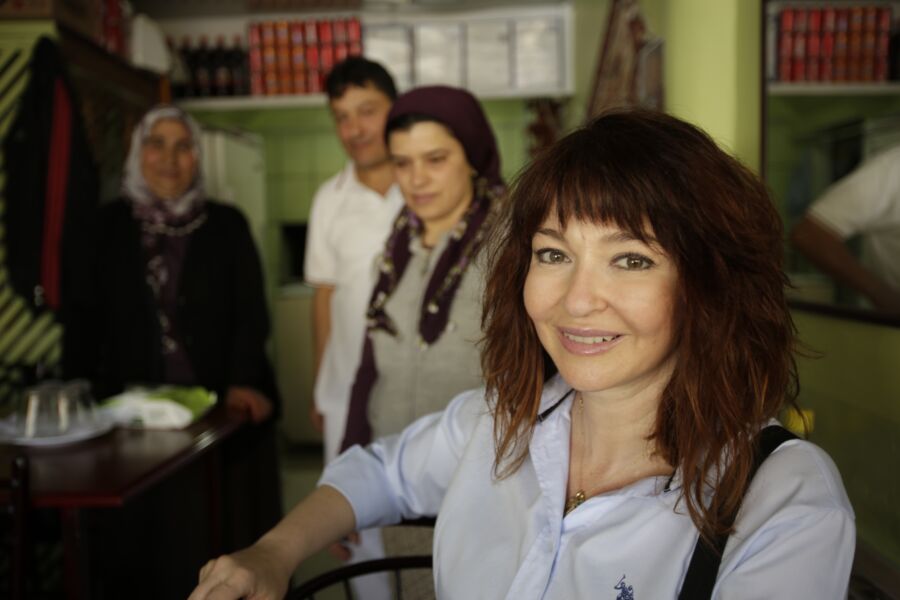
Ekmek (bread) is of special importance for us: It sustains life, and the protection of life is sacred. For us, bread is nimet, a blessing sent from God. If a piece of bread accidently falls to the ground, it must be picked up immediately before placing it somewhere higher. Some people even kiss it and put it to their forehead, to further demonstrate their respect for the blessing of God.

“Leftovers are never thrown away; when bread goes stale, it’s made into French toast and breadcrumbs. You often see plastic bags containing old bread hanging off fences along streets or tree branches, so that birds, stray cats, and dogs can be fed.

“We don’t want anyone go a day without this simple blessing. Our way of paying forward with bread is called askıda ekmek — ‘bread on a hook’: In local bakeries, you sometimes notice the owner giving someone a loaf of bread without any money changing hands. At other times, a customer will pay for two loaves of bread but only take one. That customer’s contribution is set aside so that someone in need can come and take a loaf without resorting to begging — allowing them to feed themselves while preserving their dignity.

“With COVID-19, unemployment is skyrocketing and bills are going unpaid. To avoid having our neighbors’ electricity and gas shut off, we are modifying this old tradition to ‘bill on the hook.’ A website operated by Istanbul’s municipal government collects a list of vetted recipients who need help paying their bills.

“Anyone can go online and contribute. So far, anonymous philanthropists have paid for more than 50,000 bills this way.”

In Rome, Virginia Agostinelli writes:

“I have been dedicating a lot of time to the classics, rereading Homer’s Iliad and Odyssey. I am amazed by how modern those texts are. I feel deep admiration for Ulysses’ resilience and audacity, and I have a soft spot for Achilles (he has quite a temper but also a good heart). Generally, I spend time on the rooftop terrace of my building. I can see St Peter’s dome quite well and often there are kites in the sky.
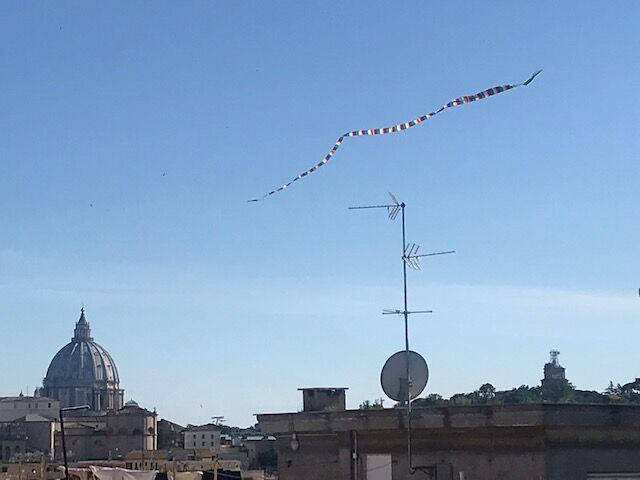
“I hope you are well and I look forward to the day when we’ll slowly start traveling with our groups again. A presto!

In Greece, Maria Sioulas writes:

“We have finally been released from our lockdown. The whole process is going to take a few weeks and will be monitored closely — any increase in infection rate or death rate, and we will be back inside. The death toll so far stands at 160.

“The first things to open were small shops, churches for individual visits (no services yet), and hairdressers, yippee! First stop: a cut and color. The shaggy look really wasn’t good. Social distancing is enforced everywhere, as is the wearing of face masks in enclosed public areas.

“This week, larger retail stores opened, and children taking their high school exams returned to school. Cinemas, gyms, theaters, sports arenas, and facilities remain closed. It’s hoped that restaurants and bars will open in early June. This is a big issue at the moment, as most places will only be at 30 percent capacity due to the distancing rules, so the owners are not happy.

“Greece is also hoping to open up to a limited number of tourists as early as June. Beaches are in the process of ensuring that social distancing is enforced by having far fewer beds and umbrellas, and more showers. Hotels will also undergo radical changes, including having a designated quarantine hotel in all resort areas.

“The country remains positive despite the massive economic toll this is taking. We are looking forward to being able to share a meal in restaurant and raise a glass of wine in a toast to a better and brighter future. Mostly, however, we look forward to welcoming visitors back to our beautiful country.”

In Britain, Charlie Rawson reports that her lockdown has been lifted by writing poetry. She explains, “I believe it is such an important time to document, especially for future generations who will unpick the challenges we are facing, and try to understand the wider ramifications of this crisis.” Here’s one of Charlie’s poems:

The Pause Between

The first cancellation of many;

a birthday, lunch and rugby.


breathe in


Reaching far and wide

above the clouds, it is growing quieter.


We are distanced, and the locks have been

turned down as we exhale and fold the laundry.


British Summer Time is here,

swiftly following by April Fools’ Day.


A first birthday comes

and goes — we should have been there.


Inhaling the sights and sounds of Spring

we Zoom in and out of weeks

another Friday another birthday

our first Full Moon was pink!


Drawing our bodies closer to the earth among the oak trees

Stepping back

two meters or six feet.


Lowering to the roadside

evading all eye contact,

the distance is greater now.


The weather forecast doesn’t list ‘inside’,

I’m residing in my own peripheral vision.


Released — one essential hour a day.

My essential tasks have mostly moved into the spare room,

it measures 311cm by 217cm.


We seem to have exchanged depth for time,

and gatherings, although charged, are paper thin.


Breathe in and open your heart.

You have always bent over backwards for me,

and we are so grateful.


Lift your gaze to the sky — full of life;

filled with radiant heat, hot blowy and everywhere,

then immersed in nourishing rain,

we needed that,


Drenched in an exhalation,

pushing back, up and away from the fear of not knowing,

the rain tastes of freedom

as the pathways rest beneath the spattering.


And one day, the 5 o’clock briefing is finally cancelled.

From now on, we define the everyday distance between us;

step forwards, step outside and step towards.

We meet back at the front, where nothing is as it was.


Coming half way only,

with hesitation, we are starting to relearn and relax.


To inhale is to grow taller, gathering the air with us,

And together, we treasure the pause, between this day and the next.

And finally, in Rome, Nina Bernardo sent us this beautiful meditation on what it means to be able to explore her adopted home city…and to reconnect with all of the personal memories that come along with it:

“Last week, when we were first let out, I walked along the banks of the Tiber River listening to the birds and the flowing water. Today I headed into the center to see what Pasquino might have to say about our current state of affairs. He is Rome’s most famous talking statue, and for centuries, Romans have been attaching notes of anonymous satire to him.
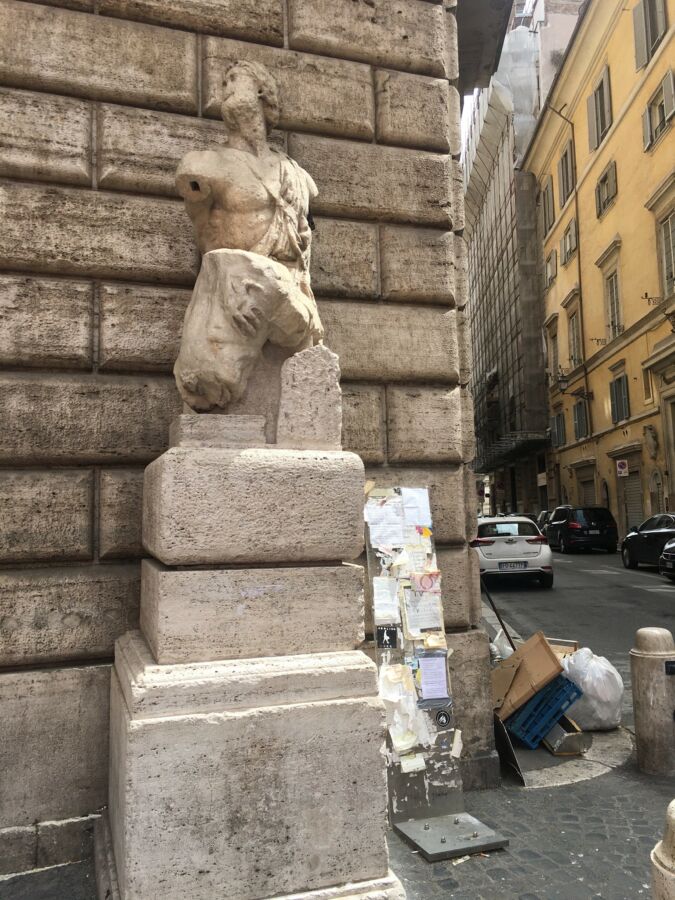
“When I arrived, an older couple was reading the material so I sat on the railing and waited. The gentleman turned around with a giant smile on his face and we started chatting. Sicilian by birth but Roman by adoption, he’s been here for 52 years and understands the Roman dialect often used in the pasquinade. I told him I was Roman by adoption, too, but sometimes the nuances of the satire escaped me.

“He shared with me his favorite poem on the board, and we said our goodbyes and went off in opposite directions. As I walked away, I realized how much I had missed these spontaneous interactions under lockdown. When my tour members ask what keeps me in Italy, that is always a point I highlight: It’s so easy to be around people and make connections, however fleeting, and share a moment that can change your day.

“I continued on and made my way to the Trevi Fountain. One of Rome’s most iconic monuments, as a resident of the city I admit I take it for granted. But today I sat for a long time listening to the rush of the water and thought about the countless times I’d been there in the evening with my tour members. I remembered what it was like to share their excitement at seeing it for the first time. ‘Gobsmacked,’ I like to say.

“My first memory of the fountain is actually a photo taken long before I was born. My parents (both born and raised in Italy) came here on their honeymoon in 1968. Well before the throngs of visitors crowded the fountain and police officers patrolled the area, they actually climbed onto it to throw their coins in! This was not allowed back then either, but my uncle, a priest, took the photo — probably reassuring them there was nothing to worry about. I love that photo. They look like slick 1960s film stars. That was during a really prosperous economic time here.

“My next real memory of the fountain came in 1996, when I decided to come live in Italy. Uncle Priest (as we still affectionately refer to him) was assigned to the parish next to the fountain, and I stayed there for two weeks before settling in elsewhere. I spent every evening sitting on the steps of the Trevi marveling at how exotic everything felt to me and excited and scared about my new adventure.

“My final personal stories all involve my family. To avoid the crowds, I’ve taken predawn walks with my nieces when they have visited. Rome is always its most magical in the early hours as the light is changing and the city is slowly coming to life.

“Our last family trip together before my father passed away was in 2016. He was in a wheelchair by then, but insisted on getting close to the basin, so we gingerly assisted him down a few steps. These are all cherished memories. I’m not embarrassed to say that I shed a few tears while sitting there reminiscing. All of the people in my stories were there with me at that moment. As were all the different “me’s”.
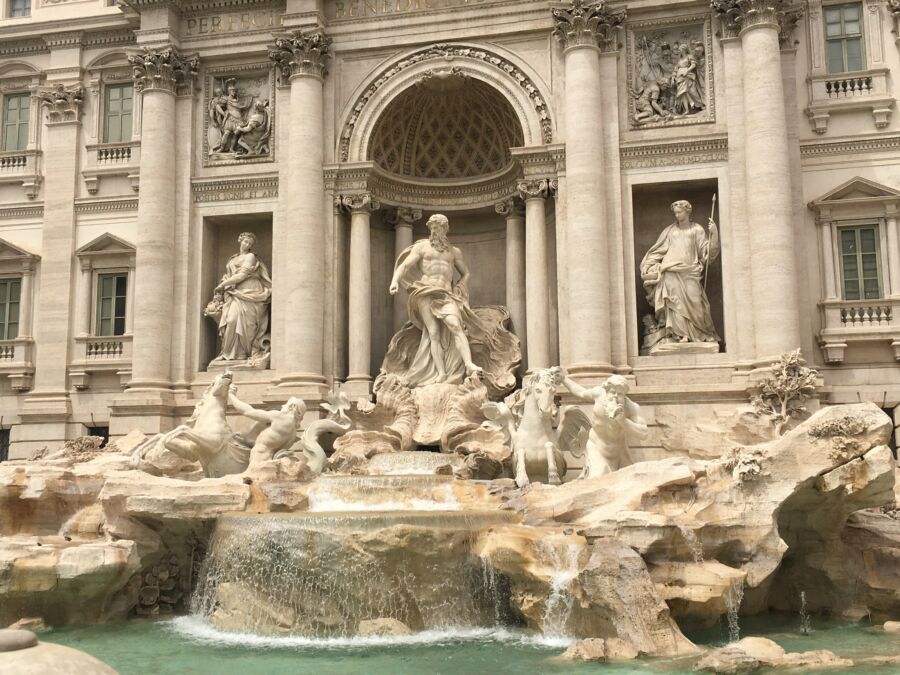
“The city is nothing without people, chance encounters, and stories. Neptune takes center stage at Trevi, but all of our memories are part of that place. Including a teary-eyed me on a cloudy May afternoon with only the sound of the rushing water and my thoughts to keep me company.”

Daily Dose of Europe: To My First Travel Partner…Happy Mother’s Day

Even though my Mom, June Steves, passed away in 2011, she remains a huge presence. When I think of how my Mom catapulted me into the wonderful life I’ve enjoyed, it was she who first took me to Europe. While my Dad was busy doing business with European piano-builders (he imported pianos), Mom was my first travel partner. (Dad was the big personality — the lead character in most stories in our family lore. But it was Mom who made sure we caught the plane, had our documents, stayed safe, and were well-fed.)

Back when I was a 14-year-old who had hardly set foot on an airplane, together we were immersed in the wonders of Europe. On that first dip into Europe, Mom and I stood in front of our first hotel in the Netherlands watching bicyclists gather at a stoplight on the way to the fields — wooden shoes filling their little handlebar baskets. Mom helped me collect a cigar box full of artfully designed beerhall coasters, tiny coins with donut holes, and sugar cubes wrapped with advertising from the restaurants we visited all over Europe. Together we collected souvenir pins to ornament my Bavarian felt hat.

In Paris, pondering the grand monuments, Mom and I puzzled at buildings that looked both new and ancient — built in the Neoclassical style…the style of ancient Rome, but dating only from the age of Napoleon. Venturing into our first subway ride ever, we found our way to a stop called Trocadéro, emerged, turned the corner, and simultaneously set eyes for the first time on the jaw-dropping Eiffel Tower. Like playmates in a wonderous park, we spontaneously held hands and ran toward that towering icon…as if entering a dream come true.

When friends in Germany gave us a tin of white asparagus, we poked at it and marveled together at what looked like a rare albino vegetable. And, with Norwegian relatives, we traveled to the fjord where we found the actual house from where my mother’s mother left for the “New Land” — in her case, Canada.

On that first trip, I was attached to my Mom — literally — as back then a mother and her child could share the same passport. And flying home from that first foreign adventure, I have a hunch my Mom had a hunch she had helped plant in me a seed that would sprout into a lifelong passion for travel.

One of my favorite photos is of me and my Mom with our hosts in Austria in a dusty village on the border of communist Hungary. It was 1969, and Mom had just introduced me a man (far left) who claimed to have witnessed the assassination of Archduke Franz Ferdinand in 1914, which kicked off World War I. Whether he actually saw it or not, the story he told had me wide-eyed — and when I look back on it, I think it was a pivotal moment in my life that directed me toward my history degree and a passion for learning and teaching through thoughtful travel.

My Mom — who, on her first trip ever to Europe, took better care of me than herself — gave me the gift of making the world, past and present, my friend through travel. Thanks, Mom. While I’d love more than ever to share a trip with you right now, I’ll always pack you along in spirit. I love you.

Daily Dose of Europe: Guide Reports, Week 8 — Italy Emerges from Lockdown

For today’s Daily Dose of Europe, we’re getting the scoop straight from our European friends. Like most of the US, much of Europe is still in some version of lockdown…but things are slowly opening up. This installment of our weekly guide reports roundup offers a look at Europe emerging from its cocoon.

In Spain, Jorge Román sent us some stunning photos of the annual patio decorating festival in Córdoba — a treasured late-spring tradition that is still happening amidst the pandemic:

In Scotland, James Macletchie posted the poetic essay “A Dream in a New World,” with gorgeous photographs from the Outer Hebrides, and his thoughts on self-isolation.

In Bulgaria, Stefan Bozadzhiev has been leading “virtual tours” around Sofia. Here’s a sample:

And here in Seattle, Sarah Murdoch has been teaching cooking lessons and interviewing our guides across Europe on her “Adventures with Sarah” Facebook page.

In Orvieto, Italy, David Tordi is staying busy with his musical act, Bartender. On Saturday (May 9), at 7:30 p.m. Italy time (that’s 10:30 a.m. on the West Coast, 1:30 p.m. on the East Coast), they will be premiering a new song that they recorded on their most recent visit to Seattle. The band will be available live to talk about the new song and answer questions:

But the big theme this week was “Italy Emerges from Lockdown.” As of May 4, Italy entered Phase 2 — the first step toward a gradual re-opening. For the first time in more than 50 days, Italians are allowed to leave their homes to go for a walk or visit a park (while maintaining social distance and wearing masks).

On her blog, Lisa’s Dolce ItaliaLisa Anderson has written beautiful posts about weathering lockdown in Piedmont. Here’s an excerpt:

“Tomorrow is beginning of the path to freedom, fase due, Phase 2, after this long quarantine. The first thing we will be allowed to do is walk again…fare due passi. Those of you who never lost the right to take walks probably can’t imagine what this is like and I would encourage you to go 600 feet from home in every possible direction just to see what this space feels like.”

In Verona, Italy, Sarah Corfield wrote this account of being an explorer in her own city:

“I’m an American who’s been living in Verona for the last seven years. For me, Verona has the perfect combination of what I love about Italy. H.V. Morton called it “elegant, dignified, and beautiful” when he wrote A Traveler in Italy in the 1960s, and I completely agree today. I love living in a city where history is all around me, from Roman times to more recent periods.

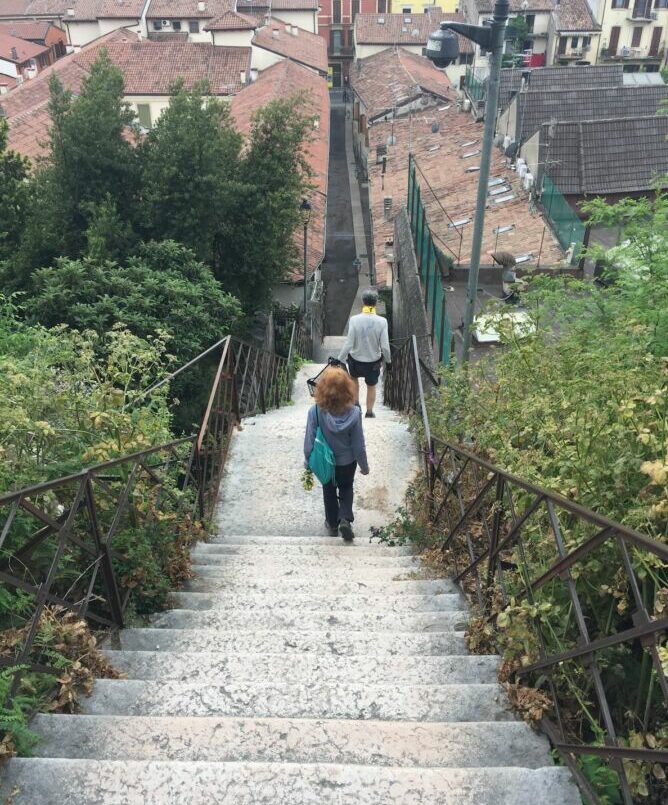
“With new permission to exercise within my own municipality, I headed for the hills with two friends, wearing our masks and being careful to stay at least six feet apart.

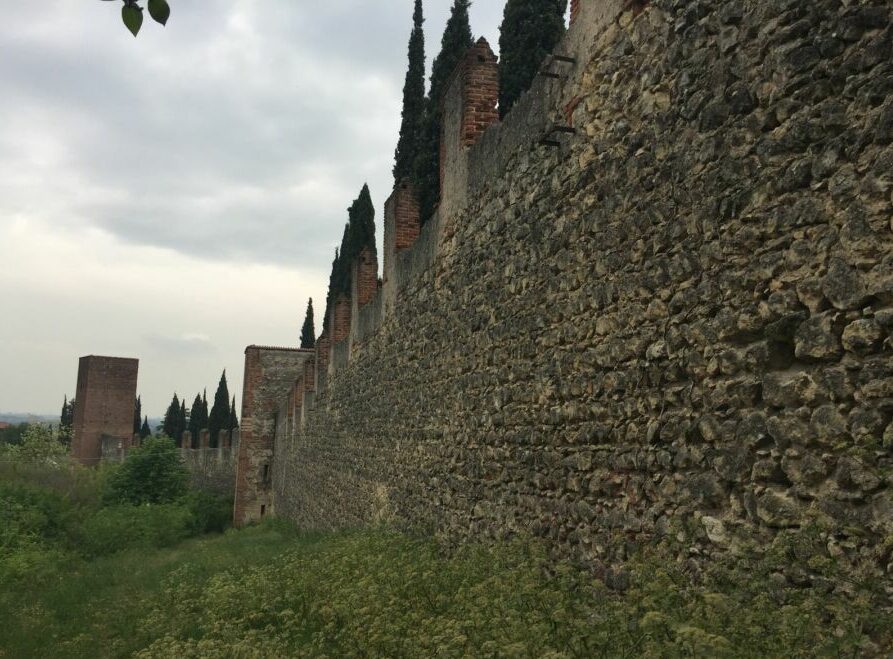
“Our walk started at the walls around the city that were originally built in the 13th century. As you walk along the walls, you realize that some parts are made from very distinct shapes of stone that interlock perfectly together. This is from a reinforcement made by the Austrian Habsburgs in the 19th century. As the Habsburgs developed Verona into an important military city, they not only reinforced the walls, but also constructed many forts in these hills to protect the city from the threat of invasion — first from the French and then from the newly formed Italian kingdom. These fortresses remain, in various states of abandonment or restoration.

“As I got further out from the city, I thought of how the wondrous landscape I was immersed in would remind most people of Tuscany with its vineyards, olive trees, and tall cypresses, magnificently growing on gently sloping hills. And now it’s clearly spring, with warmer temperatures for several weeks now, everything is GREEN!

“After my three-hour walk, I was back in my neighborhood of Veronetta, located across the river from the historic center and known mostly for its laid-back atmosphere and the university that’s located here. Since late February, we haven’t seen any students around since the university was closed for the virus emergency. Everything has been quieter, except for the birds and neighbors chatting from their balconies.

“One of the buildings in Veronetta that was magnificently restored just five years ago is now used by the economics and law departments of the university. This was originally built by the Austrians in 1863 — but not as a fort. It was a massive military bakery and grain storage facility that provided up to 50,000 troops with daily bread as they fought to ward off the new Italian kingdom from entering the city. In the basement is an exhibition with some of the old breadmaking machines and historic photos from the era.

“You can’t visit the complex now. It’s closed due to the COVID-19 emergency. But it will reopen one day, just like all the other more familiar sights in Verona: Juliet’s balcony, the Roman Theater, and our grand Roman amphitheater, the Arena, which has been hosting opera performances since 1913. If you’d like to check out what’s going on in Verona, you can view the city’s webcams. You might not see much more than a few pigeons at the moment. But sooner or later, tourists will return. I know we all are looking forward to the day when we can plan our next tour. Let’s stay positive and embrace what we can experience and learn virtually about our dream destinations in the meantime!”

In Siena, Anna Piperato explains how Phase 2 is just the first step of a much longer and more complicated recovery ahead:

“Things are changing a bit here in Italy as we enter into Phase 2. The next decree will be issued on 18 May, which should include a provision for the reopening of museums. However, we guides have been utterly forgotten about and we have no idea if we can lead small tours (say 1-5 people) in those museums, or even offer walking tours where social distancing would be much easier to uphold. I need to figure out how to earn a living because I am receiving no support from the government. Being an independent contractor always comes with risks, but I did think that paying into Social Security for 25 years and now paying into the Italian State would provide me with a bit of assistance, but no. ‘Oh, just teach online,’ they say, but it’s hard to find paying work! Still, I shall not give up. I’m taking an online art history course and have started a YouTube channel (and am finally learning how to use iMovie!). If you are interested, here is my latest coronavirus update:

In Rome, Nina Bernardo sent us this uplifting story of venturing out for the first time in 55 days:

“On Monday in Italy we were allowed our first taste of freedom. After 55 days of a very strict lockdown I went and walked along the banks of the Tiber. The sky was blue and the vegetation seemed wilder than I remembered it. As I walked, I passed cyclists and runners and instead of the usual sadness, oppression, and sometimes fear that I perceived standing in line at the supermarket (my only forays into the outdoors until then), as I walked there seemed to be joy and liberation in the air.

“Today I met a very good friend and we walked through the center (keeping our social distance). I live alone and seeing someone I love dearly up close, talking (not via a screen), being stimulated by the outdoors, speaking to people we passed and sharing our perceptions was revitalizing and for the first time since all of this started I felt hope. The world is bigger than the walls of my apartment. I want to explore that world again.”

And in Rome, Francesca Caruso wrote this beautiful essay (entitled “The Longest Journey Begins with the First Step”) about how, when you’ve been locked inside for weeks, a visit to a park is high adventure:

“May 4 has arrived, Phase 2 has begun, and we are finally allowed to walk in the park for exercise. We still cannot see our friends and it is not clear whether we can go downtown for a stroll, but after more than 50 days alone at home, I will take what I can get. I went to the Parco della Caffarella, over 300 acres of public green area, part of the Regional Park of the Appia Antica.

“I leave the concrete and the asphalt, the straight lines and right angles of the city that have been my fixed view for the last 50 days, and I walk into the park. It’s in a valley and it feels like plunging into the sea to swim. At every step knots unravel, the oppressiveness that has been lodged in my chest, gray and thick like fog, dissolves. My senses take over and they feel newly minted, sharp, polished, and eager. I am alive, I am here, and what I am feeling is unmistakably joy.

“Everything calls to me: the tender green of Spring, the enamel quality of Rome’s cloudless blue sky, the bright red of the poppies, the oily sleekness of a starling’s feathers. I walk in the tall grass and marvel at how it whips at my ankles (why had I never noticed that?).

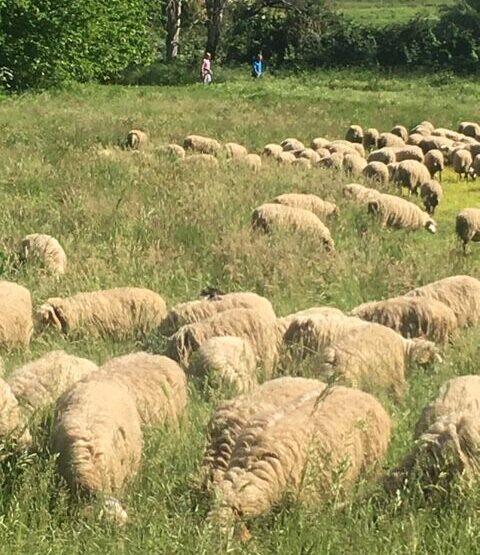
“And the sounds: the melodious warbling of a blackbird, the buzzing of the bees, the ‘singing’ of a rooster from the nearby farm (that’s what they do in Italian — they ‘sing’), a flock of sheep crossing a little bridge over a brook, their hooves against the loose wooden planks, snippets of conversation, a child passing on a bike: Ciao pecora come stai oggi? (‘Hello sheep, how are you doing today?’) And: Mamma! Mi ha risposto, hai sentito? (‘Mom! She answered me, did you hear that?’)

“A couple walks by, wearing masks but holding hands, my mind races to my loved ones, so far away right now, to my partner on the other side of the world: When will I hold his hand again? But then my mind comes back and settles into the moment. I need to be here, now.

“What does this first walk really feel like? It feels like cold spring water when one is parched. What is it though? Is it Nature, the scale of its beauty and power that don’t even acknowledge what has turned our lives upside down? Yes, but what it is really about today, for me, is moving in a shared space, a space made up and lived in by others: trees, birds, and people. Not the space of my apartment that speaks just about me and my solitude, that looks like the inside of my mind and nothing else. I recovered a sense of community, of belonging to something more vast not just than me, but vaster and more powerful than the hardship of this moment.

“And as I walk in the park, I realize too that that is exactly what I miss about guiding: offering Rome, its complex beauty and resilience as a place we can all share in and connect with. And Rome is there, always there, like the trees and the sky, and one of these days we will be able to feel her embrace again.”