Sunsets on the Road: My Top Ten

I love sunsets. They can be a vivid and romantic capper for a beautiful day on the road. Here are a few dramatic and memorable sunsets that come to mind:

1. On the Greek isle of Santorini, nursing a drink with a single flower in a vase on my table, as I sit on the lip of the crater high above the glittering Aegean Sea.

2. On the Nile, just across from Luxor, as the sun sets, the temperature drops, and villages come alive. As I’m poled along the shore in a classic felucca boat, children frolic, long-legged birds strike a pose, and I glide like a silent voyeur through the reeds.

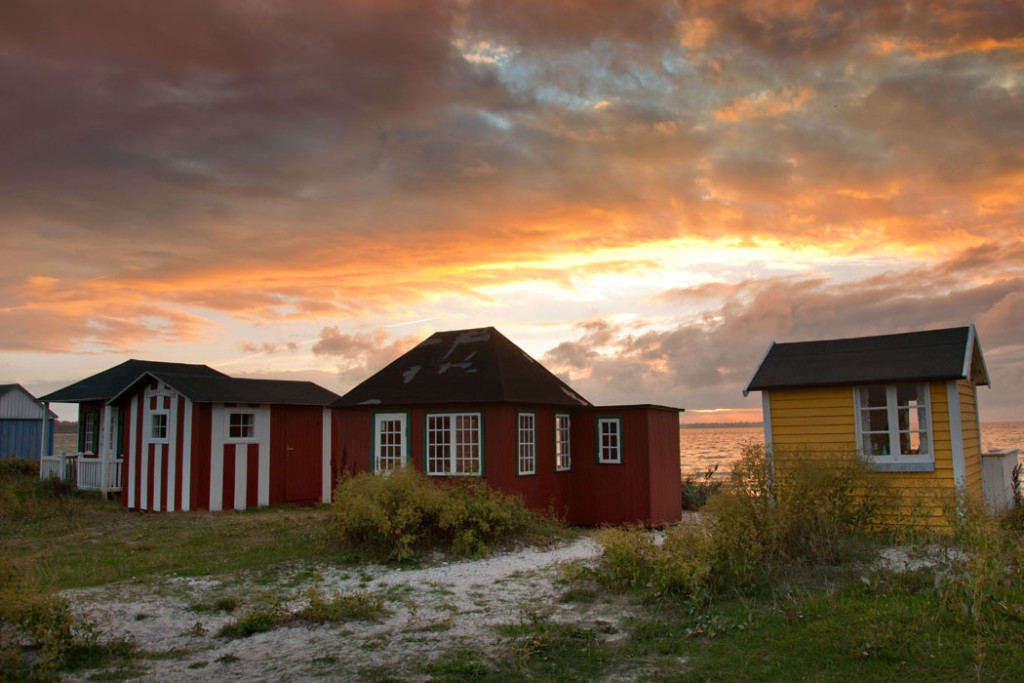
3. On Denmark’s Aerø Island, warming myself by a beach fire while children splash in the shallow waters of the bay, and parents sit peacefully on the porches of tiny beach cabins.

Ærøskøbing homes

The sun sets on Denmark’s Aerø Island. (Photo: Dominic Arizona Bonuccelli)

4. In Granada, Spain, joining the “Gypsies and hippies” at the St. Nicholas viewpoint as the setting sun makes the Alhambra glow red, evoking the tumult of its violent history.

5. On a ferry charging across the Greek sea, with dolphins — who seem to come out for the sunset — playfully loping ahead of the ship’s bow.

6. In England’s Cumbrian Lake District, sitting pensively on a stone at the Castlerigg Stone Circle just outside of Keswick, savoring a moment which inspires anyone to poetry…especially as sheep stir up the fragrance of the wild grass and the scent comes with a whiff of mystical druids, who once used these stones for their worship, dancing in the long shadows.

7. In Paris, sitting on the steps of the Sacré-Cœur atop Montmartre, surrounded by backpackers, buskers, and local lovers as Paris spreads out before me and slowly the sky grows dark and the City of Light is turned on.

8. On a Norwegian fjord, taking my dessert of ice cream and fresh berries out of my hotel’s dining room and sitting along at the end of the pier. The water is glassy and frightfully deep, black rock cliffs rocket into the sky above me, and the sun dips too early behind the peaks.

9. In Assisi, on the rampart of a ruined castle, with olive groves at my feet leading to a vast and lush Umbrian vista; imagining the age when each town was its own little state, and enjoying the same birdsong that inspired St. Francis.

10. And my favorite sunset: from my deck back home, on the Puget Sound just north of Seattle, as a golden path of sparkles leads across the bay to snowcapped Olympics. The sun settles behind the latest in a series of chosen peaks, and the ferries ply silently across as the water begins to glow like floating lanterns.

What is your favorite sunset far from home?

On My Last Nerve at The Last Supper

I’m done traveling for the year, but other members of my staff are still in the field. While I regroup from 100 days in Europe, I invited my frequent collaborator Cameron Hewitt to share some posts from his blog. Cameron has traveled about as much as me this year, updating our guidebooks in Italy and France, and turning our already strong material in Scotland into a stand-alone Rick Steves Scotland guidebook (due next spring). While Cameron and I are in perfect sync in terms of travel styles and priorities, he gives voice to the next generation of Rick Steves travelers. If you like Cameron’s insights, you can read much more on his travel blog, and you can also follow Cameron on Facebook. — Rick

On My Last Nerve at The Last Supper

by Cameron Hewitt
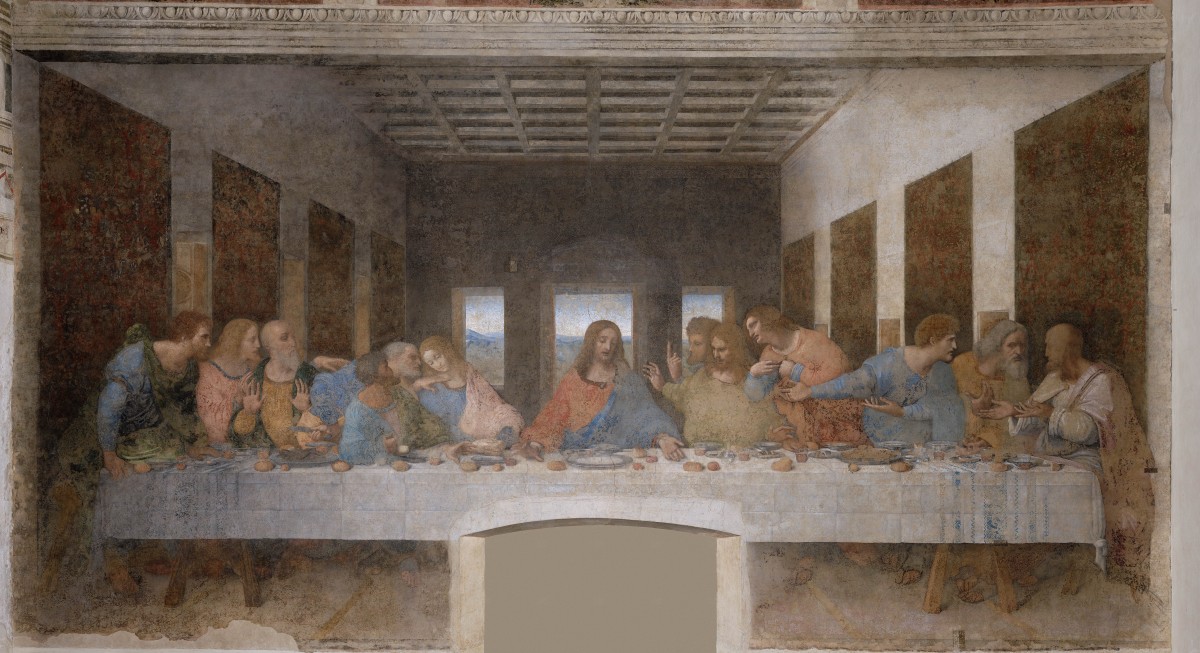
Last Supper

Sometimes, guidebook research doesn’t feel like work at all. A sunny day spent tooling around Lake Como, touring sumptuous villas and sprawling gardens? That’s not work.

But on one particular day in Milan, I really had to work. I packed about three days of sightseeing into one very busy day. It was interesting, and fun at times, but exhausting. Especially this exchange.

I walked into the ticket office for Leonardo da Vinci’s Last Supper. Spaces are severely limited, and reservations are mandatory — and book up weeks in advance. We devote nearly an entire page in our guidebook to explaining this system, and I needed to confirm everything with the woman at the information desk. She greeted me with a permanent snarl, close-cropped, died-blonde hair, and steely, cruel eyes. Before I opened my mouth, she didn’t like me. (I don’t take it personally. She doesn’t like anyone.) After I explained I was updating a book, she allowed me to continue talking, which is probably her version of tacit approval. Here are some highlights of our actual conversation. (I am not making this up.)

“So, we explain here in our guidebook that you need a reservation.”

“Yes, that’s correct. You can call or go on our website.”

“And we say that you can make a reservation three months ahead.”

“On our website, you can reserve three months ahead. At our call center, you can reserve, maybe, ten days ahead.”

“So tickets are available online three months before, but by phone only ten days before?”

“Well, you can get tickets anytime you want.”

“Yes, but if someone wants to book very early, they can try three months before?”

“On our website.”

“Not by calling?”

“No! Of course they can get a ticket by calling. Ten days before.”

“So by phone, tickets are only available ten days before?”

“It depends.”

“Well, we say here you can start trying to get a ticket three months before. More or less. Is that about right?”

“Yes.”

“Online and by telephone?”

“Yes.”

Phew. “OK, so we also explain that if you don’t have a reservation and really want to see The Last Supper, you can try to come on the same day to see if there are any cancellations.”

“No! Not possible.”

“Oh, so you…”

“Reservations are mandatory!” [Holds up sign that says “Reservations are mandatory”]

“Yes, I understand that. What I’m saying is, let’s say someone did not make a reservation. And now they are in Milan and they really want to see The Last Supper. We say that sometimes there may be a few cancellations…”

“No! You must reserve.” [Eyeing me suspiciously] “Huh. Do you write in your book that you don’t need a reservation?”

“Oh, no, we do explain that very carefully!” [Showing her several paragraphs in the book explaining that reservations are mandatory]

“But you write in your book that you do not need a reservation!”

“No, we don’t say that. We say that in case you do not have one, sometimes it’s possible…”

“It’s never possible!” [She’s really starting to blow up now] “People come here, all day, and complain to me because they do not have a reservation! And you are telling them to do this in your book!”

“But I…no, wait, look. It’s the opposite. You see, I’m trying to help people understand how this works. I want to make it very clear so people are not disappointed.”

“Huh.”

“So if you can help me now for five minutes, I can try to make sure it’s very clear in our book, so those people won’t bother you anymore — so they will understand how it works.”

“I don’t care!”

“You don’t care? You mean you don’t care if people are disappointed?”

“No! I don’t care. People come here all day and are disappointed anyway, so what does it matter what you say in your book?”

“Yes, but I’m trying to reduce the number of…” [I decide to give up on that point] “OK, sorry, I’m almost done. I just want to confirm that it is not possible to buy tickets on the same day.”

“No, it’s impossible!”

“So you never have any cancellations and tickets that are available last minute?”

“No! Well, maybe one or two tickets each day. But almost none! It’s very difficult. You must take this out of your book!”

“OK, I’ll take that out, if you say it’s not possible.”

“Yes, not possible.” [grumbling to herself] “I don’t know why you tell people in your book they don’t need a reservation…”

“OK, well, thanks for your help. By the way, I know this is very unlikely, but do you maybe have any tickets available for today?”

“You want one ticket?”

“Yes.”

[Checks computer] “OK, we have a reservation available for 5:15.”

By the way, The Last Supper was magnificent…well worth the painful conversation.
Convalescing on Lake Como

I’m done traveling for the year, but other members of my staff are still in the field. While I regroup from 100 days in Europe, I invited my frequent collaborator Cameron Hewitt to share some posts from his blog. Cameron has traveled about as much as me this year, updating our guidebooks in Italy and France, and turning our already strong material in Scotland into a stand-alone Rick Steves Scotland guidebook (due next spring). While Cameron and I are in perfect sync in terms of travel styles and priorities, he gives voice to the next generation of Rick Steves travelers. If you like Cameron’s insights, you can read much more on his travel blog, and you can also follow Cameron on Facebook. — Rick

Convalescing on Lake Como

by Cameron Hewitt

After editing Rick’s writing for many years, I’ve noticed he uses certain words in a very particular way. For example, he reserves “convalesce” for a select few places. Lake Como is one of them. And after my nearly two weeks battling South Italy, some convalescence was exactly what I needed.

Traveling from Naples to Lake Como, I grappled with severe culture shock…without ever leaving Italy. In just a few hours — screaming past Rome, Florence, and Bologna on the bullet train — I went from the unbridled south to the mellow, almost Teutonic north. Stepping off the train in Milan, the sleek efficiency stunned me. I had just enough time to grab a designer yuppie sandwich (for triple the cost of a slice of Neapolitan street pizza) before hopping on my connecting train to Lake Como.

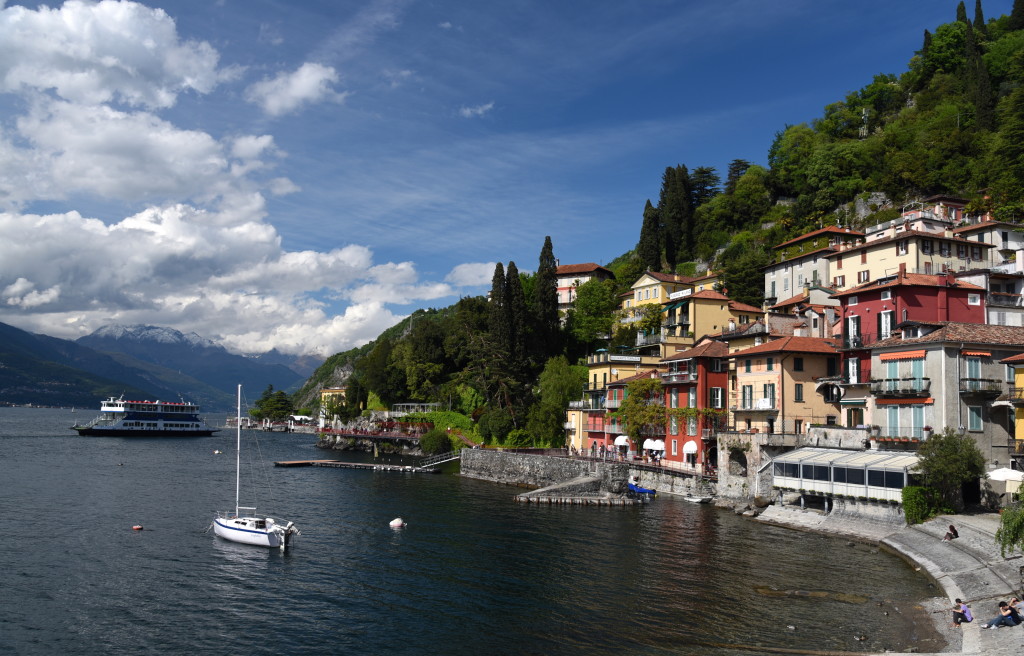
Arriving in the lakeside town of Varenna, I settled into the Hotel du Lac, a pristine Old World hotel with all the modern comforts. The hotel clings to a bluff just over the lake’s tranquil waters. Run with a polish and efficiency unusual in Italy, it feels vaguely Swiss…fitting, since I could see Switzerland from my lakeview balcony.

Set up in comfort for three whole days, I could feel my system decompress from the pressure cooker of Naples. Here’s a photo essay of the lakeside retreat of Varenna.

Varenna View
For decades, Rick has favored Varenna as the best home base for exploring Lake Como. Brassy Bellagio and well-connected Como have their fans, but after spending a few days here, it’s clear why Rick hangs his hat in Varenna.

Varenna Square

Varenna is just the right size for a relaxing vacation. It has a train station, a boat dock, a picturesque church crowning a tidy square, and two little grocery stores that specialize in made-to-order sandwiches for lakeside picnics.

Varenna Sunny Harbor

On a clear day, Varenna’s technicolor harbor lures sun-worshippers to watch the lake boats come and go.

Varenna Harbor

And even when it’s socked in, Varenna’s vacationers still enjoy chatting by the harbor. The town’s fancier, more expensive restaurants are tucked deep in the twisty lanes, but — conveniently — the two big lakeside cafés are affordable and functional. These places let you dine on €10 pasta with €10,000,000 views.

Varenna Steps

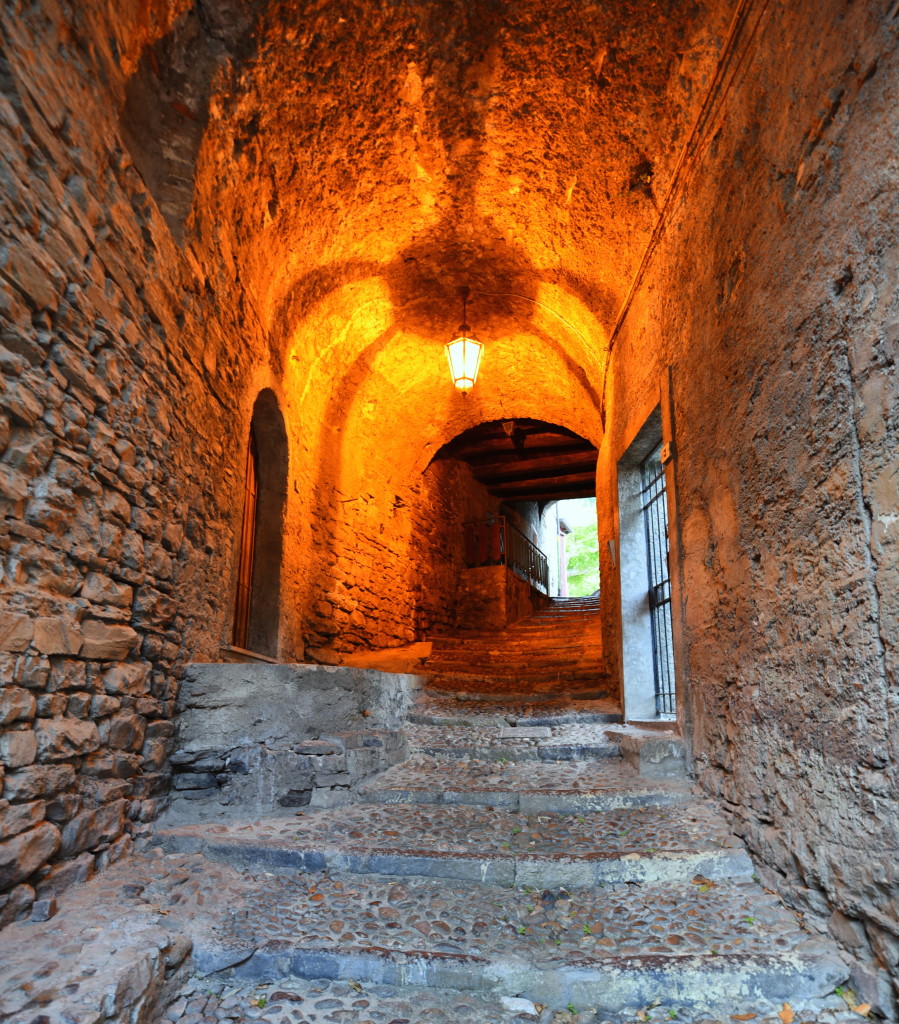
Varenna’s steep lanes climb up the hill from the harborfront. The town’s top gelateria provides cushy cushions on the stony steps.

Varenna Trail

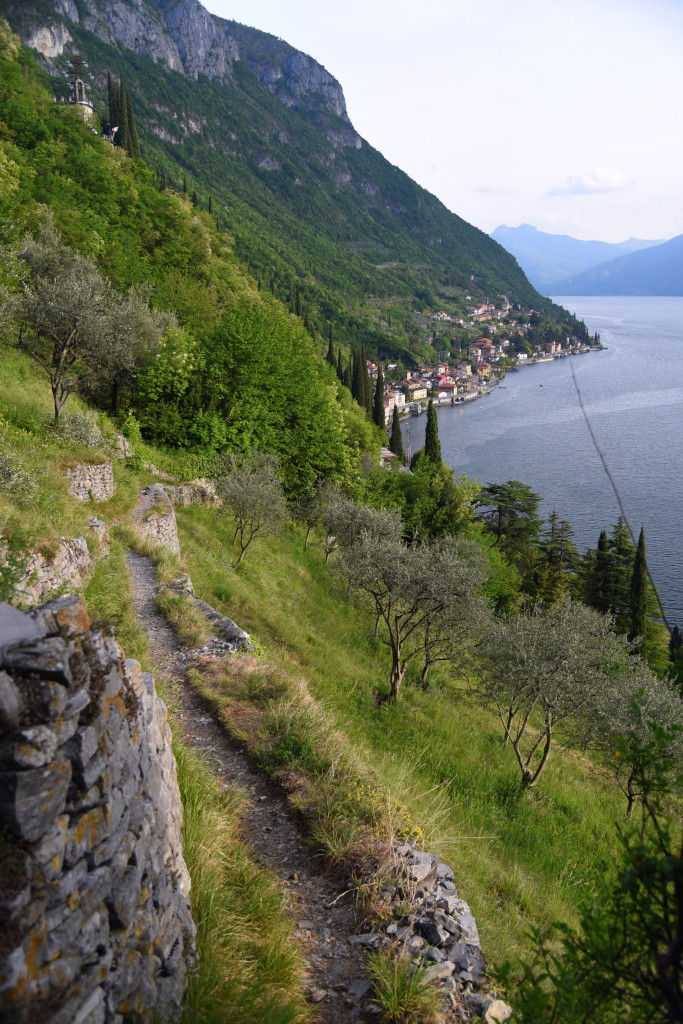
Capping the hill over Varenna — a stiff 20-minute huff above the town square — an old castle provides views across the entire lake. Hiking back down into Varenna, you enjoy sweeping views of olive groves, cypress trees, and hamlets hugging the shoreline.

Missoltino

After a busy day’s hike, it’s time for dinner. When traveling, I have an ethic about sampling — at least once — whatever the local specialty is, no matter how gross it sounds. On Lake Como, locals still dine on what, at one time, was a “hardship” food (like lutefisk for Norwegian American immigrants, or salt cod for the Basques). Missoltino is lake fish that’s preserved by being salted and sun-dried. Weeks later, it’s rehydrated and served for dinner. It wasn’t terrible. But no matter how you dress it up with delicate grilled polenta cakes and trendy plating, at some level it’s still old fish. At a later meal, having satisfied my obligation to try missoltino, I ordered a delicious, fresh filet of lavarello (lake whitefish)…much better.

Varenna Lamp

As Varenna’s street lamps twinkle on, those characteristic stepped lanes are washed in vibrant colors.