Let’s Not Be Too German

The former headquarters of the Stasi (the East German equivalent of the KGB) is now a museum and an archive where former East Germans can come to explore their files. Nearly everyone had a file. Many today don’t want to look into their files to avoid the heartbreak of finding out which of their friends and relatives were informing on them to the secret police.

Each morning that I’m doing guidebook research, I scramble to get to the hotel lobby to meet my local guide by 10:00. I write until the wee hours, and I’m determined to stay healthy and get my beauty rest. Coming down a few minutes late one morning, I apologized to my Leipzig guide. He said, “Let’s not be too German. It’s just a couple of minutes.”

On this trip, I’ve been enjoying several cities that are new to me — and Leipzig is no exception. Noting all the construction throughout Germany, my guide explained that many of the post-WWII buildings, erected on the cheap in the 1950s and 1960s, are now due for replacement. Western Germans are still paying a “solidarity surcharge” of 6 percent of their taxes for building and rebuilding the East to bring it up to Western standards. Imagine the uproar it would cause if two-thirds of the USA were paying to spiff up the poorest third of our country. But rather than complain about the taxes, Western Germans are more likely to grumble that the former East now has even better streets than the former West.

My guide is a Westerner living in the East. Later that day, we sat down to dinner with his wife, who grew up in the communist DDR (the official name for East Germany). The conversation was fascinating.

There’s still a surprising gap between the psyches of the East and West in Germany. My guide said that only about 1 percent of Germans are in “mixed marriages” between Easterners and Westerners. And more than 20 years after reunification, half of all Western Germans still have never been to the East. His wife added, “Psychologically, people don’t want to confront their prejudices.” The German government celebrates the “reunion” of East and West. But let’s be honest: The East was effectively annexed by the West, on Western terms.

We talked about the people of Leipzig rising up against the communist government. The government knew that the security forces were likely to sympathize with the people. It was standard operating procedure that border guards and police would work in pairs. That way, if one lost their nerve and didn’t shoot, the other would — or report on the one who didn’t.

During communist times, the government employed a lot of people steaming open letters, reading them, and then resealing them with fancy machines like this. Amazing gear like this fills Leipzig’s Stasi Museum.

During those courageous days before the Berlin Wall fell, all eyes were on Berlin, but there was plenty happening in Leipzig — the second city of the DDR. I remarked how courageous protesters must have been to gather in solidarity inside St. Nicholas’ Church, not knowing how the soldiers and police would respond when they went outside. My guide’s wife was there, and spoke of leaving the church cupping candles with both hands to let the soldiers know they were unarmed. (Today, this is symbolized by white cobbles scattered among the black ones around the church.) She said people brought their babies and held them in their arms as human shields. Her husband did a double-take — he’d never heard her admit to that.

I never considered the importance of capturing, and then sharing, images of a popular uprising. While plenty of international news cameras were there to broadcast images of Germans partying on top of the Berlin Wall, Leipzig’s protests took place mostly at night, under cover of darkness, deep inside East Germany, where it was particularly dangerous to be seen with a camera. Organizers sent one photographer up the church spire, where he got some of the only grainy images of the streets of Leipzig filled with people bringing down their communist regime.

I remember being in West Berlin as a child in 1969. There were riots in the streets. Even as a kid, I was aware that the government effectively bottled it up and didn’t let any images be shown on TV. In some ways, if you stage a revolution and nobody sees it, it didn’t happen.

As the conversation rolled around to American politics, I complained about how obstructionist I thought the Republicans in our government are these days. She said, “Opposition is good… we’ve tried government without.”

Angela Merkel
Germany is working hard and producing more than it consumes with strong leadership. Being here is an inspiration.

Asking them what they thought of the political discourse in our country, they were both frustrated by how many Americans confuse social programs with “socialism.” They were offended that some Americans, who don’t really understand how the German health care system works, would use it to make the case that nationalized health care is ineffective and a bad idea. Quite the contrary: These two Germans couldn’t imagine an affluent, developed nation without a nationalized, single-payer system.

Their other peeve: They explained how in 1949, the USA and other WWII victors wrote a constitution for postwar Germany, requiring that the country remain non-aligned. Then, after 9/11, President Bush declared, “You are either with us or against us” — in essence suddenly requiring Germany to become aligned.

Noticing that I’d left the blood sausage on the side of my plate, my friends chided me for not being adventurous. I told them that just the thought of it made me queasy. They said, “What the farmer doesn’t know, he doesn’t eat.”
The Brandenburg Jig 2011

Before flying to England to meet our TV crew, I had a great couple of days in Berlin. This simple little video expresses the joy I feel in Berlin when I’m there. (It just occurred to me that joy is probably a major reason why I like Berlin so much.)

There is so much potential for horror and violence in our world. Yet the vast majority of the time, in the vast majority of places, and for the vast majority of people, we live with peace, opportunity, and affluence (relative to any time in history)… even though we are taught not to be content.

These young musicians are playing uplifting music in the shadow of Berlin’s Brandenburg Gate, on ground that was once a nightmarish no-man’s-land. They are playing under warlike chariots on a gate that once called a mighty nation (Germany) to battle, then symbolized an ideological divide that denied hundreds of millions their freedom, and now calls for peace.

Today, when we sit at home and let the media shape our worldview, bursts of sadness can cloud our understanding of just how happy our world is. Politicians, talking heads, and angry neighbors can say America is broken and the rest of the world is even worse. They can say we are in crisis. They can be threatened by forces that don’t even exist. It’s as if that’s their livelihood or purpose in life. The boring truth is: Things are really good, if we let them be.

Of course, there are serious problems that must be dealt with. But most of us — especially Americans — are richly blessed. While we have our distribution challenges, there’s more than enough goodness, energy, love — and stuff — to keep everyone happy.

And here on what was the Berlin Wall, with young people making beautiful music, for the same reason a baby yelps with joy, I just want to take a moment to say let’s embrace the world constructively and positively, remembering how much is not wrong.

If you can’t see the video below, watch it on YouTube.

Berlin’s Jackbooted Punk Bands

Art helps us ponder the twentieth anniversary of the fall of the Berlin Wall. Here, hammers and sickles are buried in a slice of Berlin Wall concrete.
Enlarge photo
Thinking “Hitler” back in the 1930s, this little girl sings, “You really gotta hold on me.” Sadly, the hateful power of Nazism is not entirely dead.
Enlarge photo

The Berlin Wall fell twenty years ago. Tourists seem to care more than locals. I asked how the East Berliners have integrated into the Western ways of united Germany. Local friends told me the East Berliners were a people educated not to ask questions, not to control their destiny, and to pride themselves in manual labor.

While Westerners lived with non-Germans, Eastern Berlin didn’t live with foreigners. With freedom, the least trained among them found themselves competing at the low end of the workforce with Turks and other immigrants. Their fear of foreigners and their own lack of economic hope and opportunity make the less-educated, working-class Germans from the former East more skinheady–more prone to cling to racism and support far-right-wing political parties.

While neo-Nazis are a tiny fringe in Germany, there is a smoldering fascist element in German society. I was told it’s led (Lyndon LaRouche-style) by older men who spearhead young movements via websites and music. Neo-Nazis listen to hateful music with forbidden themes by forbidden bands. These jackbooted punk-style bands have nostalgic, patriotic names like “Rheingold” and sing patriotic themed tunes that evoke the 1930s.

In Germany, there is freedom of speech…except against Jews. Children can tell Norwegian jokes all they want. But if they say racist things against Jews, they can actually get their parents in legal trouble. Germans are dealing aggressively with their fascist ghosts. While there are rowdy skinhead gatherings on Hitler’s April 20 birthday, there are almost always much larger counter-demonstrations at the same time, effectively drowning out the neo-hate.

A friend told me that because they grew up not allowed to travel, former East Germans are the ones who “travel like hell.” While West Berliners holiday elsewhere in Germany or in the Netherlands, people from the DDR (East Germany) travel to places farther away, like Egypt.

The importance of being free to travel is a recurring theme in my travels this year. The citizens of the former Yugoslavia fondly remember how they were always free to travel. They were free to travel because they always came back, and they always came back because they were free to travel. Citizens of the DDR risked their lives to escape the country that wouldn’t let them leave. Now they “travel like hell.”

Hohenzollerns Suck as City Planners

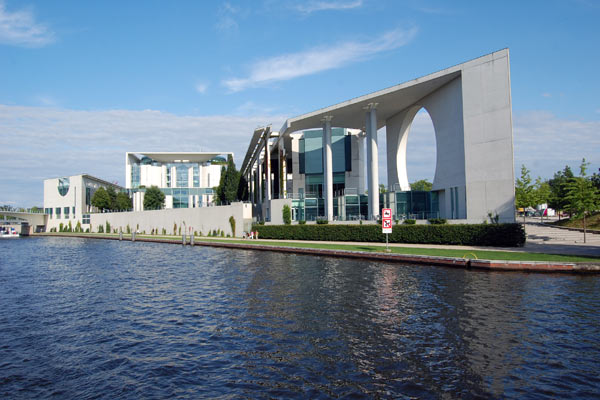
Berlin’s Spree River boat tours are suddenly a major attraction as the riverfront is lined with glorious, modern, governmental architecture. You’ll glide by buildings like the Chancellery — Germany’s grandiose answer to our White House.
Enlarge photo

I just spent three days in Berlin. Of any place in Europe, this city is a work in progress…a place you need to be in every couple of years to see how it’s developing.

The city center is blossoming. In fact, the big change in my guidebook: I now recommend the Spree River Boat Tours simply to glide by all the stunning new governmental architecture lining the river. And, while the Hohenzollerns built their buildings right up to the river (a Prussian snub against its people), today’s government seems determined to make the riverbank through Berlin a delightful park. New buildings are set back, beachy cafes come with summery lounge chairs, and the river that once had metal nets and barbed wire to keep people from crossing it to freedom now makes you want to walk a dog and hug someone.

On the down side, locals are complaining that the Berlin government is deeply in debt — $25,000 per person. Many parks are unkempt. Scaffolding is stuck in place as many building projects are on hold. The rest of Germany says that’s the price Berlin should pay for its grandiose building schemes of the last decade.

Locals are concerned that the city is coping by selling itself to foreign investors. Russian mafia types invest here because they need a solid place to put their black money. They expect crazy-high interest rates (as they’d get in corrupt Russia) and are frustrated when they don’t get them.

While Berlin is cheap by big city standards in Europe, and really happening if you are creative and edgy, it’s not the greatest if you’re filthy rich. You just can’t find the super-elite social clubs you find in Munich or Hamburg. And local elites complain that their fanciest club (China Club, $40,000 per year membership fee) is becoming overrun with Russian members.

Euro Experiences from NW to SE — Part II

Enlarge photo

Enlarge photo

Enlarge photo

Let me stoke your travel dreams by sharing some of my favorite European experiences, roughly from northwest to southeast. Maximizing the experience is a dimension of smart budget travel that’s just as important in challenging times as saving money. Imagine these…

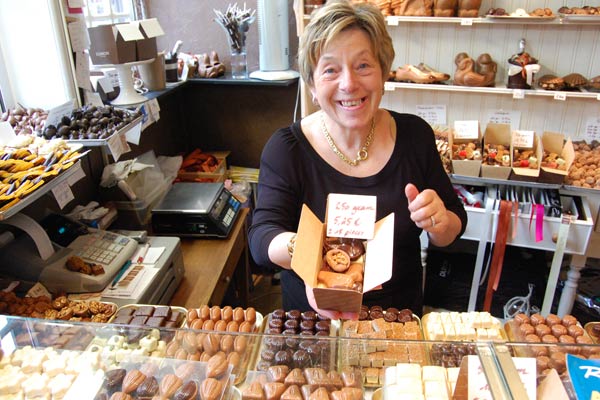
Nobody does chocolate like the Belgians. There’s something elegant about dropping in on the most expensive chocolate-maker in town—there’s one in every Belgian burg. Find a place that’s family-run, where locals buy their chocolate fresh, and people expect the shop to close on hot days because quality chocolate can’t survive the heat. Skip trendy “gourmet chocolatiers” who serve their chocolates with gimmicky flavors from gorgonzola to ginger—go for the purists.

A big percentage of American tourists visit Belgium as pilgrims…beer pilgrims, traveling all the way to that country to savor its plush and creamy beer. Hang out with devotees for a few nights and became a believer. My favorite Belgian evening is spent in an upscale pub, savoring a monk-made Trappist Blauwe Chimay (for example) with a rustic plate of bar food with locals who are both patriotic and evangelical about their Belgian brew.

In Holland, the “pilgrims” are more likely focused on the marijuana scene. Even if you’re not interested in smoking, drop by a “coffeeshop” for a whiff of its ambience. Baristas are patient in explaining to awkward Yankees how things work. Then, make an education out of the experience—talk to a local policeman, getting his take on why the Dutch stopped arresting pot smokers in 1976 and why this approach works. (I know, I just can’t pass up an opportunity to talk drug policy. To see the interesting “America’s Top Ten” list I just made in Coed Magazine, click here).

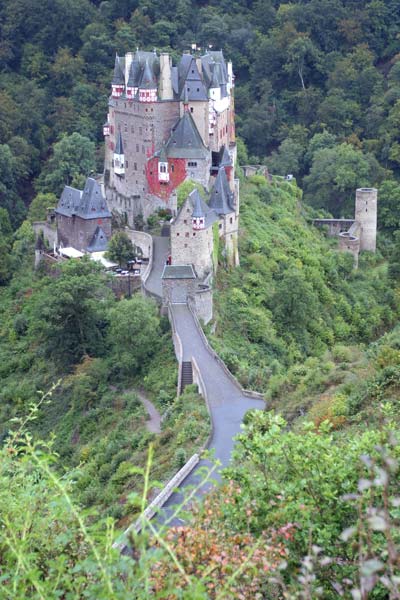
In Germany, my favorite castle experience is at Burg Eltz. Nestled in an enchanted forest just above the Mosel River, the Eltz castle is lovingly cared for by the aristocratic family that has called it home for centuries. The noble lady still puts out fresh flowers for her many visitors. Hike in from the train station and the experience gains a kind of magic. After an hour climbing under gentle trees through an ancient forest where you’d expect Friar Tuck and Martin Luther to be hiding out, the castle of your fantasies suddenly appears.

Every traditional German beer hall or Bierstube has a table for regulars—just look for the Stammtisch sign. To sample German conviviality at its best, make friends with the Stammtisch gang and get invited to join them at their table. Alternate between sniffing snuff (snorted from the “anatomical snuffbox” created by lifting your thumb high above your first finger) and drinking local schnapps. Before you know it, you’re leading the gang in a rousing rendition of “Country Roads.”

While perhaps the most touristy thing to do in Germany’s most-touristy town, following Rothenburg’s Night Watchman around on his evening rounds is a medieval hoot. Walk the town’s dark and evocative back streets with Georg Baumgartner, the wildly entertaining character whose delivery makes you forget what century you live in. While mobbed with tourists in mid-day, Rothenburg empties at night, when its flood-lit ramparts are all yours.

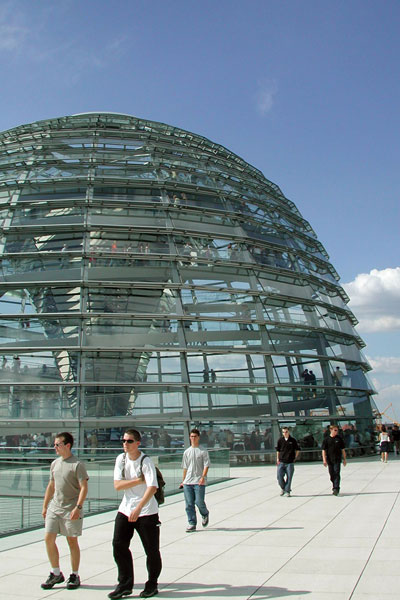
Climb the shiny glass dome that now caps the Reichstag (parliament building) in Berlin—for me, the most energizing thing to do in Germany’s most-energized city. From the top, look down on Germany’s legislators at work. You’re surrounded not by tourists but by Germans, who are determined to get politics right from now on.