Bienvenue to the French Riviera

I’ve left Italy and have arrived in the South of France. I’m looking forward to a couple of weeks of beaches, hill towns, and great meals.

eze to ferat.jpg

The French Riviera has amazing scenery. From the beautiful (but grotesquely touristy) mountaintop village of Eze, you can look down on Cap Ferrat. This cape is one of the most exclusive places for the rich and famous to live — Paul Allen’s mansion is next door to the Villa Ephrussi de Rothschild. Cap Ferrat is also geographically significant: This is where the Alps rise from the sea and begin their ripple across Europe, arcing from here all the way to Vienna’s doorstep.
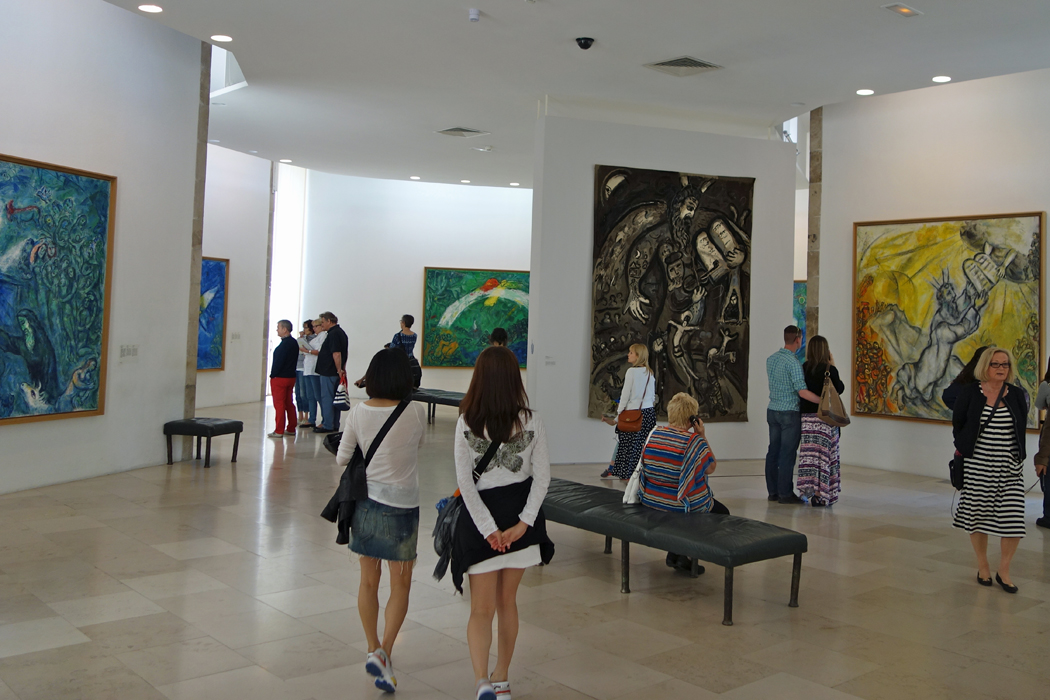
 

chagal museum.jpgThe most visited museum on the French Riviera is, understandably, the Chagall Museum in Nice. One reason this museum is so enthralling is that it was designed by Marc Chagall himself to show off his art.


chagal couple.jpg

In the world of Marc Chagall — who mixes religion, his Russian heritage, and physical love so elegantly — couples find it’s cuddle time.


french video.jpg

I love France and find the French people charming and fun. But I’ve noticed a strange attitude among some museum curators, who seem to believe that only French-speaking people pay their admission prices. I’ve seen so many fine museums this week that have plenty of staff just hanging around, but can’t find the time or energy to translate a single word into English (beyond a list of what’s forbidden and how much it costs to enter). I’m not just worried about my American readers — people from around the world communicate in the language of travel, which is English. This museum’s video has a French audio track. It has French subtitles for extra credit. And, in case a deaf person may be visiting, it devotes a quarter of the screen to a person signing. Yet fully half of the people touring the museum don’t speak French…and understand nothing. (I would bet a thousand non-French speakers come by for each deaf person who drops in.) It’s a lost opportunity. OK, I just had to get that off my chest. Merci.

Why I Love Europe: Sacred

For my holiday season gift to you, I’m sharing three exciting glimpses of why I love Europe on three successive days. Yesterday was remote. Tomorrow is wild. And today, it’s sacred.

In this clip, let’s savor perhaps the most exquisite medieval art in Europe: they Byzantine mosaics in Ravenna, Italy, and the soaring Gothic architecture and stained glass at Chartres, France.

These images share the joy I get from my work. Along with my 100 workmates here at Rick Steves’ Europe, I’m working harder than ever. And knowing that because of our hard work, 20,000 happy travelers who join our tours this year will learn that they have been art lovers all their lives — and never realized it until now — brings me great satisfaction. In a sense, our writers and guides here at Rick Steves’ Europe evangelize an appreciation of art, history, and culture.

Happy dreams of travels filled with sumptuous art treasures…

-Rick

If you can’t see the video below, watch it on YouTube.

Eating My Way Through Paris

I can return to Paris again and again for the rest of my life. Just being there–with no intention of seeing anything new–is a fine vacation opportunity. With our tour over, I enjoyed a personal day before heading for Amsterdam and the Netherlands to scout for my upcoming TV shoot. The plan: Take my own audio tours and eat very well.

rick-steves-audio-tour-ste-chapelleWe’ve produced about 45 self-guided audio tours (all free with my Rick Steves’ Audio Europe Travel App), and every chance I get, I try to actually take them. When I follow along, I can see if they work well. And (this may sound a bit weird) but I also take them because they cover my favorite places–and I simply enjoy hearing myself talking about them. It’s fun to be immersed in a tour of a place like Paris’ Gothic lantern of stained glass, Sainte-Chapelle–and drift by another traveler enjoying the same audio tour. So far, the only one that doesn’t work well is Florence’s Uffizi Gallery (because they rearranged much of the featured art).


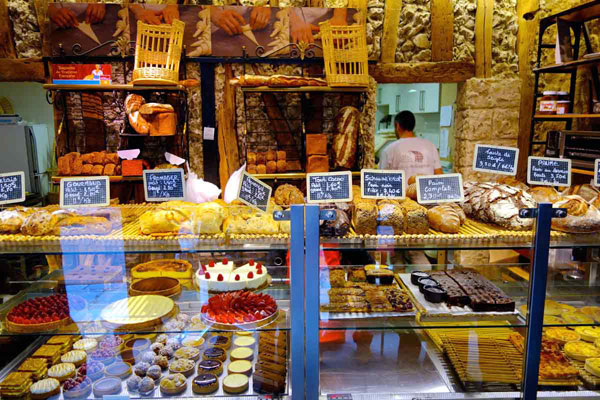
paris-by-mouth-food-tourAs has been my theme in the last year or two of guidebook research, I am finding new experiences to complement the great sights. Food tours are trendy across Europe, and I’m taking lots of them. Food tours generally take three to four hours and cost around $100. Some are worthwhile, and many are not. In Paris, we joined a Paris by Mouth food tour: six stops in three hours for €95. Our guide was an expert, expat foodie, and I gained a fun new appreciation of baguettes, croissants, cheese, and the way French people make the most out of eating. (For much more on this food tour–if you don’t mind a little food porn–see Trish Feaster’s blog at The Travelphile.com.)

rick-steves-violon-ingres-paris

After 50 days of steady work (OK–steady fun, too), I treated myself to a Michelin-star restaurant. We don’t list many destination restaurants in our guidebooks, but people come to Paris to eat well, and you’ll certainly do that at Le Violon d’Ingres.

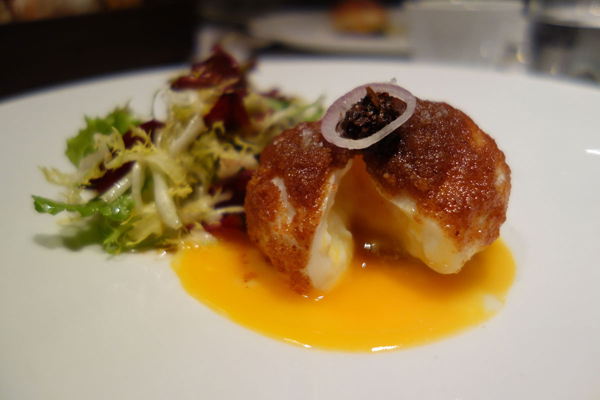
violon-ingres-truffle-egg

At Le Violon d’Ingres, the dishes are extremely creative and, while excellent, I’m glad I opted for a sampler menu which gave me twice as many plates (with half-sized portions) as a regular menu. The Degustation Menu cost €95 for eight small plates served delicately and beautifully presented. I added on the matching wine. If you’re planning on binging for an extravagant meal in France, you’ll get the best value in smaller towns in the countryside. But for me, my fine Parisian dinner at Le Violon d’Ingres was a splurge I’ll never forget.

rick-steves-chef-christian-constant

As we list his restaurant in our book, renowned chef Christian Constant dropped by to see us. There’s a family tree-type photo wall of all the chefs who’ve trained with Monsieur Constant. After our meal, I was not surprised that his kitchen has spawned so many highly regarded and successful chefs.

Cathedrals, Palaces, Towers: A Full Day in Paris

joe-tour-bus-rick-stevesJoe–as he’s done well over a hundred times before with our groups–drove masterfully from Amsterdam to Rome and up to Paris and was adored by all. After getting us to Paris, Joe had a five-hour drive back to his home in Belgium, where he enjoys a few days off before meeting his next Rick Steves tour group. I’m thankful that our bus drivers are a part of our traveling family. (Several times on this tour after a long drive, we’d walk across town for our group dinner. And, when we’d arrive at the restaurant, Joe would already be there…enjoying a nice glass of wine while awaiting our arrival. On other companies’ European tours, the last thing a driver would do is join his group for dinner during his time off. Not so with our drivers.) It’s always emotional for our groups when we unload for our last time and bid our driver farewell. Ciao, Joe!

rick-steves-builds-human-cathedralIn Europe, most commercial tour guides are called “tour managers.” They don’t really teach–they run the tour. They hire local guides that come and go in various cities to do the teaching. On a Rick Steves tour, the guide is more than a tour manager. He or she is also a teacher, and we do what we can to lace together and curate all the information we pick up from our many local contacts. We work to give the lessons context and more meaning…to make the art and history graspable. One of my great tour-guiding joys is introducing a group to its first Gothic cathedral by “building” one out of our tour members before entering. At Paris’ Notre-Dame, our guide Reid–knowing how much I always enjoyed this teaching stunt–asked me if I wanted to build a Gothic cathedral with our group. I jumped at the opportunity. Here you see me lining up our columns and making sure the buttresses are flying in with their support before erecting the spire.

human-spireStanding in the shadow of Paris’ Notre-Dame, our group built a Gothic cathedral with 13 tourists. With buttresses in place, columns strong, and ribs coming together at pointed arches in good Gothic style, we had created the skeletal structure of a Gothic cathedral. Little Brogan then hoisted himself high above it all, crowning our structure with a spire.

louvre-main-hallEurope’s biggest palace, the Louvre, contains its greatest collection of paintings. It just makes sense: You have a revolution, cut off the king’s head, take his amazing collection of art, hang it in his palace, and open it to the people. That’s exactly what happened and, since the 1790s, the unwashed masses have enjoyed a royal collection of paintings.

louvre-grand-galleryIn its day the Louvre was the biggest building in the world. The Grand Gallery is about a quarter mile long…lined with amazing art.

pickpocket-sign-in-louvreEven with warning signs flanking the Mona Lisa, pickpockets earn a fine living jostling with the masses as everyone ogles in front of Leonardo’s smirking masterpiece.

rick-steves-tour-group-eiffel-towerOn our tours, each guide works hard to create a beautiful-and-memorable last evening together. Here in Paris, we stroll from our dinner restaurant to the Champ de Mars for a memorable send-off in front of the icon of European travel, the Eiffel Tower.

rick-steves-tour-jump-eiffel-towerSometimes, when you’ve shared a great European tour, you’ve just got to cap it with a joyful “jumpie.” Happy travels!

Métro Lesson

Paris is the finale of our Best of Europe in 21 Days tour. And our first order of business (after checking in at the hotel) is getting our group comfortable with perhaps the world’s greatest subway system, Le Métro. This little video clip, taken as we were passing a group of Russian troubadours, captures the energy of being underground with the Parisians.

If you can’t see the video below, watch it on YouTube.