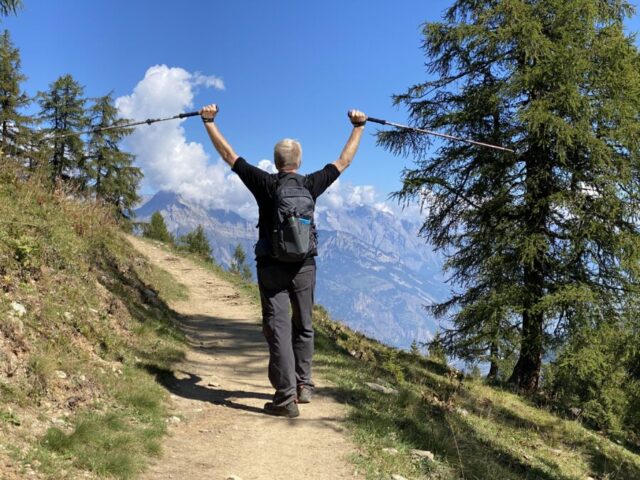
The Tour du Mont Blanc: Some Tips I Learned Along the Way


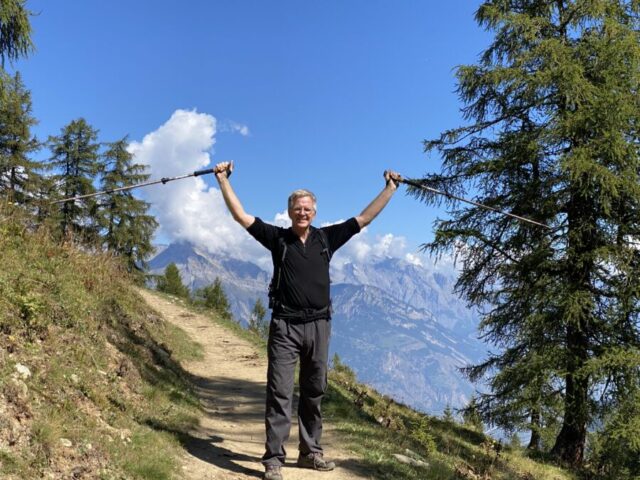
At 66, I felt a bit like the father of the hiking community when I hiked around Mont Blanc earlier this fall. But the Tour du Mont Blanc is doable for any reasonably fit hiker, and there were plenty of people on the trail who were older than me.

For total novices like Shelley and me, it’s wise to be proactive about health and safety. Here are some tips I learned along the way:

Good boots, liner socks, slippery powder, and moleskin for tender skin are essential. We kind of became gear geeks — investing in good day bags (Osprey), woolen clothes (socks, underwear, shirts), and great hiking shoes. I was never so thankful for a wool cap in Europe.
 

I was skeptical about a lot of “good ideas,” but two things I eventually appreciated were a daily baggie of trail mix and my metal water bottle. (I complained about its steep $40 price tag…but soon came to recognize it was a great value).
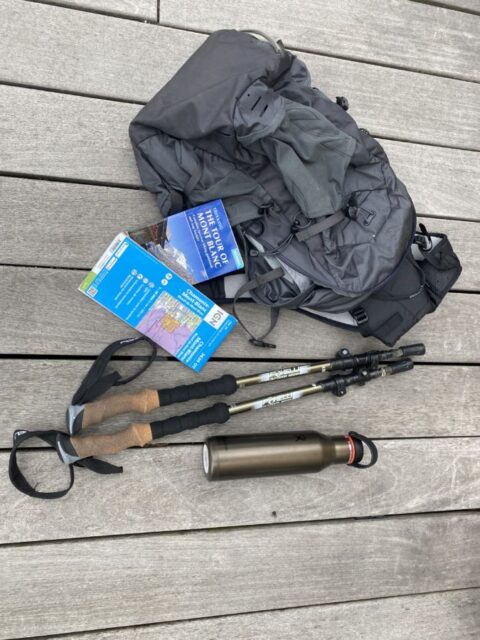
 

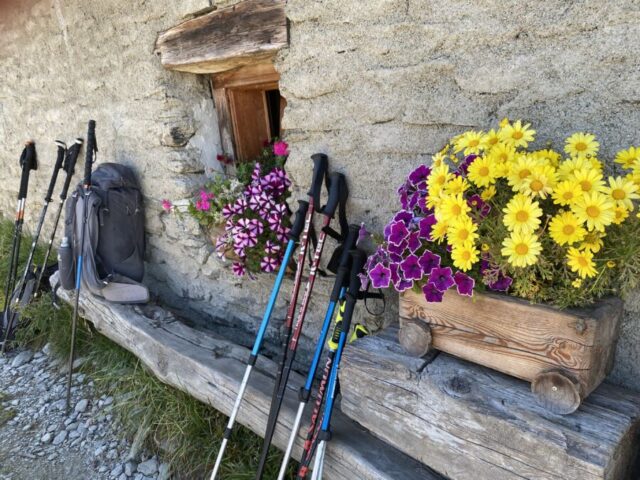
I must say, if the weather turned bad and it rained hard, I think much of the trail would become no fun at all. In fact, it would be dangerous. Hiking poles are essential, and even in perfect weather, I would have been worried about a stumble without my own trusty set.

Eat a solid breakfast. The one day we had breakfast with no protein, climbing was tougher.

Put on sunscreen, even if the weather’s bad.

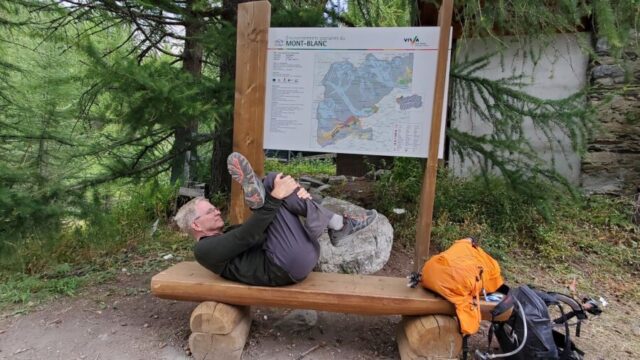
After learning my lesson on other long hikes, I decided to be religious about stretching on the Tour du Mont Blanc from the start. I had a routine of six stretches and spent time throughout the day making sure I didn’t tighten up. Very important!
 

Don’t be a hero. If skin is getting hot, wrap it up. I did the entire TMB hike without a blister — and then just got one on purpose in the last two hours.
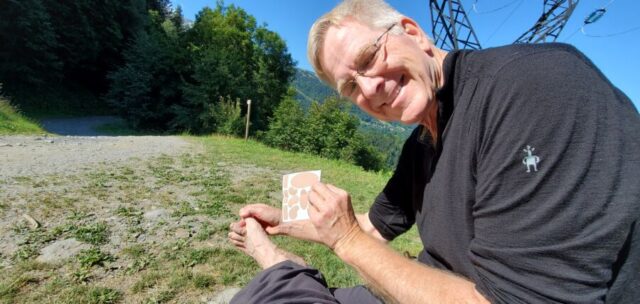
 

Good gear, smart and proactive ways to stay healthy, stretching, and taking it easy… it all worked just great.

I’ll be sharing more photos, stories, and tips from Mont Blanc on the Nov. 29 edition of Monday Night Travel. Want to come along? Register now for this fun — and free! — event.
Taking it Easy on the Tour du Mont Blanc

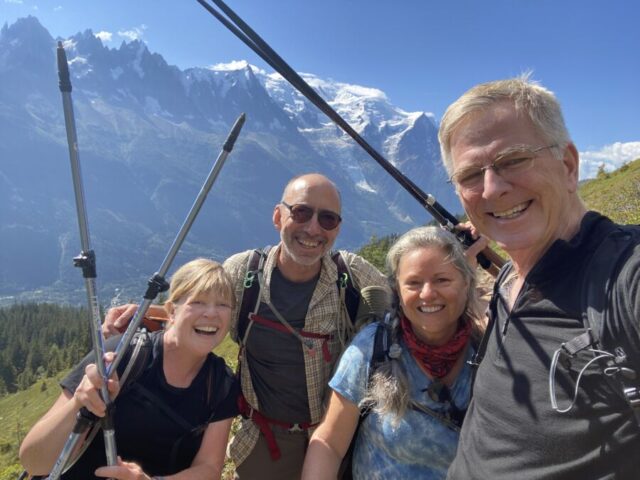
While the Tour du Mont Blanc is demanding, it’s not a particularly difficult hike. It’s just long, with lots of altitude gain and loss, and always scenic. On my recent trek around the mountain with three friends, it seemed each of us had a weak spot: knees, toes, or lungs. For some, the challenge was the uphill part, and for others (with weak knees), it was going downhill. We just took it easy, with lots of little breaks.

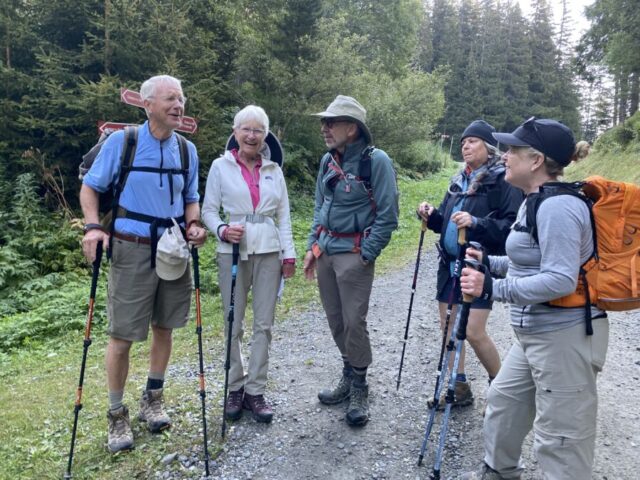
David, Sue, Shelley, and I shared the entire hike on Mont Blanc. But to be free to go our own pace, we generally found it best to hike as couples rather than as a foursome. It’s really important to be able to stop and rest with no concern for what the others want or need. Our mantra was, “We’re here to hike — to enjoy the moment, the trail, the mountains — not to race to the hotel.”

For long climbs, steady, smaller steps are best. The trail could be really rocky, and I can’t imagine doing it without hiking poles. The trail signs were great, and apps made staying on the trail easy: Just follow the blue dot. And I got good use out of a top-quality printed map. (I’d spend time the night before reading up on the hike and familiarizing myself with the trail on the map.)


While the weather forecast looked threatening, we hiked six days (in September, during the last week of the season) and, thankfully, had only one hour of rain. Still, each day we’d pack rain gear, and we’d add on and take off layers as we gained and lost altitude. After four days, we had it sorted out, and it occurred to us rank beginners, “We’re getting good at this.”

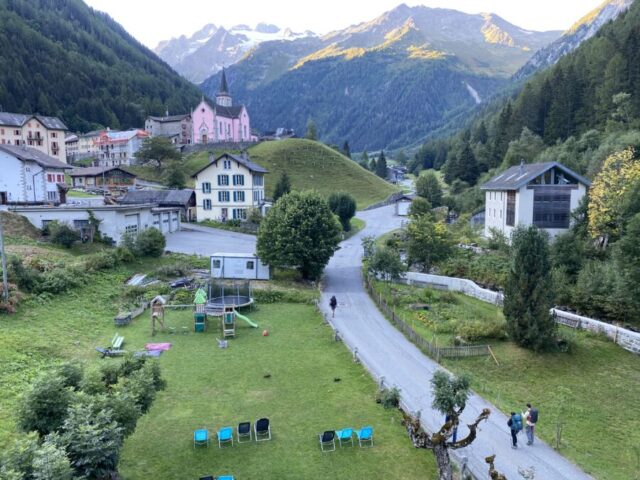
As we were hiking in a big circle around a big clump of mountains and sleeping in charming towns each night, every day seemed to be up and over a daunting mountain pass. A nightly treat was a stroll under a milky blanket of stars.


I’ll be sharing more photos, stories, and tips from Mont Blanc on the Nov. 29 edition of Monday Night Travel. Want to come along? Register now for this fun — and free! — event. 
The Mont Blanc Esprit de Corps


Hiking Europe’s Tour du Mont Blanc was a totally different slice of European culture for me: Coming upon a remote farmhouse-turned-thriving-cafe serving wonderful lunches…flowers and cows (with classic bells) scenically sprinkled throughout…and an esprit de corps where everyone is like family.


Our trail went through three countries — France, Italy, and Switzerland — before returning to our starting point in France. This cow is totally Swiss.
One of the delights of the TMB is coming upon an old farmhouse on a mountain alp (or pasture) that, these days, is a thriving little restaurant for hungry and thirsty hikers. Prices are reasonable, service is friendly, the food is great, and the vibe is one of joy.

As nearly everyone hikes in the same direction (counter-clockwise), you become friends with fellow hikers. It seemed like half the people on the trail were from the US, and I met lots of Seattleites.

It was easy to pass long stretches of the hike immersed in deep conversation with people we met along the way.
I enjoyed meeting this fan of my books and TV shows, who was celebrating his 60th birthday by hiking the TMB with his son.

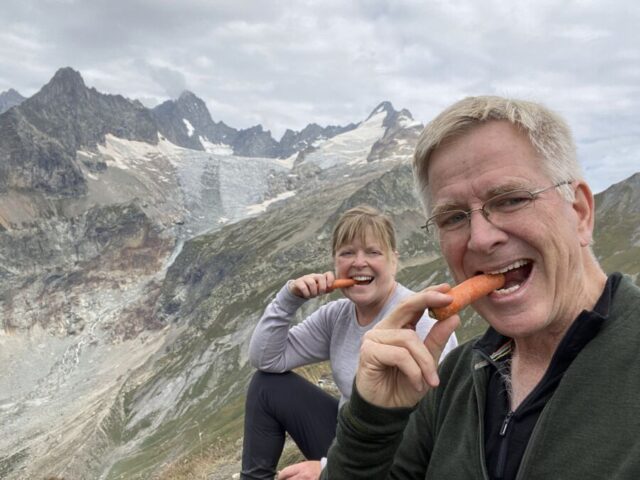
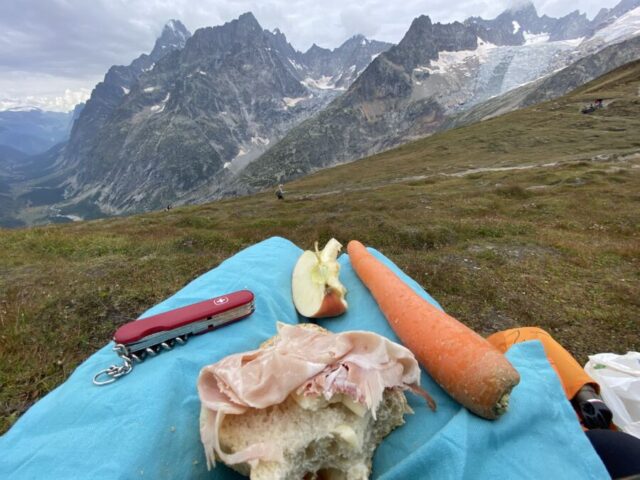
And in the interest of hiking light, lunches were very simple — just a sandwich from the hotel, maybe a carrot, a piece of fruit, and water. But upon reaching the mid-day summit, lunch was a marmot’s banquet. (Speaking of marmots, we saw no wildlife except a couple of mice that had been squished under hiking boots on the trail.)

The Best Hike of my Life: The Tour du Mont Blanc

Earlier this fall, four of us — total novices at long-distance treks — hiked around Europe’s highest mountain. (On the first day, big birds of prey circled high overhead. My hunch: They were vultures just waiting for one of us to drop.)

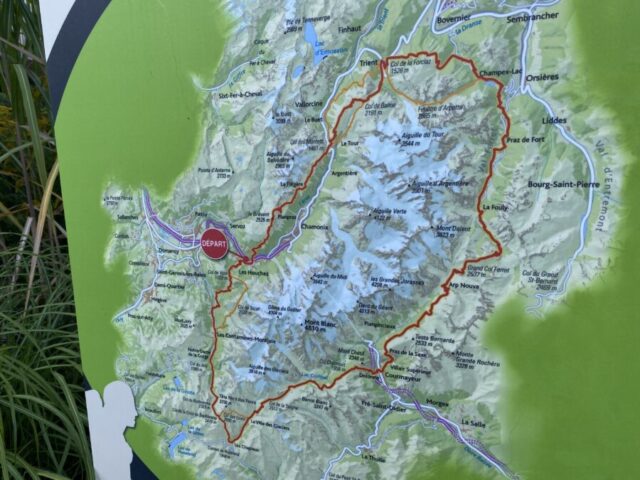
The Tour du Mont Blanc is a 100-mile, ten-day hike — but we cheated a bit, hiking the best 60 miles in six days from mountain lodge to mountain lodge, catching local buses through the less exciting parts, and letting a “sherpa service” shuttle our bags each day through France, Italy, and Switzerland, from Chamonix to Chamonix.

The Tour du Mont Blanc is a 160 km (100 mile) circle around Europe’s tallest mountain. We did the most rewarding 100 km (60 miles) connecting the segments with public buses.
I love the sherpa service offered on Mont Blanc: You leave your big bag in the hotel lobby or at your mountain refuge and trust the shuttle bus to pick it up and deliver it safe and sound to your next accommodations. Every day, our bags were waiting happily for us at check-in.
An array of buses and mountain lifts are available to hikers to help them along, as they choose, on the Tour du Mont Blanc. But the season is short, and most of the lifts and buses were shutting down by mid-September.

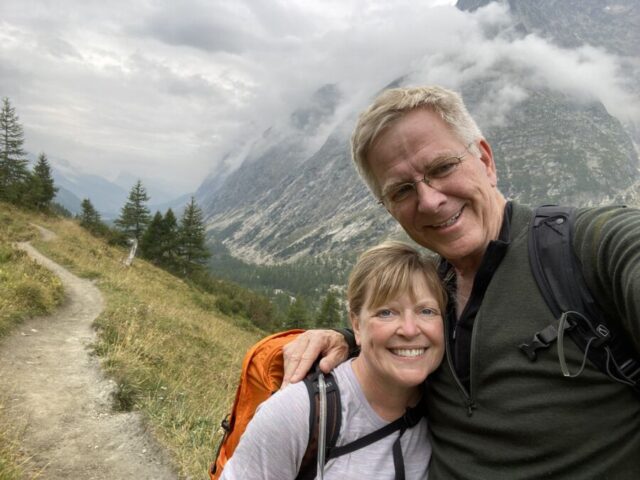
This was the first time I’d enjoyed a slice of Europe with my girlfriend Shelley, and we were joined by Sue and David from Minnesota. (I’ve worked with David Preston for 20 years at TPT – Twin Cities PBS. In the public television world, he’s considered the “pledge drive guru.”)

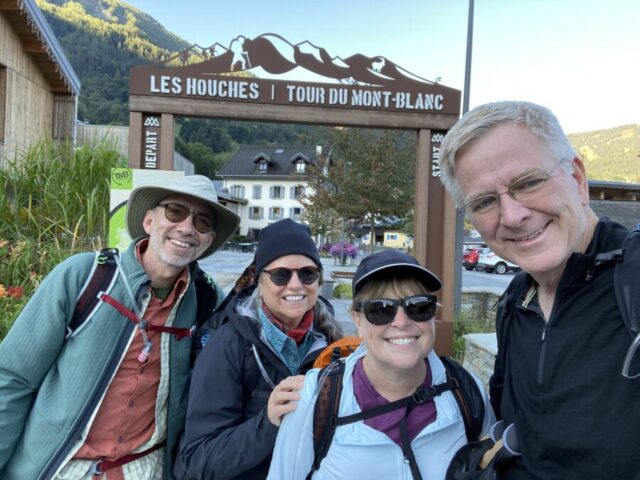
It seems everyone hikes the Tour du Mont Blanc in a counter-clockwise direction, starting from the ceremonial start point in the village of Les Houches, just outside Chamonix. And this arch is always good for a happy, pre-blister group shot.

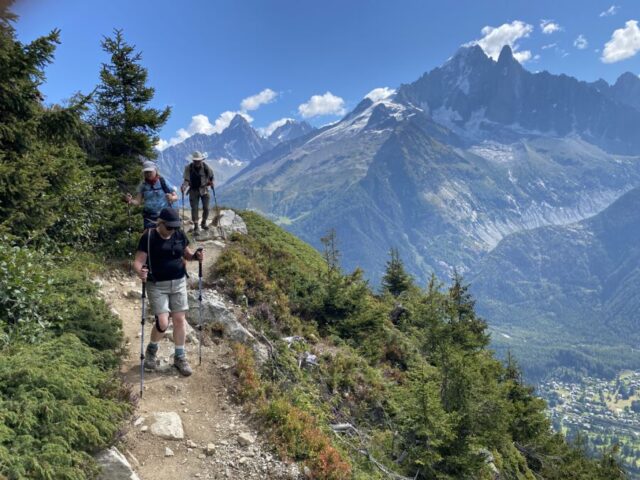
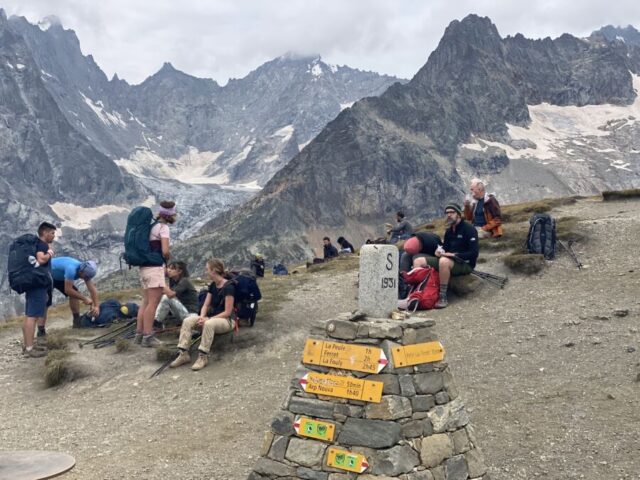
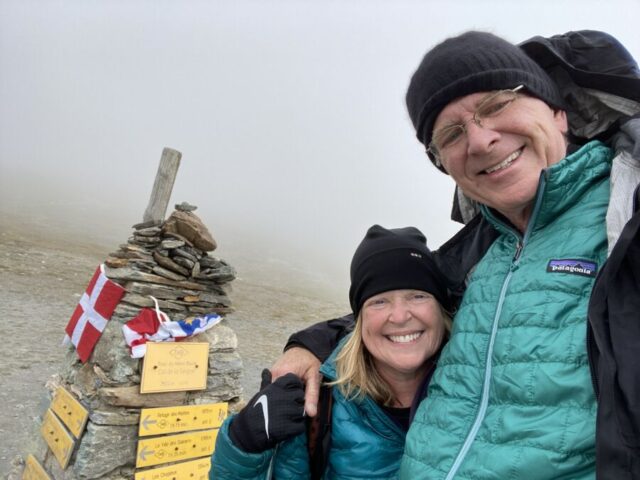
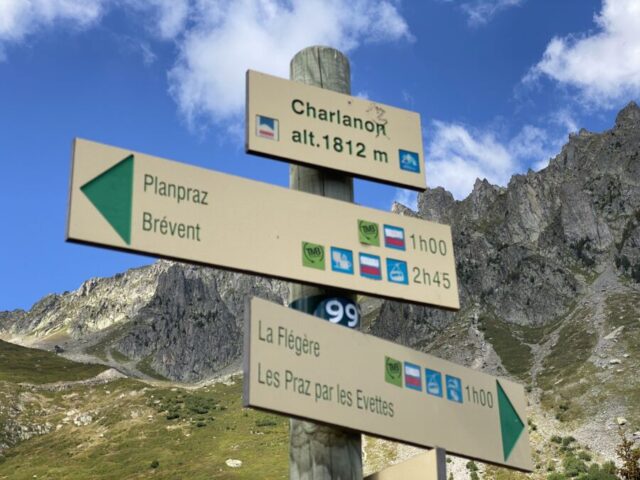
Each day, we’d hike what the trail signs said would be a five-hour hike — that took us six or seven.  Our mantra: “Take our time. This is why we’re here.” Generally, the day would start at a 3,000-foot climb to a pass (or “col”) 8,000 feet above sea level. Each col was a little triumph, with its cairn of rocks arranged in a pile, dramatic weather blowing across, commanding views, and congratulatory selfies.

Part of our pre-trip training was taking steep hikes closer to home. As a typical day’s climb on the TMB is a thousand meters (or roughly 3,000 feet), I’d recommend choosing a practice hike with a 3,000-foot elevation gain so you can use it as a reference point. Ours in Washington State was the Mount Si trail. We even had a term for a 3,000-foot altitude gain: “a Mount Si.”

Every morning on Mont Blanc, we’d do our hard work, generally climbing a 3,000-foot elevation gain. It seemed to last forever…but it didn’t. And reaching the pass (generally around 8,000 feet above sea level) was always a lunchtime celebration.

Lascaux’s Prehistoric Cave Paintings


As Europe starts opening up to travelers again, it’s more exciting than ever to think about the cultural treasures that await. For me, one of the great joys of travel is having in-person encounters with great art and architecture — which I’ve collected in a book called Europe’s Top 100 Masterpieces. Here’s an ancient favorite:   

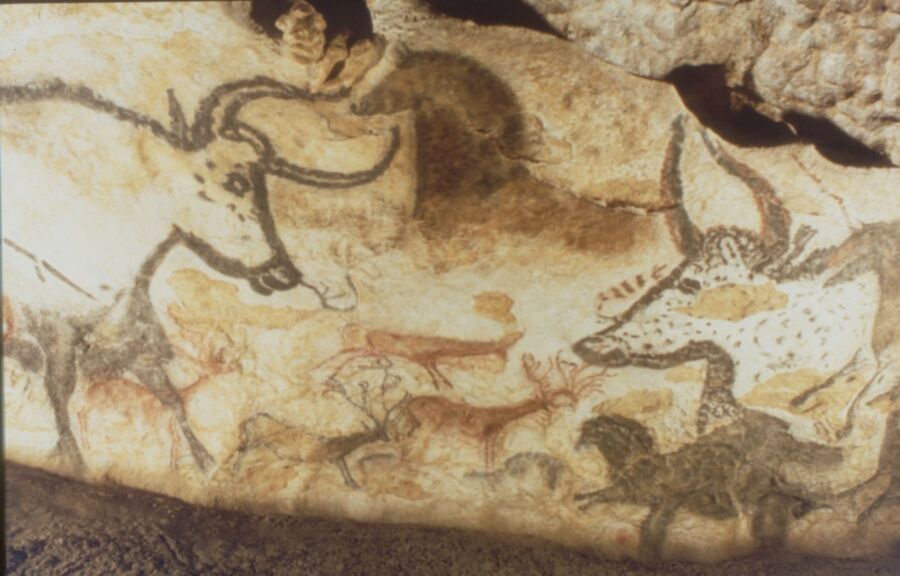
The caveman man cave at Lascaux is startling for how fashionably it’s decorated. The walls are painted with animals — bears, wolves, bulls, horses, deer, and cats — and even a few animals that are now extinct, like woolly mammoths. There’s scarcely a Homo sapiens in sight, but there are human handprints.  

All this was done during the Stone Age nearly 20,000 years ago, in what is now southwest France. That’s about four times as old as Stonehenge and Egypt’s pyramids, before the advent of writing, metalworking, and farming. The caves were painted not by hulking, bushy-browed Neanderthals but by fully-formed Homo sapiens known as Cro-Magnons. 

These are not crude doodles with a charcoal-tipped stick. The cave paintings were sophisticated, costly, and time-consuming engineering projects planned and executed in about 18,000 BC by dedicated artists supported by a unified and stable culture. First, they had to haul all their materials into a cold, pitch-black, hard-to-access place. (They didn’t live in these deep limestone caverns.) The “canvas” was huge—Lascaux’s main caverns are more than a football field long, and some animals are depicted 16 feet tall. They erected scaffolding to reach ceilings and high walls. They ground up minerals with a mortar and pestle to mix the paints. They worked by the light of torches and oil lamps. They prepared the scene by laying out the figure’s major outlines with a connect-the-dots series of points. Then these Cro-Magnon Michelangelos, balancing on scaffolding, created their Stone Age Sistine Chapels. 

The paintings are impressively realistic. The artists used wavy black outlines to suggest an animal in motion. They used scores of different pigments to get a range of colors. For their paint “brush,” they employed a kind of sponge made from animal skin. In another technique, they’d draw the outlines, then fill it in with spray paint — blown through tubes made of hollow bone. 

Imagine the debut. Viewers would be led deep into the cavern, guided by torchlight, into a cold, echoing, and otherworldly chamber. In the darkness, someone would light torches and lamps, and suddenly — whoosh! — the animals would flicker to life, appearing to run around the cave, like a prehistoric movie. 

Why did these Stone Age people — whose lives were probably harsh and precarious — bother to create such an apparent luxury as art? No one knows. Maybe because, as hunters, they were painting animals to magically increase the supply of game. Or perhaps they thought if they could “master” the animal by painting it, they could later master it in battle. Did they worship the animals?  

Or maybe the paintings are simply the result of the universal human drive to create, and these caverns were Europe’s first art galleries, bringing the first tourists. While the caves are closed to today’s tourists, carefully produced replica caves adjacent give visitors a vivid Stone Age experience. 

Today, visiting Lascaux II and IV, as these replica caves are called, allows you to share a common experience with a caveman. You may feel a bond with these long-gone people…or stand in awe at how different they were from us. Ultimately, this art remains much like the human species itself — a mystery. And a wonder.