Europeans Share Their Healthcare Experience, Part 2: Great Britain

To bring some diverse experience into the discussion on health care reform here in the USA, I’ve asked my friends in Europe to share how health care works in their lives. In this second of four entries, here are comments from my British friends:

From Martin in Wales:

The National Health Service (NHS) in Wales is essentially the same as the English NHS founded over 60 years ago. Today, the main difference between the services in England and Wales is that in Wales (as in Scotland) we pay nothing for medications. Our Welsh Assembly decided that no matter the cost of the drugs, the duration of the illness, or the wealth of the patient, no charge is made for prescription drugs.

This fulfils of the one of founding principles of the NHS — like justice, health care is “blind.” You are treated no matter who you are or what your financial means are. None would pretend that the NHS is perfect: New and expensive drugs are used to combat diseases in an increasingly aging population, which puts financial strains on our system. However, knowing that the NHS will try always to treat you to the best of its ability is something valued highly by most Welsh people.

Treatment under the NHS is free, but the cost is huge. We pay for it in our taxes. In the US, people pay insurance companies for their health care, whereas in Britain, we pay the government. You may think this makes the two systems the same, that it’s only a matter of who you pay. I don’t think so. Don’t forget that the NHS is “blind” and its blindness is its true virtue. Insurance companies insure the individual for a profit, while the NHS delivers care, free to all.

From Tom in England:

The United Kingdom National Health Service (NHS) was 60 years old last year and continues to provide “free” health care from cradle to grave. The NHS is state-funded. It is paid for by employers and employees making a contribution direct from earnings. Care and treatment is free to citizens. Drugs are about $10 per prescription. The NHS system enables completely free access and care for people who can’t pay taxes: the poor, unemployed, and elderly.

When things go wrong with the NHS, it’s given massive prominence by a media looking to sell newspapers and pump up TV ratings. However, for the majority of the English — those not made fools by hysterical media coverage — it is quite popular. We like the NHS because it takes away the worry about what would happen if your health fails, if there’s an accident, or if you just need help as you get older. It’s not perfect. No health care system is. But there are millions of people who would testify that they’d be dead without it.

The creation of our free service came after World War II, when there was a desire to spread health care to all citizens. The demographics have changed since then, however. A population that lives longer requires more costly care. Every society needs to deal honestly with this reality. Life-saving treatments have been developed that cost more. And so, in 2009, the NHS is one of the biggest topics of political debate — it’s called by some a “sacred cow.” The bottom line is that none of the major political parties will try to remove it — and certainly not when they are facing a general election in 2010. I think most of us would call our NHS a 60-year-old success story, regardless of today’s financial challenges.
Euro Experiences from NW to SE — Part I

Enlarge photo

Let me stoke your travel dreams for 2009 by sharing some of my favorite European experiences, roughly from northwest to southeast. Maximizing the experience is a dimension of smart budget travel that’s just as important in challenging times as saving money. Imagine these…

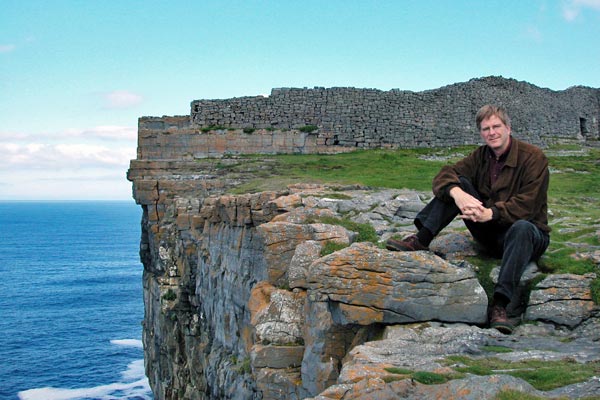
On Ireland’s Aran Island, feel like the westernmost person in Europe as you lie on a rock with your head hanging over the cliff-edge, high above the crashing Atlantic at the Iron Age fortress of Dún Aenghus.

In Dublin, be the only tourist among 50,000 cheering fans in a stadium for a hurling match—that uniquely Irish game that’s as rough and tumble as airborne hockey, with no injury timeouts.

Belly up to the bar in a neighborhood pub in Edinburgh and drink not beer, but whisky. Ask a local what they like best and why—you’ll find that whisky is as refined as wine, and suddenly you feel like an expert taster.

Hike the best-surviving stretch of Hadrians’ Wall, and picture being posted there back in ancient Roman times to keep out the scary Scots.

Sit in the choir for an evensong service in the York Minster—surrounded by men and boys singing their hearts out for the glory of God today, in a church built for the glory of God hundreds of years ago.

Immersed in the wild and pristine vastness of England’s Dartmoor, trek from the hamlet of Gidleigh through a foggy world of scrub brush and scraggy-haired goats to find your own private Stonehenge. Arriving at a humble stone circle, sit and observe blackbirds and wild horses, and feel the echoes of druids worshipping and then partying right there thousands of years ago.

Tonight It’s Leftovers

I’m just wrapping up this trip. And my refrigerator is cluttered with still-edible blog scraps. So tonight, we’re having leftovers.

Just like Americans used to clap when a plane landed safely after a long flight (back in the 1970s), on two successive Turkish Air flights I noticed that Turks clap today as they land safely.

English drivers monitor their driving record carefully to maintain their favorable insurance rating. Moving violations are given various points (e.g., 3 points for speeding). When they get 12 points, Brits loose their license. Points stay on their record for four years. Everyone I talked to in Britain was nursing their record along with somewhere between 3 and 6 points.


London’s emerging Manhattan at Canary Wharf.
Enlarge photo

Back when Britannia ruled the waves, London’s Canary Wharf was the world’s biggest shipping harbor. Then it became a run-down wasteland. Now it’s hosting my nomination for Europe’s most impressive urban development. London is shifting east. There’s a whole new Tube network evolving east of London. The 2012 Olympics will be the district’s coming-out party, as most of the events and venues will be there. Wandering around the Docklands (Tube: Canary Wharf) was like finding a slick, futuristic Manhattan with an English accent.

I found the English were really caught up in the American presidential campaign. They say this is in part because of the popularity of the TV series The West Wing,which has educated an entire generation of Brits on American politics, and is still very popular in the UK. When I told an English friend I thought American travel to England was down, he disagreed, saying, “Americans are still coming to the UK because as Americans are less popular in the world, England is a refuge…a place where Americans can tell if people are talking about them.”

When I meet backpackers, I quiz them on shoestring travel in 2008. Most find rooms via www.hostelworld.com, which lists and assesses the countless hostels that house people who don’t stay in hotels. And most are enjoying Europe on $80 a day.

I’ve never seen a car with a bumper sticker on it in Europe. Why are we so into bumper stickers, while sticking what you think about something on your car never even occurred to any European?

I don’t make a habit of responding to comments on this blog, but Ken’s question (responding to my previous entry), implying that I was contributing to the Russian Bear’s economy and image by choosing this “monumental” time to start our tour program there, deserves an explanation. Yes, we have just added a Best of the Baltics tour that includes St. Petersburg in Russia. And it happens to be our best-selling tour right now. (You can find out more about this new itinerary on our 2009 Tourswebsite.)

Like most people, I didn’t anticipate the Russian aggression against Georgia. But, to answer Ken’s concern, this breaking development makes me more enthusiastic about a tour including Russia, rather than less enthusiastic.

I believe many people, when confronted with an enemy, are predisposed to shut off communication, hunker down, and fight. And I believe that when you travel into “enemy territory,” you can make connections that help encourage understanding and dispel fears. (That’s why I took our film crew to Iran this spring.) I believe people-to-people communication (along with the costly-but-successful US battle of economic attrition and our hard military stance) helped us get through the Cold War with the USSR without it going hot.

We will always have enemies and people whose goals are at odds with ours. While interviewing Lord Alderdice, Member of Parliament and architect of the Irish peace, for my radio show (which will air on the weekend of September 6), I learned that the only alternative to needless wars (which ironically make us weaker on the international scene) is perpetual negotiation and compromise and creative waging of peace — which, I believe, will make us stronger.

Finding Good Eateries in Britain

One of my favorite challenges is to spiff up the eating sections in my guidebooks. Because I’m famously simple in my tastes among my family and friends, it seems odd that I have this power to recommend or not recommend restaurants in my guidebooks. While I would be hard-pressed to judge the yellowness of the butter or the dentition of the pasta or the glimmer of the fish eyes, I still manage to find and collect places that seem to please my traveling readers.

Having just completed my work in Edinburgh, York, Bath, and London, I am impressed by the passion of the couples (gay, straight, professional, or romantic) who run my favorite little places. Rather than big, highly advertised formula places, I like quirky little ten-table places that are the creative vision of these entrepreneurial restaurateurs.

Doing my research, I rely heavily on the advice of B&B hosts (who have no vested interest in anything other than happy guests). If they’re good, it’s impressive how quickly new little restaurants gain a huge reputation.

In Edinburgh, the Wedgwood, run by Paul and Lisa (who served me haggis with pigeon — my favorite haggis ever), is a delight. In Bath, Casanis French Bistro (run by Jill and Laurent) has been open only a couple of months, and is already on everyone’s short list. (It’s fun to see a traveler fall in love with a chef, bring him home, and start a winning restaurant.)

Not only new places are fresh. In Bath, at Tilly’s Bistro, Dave and Dawn have been at it for nearly two decades and still scamper up and down their stairs and weave through their tight tables like it was their debut. Enjoying a great cheese and port plate for dessert, I told Dave this was my idea of a fine dessert. It didn’t surprise me that he admitted his desserts suffered a bit because he also was “passionate about cheese and port.”

Going back year after year, I often find the once-magic place has ebbed, and its talent is turning on taste buds just down the street. In York, Café Concerto has long been a favorite. I dropped by Café No. 8 and was blown away — everything that charmed me about Café Concerto at its peak and more. Then, savoring my figs with local blue cheese, I learned that Martin, who runs No. 8, came from Café Concerto.

I don’t like recommending chains, but some are just too fun or too right. The pan-Asian noodle slurp-a-thon Wagamama is everywhere now…and just as great as the day its first location took London’s Soho by storm a decade ago. The Italian chain Ask seems to nab the best grand old dining hall in many towns, and fill it with happy eaters enjoying decent pasta and pizzas at good prices. And how does Starbucks get the best real estate in each city? If I’m in need of a fix, I can intuit where they’ll put a branch.

In each town, there seems to be a hot Italian place where as soon as you step inside, you know its going to be a fun evening (Martini’s in Bath, Il Positano in Edinburgh). There’s something about a gang of happy Italian waiters and cooks that makes you just want to drink red wine and slurp spaghetti.

English office workers make a routine out of getting a top-quality sandwich. When going for a budget sandwich lunch, you might as well skip the tired chain and find the deli with the line of local professionals. York Hogroast dishes out great pork sandwiches in York. In Bath, at Chandos Deli, I just lingered on my stool enjoying my wonderful sandwich and glass of tap water while watching all the yuppies swing by for their take-away meal. My son Andy reported that during his recent studies in London, each day he’d go to the same winning sandwich place that included free Wi-Fi, and enjoy his meal on a shoestring while checking email.

Chinese buffets (like Jasmine, just outside Monk Bar in York) serve all-you-can-eat meals for $12. That’s fun and cheap. But their take-away boxes (fill one up for $7) can feed two, and that has to be the best cheap, hot meal going.

In general, I found British portions huge. Rather than two appetizers, two mains, and two desserts with wine for $70 each, a couple can order two appetizers, split a main, split a dessert, and drink tap water — and probably fill up fine, enjoy the same atmosphere, and get out for $30 each. Waiters seem to sympathize with the budget traveler these days, and accommodate our cost-cutting measures with a smile.

Great budget values in any town are the cafés in the market, where you can get baked beans with your breakfast all day long. And many churches have cafés where volunteers from the congregation serve up soup and sandwich for a price that’s not particularly cheap, but you know you’re supporting a humble local congregation’s community work with your lunch money.

Good fish-and-chips joints are rare. In each town, there seems to be one that is evangelical about grease and has won the undying allegiance of a passionate local following. One thing these winning chippies seem to have in common: a guy behind the counter who’s as greasy as the fish.

I was quite frustrated to find that many pubs that once served great pub meals are backing off on their pub grub to make more money selling beer. That attracts a younger and noisier crowd, and it becomes no place to enjoy a meal. In the Victoria Station area near my favorite London B&Bs, I found my two favorite pubs were overwhelmed by drinkers. Thankfully, I found St. George’s Tavern (on Hugh Street and Belgrave Road), with famous sausages, a commitment to serving good pub meals, and three fine eating zones — scenic sidewalk tables, sloppy pub interior, and classier back room. In London now you’ll pay $25 for a good pub meal with a big glass of beer.

I’m purging my books of stupid things that, for some odd reason, are just in all the guidebooks. I just deleted the paragraph about Spotted Dick (which I can’t remember seeing on a menu in the last decade). So that Spotted Dick can rest in peace, here’s what it said:

Spotted Dick is a sponge pudding with currants. How did it get its name? Some say it looks like a spotted dog and dogs were called Dick. Another theory suggests that “Dick,” “duff,” and “dog” are all variants of the word “dough.” One thing’s for sure: the stuff isn’t selling very well today, thanks to the name’s connotation. Some are considering renaming it “Spotted Richard.”

Eddie the Verger and My First London Blister


A friendly verger greets tourists (who pay to get in unless they are really really worshipping) at Westminster Abbey.
Enlarge photo

Eddie the Verger is posted in his red robe with a warm smile at the exit of Westminster Abbey. His responsibility: to sort through those who want to go into the abbey to worship, and those tourists who fold their hands and reverently say, “I’d like a few moments with the Unknown Soldier, please.” (By masquerading as worshippers, sightseers can sidestep the £12 — or $24 — entrance fee to the church.)

Dropping by, I tell him I’m working on the Rick Steves book, and he says, “I’d like a word with that Rick Steves. He implies in his guidebook you can pop in to worship in order to get a free visit to the abbey.”

I tell him who I am and we sort it out. Really charmed by Eddie, I agree that rather than promote the fact that visitors can pop in anytime for free if they claim to be worshippers, I’ll encourage those tourists to actually experience the church the way it was designed to be experienced, by listing the busy daily schedule of worship services (for example, there is a sung evensong six days a week, when anyone is welcome for free).

Then Eddie took me into a place where no tourist goes — the Jerusalem Chamber, where the monks set up shop to actually translate the Bible from ancient Greek into English, creating the King James Version.

Knowing the dangers of getting the word of God into the people’s language, the potentially dire consequences for these reformers, and the importance of these heroic steps back in the 16th century, I got the same goose bumps as when I was in the Wartburg castle and saw the room Martin Luther holed up in while he did essentially the same thing for the German-speaking world.

Eddie deposited me in the abbey, and I visited like any other tourist — enjoying the great new audio tour narrated by Jeremy Irons. Listening to his soothing voice, I enjoyed some private time with great history: the marble effigy of Queen Elizabeth I, made from her death mask in 1603 — considered the most realistic likeness of her; the coronation chair that centuries of kings and queens sat upon right here in the abbey on their big day; the literary greats of England gathered as if conducting a posthumous storytelling session around the tomb of Geoffrey Chaucer (Mr. Canterbury Tales); the poppies lining the tomb of Britain’s Unknown Soldier — with the US Congressional Medal of Honor given to him by General Pershing in 1921 hanging from the neighboring column; the statue of Martin Luther King added as an honorary member of this now heavenly English host; and so much more.

The steep admission fee includes this marvelous one-hour guided walk with the best-designed audio wands I’ve encountered anywhere in Europe. (These things are really getting good.) I started my visit wondering if I should produce my own audio tour for Westminster Abbey. Now that the abbey’s audioguide is included in the admission, I’m off the hook. Instead, I’ll strongly encourage all who visit to take this tour with gusto.

Then I stepped across the street into the basement of the Methodist church for a cheap soup and sandwich, wrapped a Band-Aid around my toe — cushioning the first blister of my trip — and headed out for more of London.