Here you can browse through my blog posts prior to February 2022. Currently I'm sharing my travel experiences, candid opinions, and what's on my mind solely on my Facebook page. — Rick
Ronda is the birthplace of modern bullfighting, and its bullring — the oldest in Spain — comes with a fine little museum about the bloody ritual. Local aficionados would never call bullfighting a “sport” — you’ll read newspaper coverage of fights not in the sports pages, but in the culture section. Lovers of the “art” of bullfighting will explain that the event is much more than the actual killing of the bull. It celebrates a noble heritage and Andalusian horse culture.
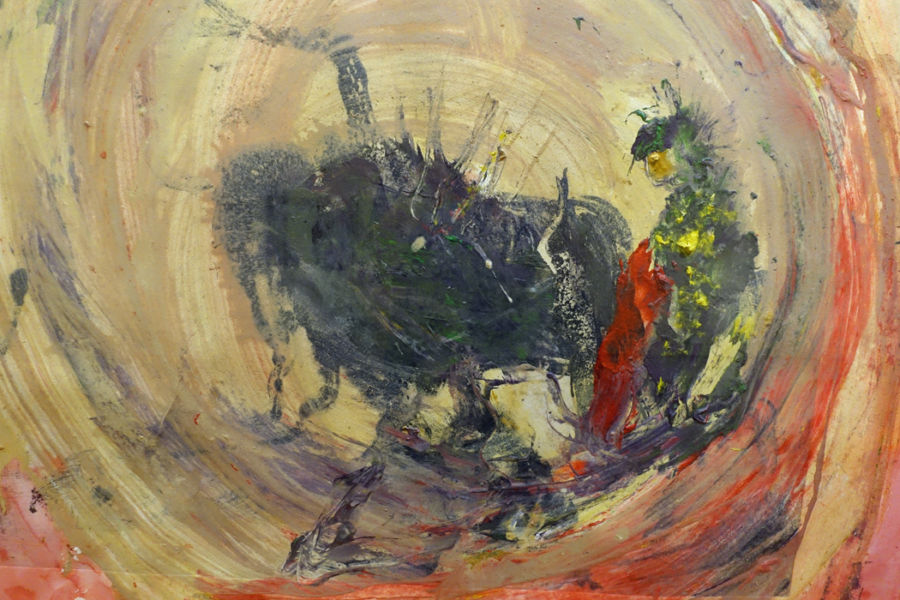
This poster promoting a bullfight is like a piece of modern art.
Locals tell me the tradition of bullfighting is still going strong, with or without tourist money. What are your thoughts on bullfighting in Spain? Let me know in the comments below, on Facebook, or on Twitter.
Exploring Europe, you see the big sights — and you also see the little ones. Here are a few little things I noticed along the way in Spain.
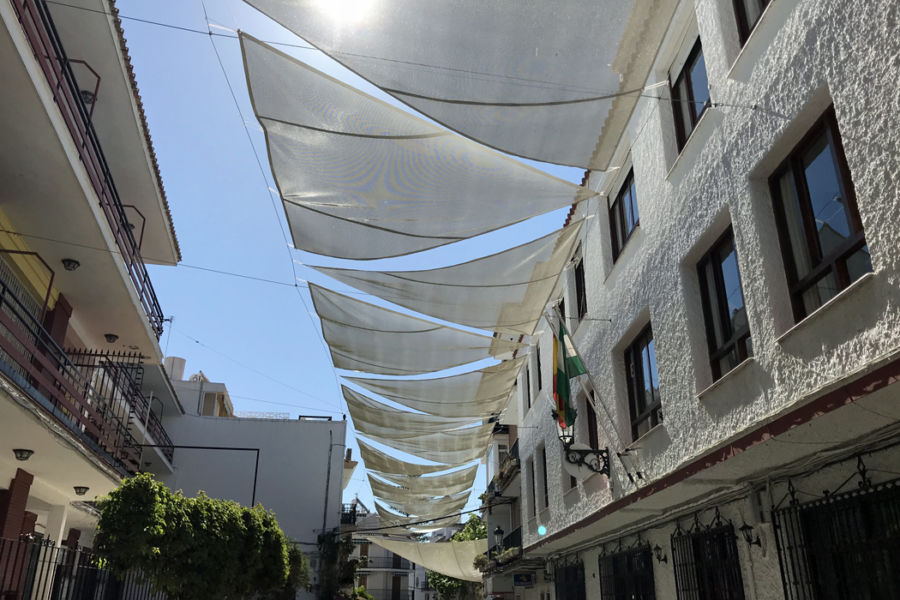
While I was very comfortable during my visit earlier this spring (temperatures were in the 60s and 70s each day and evening), in a few weeks it’ll be cracking 100, and there will be a lot of wall-crawling shrimps. (The brutal summer sun in Spain turns pedestrians into what are now called “wall crawlers” — people walking right up against the walls, catching whatever shade they can. And tourists not used to the sun who get burned are called “shrimps.”)
Climate change is real — and Europe is getting hotter. In Spain, canvas awnings provide entire streets with critical shade.
More and more, tourists are enjoying the delights of Andalucía and, more and more, English is the language of travel. Rather than the old-school menus with five languages, menus are now generally in two (or maybe three) languages, including English.
Study this menu — great prices, fun tapas.
Spain loves its festivals, and Sevilla takes it to extremes. My favorite Triana bar includes the dates of the major festivals on its business card — for the next several years.
Olé!
(What about you? I’d love to hear about some of the little sights you saw on your last trip. Connect with me on Facebook or Twitter.)
As I travel far from home, I think a lot about economic realities — both in the US and abroad. I know that many travelers feel the same. And that’s why, last week, I offered to match all your contributions to Bread for the World (up to $50,000) with my own gift. Plus, if you make a gift of $50 or more, I’ll send you a copy of my book, Travel as a Political Act, as a thank you.
I’m really proud to help empower Bread for the World with this fundraiser…and we’re off to a great start, with over $40,000 raised so far. With my match, that’s $80,000 for Bread. Remember, rather than charity, this is advocacy — advocating for smart government policies that help struggling and hungry communities, both in the US and abroad, to work hard and succeed.
While I’m excited about Bread’s work from a “love thy neighbor” point of view, I’d like to point out to people for whom hunger and desperation, out of sight, isn’t an issue that this is a national security issue, too. When we help our poor succeed (with, for example, better nutrition for children in their first 1,000 days), they are better able to contribute to society, and our nation grows stronger. And when we help other countries build their economies (with, for example, technologies that help their people become healthier, and therefore better able to learn, work, and take care of their environment), the world becomes more stable — and America becomes safer.
Whether you’ve got a heart the size of Mother Teresa, you’re someone at the other end of the compassion spectrum, or you’re somewhere in between, this exciting initiative will help Bread for the World do good and important things. Please, as you watch this clip, consider the timeliness of this initiative and help us meet our goal. To join in, please make your contribution now. Thanks.
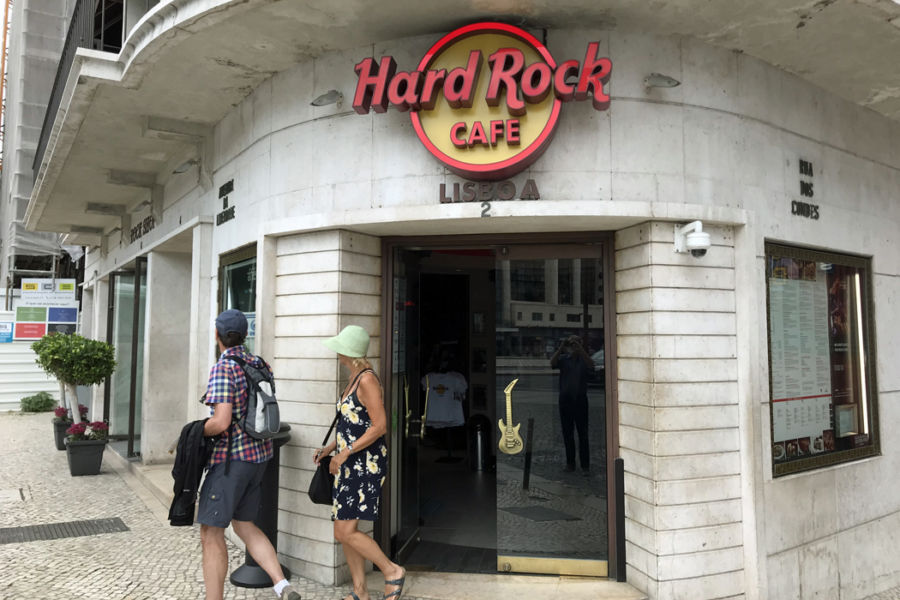
You find Hard Rock Cafes at landmark locations all over Europe. And you find tourists that, like pilgrims, seek them out and buy a T-shirt there. I have never understood the allure.
Can anyone explain to me the appeal of this bit of American rock ‘n’ roll culture overseas? Drop me a line in the comments below, on Facebook, or on Twitter.
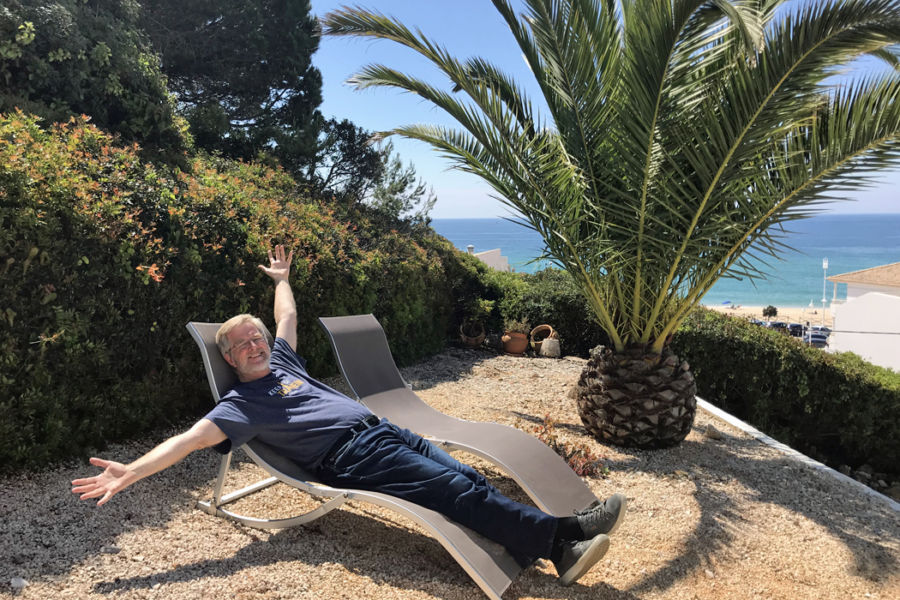
Hello from the Algarve, on Portugal’s south coast — a place where I love to recharge. After a busy six weeks of TV filming and guidebook research, I took an easy day at my favorite retreat (Pensión Maré in Salema, which I’ve recommended for decades).
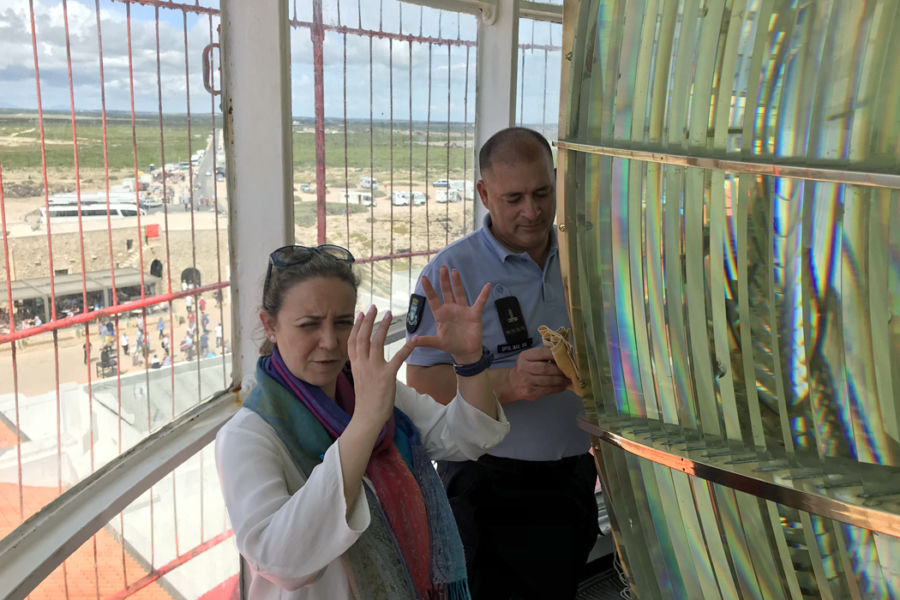
Then, I ventured to the Land’s End of Europe, Cape Sagres, to check the information in theRick Steves Portugal guidebook. Last year, my researcher added a bit about the lighthouse at Cape St. Vincent that sounded hard to believe:
“If you’d like to go up to visit the actual lighthouse, wait at the door marked ‘Privado Staff Only,’ and the lighthouse keeper may eventually show up to take you on a free little tour (for a tip). The ‘tour’ is a 20-minute romp (in broken English) around the 1908 lighthouse. You’ll climb steep stairs and enjoy the tranquility of the couple of families who live here, maintaining the now automated beacon.”
So often, these kinds of possibilities turn out to be nothing more than wishful thinking. I’m happy to confirm that I knocked…and it worked.
This is why we update our guidebooks in person. When you knock…I want it to work for you, too.
— Join our traveling community — connect with me on Facebook and Twitter.