Here you can browse through my blog posts prior to February 2022. Currently I'm sharing my travel experiences, candid opinions, and what's on my mind solely on my Facebook page. — Rick

Video: Bouncing Across Guatemala’s Lake Atitlán

There’s not much tourism in Guatemala…except on the dreamy Lake Atitlán. I would imagine most visitors skip Guatemala City altogether and go straight to the country’s high-altitude resort lake. Atitlán is like Oregon’s Crater Lake — a caldera surrounded by volcanic peaks. At 5,100 feet above sea level, the weather is very comfortable. The terrain is so rugged, and the roads are so treacherous, that the only efficient way to travel around the lake is by boat. For the cost of my Uber ride to the airport in Seattle, we had the services of a fast boat for several hours. A pounding trip across the lake took me back to my childhood days, boating with my family…a nice break from the intensity of this trip’s learning mission.

Join our traveling community — connect with me on Facebook and Twitter.
 

Video: Watch Microlending in Action at a Guatemalan Beading Business

I’m scouting for a new one-hour public television special about hunger, poverty, and hope — and Guatemala is a great place to learn about development.

Near the dreamy Lake Atitlán, I traveled to a little village with Friendship Bridge, an American NGO dedicated to helping local women help themselves through microlending. And I saw what happens when hardworking people, struggling in the poor world, get a little capital to start a business. Within months, they are typically up and running, and able pay off their loans (usually a couple hundred dollars). That money can then be recycled to another entrepreneur, kick-starting another family business. The mark of success for a caring organization like Friendship Bridge is how many former clients they have — now debt-free and independent, thanks to that microloan.

In this clip, we see examples of microlending, diversity farming, and the value of education and child nutrition — as well as the importance of remittances, which are sent home from migrant workers doing work in the USA that wealthy Americans don’t want to do. Development requires lots of moving parts and lots of caring people.

Join our traveling community — connect with me on Facebook and Twitter.


Video: My Sweet Brown Sugar Dream

It was a long, long flight (three, actually) from Addis Ababa to Guatemala City. And today, I begin part two of my TV scouting trip through Ethiopia and Guatemala. I’m here to learn — and to find vivid ways to teach, through travel, the basics of smart and modern development for our upcoming public television special about global poverty.

I’m learning how we’ll overcome extreme poverty and world hunger in our lifetime, and why that’s a worthy goal. One thing is clear: Poor countries want to work hard and export goods, and playing ball competitively in the global economy is a key part of that. That’s why the nicest road in Guatemala is the one that leads to the port.

In this country, sugar is a big deal and a huge employer. Several sugar mills have formed a group that works together, in order to competitively sell their sugar around the world. And they are also committed to a program, called Fundazucar, which takes care of their hard-laboring workers and the environment. Here’s a peek at one very sweet warehouse.

Join our traveling community — connect with me on Facebook and Twitter.


A New Era of Hope in Ethiopia

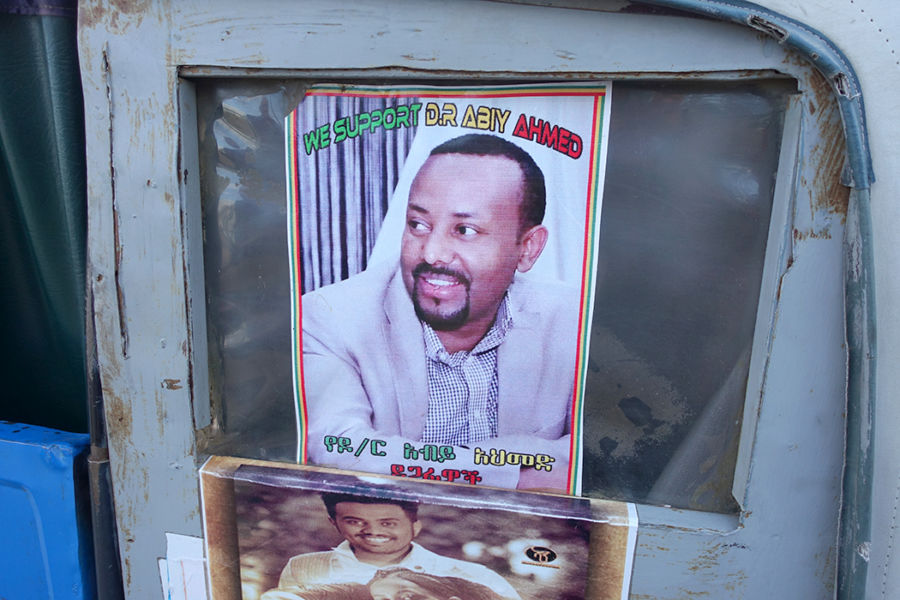
picture of dr. abiy ahmed, the prime minister of ethiopia, with text that says "we support dr. abiy ahmed" - it is a poster


It’s a hopeful time for Ethiopia. The country’s young new leader, Dr. Abiy Ahmed, is a peacemaker — and he seems to be moving this multiethnic land toward democracy. Two of his first actions as prime minister: releasing thousands of political prisoners and ending a 20-year war with Eritrea.

Under Dr. Ahmed’s leadership, the federal government seems to be striving for good, decentralized governance — by taking full advantage of the “kebele” system, a network of several thousand small administrative units with locally elected leadership, stretching across the whole country.

While there will always be poor people, overcoming extreme poverty in our lifetime is well within reach. Two big hurdles: climate change and conflict. Economists believe that by 2030, nearly half the remaining people living in extreme poverty will be citizens of war-torn countries. All too frequently, national borders — often drawn by colonial powers — ignore ethnic regions. That’s certainly a basis for the strife in Libya, Iraq, and Syria. And it’s been a challenge in Ethiopia, which has a proud ethnic group for each of its many languages.

In countries with multiple ethnic regions, good governance means decentralizing — with regional governments that are empowered, but still accountable to the national government. Development needs stability rather than conflict, and that requires respect for ethnic regions.


Video: Schoolyard Art in Inspiring Ethiopia

We’re producing a new special about hunger, airing next fall on public television — and for the past week, I’ve been scouting in Ethiopia, one of Africa’s development success stories. We’ll use the information I learn on this trip to write a better script and, ultimately, produce a better program when I return in April with our TV crew.

One big takeaway has been that education is a government priority — and a fundamental part of Ethiopia’s success. The number of K-8 schools here has tripled in the last 20 years, and almost all Ethiopian children now go to primary school. Here’s a fun look at the art that decorates the playground at one of them.


Join our traveling community — connect with me on Facebook and Twitter.