Here you can browse through my blog posts prior to February 2022. Currently I'm sharing my travel experiences, candid opinions, and what's on my mind solely on my Facebook page. — Rick

Talking Traveling Heads

Last night, I recorded an interview with a local Seattle TV show, On the Money,giving advice about how the financial meltdown will affect travel. Speaking “authoritatively” on the topic, it occurred to me that the media has an insatiable appetite for talking heads to give their take on things, and the general starting point is, “How do we get through this catastrophe?”

My message: Sure, the travel industry — like our tour sales — is down about 30 percent. That’s not great. But why do we measure it against a spasmodic spike after years and years of mercilessly goosing our economy to perform better than it should? We goosed and goosed the poor thing until we ran out of prods. The exhausted economy finally just stopped responding. Everything’s down 30 percent — so we hunker down. And because our unrealistic and unsustainable expectations are no longer met, I fear we’re actually making things worse — turning the perception of bad times into actual bad times by burrowing in.

So, what’s the impact of these “hard times” for travelers? Airfares are down about 20 percent since this time last year. (I just sent one of our researchers to Europe, flying from Seattle into London and home from Rome for $600 — wow.) Our dollar is about 20 percent stronger versus the euro, compared to a year ago (the euro used to cost $1.60, now it costs about $1.25). And the tumbling stock market means most of us have 30 or 40 percent less in our retirement accounts than we hoped to at this time. (Many are starting to think that investing in life experiences like travel might bring better and more reliable returns than investing in the stock market.)

What’s the result in Europe? I don’t see hotels formally dropping their prices, but I expect those who venture abroad without reservations will find prices soft. Tour companies like ours are discounting select dates to fill buses so they don’t have to cancel tours. Discounting is frustrating to people already on board who paid full price. And it’s frustrating to a tour company trying to make a profit, too. But it’s done in the interest of those already booked, so that their tour will not be cancelled. Cancelling is disruptive to travelers and tour hotel relationships in Europe. It’s costly in flight-cancellation fees for travelers with airfares already booked. Our company pays these fees, which can really add up. Everybody loses when a departure date is cancelled. Some companies (like ours) are easing up cancellation penalties for people who lose their jobs. It just seems decent.

While our tour sales are down, repeat customer sales (the majority of our tour members) are close to last year’s sales numbers. We figure many are holding off on their decision-making until closer to departure. While our “beginner tours” (like Best of Europe) are way down, our “advanced tours” (like Turkey, Adriatic, Baltics, Basque Country, and so on) are selling as well as last year. That indicates that fair-weather travelers will wait out this economic storm, while committed globetrotters will travel even if it means taking a financial risk or forgoing other things.

I believe our financial crisis is just a dose of reality as America realizes that it is not as rich as it thinks it is. (If you had a house worth $500,000, then it was worth a million dollars, and then it was worth $500,000 again — you didn’t lose $500,000. You were never really a millionaire. You’re just half a millionaire. I hope our government doesn’t do anything heroic to make you a fake millionaire again.) When good minds dedicate their lives to rearranging the economic furniture rather than producing things of real value and get filthy rich in the process, the fabric of our economy is weakened. I hope those days are gone.

In 2008, 12 million Americans went to Europe. About a million of them used my guidebooks, and 12,000 of them took a Rick Steves tour. In 2009, it looks like 8 million Americans will enjoy a little European travel, 750,000 will use one of my guidebooks, and 8,000 will enjoy a Rick Steves tour. Will we make anywhere near the money in 2009 that we did in 2008? Nope. Is that okay? It’ll have to be. Best wishes to those struggling to hang on to or to find a job. Let’s not let the media (which are constantly on mindless overdrive to sensationalize things in order to drive up their audience) stoke a panic that makes things worse. Let’s all work hard, produce worthwhile goods, and evolve as necessary with the times. And for those who can fly somewhere this year…happy travels.

A budget travel tip for 2009: Regardless of who you voted for, wear an Obama T-shirt, and you’ll be getting free drinks all over Europe.

Another tip: These are the “good old days.” People waiting for something else may someday look back with regret.

Euro Experiences from NW to SE — Part V

Let me stoke your travel dreams by sharing some of my favorite European experiences, roughly from northwest to southeast. Maximizing the experience is a dimension of smart budget travel that’s just as important in challenging times as saving money. Imagine these…

In Padua, Italy, sip wine with college students at an outdoor bar in the market square. Pour some fine olive oil on a dish, season with salt and pepper, rip a long strip from your bread, dip it, and bite. A student explained I was making the scarpetta — the little shoes. Soaking up the oil along with the conversation, we travelers become human scarpette,sopping up culture as we explore Europe.

Borrow a good knife from a friendly restaurant and hike from village to village through the terraced vineyards of Cinque Terre — Italy’s most exotic stretch of the Riviera coastline. Climbing through ancient terraces, surrounded by twinkling Mediterranean views and castle-studded villages, you’ll work up a thirst. Then, using a big leaf as a protective mitt, break off a spiny cactus fruit, peel it with your knife, and slurp it — sloppily savoring the sun and the fun as you explore the best of the Riviera.

When in Rome, drop by St. Peter’s early or late for a Mass at the high altar. With the alabaster starburst of the dove symbolizing the Holy Spirit before you, the greatest dome on earth rocketing above you, and the nearly 2,000-year-old tomb of St. Peter below you, eat the bread and drink the wine of the Eucharist with worshippers from around the globe. On the way out, kneel before Michelangelo’s Pietaand ponder what humankind can do for the glory of God.

In Bosnia, at the crest of Mostar’s single-arched bridge, survey the town that just over a decade ago was a killing field of sectarian strife. Take in the cityscape of crosses, spires, and minarets. Ponder the tragedy of Mostar’s recent past and the hope symbolized by the bridge upon which you stand — once bombed and now rebuilt. Then pay the kid in the bathing suit to make the dizzying jump from there into the river way, way below.

In Istanbul, wander away from anything of interest to a typical tourist, and find a convivial bar filled with Turkish men sipping tea and playing backgammon. Ideally, the bar has classic inlaid game boards — where their softer light wood is worn deeper than the harder dark wood, and stained with generations of laughter and smoke — and the players use handmade dice with unruly dots. Challenge a local to a game and gather a crowd. Learn to count in Turkish and holler the numbers as the dice are rolled. Bir, iki, üç, dört…Let the kibitzers move for you whenever you wonder which move is best. Expect to lose the game and gain a lifelong memory

Every corner of Europe offers magic moments like these to good travelers. Opportunities are rich and the stakes are high. Wherever you travel, meet the people, and understand the historic and cultural context of your sightseeing. Equip yourself with the best information and expect yourself to travel smart. Take the initiative not to just see your destination, but to experience it.

Euro Experiences from NW to SE — Part IV

Let me stoke your travel dreams for 2009 by sharing some of my favorite European experiences, roughly from northwest to southeast. Maximizing the experience is a dimension of smart budget travel that’s just as important in challenging times as saving money. Imagine these…

Enlarge photo

Enlarge photo

Enlarge photo

Enlarge photo

Many abhor the French passion for la gavage — the force-feeding of their geese. To learn about the tradition, walk through the idyllic French farmland with a Dordogne farmer, surrounded by a hundred happy geese, dragging their enlarged livers like loaded diapers. On a visit to a gavagefarm, feel the rhythm of life for a goose…taste a slice of that glorious foie gras…and be thankful you’re tops on the food chain.

People visit Paris’ St. Sulpice Cathedral to worship, to track down a scene from Da Vinci Codelegend, and to climb into the loft to see perhaps Europe’s greatest pipe organ played by Europe’s greatest pipe organist. After Mass, a tiny green door in the back pops open. Join a gang of organ aficionados and scamper like sixteenth notes up a tight spiral staircase to the dusty loft. Pass 19th-century Stairmasters upon which men once tread — filling the billows that powered the mighty organ — and enter the ramshackle loft where a venerable lineage of world-class organists have performed. The current organist, Daniel Roth, graciously welcomes visitors each Sunday. Rest your chin on the historic organ, and watch as Mssr. Roth powers an entire church with his mastery of the mighty bank of keyboards.

You can read about the carnage as German and French soldiers slaughtered each other day after day on the Western Front. Or you can wander silently through fields of white crosses at the vast World War I cemetery at Verdun — realizing that less than a century ago, that horrific battle of attrition left half of all the men in France between the ages of 15 and 30 as casualties. You’ll come away with a deeper understanding of why, to this day, France is reluctant to go to war.

In Beaune, surrounded by the hallowed vineyards of Burgundy, the venerable Marche aux Vins (wine market) welcomes serious wine buyers and tourists in a subterranean, candlelit world, where fine wines sit seductively on old oak kegs, just waiting to be tasted. Pick up a tastevin(shallow stainless steel tasting dish) and a shopping basket, descend into dimly lit caverns, and work your way through the proud selection. Sampling a world of $100 bottles in the company of people who live for their fine wine can be both inspirational and intoxicating.

Summit the Rock of Gibraltar by taxi or cable car to find yourself at a unique perch: the only place on earth where you can see two continents and two seas come together. Gaze out at Africa and notice the energy in the straits. Ponder the action where two bodies of water meet, creating choppy riptides where little fish gather, attracting big fish, who attract fishermen. Consider the action at this meeting point of two great civilizations — Islam and Christendom — rubbing like cultural tectonic plates for 1,300 years. Then ape with the monkeys who call the Rock home and couldn’t care less.

In Santiago de Compostela, in the northwest corner of Spain, stand in front of the cathedral at mid-morning to greet the daily batch of well-worn pilgrims completing the Camino de Santiago. For centuries, humble seekers have hiked from Pairs and points all over Europe to this spot. With leathery faces, tattered pants, and frayed walking sticks, they plant their hiking boots victoriously on the scallop shell symbol of St. James imbedded in the square, look up at the cathedral that marks the end of their journey, and are overcome with jubilation.

Euro Experiences from NW to SE — Part III

Let me stoke your travel dreams for 2009 by sharing some of my favorite European experiences, roughly from northwest to southeast. Maximizing the experience is a dimension of smart budget travel that’s just as important in challenging times as saving money. Imagine these…

High above Interlaken in the Swiss Alps, hike the narrow ridge from Schynige Platte to Faulhorn. As you tightrope along the ridge, lakes seem to stretch all the way to Germany on your left, and the Eiger, Mönch, and Jungfrau cut like broken glass into the sky on your right. Listen for the haunting legato tones of an alphorn just ahead, announcing that the helicopter-stocked mountain hut is open. It’s just around the corner, and the coffee-schnapps is on. That’s enough to make a Lutheran raise his hands and holler hallelujah.

Pump up your adrenalin in the same Swiss Alps on a rented mountain bike. Tiny service roads, paved smooth as a mansion’s driveway, are designed for the little hay wagons of farmers. While these scenic lanes are off-limits to cars, they are wide open for (and a hit with) bikers.

At the bottom of the Lauterbrunnen Valley (just south of Interlaken), drop by the rough and not-very-inviting Pub Horner. It’s the unofficial clubhouse for base jumpers—the hangout for those daredevils who exasperate local farmers by jumping off sheer cliffs, miscalculating with their little parachutes, and smashing messily into the fields below. Have a beer with these guys, begin to understand their passion for an adrenaline rush, and gain some appreciation that life may be short, but it’s not cheap for these amazing thrill-seekers.

Get as high as you can mechanically in Europe, riding the cable car from the French alpine resort of Chamonix to Aiguille du Midi. Up there, at 12,600 feet above sea level, just climbing a few steps gets you winded. The air is thin. Perfect strangers do the halfway to heaven tango, and people are giddy as they marvel at Europe’s tallest peaks around them. You can almost reach out and pet the white head of Mount Blanc just across the way.

Euro Experiences from NW to SE — Part II

Enlarge photo

Enlarge photo

Enlarge photo

Let me stoke your travel dreams by sharing some of my favorite European experiences, roughly from northwest to southeast. Maximizing the experience is a dimension of smart budget travel that’s just as important in challenging times as saving money. Imagine these…

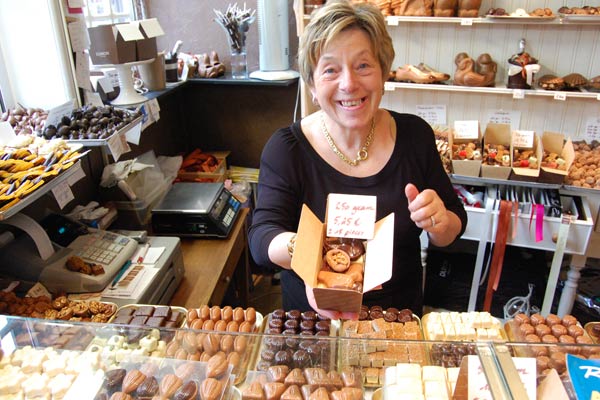
Nobody does chocolate like the Belgians. There’s something elegant about dropping in on the most expensive chocolate-maker in town—there’s one in every Belgian burg. Find a place that’s family-run, where locals buy their chocolate fresh, and people expect the shop to close on hot days because quality chocolate can’t survive the heat. Skip trendy “gourmet chocolatiers” who serve their chocolates with gimmicky flavors from gorgonzola to ginger—go for the purists.

A big percentage of American tourists visit Belgium as pilgrims…beer pilgrims, traveling all the way to that country to savor its plush and creamy beer. Hang out with devotees for a few nights and became a believer. My favorite Belgian evening is spent in an upscale pub, savoring a monk-made Trappist Blauwe Chimay (for example) with a rustic plate of bar food with locals who are both patriotic and evangelical about their Belgian brew.

In Holland, the “pilgrims” are more likely focused on the marijuana scene. Even if you’re not interested in smoking, drop by a “coffeeshop” for a whiff of its ambience. Baristas are patient in explaining to awkward Yankees how things work. Then, make an education out of the experience—talk to a local policeman, getting his take on why the Dutch stopped arresting pot smokers in 1976 and why this approach works. (I know, I just can’t pass up an opportunity to talk drug policy. To see the interesting “America’s Top Ten” list I just made in Coed Magazine, click here).

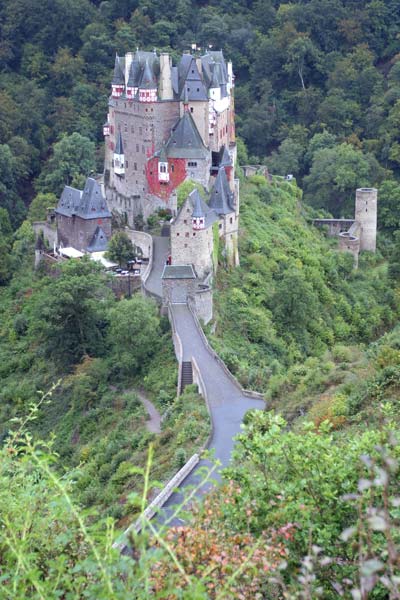
In Germany, my favorite castle experience is at Burg Eltz. Nestled in an enchanted forest just above the Mosel River, the Eltz castle is lovingly cared for by the aristocratic family that has called it home for centuries. The noble lady still puts out fresh flowers for her many visitors. Hike in from the train station and the experience gains a kind of magic. After an hour climbing under gentle trees through an ancient forest where you’d expect Friar Tuck and Martin Luther to be hiding out, the castle of your fantasies suddenly appears.

Every traditional German beer hall or Bierstube has a table for regulars—just look for the Stammtisch sign. To sample German conviviality at its best, make friends with the Stammtisch gang and get invited to join them at their table. Alternate between sniffing snuff (snorted from the “anatomical snuffbox” created by lifting your thumb high above your first finger) and drinking local schnapps. Before you know it, you’re leading the gang in a rousing rendition of “Country Roads.”

While perhaps the most touristy thing to do in Germany’s most-touristy town, following Rothenburg’s Night Watchman around on his evening rounds is a medieval hoot. Walk the town’s dark and evocative back streets with Georg Baumgartner, the wildly entertaining character whose delivery makes you forget what century you live in. While mobbed with tourists in mid-day, Rothenburg empties at night, when its flood-lit ramparts are all yours.

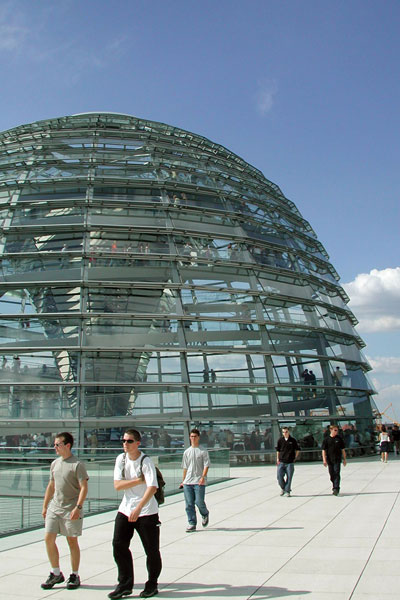
Climb the shiny glass dome that now caps the Reichstag (parliament building) in Berlin—for me, the most energizing thing to do in Germany’s most-energized city. From the top, look down on Germany’s legislators at work. You’re surrounded not by tourists but by Germans, who are determined to get politics right from now on.