Here you can browse through my blog posts prior to February 2022. Currently I'm sharing my travel experiences, candid opinions, and what's on my mind solely on my Facebook page. — Rick

My Naked Hot Tub Experience


Ashley Sytsma, Rick’s publicist, is a guest writer this week. She’s reporting on her travels to Georgia (the one over by Russia).

When I heard Tbilisi was known for its ancient bath houses, I put it high on my sightseeing list. Who wouldn’t love a relaxing spa day? But I had no idea what I was in for.

Georgia’s capital was founded thanks to one thing: natural sulfuric hot springs. According to legend, 1,500 years ago King Vakhtang was hunting with his trusty falcon. Injured while catching a pheasant, the falcon fell into a small pool. The bird’s body was retrieved…fully cooked. The poor creature was boiled to death. The king decided this would be the perfect place to pass the cold winters. He called it “Tbilisi,” or “warm place.”

The domed roofs of Tbilisi's ancient baths.
The domed roofs of Tbilisi’s ancient baths.

Ever since then, people of all classes and creeds have soaked, bathed and warmed themselves in large, brick bath houses here. The one we chose for our adventure was hundreds of years old, and its facade was covered in bright-blue tiles. It looked more like a mosque than a giant hot tub. With bathing suits in hand, my husband and I trotted in.

Smaller test

This spa was different from those back home. There was no calming music or iced cucumber water, no perky hostess waiting to give us a tour of the facilities. Instead we walked up to a small office set behind glass. The lobby, while sparkling clean, smelled of stale cigarettes. A bustling beauty parlor was tucked into the corner.

In broken English, the office worker barked, “No man-woman together in group rooms. Together only in private rooms. You go see!”

While I waited, my husband ran upstairs to check out the men’s area. He came down and giggled, “Let’s get a private room. That is, unless you want to relax with 50-year-old naked men smoking cigarettes and drinking beer.”

As we paid, the worker asked, “You want massage?”

“Yes, please!”

“OK. I call him.”

Our private room was actually two large rooms with a dressing area and a toilet. It was very clean but dingy, with modern and Soviet-era tiles. However, the spaciousness and the elegantly domed ceilings and arched entryways hinted at past luxury.
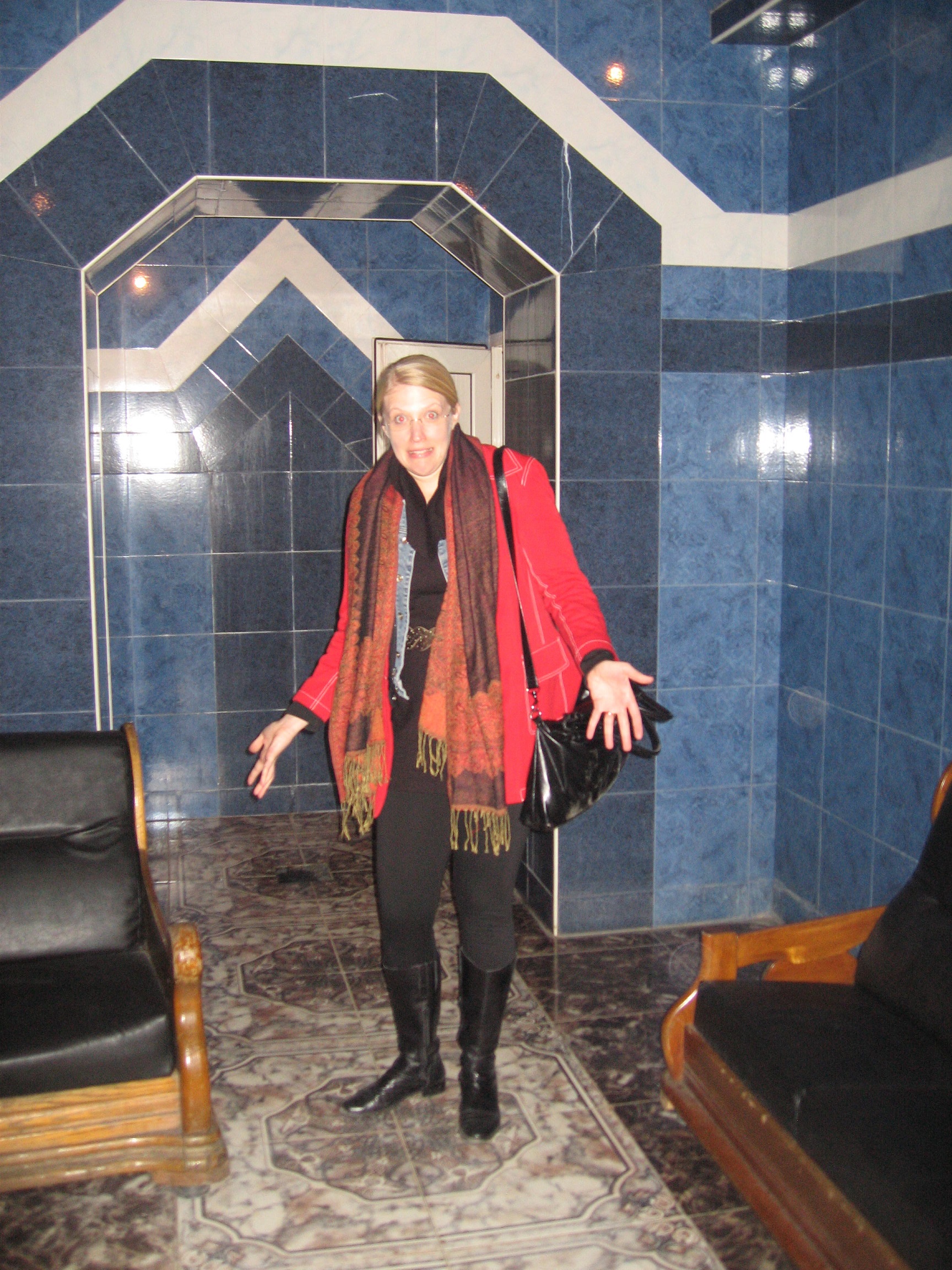
Our dingy (though clean) private bath room.

After changing into our suits, we nestled into the hot (albeit sulfur-stinky), five-foot-deep tub. Lounging there, it was easy to imagine a time when harems of naked women soaked, ate grapes and drank wine in that same room. We floated and sipped beers.  I even felt saucy enough to remove my bikini top.

Our peace was interrupted by a small white-haired man wearing boxers — the masseur. I quickly reached for my top, but with a shooing motion he made it clear that it wasn’t necessary.

His kind eyes and warm, toothless smile put us at ease. Through an elaborate set of hand gestures (he spoke no English and we spoke no Georgian), I was instructed to get completely naked and lie face-down on a large marble table.

With a firm slap on my back, he got to work. Using soap suds and what felt like a Brillo Pad, he began scrubbing every nook and cranny of my body. At first it felt nice, but with increased pressure and vigor, my skin quickly turned cherry-red and my few raised moles began to bleed. The force was so strong, he needed to show me how to properly grasp the table to keep from sliding off. He flipped me over. I felt like a large fish being descaled. He enjoyed pointing out the amount of dead skin flaking off of my body.

Next came the “massage.” With the full force and weight of his body, my white-haired friend tugged on my arms and legs, popped all of my joints, and worked my muscles like he was tenderizing a huge human steak. By the end, he was obviously proud of his work and sweating from exertion. I thanked him and sheepishly sunk back into the hot water.

I never truly understood the term “squeaky clean” until then. There wasn’t a lick of dead skin or oil left. I felt like a piece of Tupperware pulled from a hot dishwasher. I couldn’t help but laugh at how much it…hurt!

After all was said and done, we emerged into the daylight dehydrated, physically exhausted and still dripping dry. We leaned against a wall to catch our breath. As we rested, we watched hardy, working-class men walking out with a spring in their step, invigorated by the same scrub that had almost killed me. Humble old ladies proudly protected their new hairdos with bright silk scarfs. What a sorry sight we must have been to these well-groomed regulars!

That day I realized Tbilisi’s famous “spas” aren’t spas at all. They are bath houses…places for people without hot running water at home to bathe. The experience gave me a treasured insight into real working-class Georgian life and culture. And that was worth every inch of red skin.
Spiritual Awakening in One of the World’s Oldest Christian Nations


Ashley Sytsma, Rick’s publicist, is a guest writer this week. She’s reporting on her travels to Georgia (the one over by Russia).

Georgia is a Christian outpost in a largely Islamic part of the world. Despite living farther east than Syria, Egypt, and parts of Iraq, Georgians have a strong Christian tradition. It was the third state to convert to the religion (after Armenia and Constantine’s Rome) in the third century A.D., and since then has resisted many attempts at forced conversion by invaders.

The most recent threat to Georgia’s religious traditions came during the decades living under Soviet Union’s state-enforced atheism. However, since Georgia’s independence in 1992, Orthodox Christianity is experiencing a flourishing revival…one that I couldn’t help but get swept up in.

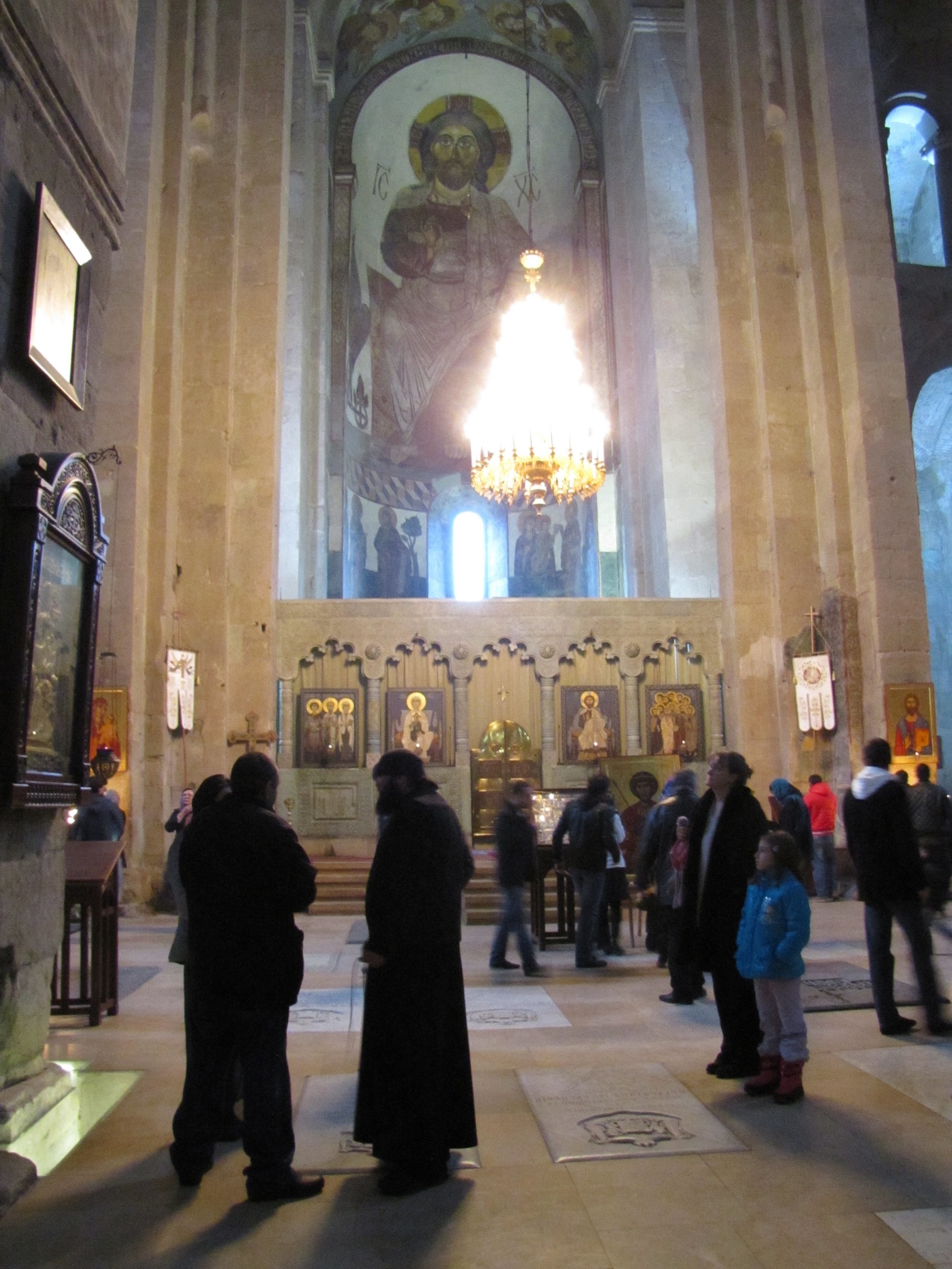
Dutifully following my guidebook’s walking tour, I slipped into a small cathedral famed to be the oldest in Tbilisi. Now, I enjoy a good European cathedral as much as the next traveler. But after many years of travel, church fatigue has set in. Another church is worth a peek, but not much more. Plus, I find myself feeling sorry for the few worshipers: Would you want to be photographed by hordes of tourists while conversing with your Lord and Savior? Heck, no! So my intention was to step inside, poke around, read about its history and continue on my walking tour. Instead I stayed for hours.

What first struck me was how busy the church was. Despite it being a Wednesday afternoon, it was packed. Mothers chased unruly toddlers. Husbands wandered arm-in-arm with their wives. Neighbors waved at each other from across the nave. Believers of all ages meandered from icon to icon — pausing to delicately touch the glass, whisper a prayer, light a candle, kiss the corner of the frame and rest their foreheads lovingly where they had kissed…all with the tenderness they would show a beloved grandmother.

Georgia's cathedrals function more like community centers than places of worship.
Georgia’s cathedrals function more like community centers than places of worship.

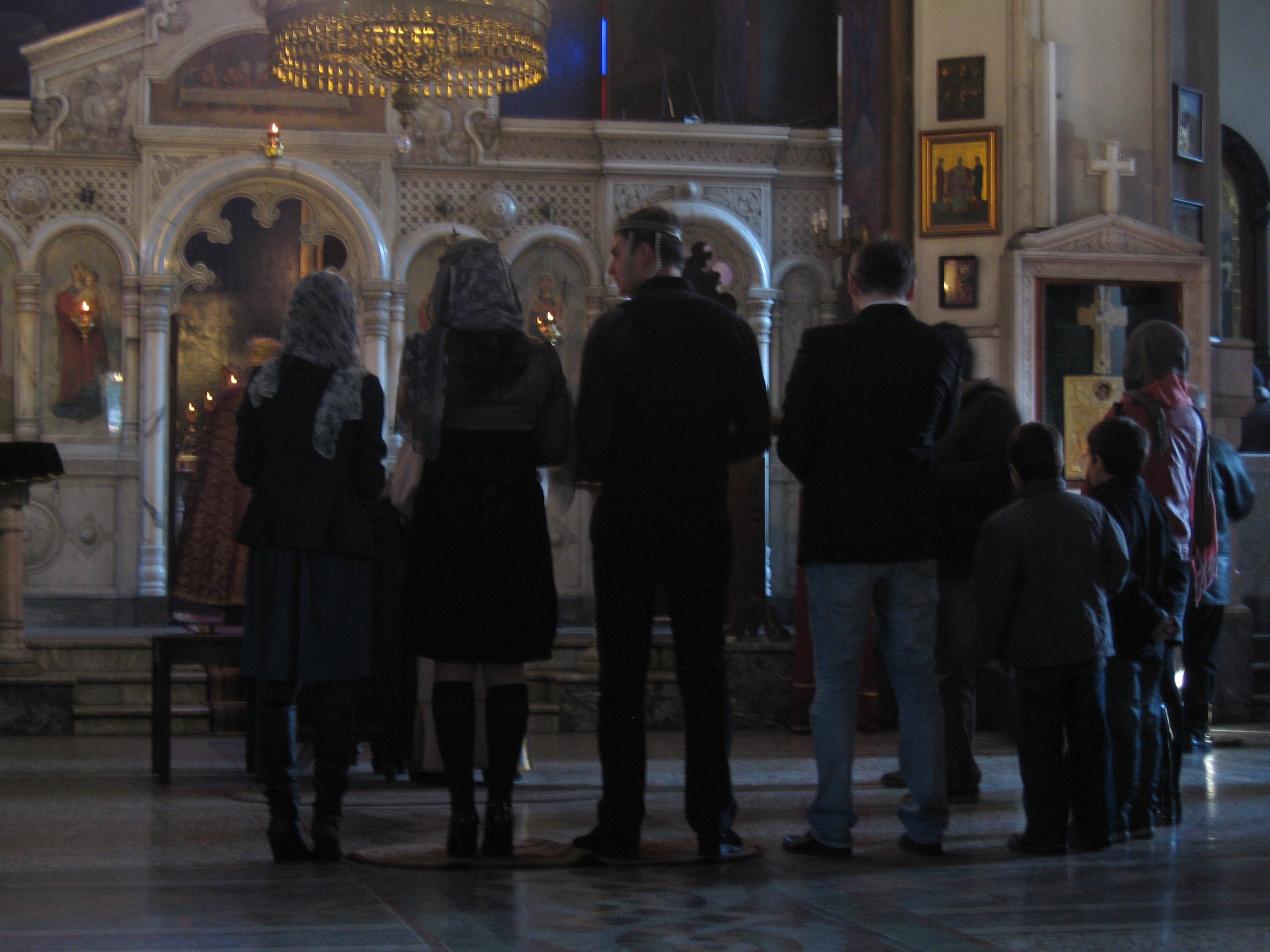
A half-dozen priests busily performed ceremonies for small clusters of followers. On the right, a baptism for three babies: Priests-in-practice shuttled in holy water with large, green-plastic buckets. In the center, a casual wedding: Wearing street clothes, a young couple took their vows. During our trip, we even saw an open-casket funeral — dead body and all.

Nothing was private. Nothing closed to the public. It was community in its truest form.

A simple wedding ceremony.

The pure, sweet love these believers had for their God was palpable. As I watched quietly from the corner, I was moved to tears by their tender devotion and strong faith.

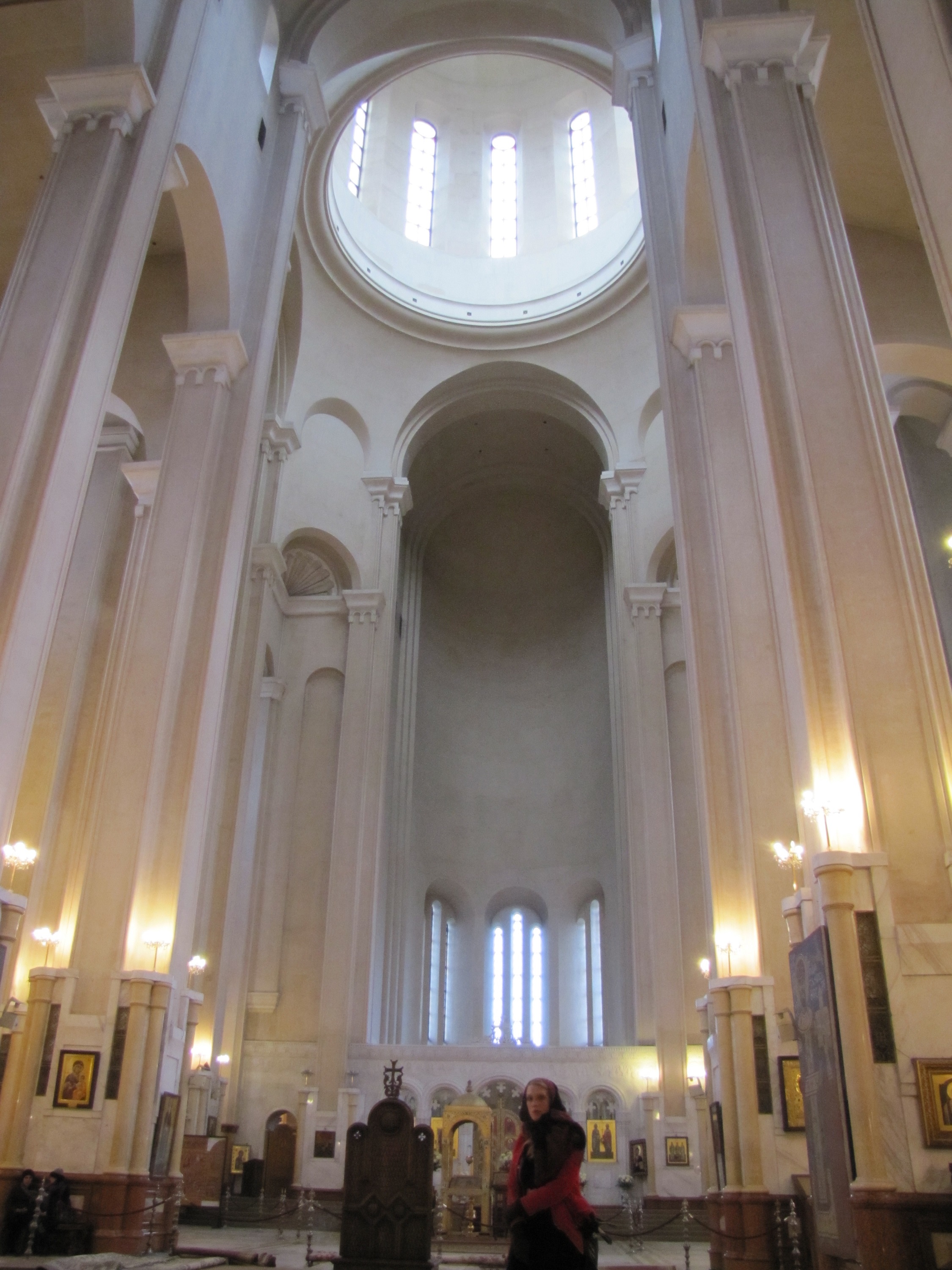
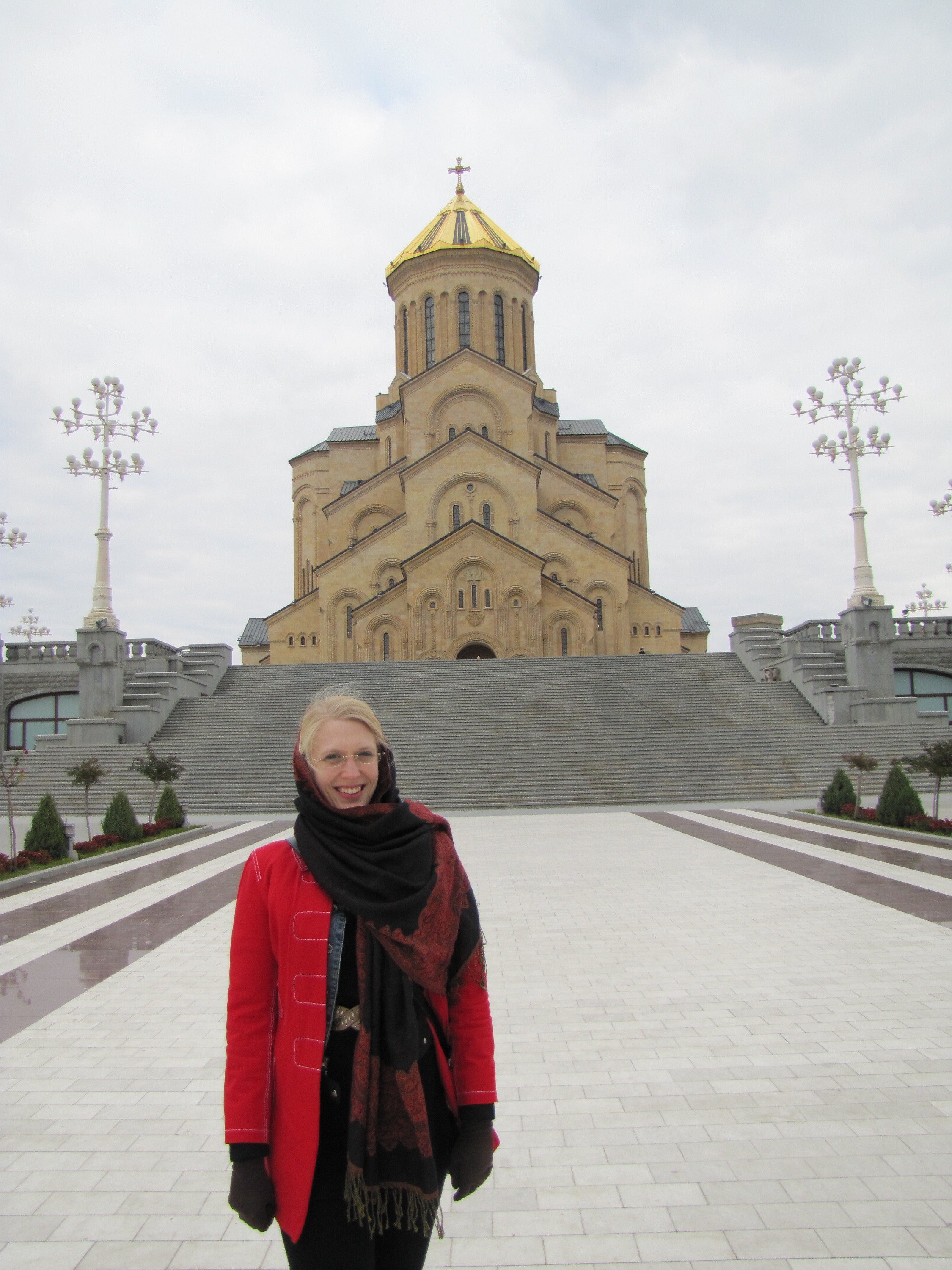
In every single church we visited, we found a similar scene. If you ever found Georgia’s streets empty, you could safely assume everyone was at church. In fact, there’s such a demand for space that in 2005, Tbilisi opened one of the largest Eastern Orthodox cathedrals in Christendom. It’s grand and beautiful, but its interior walls are still bare. They’ve started a collection to pay for a brand-new set of frescoes.

Tbilisi's newest cathedral is fundraising for frescoes.
Tbilisi’s newest cathedral is fundraising for frescoes.

Many people try to explain away this spiritual revival: Pent-up religious fervor being released after years of Soviet rule. A show of Christian religious strength in an Islamic world. An exhibition of national pride. They may be right. But above all else, what I saw was a deep and real love of God.

Georgia: Europe’s Ultimate Back Door


While most Americans refer to Central Europe (including the Czech Republic, Poland, Hungary, and Croatia) as “Eastern Europe,” the countries deeper into the former Soviet Union are the
real Eastern Europe. And lately, I’ve heard lots of rumbling that destinations like Ukraine, Armenia, and Russia are offering very rewarding travel experiences.

Ashley Sytsma, my publicist, is in Georgia on a mission to learn about its nascent wine industry for her family’s wine business. As I know nothing about this corner of Europe, I invited her to guest-host my blog for a week.

So, let’s all go to Georgia — the one over by Russia. Take it away, Ashley!

A while back, my husband asked me if I wanted to go with him to Tbilisi, Georgia to buy wine for our family business. Despite not knowing a thing about the country, I said, “Why not?” Knowing what I do now, my only regret is that I hadn’t visited Georgia sooner.

After a jolly nine-hour layover of beer-drinking in Munich, we flew east for four hours, landing bleary-eyed (and slightly hung over) at 3 a.m. in a bitterly cold and silently sleeping Tbilisi. Driving to our hotel, we quietly murmured in awe, “Where the heck are we? This is wild…”

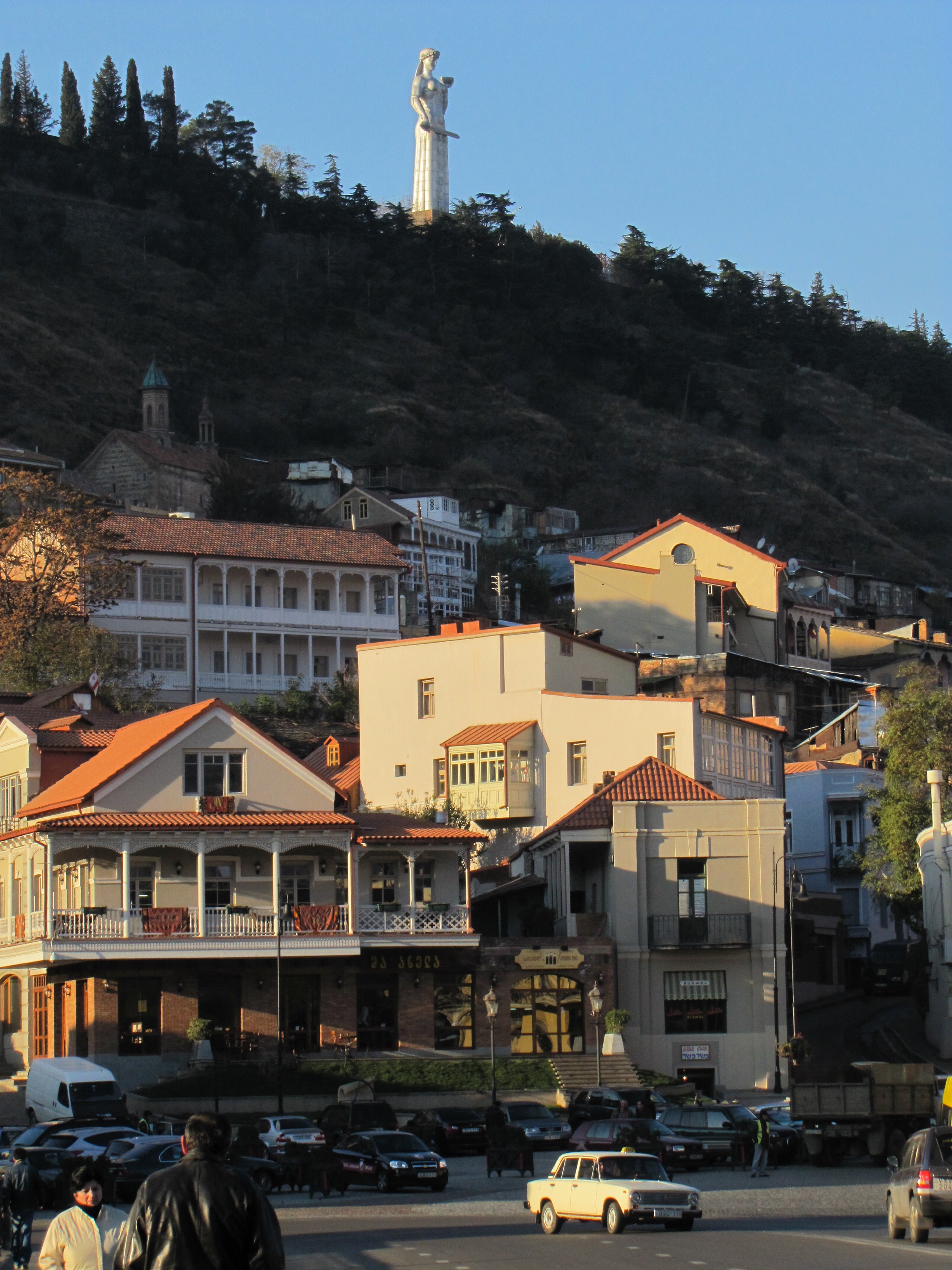
Colossal Soviet-built concrete apartment towers lined the George W. Bush highway (named after the first US president to visit independent Georgia). Orthodox cathedrals were illuminated with pink, blue, and yellow lights. Ornately carved wooden balconies (which the city is famous for) sagged on their building’s crumbling foundations. On one of Tbilisi’s many hills sat a television tower that looked like something from The Jetsons and glittered nonstop like the Eiffel Tower. On another hill stood a piercingly white 70-foot statue: Mother Georgia forlornly watching over her sleeping city, a bowl of wine in one hand for her guests and a sword in the other for her enemies.

Mother Georgia overlooking her city with a bowl of wine for her guests and a sword for her enemies.

Rick likes to discover Back Doors — special places where we travelers have our mental and spiritual furniture rearranged, and where we learn that other parts of the world consider different truths self-evident and God-given. During that ride from the airport, I knew we were about to explore the ultimate European Back Door.

By noon, we were hiking yet another hill to Tbilisi’s ancient Narikala Fortress, which is known for its spectacular city views.  Ascending the hill is like climbing up through time, as the fortress’ outer wall is a layered patchwork of different stones and building styles. In many ways, this fortress tells the history of the entire nation. Georgia sits at the center of a very profitable crossroads. Its strategic location and lush natural resources have (to the war-weary Georgians’ dismay) made it a target for countless invasions. The Romans, Persians, Ottomans, Arabs, Russians and even Mongols have all played parts in Georgia’s tumultuous history. With each invasion, the fortress was bombed. With each new victor, the walls were rebuilt on top of the destruction — the oldest layer being from the fourth century A.D., the newest being the fortress’ crown jewel: a small Orthodox church that opened only a few years ago.

As we caught our breath at the top, we gazed out over the magnificently beautiful city, marveling at the fact that our only company was a sleeping dog, the resident monk’s beehive, and an elderly Georgian man doing his daily exercises. As we listened to the cold wind whistle through the ancient rocks and trees, we giggled at our good fortune at having this place to ourselves.

For such a stunning place, where were all the tourists?

Join me as I travel in Georgia.

Donate, Get Cool Gifts, Make a Difference for Christmas

If times seem tough for our friends and family now, imagine how tough they are for hungry and poor people. To inject a little extra meaning into the holiday season, each Christmas I put on a fundraiser to help Bread for the World. This year the needs and rewards are particularly great. I’d love to send you a special Christmas gift package in thanks for your gift to empower Bread’s work.

Bread for the World is a non-profit, non-partisan organization working in Washington, DC to urge our government to address the needs of hungry people at home and around the world. Especially today, when there are so many interests elbowing for attention on Capitol Hill, hungry and poor people need a strong, compassionate advocate like Bread.

While all the great charitable work we do as caring citizens is important, it’s interesting to realize that just a 6 percent drop in funding of government programs for hungry and poor people amounts to as much money taken from these causes as all the private donations put together raise. That means that the advocacy work of Bread for the World has a huge impact on the most vulnerable among us. Considering the value of this advocacy work, I’m convinced that supporting Bread is the best way to leverage my charitable giving. That’s why I’ve been a Bread member for thirty years now.

David Beckmann, the president of Bread for the World (who was honored with last year’s World Food Prize for his leadership in the fight against hunger) recently explained to me how Bread’s work is particularly vital, productive and worth empowering with our financial support now. “Deficit hawks have learned they can shape the political landscape of our country with the tool of defunding.  We are at a point now where Congress is threatening deep cuts in the programs that provide help and opportunity to poor people in our country – programs such as food stamps, Medicaid, and tax credits for the working poor,” he said. “Of course, all Americans can be enthusiastic about our government running a tight fiscal ship.  But if the budget is to be balanced on the backs of our poor, innocent children will suffer, and the civility woven into the fabric of our society will be threatened.” I see Bread for the World not as a charity but as a service. They are transforming my concern about hunger into effective action by waging a courageous and difficult battle to protect struggling people in our country and around the world.

So here’s my challenge to you for this Christmas: Help Bread for the World’s dedicated staff do their work with your gift of $100. As a thank you, I’ll send you three gifts: my Rick Steves’ European Christmas DVD (our PBS-TV special which celebrates a traditional, non-commercial, and sacred Christmas in seven different countries); our European Christmas coffee-table book (sharing the fun insights and best photos I picked up while producing this special); and the Christmas music CD we produced while filming (featuring our 20 favorite European carols). I’ll happily pay for the cost of these gifts and postage so that Bread can use 100 percent of your donation for their work. Make your gift by Dec. 15th and you’ll get everything in time for Christmas.

It’s my hope that these gifts will bring a wonderful new twist to your family celebrations for years to come (as they have for mine) while enticing you to empower Bread for the World with your donation. To learn more and make your gift to Bread, please follow this link.

Thanks and Merry Christmas,

Rick

P.S. For every dollar Bread raises, it leverages $100 in terms of development aid and funding vital to the lives of poor and hungry people in our country and abroad.

My Favorite Travel Moments in 2011

With each trip I take, I bring home magic memories — travelers’ gold nuggets of experiences I will remember all my life. In this month’s edition of Travel News, in words and pictures, I’m sharing a few favorite moments that gave my 2011 travels that extra sparkle:


All of my Protestant life I’ve watched hard-scrabble pilgrims and frail nuns climb Rome’s Scala Santa (Holy Steps) on their knees. I always observed as though they were in a parallel universe. This year, I passed into that universe. I picked up the little pilgrim’s primer explaining what holy thoughts to ponder on each step, knelt down, and — one by one — began climbing the Scala Santa. Knees on stone, I experienced each of the steps Jesus climbed on his way to being condemned by Pontius Pilate. If they could, my kneecaps would have been screaming. In my pain, the art that engulfed the staircase snapped into action. And, while my knees would never agree, the experience was beautiful.
 

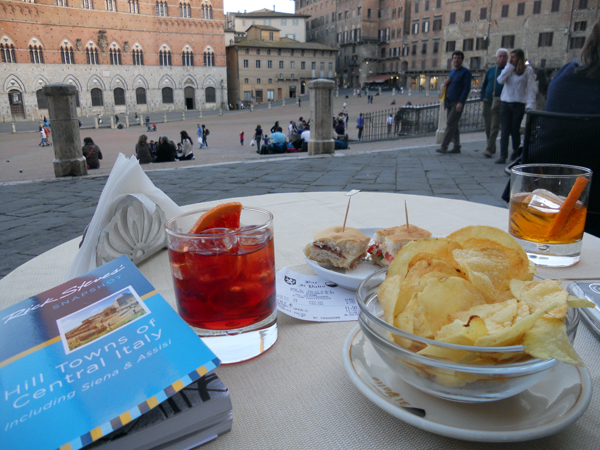
I’m not the cocktails-at-happy-hour type of traveler. But this year, in the early evening light, with no harsh shadows to darken the natural pastel pretty of Siena’s stones, I sat at the best table overlooking Il Campo — my favorite square in Europe — and enjoyed a cocktail. After a leisurely hour presiding over the passegiatta action that turns Il Campo into “il Italian fashion show,” I left thinking that was the best five euros I could have spent.
 

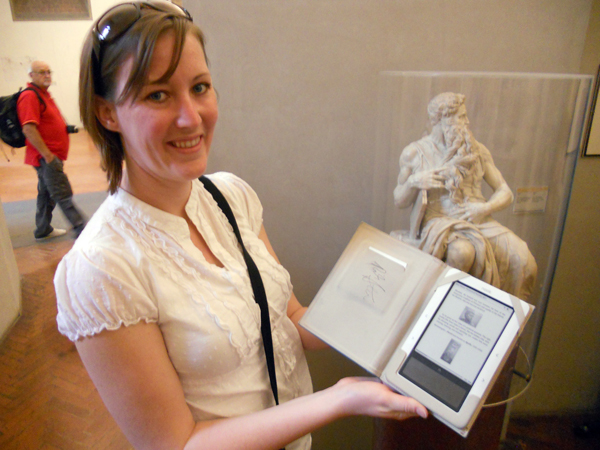
This year I saw lots of travelers with new-fangled tablets, reading my guidebooks electronically. It’s so fun to see people touring with a non-print version of my work. In Florence, I experienced a moment when the future arrived. In the shadow of David, a tourist handed me something and asked, “Can you sign my nook, please?”
 

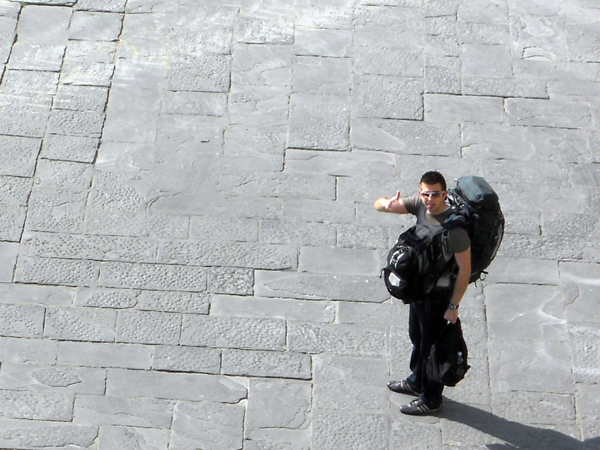
Every dad knows that the worst way to have your son embrace something you care about is to push for it. I’ve made a careful point to let my 24-year-old son, Andy, blaze his own path. It turns out he’s every bit as much of a creature of the road as I was in my twenties. For half the year, Andy basically lives on the road in Europe — sleeping in hostels and running his student tour business out of cafes that offer free Wi-Fi with a drink. We crossed paths in Florence and hung out together for a few days. He even got a cameo in one of my TV episodes (joining us for a dinner on film). When it was time for him to head out, he dropped by my hotel room to say goodbye. Hugging Andy, loaded up with all his gear, I marveled at this young man’s physical and emotional strength. Afterward, from my third story hotel room window, I secretly watched him walk across the Piazza S.S. Annunziata, and plunge back into his backpacker world. It was a meaningful moment: My son travels with a fresh spirit, curiosity and boundless energy that I find inspiring.
 

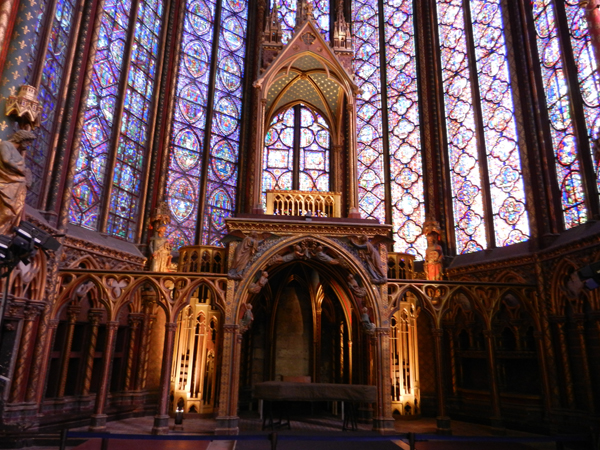
My TV crew and I are often charged a lot of money to film inside great museums and palaces on days when they are closed to the public. While sometimes a headache, this comes with the joy of being all alone with great art. This past year I’ve been aroused (artistically) while alone with Klimt’s Kiss in Vienna. In Paris, I’ve stood silent and solitary in the splendor of the glorious, gothic Sainte-Chapelle, the mysterious Mona Lisa, and the exquisite Unicorn Tapestry. In Italy, I’ve been all alone with a room full of Botticelli paintings, with Bernini’s Apollo Chasing Daphne, with Leonardo’s Last Supper, and with two masterful Davids — Donatello’s and Michelangelo’s. Each experience was a kind of artistic climax, leaving me craving a cigarette.
 

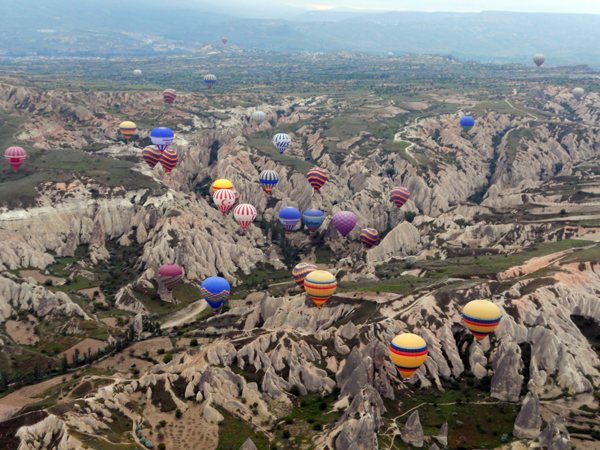
I’ve never spent much time fantasizing about parachuting or hang gliding. I’ve accepted the notion that if God wanted me to fly, he’d have given me wings. I’m happy to be on the ground. But this summer I learned that even if I wasn’t blessed with wings, I’ve got an abundance of hot air and you can fly quite well with little more than that. I’ve always loved Cappadocia in Central Turkey. And this summer, while enjoying one of our Turkey tours, I joined the group for a majestic hot air balloon ride over the fairy chimneys of that exotic landscape. From the moment our basket slipped from land borne to air borne, I gazed in wonder, mesmerized, at the erosion-shaped stretch of Anatolia so steeped in memories of the struggles of civilization after civilization that have called this land home. Suspended gracefully over Cappadocia, I felt perfectly safe, at peace, delighted to put my fate in the hands of our Turkish captain.
 

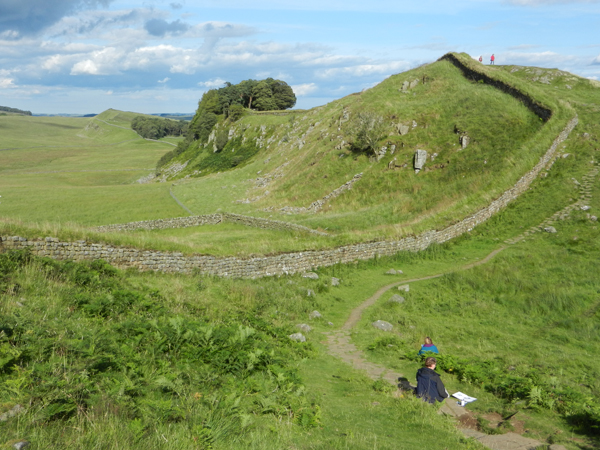
For years I’ve visited Hadrian’s Wall, the remains of the fortification the Romans built 1800 years ago to mark the northern end of their empire, where Britannia stopped and where the barbarian land that would someday be Scotland began. But I never ventured beyond the National Trust properties, the museums, and viewpoints from various car parks. This year, cameraman in tow, I grabbed a sunny late afternoon to actually hike the wall. When you’re scrambling along Roman ruins, all alone with the sound of the wind, surveying vast expanses of Britain from rocky crags that seem to rip across that island (like a snapshot freezing some horrific geological violence in mid-action) you need to take a moment and simply absorb your setting. As my cameraman did his work, I did just that.
 

Great teachers are heroes to me. They’ve shined lights where I had been in darkness. They’ve inspired me with things I’d thought were mundane. While their teaching must seem repetitive to them, with each student they get renewed, recognizing a need and filling it. Great teachers teach with passion and love. And they do it long past a normal retirement age, as if it is their purpose on this planet. One of these teachers is Malcolm Miller at Chartres. For thirty years I’ve been coming to see “Malcolm’s” great cathedral, its spires rising above the fields as I approach it from a distance. My heart leaps at the sight, as did the hearts of approaching pilgrims centuries ago. I come to Chartres on a kind of pilgrimage of my own…to be a student again...to be inspired. Twice a day, Malcolm Miller still meets with small groups of curious travelers. He sits them down on pews in front of his stained-glass “window of the day” and, as if opening a book, tells the story that window was created to tell. There, in Europe’s most magnificently decorated Gothic cathedral, Malcolm Miller gives voice to otherwise silent masterpieces of that age. This past year I was again in the front row, eager as a teacher’s pet, learning from Malcolm Miller.
 

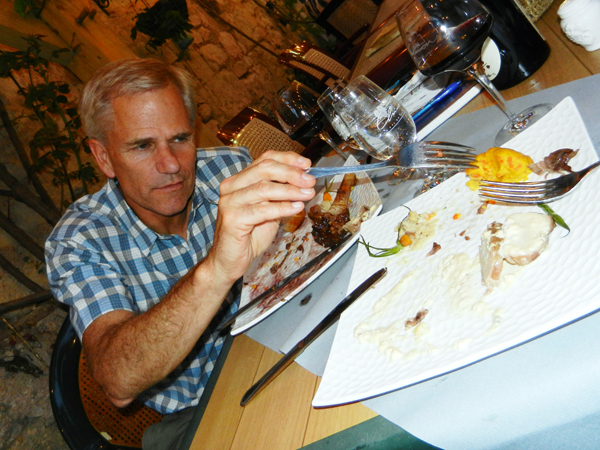
Coming from a picnicking, backpacker travel heritage, it’s taken me decades to recognize the value of a fine meal. Now, I can enthusiastically embrace a long, drawn-out “splurge meal” as a wonderful investment in time and money. I traveled through France this past summer with my buddy (and co-author of our France guidebook) Steve Smith. After each long day of research, we treated ourselves to the best meal in town, dedicated to the notion that you’re not really paying $50 for the food — it’s a three-hour sensual experience that happens to include your evening’s nourishment. Describing the very best meal of our trip — from start to finish, in elaborate detail — was a productive writing exercise. It not only gave me a great Facebook entry…it trained me to eat with sensory abandon.
 

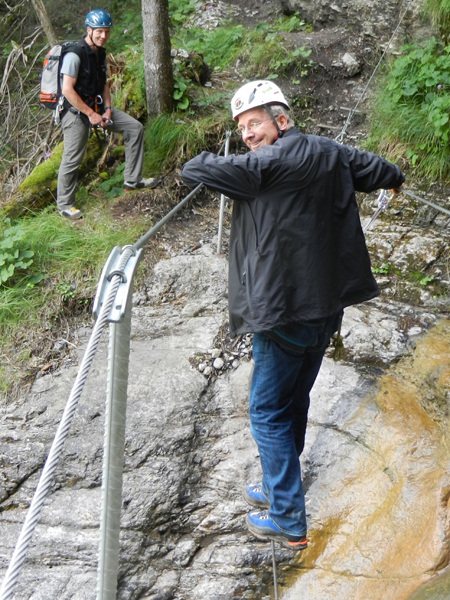
Returning to the same places year after year is not the best way to broaden my repertoire of travel delights that I hope to share with my readers. So my guidebook research has evolved into a system where I send a trusted fellow researcher into a town ahead of me to update all the nitty-gritty on restaurants, hotels, museums, prices and transportation ins-and-outs. I can then devote my limited time to what I call “living” the town or destination: climb the spire, rent a bike, enjoy a sunset drink at that bar with a view, join fans at the soccer stadium, and so on. Visiting my favorite village in the Swiss Alps this past summer, it occurred to me that I’d already ridden the lifts and hiked all the trails around Gimmelwald. But there was one experience listed in our book that I had yet to do personally: traverse the cliff-side cable-way called the Via Ferrata. So, my friend Olle and I pulled on mountaineering harnesses and clipped our carabineers onto the first stretch of a three kilometer-long cable, setting off with a local guide on the “iron way” from Murren to Gimmelwald. The route does not follow the top of the cliff that separates the high country from Lauterbrunnen Valley — it takes you along the very side of the cliff, like a tiny window-washer on a geologic skyscraper. The “trail” ahead of me was a series of steel rebar spikes jutting out from the side of the cliff. The cable, carabineer and harness were there in case I passed out. For me, physically, this was the max. I was almost numb with fear. After one particularly harrowing crossing — gingerly taking one rebar step after another — I said to the guide, “Okay, now it gets easier?” And he said, “No. Now comes Die Hammer Ecke (Hammer Corner)!” For a couple hundred meters we crept across a perfectly vertical cliff face — feet gingerly gripping rebar steps, cold and raw hands on the cable, tiny cows and a rushing river 2000 feet below me, a rock face rocketing directly above me with my follow-the-cable horizontal path bending out of sight in either direction. When we finally reached the end and I unclipped my carabineer for the last time, I hugged our guide like a full-body high-five, knowing this was an experience of a lifetime. For the next several nights I awoke in the wee hours, clutching my mattress.

Thoughtful, rewarding travel goes way beyond collecting famous sights. It’s leaving our comfort zones to have experiences that surprise, thrill, challenge, enrich and inspire us. These create insights and memories that we’ll forever treasure. So raise a glass. Here’s to — for all of us and those we love — a heaping helping of rewarding travel moments in 2012.