Here you can browse through my blog posts prior to February 2022. Currently I'm sharing my travel experiences, candid opinions, and what's on my mind solely on my Facebook page. — Rick
Rene Konings has been a much-appreciated bus driver for our tours for about 15 years. And for three days, I enjoyed the luxury of having Rene as my personal driver through the Netherlands. Taking time to visit places not in my guidebooks, it was a vacation in the middle of my trip. Here, we’re in the historic yet virtually unknown-among-American-travelers little town of Zierikzee. And I’m getting a tasty lesson in the best fish ‘n chips I think I’ve ever enjoyed.
If you can’t see the video below, watch it on YouTube.
Here are a few tidbits from my recent research trip to Brussels, Belgium:
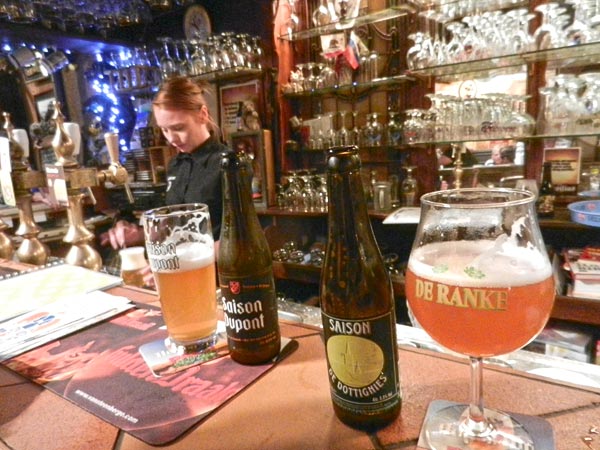
High-Maintenance Belgian Beer Drinkers - Belgians are exacting consumers when it comes to beer. They appreciate a pub that's not owned by a single brewery, freeing them up to serve a good selection of their country’s literally hundreds of microbrews. Many Belgian pubs brag about the number of beers they serve. To add complexity to the mix, most special local beers are served in a glass unique to that beer. Connoisseurs insist that each beer’s character comes out best in the proper glass. If there’s a run on a particular beer and the pub runs out of that beer’s glasses, they ask the drinker whether they’d accept a close match for a glass, or if they’d prefer to change their beer order. Many will switch beers rather than drink one from the wrong glass.
The Glassy EU Headquarters in Brussels - The European Union headquarters — by bringing in tens of thousands of diplomats, bureaucrats, lobbyists, and so on — is literally changing the demographic make-up of Brussels. As the EU tries to accommodate its 23 official languages (and they do, in some ways), the practical language of governance has become English. The EU has had such an impact on Brussels that some say in a generation, English will become the city’s first language. The EU headquarters complex has long welcomed visitors with a pretty simple info desk and shop. But now it’s opened up a big and high-tech “Parlamentarium,” giving those who visit something much more substantive to experience and enjoy. That, coupled with the hourly free tour of the parliament building itself, makes for a much better visit now than in past years.
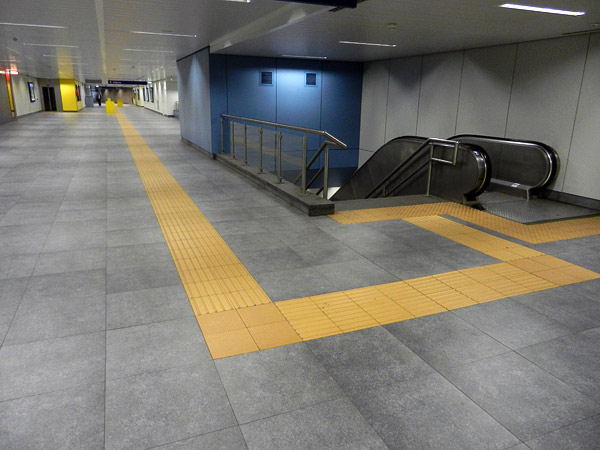
Feelin’ Groovy but Misguided Compassion? Early in the morning, the groovy sidewalks designed for blind people with white canes add an extra dimension to station designs all over Europe. These are expensive and well-intentioned, but I've never actually seen one used for its intended purpose. In fact, in many places, I've seen these grooves blocked by kiosks, flowerboxes, and bike racks. And yet, it seems that no one at the city council has the nerve to say no to a nice (but apparently impractical) idea for blind people.
As I’ve been traveling through Belgium, I’ve been thinking about how rare and special it is when someone finds his or her niche. Here are three examples.
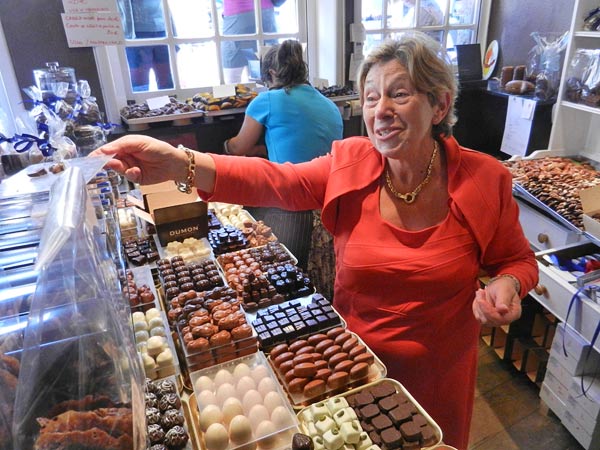
It’s so clear: A fundamental part of the joy of travel is to simply be in the presence of people who’ve found their niche. We only live once on this beautiful planet, and we have the personal challenge of doing with our lives what God intended — of finding our niche. I think that when you’re blessed enough to find a livelihood that fits your spirit, it gives you energy — and you, in turn, give the world a positive radiance. In Bruges, Belgium, Madame Dumon makes and sells chocolate. Keeping her little brown world cool in a heat wave, she makes sure everyone who enters gets a rich and creamy sample of their choice.
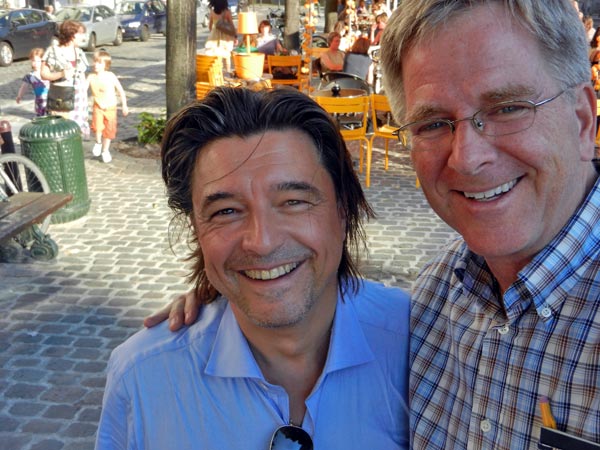
Michael Smeester runs my favorite hotel in Brussels. When you see his smile and feel his personal energy, you are not surprised by the name he chose: Hotel Welcome. With every visit to Brussels, I have a tradition of teaming up with Meester Smeester to blitz the city’s restaurants and be sure I’ve got the very best in my guidebook. The new edition will be much-improved as — with Michael’s help — I once again saw why locals brag, "Belgian cuisine...we eat as hearty as the Germans and as well as the French.”
Reflecting on My Coffin in Antwerp - I generally travel alone. It’s just me and my mortality. Travel often has me thinking about life, and, now that I’m at the age where I look at the obituaries more than I used to, I’m also aware that the years do go by. For centuries, churches have contributed to that awareness in different and creative ways. Here in Antwerp’s cathedral, a glass coffin seemed to fit this vagabond’s body as if tailor-made.
While in Amsterdam, I always rent a bike for the duration of my stay and lock it to a “staple” (as the bike hitching racks here are called) in front of my hotel. A three-minute pedal away from the busy center puts me in the lazy, scenic, and mellow Jordaan district.
If you can’t see the video below, watch it on YouTube.
Nurseries promise you can take most of their seeds back into the USA. An exception is this marijuana starter kit.
Dutch pot smokers are complaining that the generation that was running naked on acid around Amsterdam’s Vondelpark during the Sixties is now threatening the well-established, regulated marijuana trade in the Netherlands.
Responding to international pressure and conservatives in rural and small-town Holland, the federal government is cracking down on coffeeshops (which legally sell marijuana). But big-city mayors, like Amsterdam’s, will fight to keep them open. Amsterdam’s leaders recognize that legalized marijuana and the Red Light District’s prostitution are part of the edgy charm of the city; the mayor wants to keep both, but get rid of the accompanying sleaze. The Dutch have learned that when sex and soft drugs are sold on the street (rather than legally), you get pimps, gangs, disease, hard drugs, and violence. Amsterdam recognizes the pragmatic wisdom of its progressive policies and is bucking the federal shift to the right. Locals don’t want shady people pushing drugs in dark alleys; they’d rather see marijuana sold in regulated shops.
While in Amsterdam, I took a short break from my guidebook research to get up-to-speed on the local drug policy scene. I find this especially interesting this year, as I’m co-sponsoring Initiative 502 in Washington State, which is on track to legalize, tax, and regulate the sale of marijuana for adults (on the ballot this November).
The Netherlands’ neighboring countries (France and Germany) are complaining that their citizens simply make drug runs across the border and come home with lots of pot. To cut back on this, border towns have implemented a “weed pass” system, where pot is sold only to Dutch people who are registered. But the independent-minded Dutch (especially young people) don’t want to be registered as pot users, so they are buying it on the street — which is rekindling the black market, and will likely translate to more violence, turf wars, and hard drugs being sold. The next step: In January of 2013, this same law will come into effect nationwide — including in Amsterdam, whose many coffeeshops will no longer be allowed to legally sell marijuana to tourists.
Locals point out that the Dutch are not more “pro-drugs” than other nations. For example, my Dutch friends note that, while the last 20 years of US Presidents (Clinton, Bush, Obama) have admitted or implied that they’ve smoked marijuana, no Dutch prime minister ever has. Many Dutch people are actually very anti-drugs. The Dutch word for addiction is “enslavement.” But the Dutch response to the problem of addiction is very different from that of the US.
Being a port city, Amsterdam has had its difficult times with drug problems. In the 1970s, thousands of hard-drug addicts made Amsterdam’s old sailor quarter, Zeedijk, a no-go zone. It was nicknamed “Heroin Alley.” To fight it, they set up coffeeshop laws (allowing for the consumption of pot while cracking down on hard-drug use). Today Zeedijk is gentrified, there’s no sense of the old days, and various studies indicate that Holland has fewer hard-drug users, per capita, than many other parts of Europe.
From the mid-1980s to the mid-1990s, the number of coffeeshops exploded. The Dutch observed that marijuana use rates increased, too, so they made changes, closing shops that ignored rules or generated neighborhood complaints. Now, new coffeeshop licenses are no longer being issued, and the number of coffeeshops in Amsterdam has declined from a peak of over 700 to about 200 today. With the movement afoot to crack down on things, coffeeshops are trying harder than ever to be good citizens and to nurture good relations with their neighbors.
While most Americans like their joints made purely of marijuana, the Dutch (like most Europeans) are accustomed to mixing tobacco with marijuana. There are several reasons: Back in the 1970s, most “pot smokers” here smoked hash, which needs to be mixed with something else (like tobacco) to light up. Today, more Dutch prefer “herbal cannabis” — the marijuana bud common in the US — but they still keep the familiar tobacco in their joints. Tobacco-mixed joints also go back to hippie days, when pot was expensive and it was simply wasteful to pass around a pure marijuana joint. Mixing in tobacco allowed poor hippies to be generous without going broke. And, finally, the Dutch don’t dry and cure their marijuana, so it’s simply hard to smoke without tobacco. Any place that caters to Americans will have joints without tobacco, but you have to ask specifically for a “pure” joint. Joints are generally sold individually (for €3 to €5, depending on the strain you choose).
Coffeeshops are allowed only half a kilo (about a pound) of pot in their inventory at any given time. On a typical day, a busy shop will sell three kilos (and, therefore, take six deliveries). Very little marijuana is imported anymore, as the technology is such that strains from all over the world can be grown in local greenhouses. (And the Dutch wrote the book on greenhouses.) “Netherlands weed” is now refined, like wine.
The Dutch hemp heritage goes way back in this sailing culture. In the days of Henry Hudson, hemp was critical for quality rope and for sails. The word “canvas” comes from the same root as “cannabis.” In fact, there was a time when tobacco was the pricey leaf, and sailors mixed hemp into their cigarettes to stretch their tobacco.
Tourists who haven’t smoked since they were students are famous for overdosing in Amsterdam, where they can suddenly light up without any paranoia. Coffeeshop baristas nickname tourists about to pass out “Whitey” — because of the color their face turns just before they hit the floor. The key is to eat or drink something sweet to stop from getting sick. Coca-Cola is a good fast fix, and coffeeshops keep sugar tablets handy.
No one would say smoking pot is healthy. It’s a drug. It’s dangerous, and it can be abused. The Dutch are simply a fascinating example of how a society can allow marijuana’s responsible adult use as a civil liberty, and treat its abuse as a health-care and education challenge rather than a criminal issue. They have a 25-year track record of not arresting pot smokers, and have learned that if you want to control a substance, the worst way to do it is to keep it illegal. Regulations are strictly enforced. While the sale of marijuana is allowed, advertising is not. You’ll never see any promotions or advertising in windows. In fact, in many places, the prospective customer has to take the initiative and push a button to illuminate the menu in order to know what’s for sale. And, surprisingly, marijuana is just not a big deal in the Netherlands — except to tourists coming from lands where you can do hard time for lighting up. A variety of studies have demonstrated that the Dutch smoke less than the European average — and fewer than half as many Dutch smoke pot, per capita, as Americans do.