Here you can browse through my blog posts prior to February 2022. Currently I'm sharing my travel experiences, candid opinions, and what's on my mind solely on my Facebook page. — Rick

Reflecting on 100 Days in Europe: Travel Memories Make You Richer

Finally home now after a hundred days in Europe, something occurred to me. I posted 100 blog entries in 100 days on my Facebook page. These generated about a hundred comments a day…and I read all 10,000. It’s fun to be in touch with my readers, and to able to share experiences like these in almost real time:

In Greece, when the Orthodox priest explained to me how he used incense to change the mood at Eastertime — from sadness to anticipation to joy — and then gave me a fragrant tour of his stash to make me a believer.

In Florence, when the chef giving one of our tour groups a cooking lesson coached me to knead the flour with more love and more determination, even as I doubted that a little egg could turn that dry wad of flour into usable dough. (Shortly after that, we ate our delicious homemade pasta with an unforgettable sense of triumph and accomplishment.)

In Nürnberg, when, standing at the doorway Hitler walked through to address the masses at his tribune, I saw and smelled the rot caused by Germans who, 75 years later, still urinate on that door.

tintern abbey wedding

In Wales, when craning my neck to enjoy the broken Gothic arches in the sky of the remote and romantic Tintern Abbey at the border of Wales and England, it suddenly got even more romantic as a harpist began strumming and an angelic bride and her happy father walked by me, arm-in-arm.

What can you both treasure and share? Travel memories. And when you make them, you become richer.

Home Sweet Home Run!

I’ve been on the road for four months out of the last five. It’s been a great year of traveling, with 3.5 hours of new TV produced (Easter — airing next spring; Martin Luther and the Reformation — airing in the winter of 2016/17; and three new public television shows on Germany — part of our 10-episode Season Nine, airing in October of 2016). I also enjoyed researching and updating our guidebooks (in Greece, Rome, Florence, Tuscany, South France, and South England), which helped me scout new TV episodes (for Tuscany and South England) and refine our newest Rick Steves Europe Tours Villages of South England itinerary.

My “welcome home” celebration: a day at the ballpark to watch the Mariners win one. Home run!


Rick Steves at Mariners game

Photo: Rosie Leutzinger

After all that travel, it’s a joy to simply be back home. No more toiletries kit, no more rationing clean clothes, no more crummy connections with family and loved ones. With this post, I wrap up my “Hundred Days of Europe” blogging project. (I think I was about 95% successful — sorry for those five missed days.) It’s been fun packing you along through all these great travel experiences. I hope you’ve enjoyed the trip. And to all my new friends: It’s great to have you on board.

Stay tuned for more travel fun, as we’ve got lots of great projects in the pipeline, and I enjoy giving my friends here an inside peek at our work.

Wrapping Up One Hundred Days in Europe

My summer trip is finished. I’m flying home. And to wrap up my Hundred Days of Europe blog, I threw a bunch of final images against the wall, and these are the ones that stuck.

Rick Steves and women from a hen party

In Europe, brides are given wild “Hen Parties” before their wedding day. You see them throughout northern Europe. They provide a fun challenge for my “selfie” skills.

Simon Griffith with Rick Steve's shirt

The thing I like least about filming our TV shows is wearing jeans and long-sleeved shirts (that’s my wardrobe) in the hot and mucky heat. For “continuity,” I have to wear the same shirt for as long as I’m in a particular town. Some shirts wear amazingly well, but others get pretty frazzled. Producer Simon Griffith thinks this rag is ready for the bin.

girl making peace signs with her fingers

These days, while exploring the more famous corners of Europe, you’ll see more peace signs than ever.

A symbol of a person with a cane on the street

A few weeks ago, I posted about the grooves that break up sidewalks all over Europe. There was a vigorous discussion among commenters about their actual purpose. It was my hunch that they’re designed to help blind people with canes. This icon on the street in Hamburg seems to confirm that use. Groovy!

Hamburg: Mighty Harbors, Repurposed Bomb Shelters, and Designer Embankments

My last stop in Europe this year is Hamburg. After weeks of filming in scorching heat, heavy rains finally slammed us — and after three socked-in days, I had to change my flight and hope for better weather. I’ve never had to do this before, but it gave us a gorgeously sunny day to finish our show and continue our deception that it is always sunny in Europe. (By the way, it cost me $310 to change my flight one day before on British Air.)

In spite of the rain, we found ourselves enamored with Hamburg. It’s one of the great unvisited cities in Europe.

hamburg harbor

Hamburg’s harbor is mighty, historic, and welcoming. A harbor boat tour gives an intimate look at the massive container industry. The huge warehouse district shows how important Germany’s top port was in the 19th century. And the new Elbephilharmonie concert hall is not quite open to the public, but it looks that way — which was great for filming.

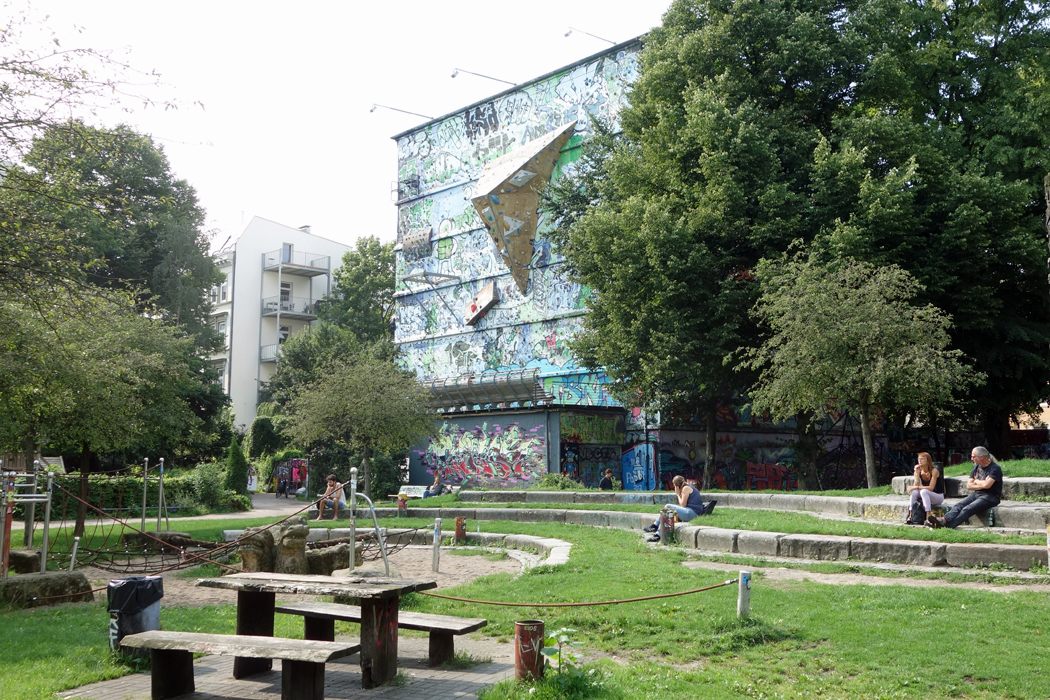
Bomb shelter

Hamburg was a strategic target in WWII. The Nazis constructed literally hundreds of beefy bunkers, using mountains of concrete and almost unlimited slave labor. This is one of many — too big to demolish economically — that are simply incorporated into the everyday cityscape. This one is a colorfully painted rock-climbing wall in a neighborhood park. Standing tall and ugly-yet-colorful, with children lining up to climb all over it, it is emblematic of the poignant contrasts I see when traveling thoughtfully through today’s Germany.

Flood embankment

A theme that keeps crashing into my reporting on Europe is how real climate change is, and how tragic it is that some people deny it just for their own economic convenience. Everywhere I go in Europe, I see the results of literally billions of dollars being invested in infrastructure changes that will allow Europe to live in the future that we are creating. Europeans (with a fatalistic acceptance of the momentum created by reliance on fossil fuels and the values of many international corporations) just shrug their shoulders and take a pragmatic view: It’s a reality, and there’s not much we can do to change it — but we can prepare for it. Situated just up a big river from the sea, and therefore in danger of storm surges, Hamburg has raised 60 miles of embankments…and artfully designed the ones in the city center to be inviting people zones like this.