Here you can browse through my blog posts prior to February 2022. Currently I'm sharing my travel experiences, candid opinions, and what's on my mind solely on my Facebook page. — Rick

It’s Market Day in Sarlat

I’m done traveling for the year, but other members of my staff are still in the field. While I regroup from 100 days in Europe, I invited my frequent collaborator Cameron Hewitt to share some posts from his blog. Cameron has traveled about as much as me this year, updating our guidebooks in Italy and France, and turning our already strong material in Scotland into a stand-alone Rick Steves Scotland guidebook (due next spring). While Cameron and I are in perfect sync in terms of travel styles and priorities, he gives voice to the next generation of Rick Steves travelers. If you like Cameron’s insights, you can read much more on his travel blog, and you can also follow Cameron on Facebook. — Rick

It’s Market Day in Sarlat

by Cameron Hewitt

Twice a week, the normally traffic-free lanes of Sarlat are clogged with a human traffic jam of shoppers. Wednesday and Saturday are the town’s market days. And in all my travels, I’ve rarely seen a market better than Sarlat’s.

Sarlat Market OV1

As the day dawns, Sarlat’s sun-baked streets are jammed with tables, each one a cornucopia overflowing with Dordogne Valley products. Strolling the cobbles, I survey the array. Produce is delicately arranged on a rickety wooden table — little more than a rough plank resting on sawhorses, piled high with lettuce, artichokes, leeks, potatoes, garlic, onions, carrots, tomatoes, eggplant, cucumbers, and radishes.

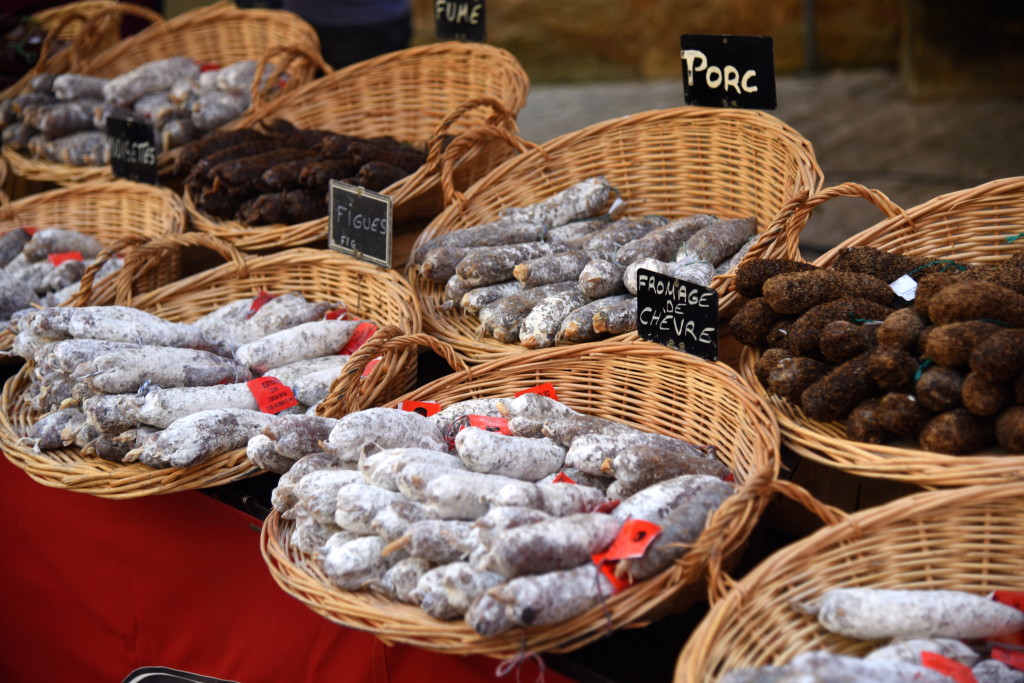
Plunging deeper, I’m immersed in a vibrant world of sights, smells, and sounds. Baskets neatly filled with oddly shaped sausages. Mountains of olives. Carefully sealed bags of dried mushrooms. Loaves of rustic breads. Refrigerated trucks displaying meats, fish, and tiny wheels and pyramids of goat cheese. A vivid festival of flowers. Tree stump-sized wheels of mountain cheese. Kitchen tools, from newfangled walnut crackers to a huckster demonstrating the sharpness of his kitchen knives. Snail shells already pre-filled with garlicky-green butter, ready for escargot. Mammoth hunks of nougat the size of car tires. Tidy rows of jams, jellies, preserves, and walnut oil. A young, dreadlocked farmer selling more different types of onions than I realized even existed. Bowls of colorful, intensely flavored tapenades. Giant slabs of fruitcakes — nut, orange, fig — waiting to be sliced up and sold by the weight. A rainbow of colorful little beanies used to cover your fruit or bread basket. And, of course, cans of artisanal foie gras and other duck and goose products.
Sarlat Olives 1

Sarlat Sausages

Sarlat Cheese

CH15MaySarlat_130

Sarlat Covers

The longest line is at the strawberry stand — a good sign. You smell the strawberries before you see them. I try to stake my claim in the queue, but quickly learn that no-nonsense French grannies are shameless about butting in line. Elbows up! I trudge patiently to the front and am given a choice: charlotte or gariguette? I splurge on the pricier, rounder, more pungent charlotte style, at €3.50 a basket, instead of the cheaper, torpedo-shaped gariguette style, at €2.50.

It’s a good thing I got my shopping in early. Shortly after the noon bell tolls, everyone starts packing up. Shoppers disperse — instantly filling up the town’s many al fresco café tables — while merchants crate up unsold goods for tomorrow’s market in Domme. They’ll all be back in Sarlat on Saturday — just like they have been, twice a week, for decades. By then, I’ll be in Normandy, halfway across the country. But I’ll still be tasting those strawberries.

Cool, Cool, Collioure: Vive La France!

I’m done traveling for the year, but other members of my staff are still in the field. While I regroup from 100 days in Europe, I invited my frequent collaborator Cameron Hewitt to share some posts from his blog. Cameron has traveled about as much as me this year, updating our guidebooks in Italy and France, and turning our already strong material in Scotland into a stand-alone Rick Steves Scotland guidebook (due next spring). While Cameron and I are in perfect sync in terms of travel styles and priorities, he gives voice to the next generation of Rick Steves travelers. If you like Cameron’s insights, you can read much more on his travel blog, and you can also follow Cameron on Facebook. — Rick

Cool, Cool, Collioure: Vive La France!

by Cameron Hewitt

I specialize in Eastern Europe, but for a change of pace this year, I’m swapping research chores with the co-author of our Rick Steves’ France guidebook, Steve Smith. (Rick was recently singing Steve’s praises on his blog…and deservedly so. Steve’s France book is the best in print, hands down.) Steve is picking up a couple of weeks updating Croatia for me, and I’m covering some of his territory in France: Languedoc-Roussillon, the Dordogne, and Normandy. It’s a fun switcheroo.

To begin my France swing, I had to get from Milan to Collioure, on France’s Mediterranean coast. Planning my itinerary a few months back, I came up with what now seems like a foolishly Rube Goldberg route between two points: Wake up early in Milan. Subway to the train station. Train to the airport. Fly to Barcelona. Commuter train to the main train station. High-speed TGV to the first French town over the border, Perpignan. Taxi to yet another airport to pick up my rental car. And finally, drive that last 40 minutes to my hotel. Amazingly, everything came off just right. Phew!

At the end of that long day, my reward is the postcard-perfect town of Collioure. After so many years of traveling around Europe, I start to think that I’ve seen it all. But then I pop into a place like Collioure and realize that there’s much more of Europe that I haven’t seen than what I have.

Collioure is a largely undiscovered gem of a resort town just a 45-minute drive from the Spanish border. (From there, it’s just another couple of hours — past trippy Salvador Dalí sights and world-famous Costa Brava restaurants — to Barcelona.) Collioure is the perfect size for being on holiday. It has five beaches, each with its own distinct personality (from party/pebbly to sandy/serene). And its town center, with atmospheric restaurant-lined pedestrian lanes, is an utter delight. It’s settled: I need to come back here on vacation.

It’s overcast today — the Friday afternoon of a long holiday weekend — so the cafés are full and the beaches are empty. But people are in high spirits, enjoying being on a mini-vacation, perfectly content to lick ice-cream cones and socialize rather than sunbathe and swim. They’ve read tomorrow’s perfect weather forecast…and they’re willing to be patient.

Collioure is one of those South of France towns that’s famous for its light, which draws great artists like moths. Shutterbugs love it, too. I pull out my camera and enjoy a photo safari.

Collioure Crayola

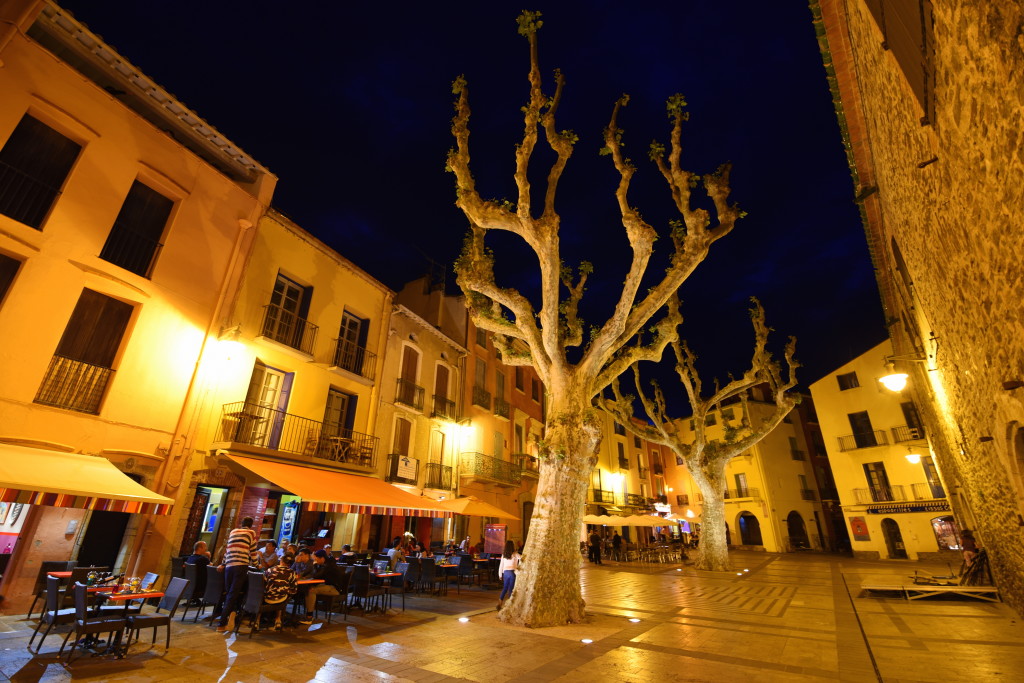
Turning a corner, suddenly I’m in an almost fantastical square. Two scrawny but determined plane trees — their leaves still just coming in — yawn and stretch their knobby limbs over inviting café tables. Behind them is a Crayola box of houses, each more vivid than the last. In that instant, I know that, for the rest of my time here, I’ll fabricate excuses to circle back through this square as often as possible.

Collioure Church

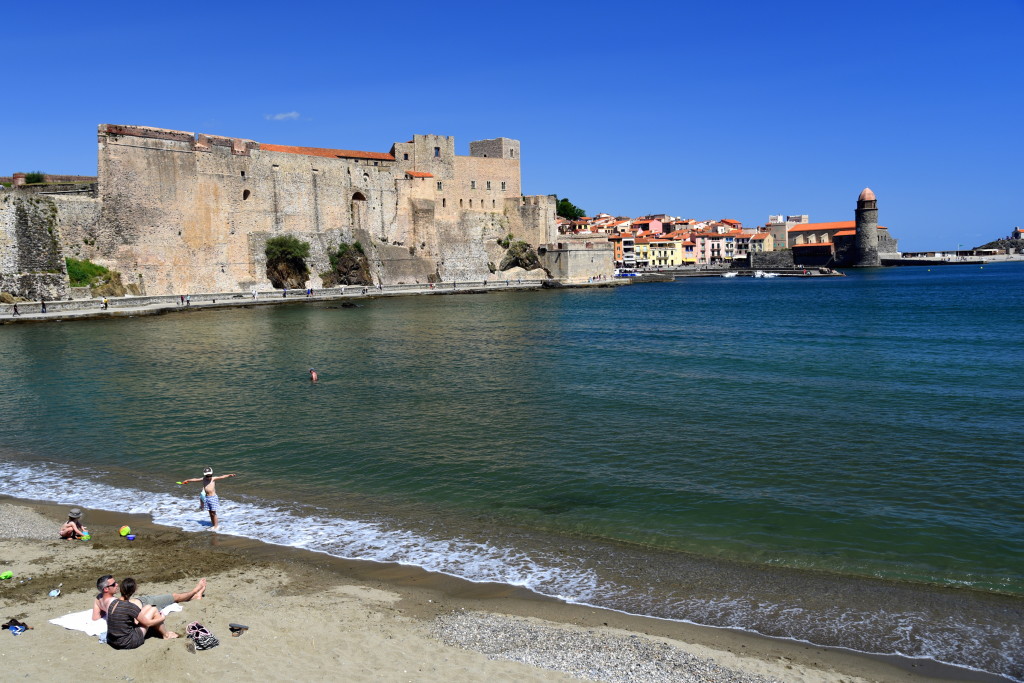
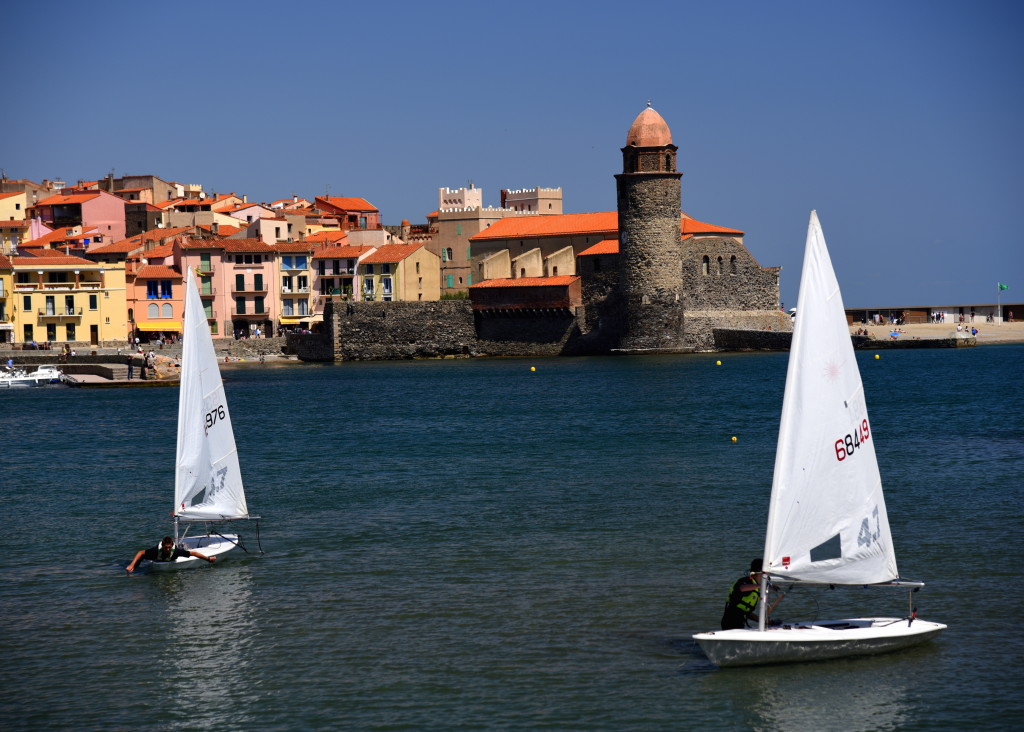
Continuing past Collioure’s perfect place, I approach its formidable church. The bell tower isn’t a bell tower: It’s a fortified lighthouse, providing direction to passing vessels even as it reminds would-be invaders that this town is no pushover. (The town’s stern and sprawling château — just across the beach — completes this thought.)

Finally I reach the pebbly beach, protected by a long, beefy jetty. I pause at the beach bar, whose owner is very proud of his homemade sangria. I’m intrigued by the daily special — fresh-caught turbot — and wind up returning later for dinner. As I eat my first-ever turbot (a flat, muddy-colored bottom feeder with a crumbly, almost rubbery flesh made flavorful with abundant herbs), the setting sun finally breaks through the clouds and washes the far side of the harbor in a rich, golden light — promising a sunnier day ahead. Strolling back to my hotel, I linger at the illuminated church and at my favorite square.

Collioure Sunset

Collioure Night

Sure enough, the next day I awake to brilliant sunshine and bright blue skies. My research chores take me all the way around the harbor, and I’m glad they do, because it forces me to walk past two more fine beaches.

Collioure Beach

Collioure Sailboats

At the biggest beach — whose curve is defined by the stout fortress — chest-deep novices struggle to board their mini-sailboats. Nearby, a topless sunbather catches some rays, while a nubile teenage couple makes out, just steps from where kids build sandcastles. Vive la France!

Stick with me for the next couple of weeks, as I explore France’s Languedoc-Roussillon, Dordogne, and Normandy regions. There’s a lot to see, a lot to experience…and a lot to eat. Allons-y!

On My Last Nerve at The Last Supper

I’m done traveling for the year, but other members of my staff are still in the field. While I regroup from 100 days in Europe, I invited my frequent collaborator Cameron Hewitt to share some posts from his blog. Cameron has traveled about as much as me this year, updating our guidebooks in Italy and France, and turning our already strong material in Scotland into a stand-alone Rick Steves Scotland guidebook (due next spring). While Cameron and I are in perfect sync in terms of travel styles and priorities, he gives voice to the next generation of Rick Steves travelers. If you like Cameron’s insights, you can read much more on his travel blog, and you can also follow Cameron on Facebook. — Rick

On My Last Nerve at The Last Supper

by Cameron Hewitt

Last Supper

Sometimes, guidebook research doesn’t feel like work at all. A sunny day spent tooling around Lake Como, touring sumptuous villas and sprawling gardens? That’s not work.

But on one particular day in Milan, I really had to work. I packed about three days of sightseeing into one very busy day. It was interesting, and fun at times, but exhausting. Especially this exchange.

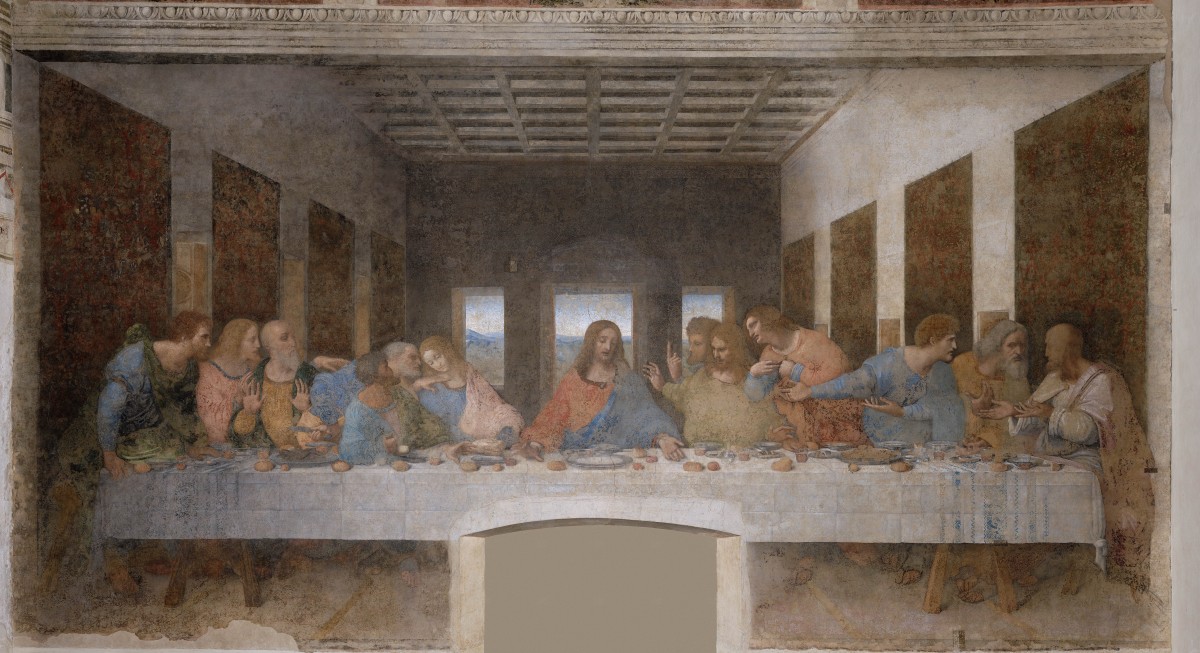
I walked into the ticket office for Leonardo da Vinci’s Last Supper. Spaces are severely limited, and reservations are mandatory — and book up weeks in advance. We devote nearly an entire page in our guidebook to explaining this system, and I needed to confirm everything with the woman at the information desk. She greeted me with a permanent snarl, close-cropped, died-blonde hair, and steely, cruel eyes. Before I opened my mouth, she didn’t like me. (I don’t take it personally. She doesn’t like anyone.) After I explained I was updating a book, she allowed me to continue talking, which is probably her version of tacit approval. Here are some highlights of our actual conversation. (I am not making this up.)

“So, we explain here in our guidebook that you need a reservation.”

“Yes, that’s correct. You can call or go on our website.”

“And we say that you can make a reservation three months ahead.”

“On our website, you can reserve three months ahead. At our call center, you can reserve, maybe, ten days ahead.”

“So tickets are available online three months before, but by phone only ten days before?”

“Well, you can get tickets anytime you want.”

“Yes, but if someone wants to book very early, they can try three months before?”

“On our website.”

“Not by calling?”

“No! Of course they can get a ticket by calling. Ten days before.”

“So by phone, tickets are only available ten days before?”

“It depends.”

“Well, we say here you can start trying to get a ticket three months before. More or less. Is that about right?”

“Yes.”

“Online and by telephone?”

“Yes.”

Phew. “OK, so we also explain that if you don’t have a reservation and really want to see The Last Supper, you can try to come on the same day to see if there are any cancellations.”

“No! Not possible.”

“Oh, so you…”

“Reservations are mandatory!” [Holds up sign that says “Reservations are mandatory”]

“Yes, I understand that. What I’m saying is, let’s say someone did not make a reservation. And now they are in Milan and they really want to see The Last Supper. We say that sometimes there may be a few cancellations…”

“No! You must reserve.” [Eyeing me suspiciously] “Huh. Do you write in your book that you don’t need a reservation?”

“Oh, no, we do explain that very carefully!” [Showing her several paragraphs in the book explaining that reservations are mandatory]

“But you write in your book that you do not need a reservation!”

“No, we don’t say that. We say that in case you do not have one, sometimes it’s possible…”

“It’s never possible!” [She’s really starting to blow up now] “People come here, all day, and complain to me because they do not have a reservation! And you are telling them to do this in your book!”

“But I…no, wait, look. It’s the opposite. You see, I’m trying to help people understand how this works. I want to make it very clear so people are not disappointed.”

“Huh.”

“So if you can help me now for five minutes, I can try to make sure it’s very clear in our book, so those people won’t bother you anymore — so they will understand how it works.”

“I don’t care!”

“You don’t care? You mean you don’t care if people are disappointed?”

“No! I don’t care. People come here all day and are disappointed anyway, so what does it matter what you say in your book?”

“Yes, but I’m trying to reduce the number of…” [I decide to give up on that point] “OK, sorry, I’m almost done. I just want to confirm that it is not possible to buy tickets on the same day.”

“No, it’s impossible!”

“So you never have any cancellations and tickets that are available last minute?”

“No! Well, maybe one or two tickets each day. But almost none! It’s very difficult. You must take this out of your book!”

“OK, I’ll take that out, if you say it’s not possible.”

“Yes, not possible.” [grumbling to herself] “I don’t know why you tell people in your book they don’t need a reservation…”

“OK, well, thanks for your help. By the way, I know this is very unlikely, but do you maybe have any tickets available for today?”

“You want one ticket?”

“Yes.”

[Checks computer] “OK, we have a reservation available for 5:15.”

By the way, The Last Supper was magnificent…well worth the painful conversation.

Convalescing on Lake Como

I’m done traveling for the year, but other members of my staff are still in the field. While I regroup from 100 days in Europe, I invited my frequent collaborator Cameron Hewitt to share some posts from his blog. Cameron has traveled about as much as me this year, updating our guidebooks in Italy and France, and turning our already strong material in Scotland into a stand-alone Rick Steves Scotland guidebook (due next spring). While Cameron and I are in perfect sync in terms of travel styles and priorities, he gives voice to the next generation of Rick Steves travelers. If you like Cameron’s insights, you can read much more on his travel blog, and you can also follow Cameron on Facebook. — Rick

Convalescing on Lake Como

by Cameron Hewitt

After editing Rick’s writing for many years, I’ve noticed he uses certain words in a very particular way. For example, he reserves “convalesce” for a select few places. Lake Como is one of them. And after my nearly two weeks battling South Italy, some convalescence was exactly what I needed.

Traveling from Naples to Lake Como, I grappled with severe culture shock…without ever leaving Italy. In just a few hours — screaming past Rome, Florence, and Bologna on the bullet train — I went from the unbridled south to the mellow, almost Teutonic north. Stepping off the train in Milan, the sleek efficiency stunned me. I had just enough time to grab a designer yuppie sandwich (for triple the cost of a slice of Neapolitan street pizza) before hopping on my connecting train to Lake Como.

Arriving in the lakeside town of Varenna, I settled into the Hotel du Lac, a pristine Old World hotel with all the modern comforts. The hotel clings to a bluff just over the lake’s tranquil waters. Run with a polish and efficiency unusual in Italy, it feels vaguely Swiss…fitting, since I could see Switzerland from my lakeview balcony.

Set up in comfort for three whole days, I could feel my system decompress from the pressure cooker of Naples. Here’s a photo essay of the lakeside retreat of Varenna.

Varenna View
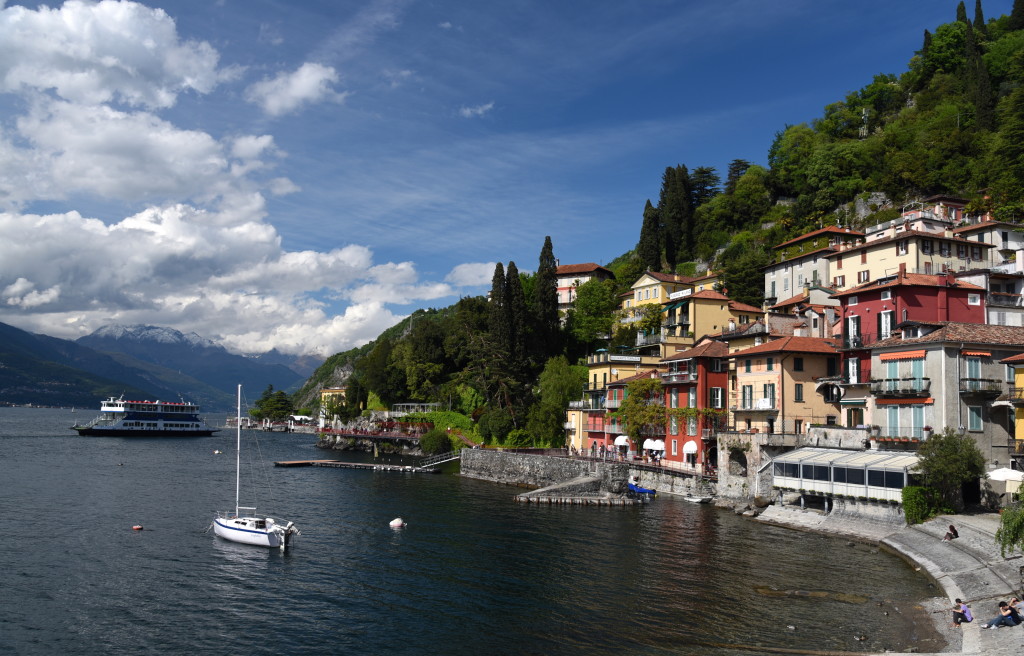
For decades, Rick has favored Varenna as the best home base for exploring Lake Como. Brassy Bellagio and well-connected Como have their fans, but after spending a few days here, it’s clear why Rick hangs his hat in Varenna.

Varenna Square

Varenna is just the right size for a relaxing vacation. It has a train station, a boat dock, a picturesque church crowning a tidy square, and two little grocery stores that specialize in made-to-order sandwiches for lakeside picnics.

Varenna Sunny Harbor

On a clear day, Varenna’s technicolor harbor lures sun-worshippers to watch the lake boats come and go.

Varenna Harbor

And even when it’s socked in, Varenna’s vacationers still enjoy chatting by the harbor. The town’s fancier, more expensive restaurants are tucked deep in the twisty lanes, but — conveniently — the two big lakeside cafés are affordable and functional. These places let you dine on €10 pasta with €10,000,000 views.

Varenna Steps

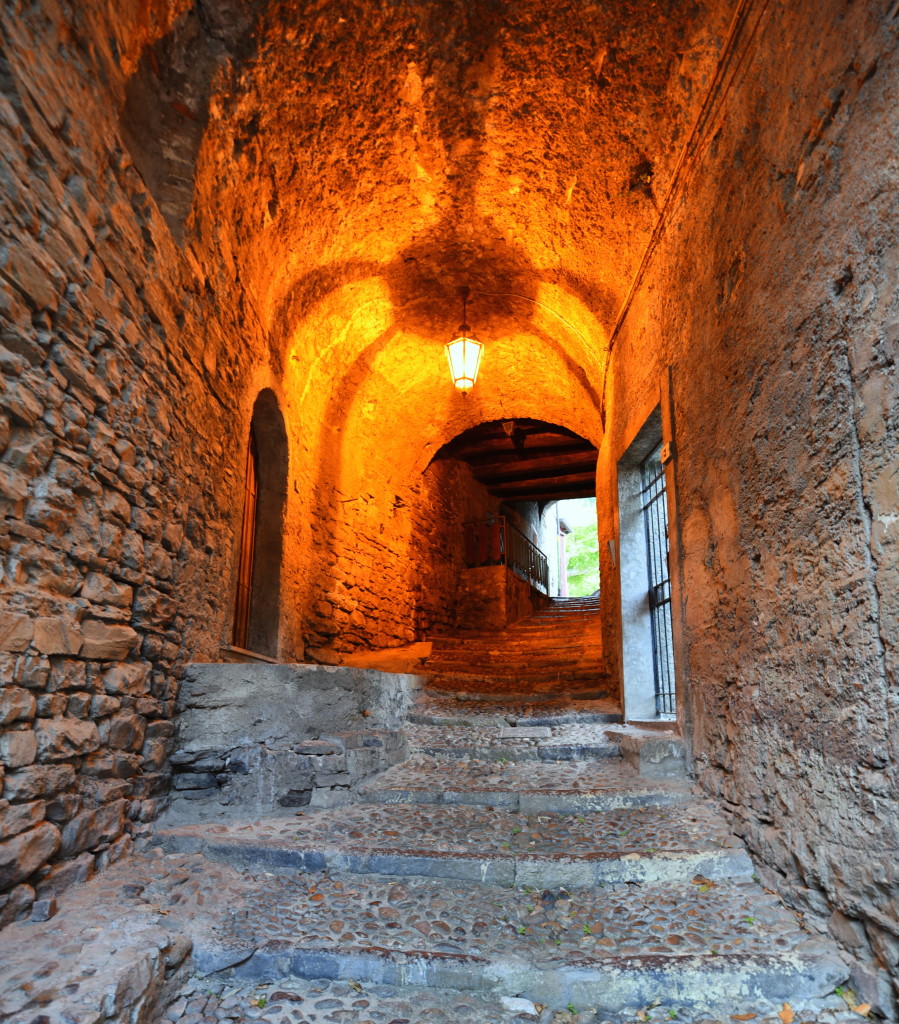
Varenna’s steep lanes climb up the hill from the harborfront. The town’s top gelateria provides cushy cushions on the stony steps.

Varenna Trail

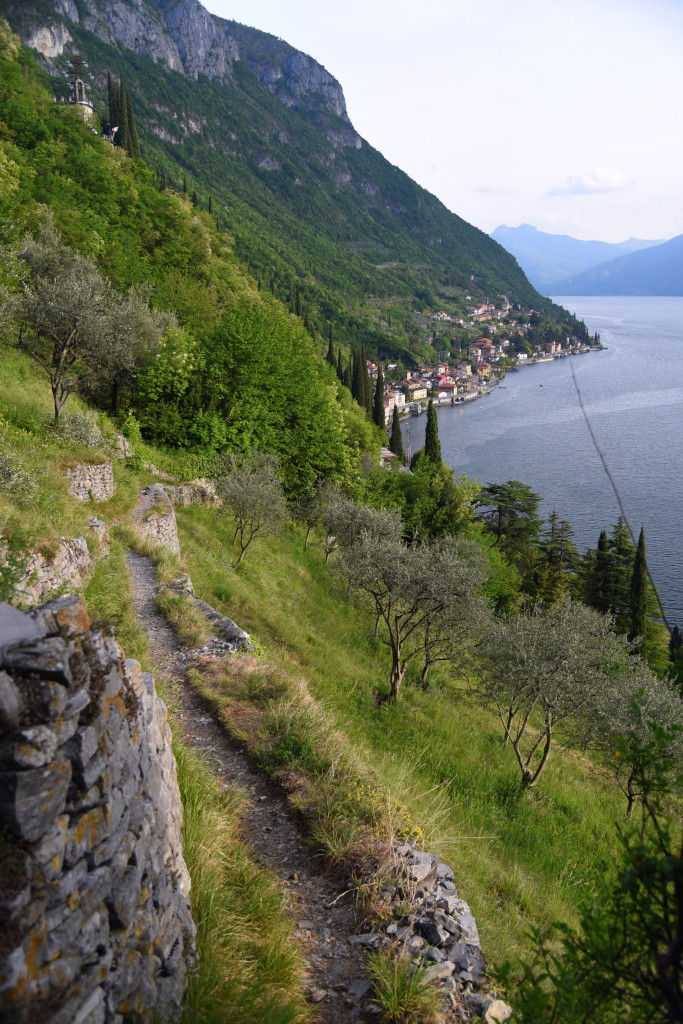
Capping the hill over Varenna — a stiff 20-minute huff above the town square — an old castle provides views across the entire lake. Hiking back down into Varenna, you enjoy sweeping views of olive groves, cypress trees, and hamlets hugging the shoreline.

Missoltino

After a busy day’s hike, it’s time for dinner. When traveling, I have an ethic about sampling — at least once — whatever the local specialty is, no matter how gross it sounds. On Lake Como, locals still dine on what, at one time, was a “hardship” food (like lutefisk for Norwegian American immigrants, or salt cod for the Basques). Missoltino is lake fish that’s preserved by being salted and sun-dried. Weeks later, it’s rehydrated and served for dinner. It wasn’t terrible. But no matter how you dress it up with delicate grilled polenta cakes and trendy plating, at some level it’s still old fish. At a later meal, having satisfied my obligation to try missoltino, I ordered a delicious, fresh filet of lavarello (lake whitefish)…much better.

Varenna Lamp

As Varenna’s street lamps twinkle on, those characteristic stepped lanes are washed in vibrant colors.