Here you can browse through my blog posts prior to February 2022. Currently I'm sharing my travel experiences, candid opinions, and what's on my mind solely on my Facebook page. — Rick

Communism in Cuba

Part of being a tourist in Cuba is sorting out the puzzle of its ideology and its struggling economy. With the country opening up to tourism, softening its controls on society, and preparing for the inevitable end of the Castro era, traveling here is filled with fun and curious insights.

Fidel Castro is beloved by many for winning Cuba’s independence from the dictatorship of Batista, and loathed by many for keeping the country out of the global economic and political mainstream. Visiting Americans who may be inclined to criticize Cuban policies compare the economy and civil liberties to their reality in the USA, and find it horrible. Others compare the economic reality of workers here to workers anywhere else in Latin America, and find it roughly the same (from a material wealth point of view) — and note Cuba’s comparative advantage in health care, education, stability, and safety. When it comes to crime, drugs, and gang-related violence, communist Cuba is far safer than capitalist Latin American countries. But this is not a democracy, and being a dissident here can land you in jail. While other countries have their economic elites in business, Cuba has its economic elites in high government posts.

RS15Cuba_064.jpg

In 1956, Fidel Castro and a few dozen fellow Cuban Revolutionaries motored a yacht from Mexico to Cuba intent on overthrowing the Batista dictatorship. (Batista was friendly with the big American corporations that dominated the Cuban economy. He also stripped Cuban people of many rights and arrested anyone who took a stand against him.) With a mix of heartless brutality, political brilliance, and liberty-or-death courage and idealism, Castro and his gang inspired Cubans to rise up and overthrow their government. And in 1960, Castro — now the leader of the island — found himself in Havana speaking to the masses who filled what was later renamed “Revolution Square.”

TF15Cuba_003.jpg

Photo: The Travelphile

The Museum of the Revolution tells that amazing story from a Cuban point of view. It shows off the good ship Granma, in which Fidel Castro and the original band of 82 Revolutionaries cruised from Mexico to gain a toehold on the island and eventually rally the people to overthrow their corrupt dictator, Batista. The museum also displays, with simple typed descriptions in old-school glass cases, the humble artifacts of that stirring Revolution.

RS15Cuba_037.jpg

Castro’s right-hand man was Che Guevara. While you see lots of monuments to Che and the revolutionary hero from a century earlier (José Martí), you rarely see Fidel Castro’s image on monuments. But he looms large in many Cuban hearts.

RS15Cuba_218.jpg

Che Guevara is the classic dashing Revolutionary, and a big seller from souvenir shops to tattoo parlors. While a charismatic leader, he was also a brutal killer. I resist the temptation to celebrate Che.

TF15Cuba_033.jpg

Photo: The Travelphile

In Cuba, you see very little advertising beyond simple store signs. But there are plenty of billboards with political messages. The propaganda I saw was not anti-Imperialism or anti-American (except for anti-embargo messages), but rather pro-Cuban Revolution and pro-Cuban dignity and independence. Many of them tied Castro and the Cuban Revolution to two newer world figures: the late Venezuelan strongman Hugo Chávez (Venezuela provides Cuba with critical economic support — desperately needed considering the US embargo and the fall of the USSR, which propped up the Cuban economy for so long) and Nelson Mandela (a fellow hero of the “non-aligned world” — developing nations that refused to formally align with the big powers during the Cold War).
Havana: The Caribbean’s Mightiest Port, 500 Years Ago

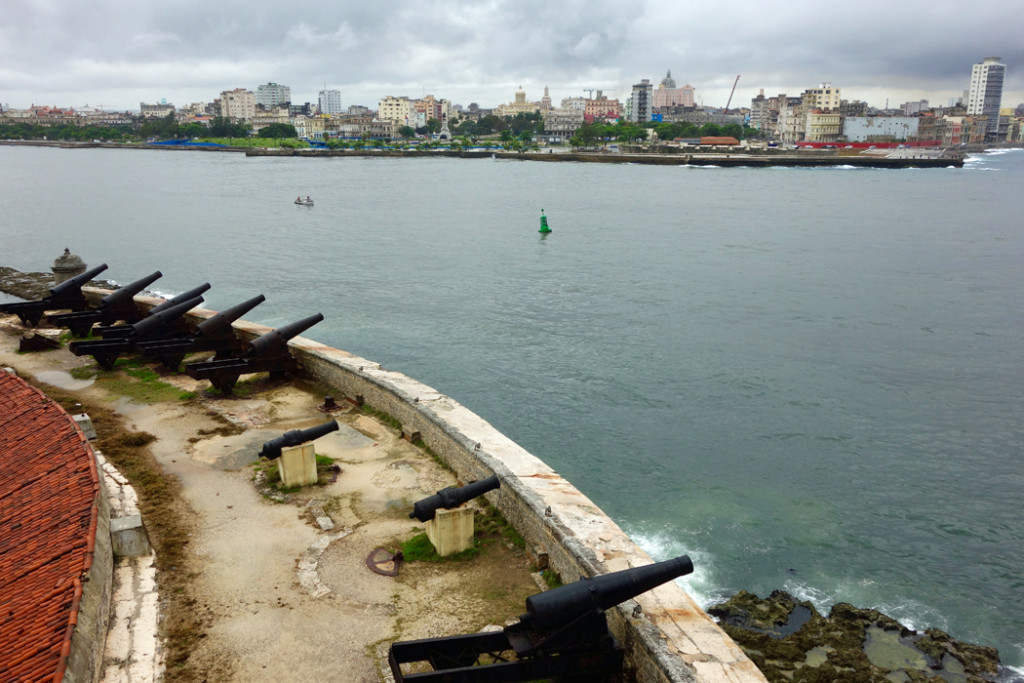
A first stop for any sightseer in Havana is the fort. Peering across its rusty old cannon to see how a tiny and easily protected strait of water led to a calm and secure harbor, and hearing stories of how the Caribbean-European trading vessels would gather here before crossing the Atlantic in a safety-in-numbers convoy, I could understand how Havana was the mightiest port in the Caribbean 500 years ago.

Welcome to Havana

Flying into Havana after dark, I was struck by how dimly lit the city was. Touching down, it was the darkest airstrip I’d ever landed on. For such a big and important city, the airport felt provincial — a hint at the economic struggles that plague this island just 90 miles south of Florida, with a population of 11 million that’s both shrinking and aging.

RS15Cuba_295.jpg

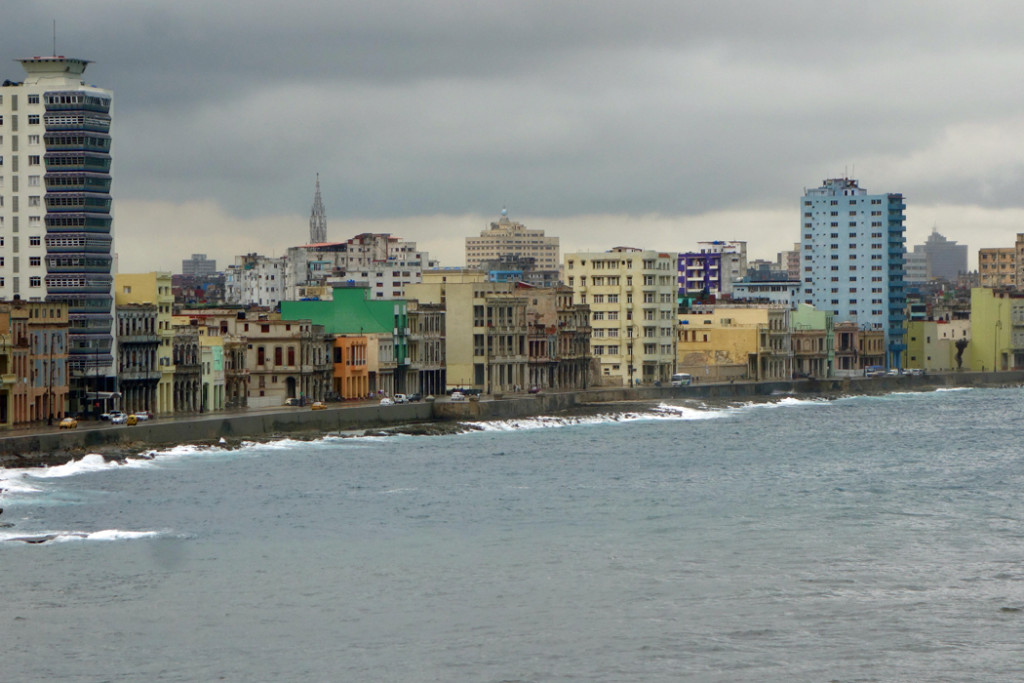
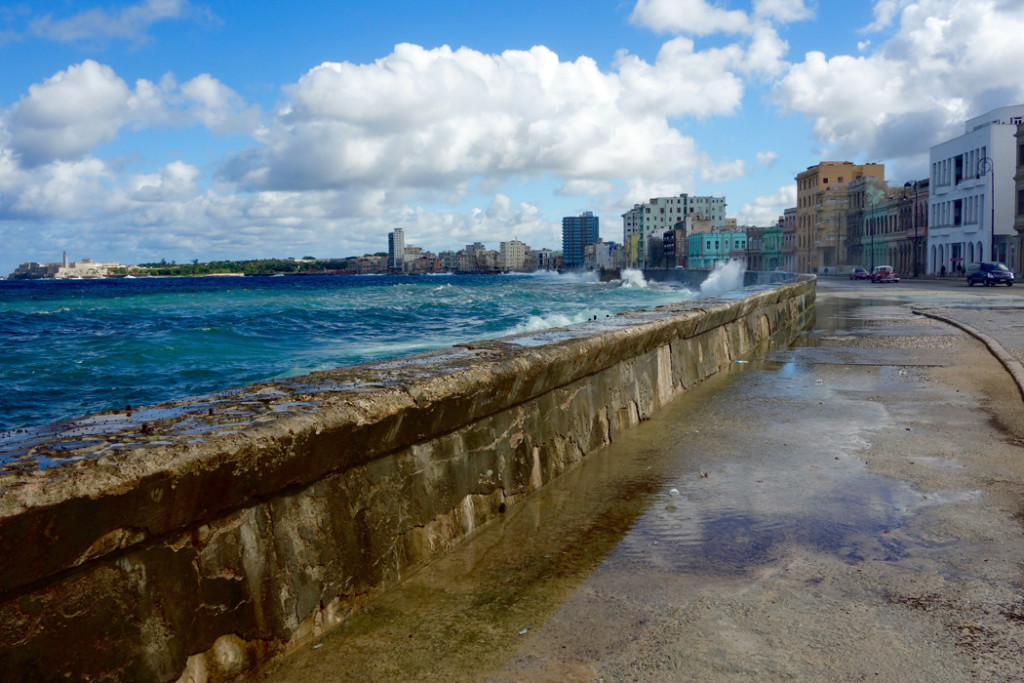
The Malecón, a five-mile-long embankment built a century ago to keep out waves, is an iconic feature of Havana. Tough as it feels, storms do overwhelm it, and the adjacent district endures regular floods. Between storms, the stark Malecón — with no landscaping and six lanes of traffic separating it from any buildings — is a beloved concrete promenade. It’s a popular place to go — to fish, hang out with a lover, strum your guitar, and make the scene. Every tourist should spend part of an evening strolling Havana’s waterfront strip.

RS15Cuba_261.jpg

Havana’s fort features barren rooms, a few humble and boring exhibits, and grand views of the strategic harbor — so easy to protect with a few cannons. A skinny stretch of water leads past a mighty fortress to the easy-to-defend harbor. Havana was the obvious spot for those Spanish conquistadors to establish a safe and thriving port to serve the needs of colonial trading ships. To sail to Europe safe from pirates, ships from throughout the Caribbean would gather here into a huge convoy for the twice-annual crossing of the Atlantic. Sipping the local Bucanero beer in a stone building constructed after pirates burned the original wooden town (back in the 16th century), I was reminded that Havana’s heritage is hard-fought and goes way, way back.

RS15Cuba_260.jpg

Havana, with about 2 million people, has a stubborn and neglected little skyline facing its Malecón promenade and the open sea.

RS15Cuba_196.jpg

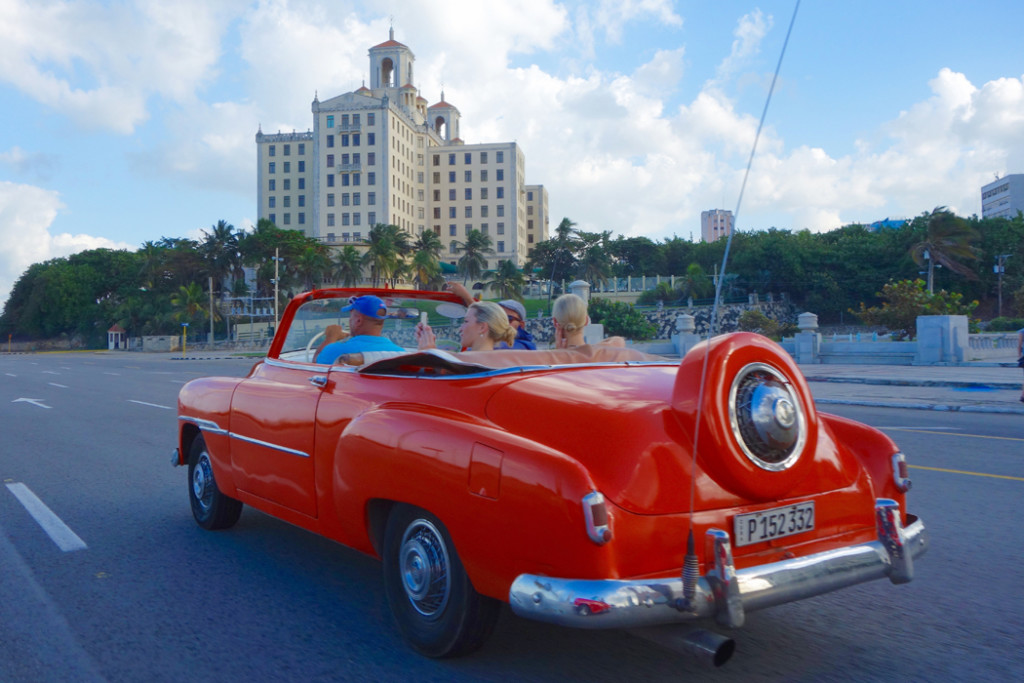
As expected, Havana traffic was sparse, and many of the cars were American classics from the 1950s. Once Cuba and the USA became enemies back in 1960, the American embargo locked the country into a 1950s time warp. Before the Revolution, Havana was a playground of the rich and famous. A few vestiges of those Sinatra and Hemingway days survive — like the stately Hotel Nacional de Cuba.

Rick Steves’ Cuba Report

One of the hottest topics among American travelers lately is Cuba. Can we visit now? Is it legal? How does it work? I just got back from a (fully legal) trip to Cuba, and I’m excited to share the answers to these questions — and much more — over the next two weeks. It will be the most up-to-date report on Cuba for American travelers available anywhere.

Fidel Castro painting

Soon the Castros will be gone, and Dunkin’ Donuts and all of the international chain stores will arrive, heralding a tsunami of change that will submerge the time-warp, idealistic charms of this mysterious island 90 miles off the coast of Florida. I just had to visit now and share my experience.

If you have any friends dreaming of seeing Cuba — for so long forbidden to American travelers — please share my Facebook page with them. This promises to be an exciting ride!

Rick Steves' entry documents

Visiting Cuba comes with a unique set of travel experiences, challenges, and joys. As an American, you don’t know quite where the line of legality is. I booked my flight to Mexico City as I normally would, but needed to use a London-based service to buy my Mexico City-to-Havana connection. Because US credit cards don’t work in Cuba, I booked my accommodations through a company in Canada. In order to do either, I needed to have a “general license” to travel by declaring I was one of a dozen permissible kinds of travelers (family visit, educational, journalistic, and so on). “Professional research” made me legal. Every American tourist here checked one of these boxes…and no one seems to care after that. Traveling in Cuba, you have a feeling that everything — including the red tape involved to get there — is on the verge of an avalanche of change.

Rick Steves, family, and tour guide

I was joined on this trip by my partner (Trish), my son (Andy), and my daughter (Jackie). Each winter, we enjoy a little travel adventure together. For Cuba, I hired a local guide for our first four days to be sure we were in good hands. Our guide was Reinier Menéndez, who works for the Martin Luther King Center (the Cuban partner organization for Augsburg College’s Center for Global Education — more on that later).

Young Cuban students

I’ve long heard that the great joy of visiting Cuba is being with its people. From day one, the truth of that statement was clear. Whether poor or…less poor, the Cubans we met were friendly, good-humored, smart, and buoyed with self-respect and national pride.

Finally! A Ringtone for the Rick Steves Traveler

Going to the big travel shows around the USA, I meet lots of enthusiastic travelers who throw clever suggestions my way. One traveler just suggested that we offer a ringtone featuring the theme music of my public television show. Why not? It’s free and available right now for anyone who can’t stop dreaming about their travels. Enjoy.

Rick Steves and phone booth in Sweden

Even if you’re not using Rikstelefon, you can use Riksrington.

iPhone
1. Download the Rick Steves Europe iPhone Ringtone by right-clicking on this M4R file and saving it to your computer. (Using a Mac? Instead of right-clicking the link, you will hold down the control key while clicking the link.)
2. Using a USB cord, connect your iPhone to iTunes.
3. Open iTunes and view the iTunes library so that your iPhone appears in the sidebar.
4. Drag the M4R file from its location on your computer into iTunes and drop the file over the name of your iPhone. The new ringtone will appear in the Tones tab listed under your iPhone in iTunes.
5. On your iPhone, select the new Rick Steves Europe ringtone in Settings > Sounds > Ringtones.

Android Device
1. Download the Rick Steves Europe Android Ringtone by right-clicking on this MP3 file and saving it to your computer.
2. Connect your Android to your computer using a USB cable. Set the phone to connect as a Disk Drive.
3. Open the file folder for your Android and look for a folder labeled “ringtones”. If it does not exist, create one now.
4. Drag the Rick Steves Europe Android Ringtone file to the “ringtones” folder. Safely remove the phone and physically disconnect it to complete the transfer.
5. On your device, open Settings > Sound & Display > Phone Ringtone, and choose the new Rick Steves Europe ringtone.

If you require additional assistance, please refer to the user manual for your device.