Here you can browse through my blog posts prior to February 2022. Currently I'm sharing my travel experiences, candid opinions, and what's on my mind solely on my Facebook page. — Rick

Video: Creating Mealtime Magic in Venice

Video: thetravelphile.com / facebook.com/thetravelphile

One of the joys of travel is eating well. And one of the challenges of leading a good tour is to connect our travelers with great local cuisine served with passion and pride by local chefs in small, characteristic, family-run restaurants. We did just that with our group on our first evening in Venice. I’ve long enjoyed Trattoria da Bepi and its chef/owner, Loris (who plays a sizable role in my autobiographical “Postcards from Europe” book). I phoned Loris, asked him if he could seat a group, and welcomed him to assemble a “maximum-experience Venetian gastronomic extravaganza.” I explained we wanted to eat seasonal, local, and family-style, and that I’d trust him with the “tasting festival.” As you can see in this clip (edited by Trish Feaster), we had an unforgettable dinner. And, as our guides share our collective triumphs, I’m sure Loris will be seeing more of our groups.

(Thanks for following along here on my blog and on Facebook as I guide our Best of Europe in 21 Days Tour.)

Video: Walking on Air at Ehrenberg

Leading my hearty group on our Best of Europe in 21 Days Tour, we are stacking up the memories — and that’s our goal. Here, we’re in Austria’s Tirol at the Ehrenberg Castle ruins above the town of Reutte.

Imagine the fun I have: hiking with our group up to my favorite ruined castle, then wobbling over the recently built “longest suspension bridge” 300 feet above the ancient Roman Via Claudia, teaching my fellow travelers why the route below us (nicknamed “the salt way”) was so strategic in centuries past, explaining how castle architecture evolved with the advent of cannon fire, surprising the group with cold beers once we reach the ruined castle, and then setting them loose amid sword ferns and broken ramparts to let their medieval imaginations go wild.

(Thanks for following along here on my blog and on Facebook as I guide our Best of Europe in 21 Days Tour.)

Video: More Oktoberfest Fun

Video: thetravelphile.com / facebook.com/thetravelphile

Here’s one last look at the fun of Oktoberfest. Since our Best of Europe in 21 Days tour happened to be passing through Munich, we guides made it a point to drop in with our group (as we do whenever there’s a festival nearby). Our Rick Steves’ Europe Tours mantra: maximize the experience. Driving south from Rothenburg, we spent the morning with a powerful visit to the former Nazi concentration camp at Dachau (a suburb of Munich). Then after lunch, for a whiplash change of scene, we popped into the fairgrounds for Oktoberfest. Again, anyone can do this. Just drive or take a train from the city to enjoy the festive scene — parades, rides, amusements, 16 giant beer tents to choose from (and huge beers), lots of traditional food, and some of the happiest people-watching in Europe. After three hours of Oktoberfest fun, we continued on our route, driving south to Reutte in Tirol to enjoy the “King’s Castles” the next day. Prost!

(Thanks for following along here on my blog and on Facebook as I guide our Best of Europe in 21 Days Tour.)

Oktoberfest Observations

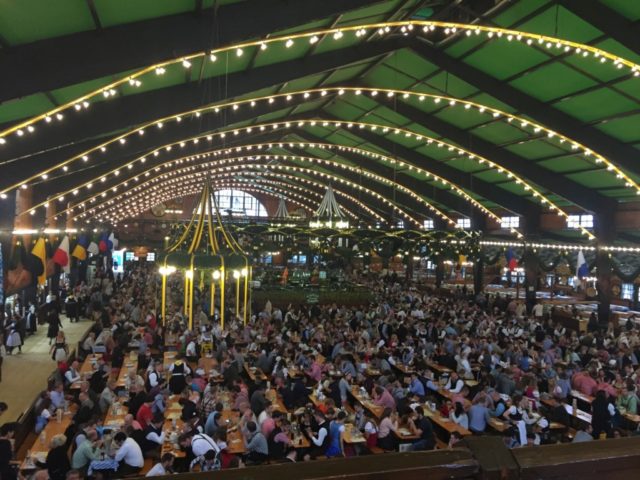
oktoberfest-tent
 
Munich is in the midst of its annual 16 days of Oktoberfest. It’s massive (serving literally millions of people each year in 16 tents, each filled with about 8,000 people). Each of the leading local breweries has its own tent. It’s well organized (they’ve been at it annually for 200 years). And I was impressed by how easy it was for a traveler to enjoy. Here are five photos illustrating a few observations from my visit:
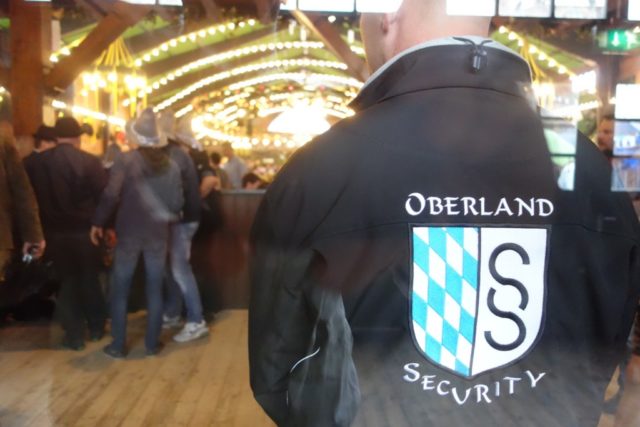
 
oberland-security-oktoberfestOktoberfest would be an ideal target for terrorists, so security is tight. Each tent has its own security and a new fence has been placed around the perimeter. There is a heavy police and security presence at each entrance, and no large bags are allowed in. In spite of all this, however, it felt relaxed and fun.
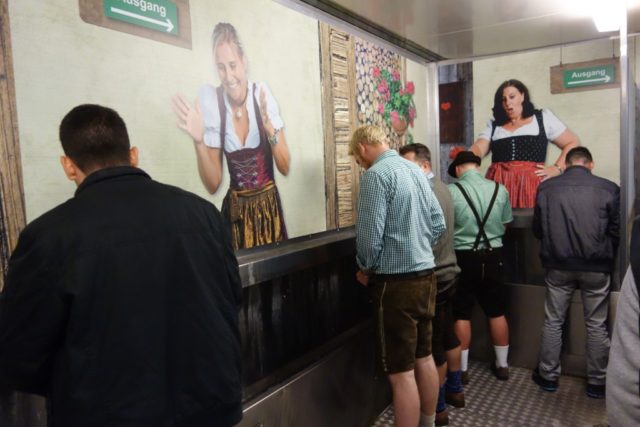
oktoberfest-urinalsWith 16 temporary tents set up to accommodate over 100,000 beer drinkers at the same time, and with literally millions of liters of beer drunk, there are lots of urinals set up in the men’s rooms. And, in the saucy spirit of this festival, posters of randy girls sporting traditional dirndls are hung above, looking on and commenting on what they see.
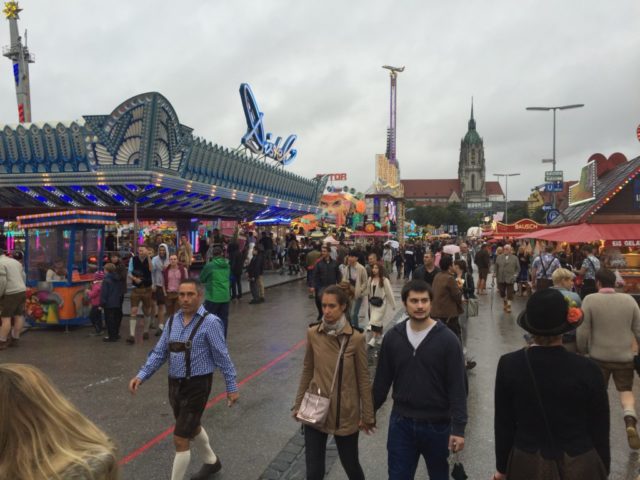
oktoberfest-fair-groundsThe weather was pretty bad during our visit. But for the festival-goers, the rain didn’t dampen the fun — it just drove more of them into the giant tents.
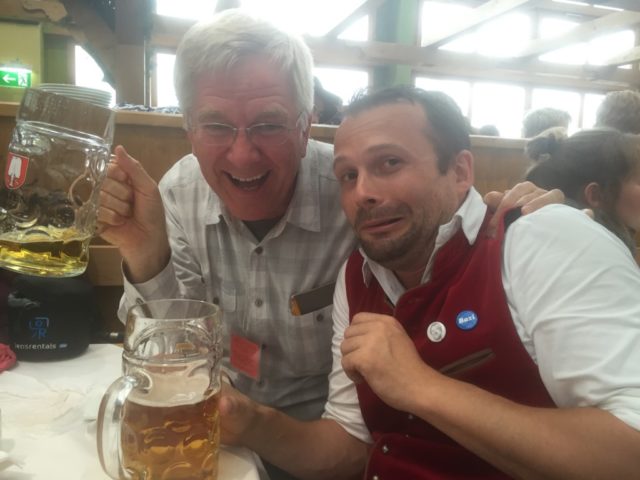
rick-steves-oktoberfestBavarians love their big liter-sized glass beer mugs (and so do I), but you can imagine the security concerns these days with these potential weapons. In the USA, you can’t use glass bottles in stadiums, but in Bavaria, the people insist on keeping their glass steins. I made a local friend at our table and he told me the Bavarian solution: design the handles so they break off easily if the mugs are used to hit someone and consider any attack with a big glass mug attempted murder. Consequentially, everyone gets their big glass mugs — and no one uses them as weapons.
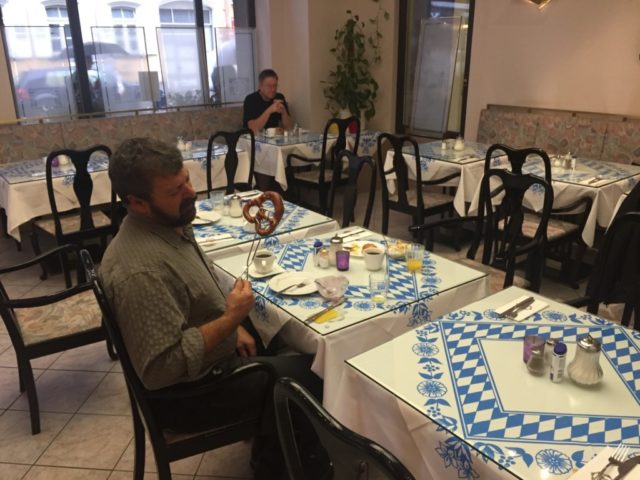
oktoberfest-pretzel-breakfastIf you head down to an early breakfast at your hotel during Oktoberfest, you’ll find yourself in an empty room. (It seems everyone was out pretty late.) And, while a nice fresh pretzel can be appealing for breakfast in Bavaria, I noticed that after eating huge pretzels the night before at the fair, they’re the last thing I crave in the morning.

Video: Soaking Up Oktoberfest

I joined my film crew in Munich this year for Oktoberfest — the last festival we’re filming for our “Europe’s Top Ten Festivals” special that will air on public television in 2017. Oktoberfest goes for 16 straight days, usually starting on the third Saturday in September. Here are some thoughts and a few tips after my visit this week:

  • It’s massive (serving literally millions each year in 16 tents, each filled with about 8,000 people). Each of the leading local breweries has its own tent. The famous ones (Augustiner Bräu and Hofbräu) are most crowded and touristy.
  • It’s well organized (they’ve been at it annually for 200 years).
  • Security is tight as this would be an ideal target for terrorist (a fence is newly added around the perimeter, there are thousands of police and security at each entrance, each tent has its own security, and no large bags are allowed). In spite of the high alert, it all felt relaxed and fun.
  • Anyone can enjoy this. It’s busiest late and on weekends, but weekday afternoons and early evenings are a delight when it’s family-friendly. (I’d highly recommend enjoying it Monday through Thursday during the late afternoon and early evening; if you don’t like drunken brawls, avoid it after dark.) Popular tents do fill up and can have long waiting lines. It’s free except for your €10 beers (that’s for an entire liter), food, and rides. English works everywhere and people are friendly. It’s tradition to sit at any table that can fit an extra rear end. Jump right into the conversation with a clink of the glass mug.
  • It feels local. While there are plenty of tourists, it’s estimated that 90 percent of the attendees are Bavarians. Locals love to dress up in traditional garb and gather their friends at their favorite beer tent to enjoy a fun evening meal with drinking and music.
  • The famous beer maids make you think, “Who needs Hooters?”. These women are generally amateur servers who take two weeks of their generous paid vacation time to work hard here and make some serious extra money. Each tent considers them independent businesses — they buy the beer or pretzels or whatever at a wholesale price from the big kitchens, and then are free to sell them anywhere in the tent. And pricing beers at €10.50 makes it hard not to tip (if they were an even €10, I imagine earnings would take a huge hit).

I must close with a political observation. (If that will anger you, you might just stop reading now and leave today’s post with nice beer-and-dirndl thoughts.) While enjoying this happy festival, I was struck by how the crowd was 90 percent local and how I felt I was in a country with a healthy middle class. It’s fair to say that the vast majority of Germans are middle class. They live in a country where progressive taxation, a $15 minimum wage, one-month paid vacations, and affordable health care are not controversial issues. And they easily afford fun such as this. In my travels, I’ve observed that when a society’s middle class is shrinking and under siege, so is the societal well-being of that entire nation. Over all, Germany and the USA are similarly successful economically. But Germany has more people in the middle and fewer at the extremes, while America has more of the rich and far more people struggling. If I had a red hat with a political slogan to wear, it would say, “Make Our Middle Class Great Again.” And I wouldn’t buy that trickle-down stuff our big-business elites (“job creators” and their friends) keep preaching.