Here you can browse through my blog posts prior to February 2022. Currently I'm sharing my travel experiences, candid opinions, and what's on my mind solely on my Facebook page. — Rick

Video: Let’s Be Cruise Partners!

I’ve long wanted to make a one-hour public television special about cruising. And we’re doing just that now. My TV crew and I are on a Mediterranean cruise, filming a special that will air across the country in February 2019. It won’t be pro or con cruising — just a candid and honest look at this travel option, one of the fastest growing kinds of travel.

For the next couple of weeks, I’ll be posting daily as we cruise to destinations ranging from Barcelona in the west to Rhodes in the east. In this clip, I’m just in from a hot day of filming on shore. I took an amazing shower (any shower would have been amazing, the way I was feeling), changed into my casual cruise wear, and am enjoying a quiet, private sunset on my balcony with no land in sight — but curiously surrounded by lots of ships.

Stay tuned for lots of Mediterranean fun and learning.

Exploring the Unique Museums of Lausanne, Switzerland

Boat on Lake Geneva

Lausanne is an elegant town on Lake Geneva with a fine old town, towering cathedral, and charming lakeside promenade. While I was there this summer, I made a point of visiting its two main museums, the Olympic Museum and the Collection de l’Art Brut. Both are unique and worth a look.

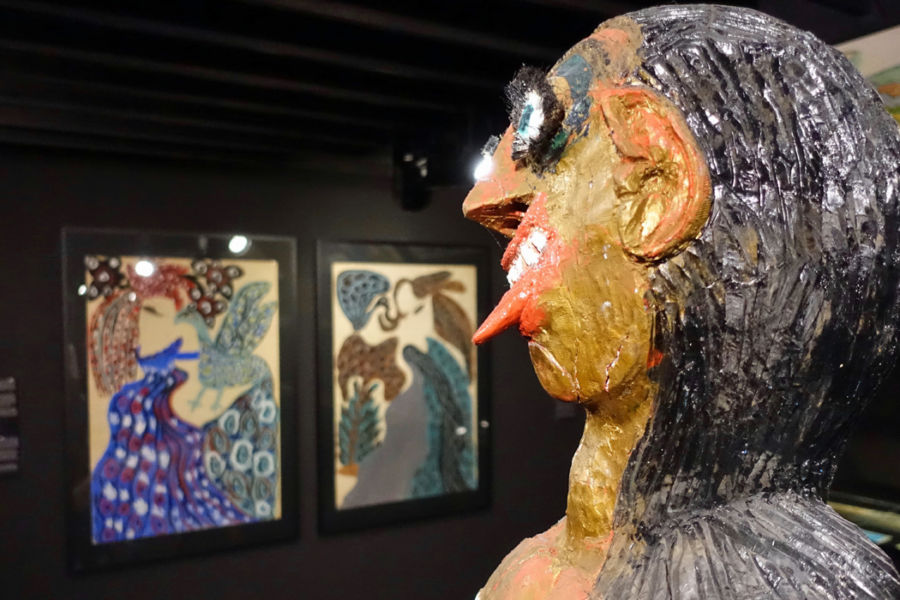
The Art Brut Collection is like nothing else you’ll see in Europe: a museum filled with art produced by untrained artists, many labeled (and even locked up) by society as “criminal” or “insane.” Read thumbnail biographies of these outsiders, and then enjoy their unbridled creativity.

Collection de l'Art Brut

In 1945, the artist Jean Dubuffet began collecting art he called “brut” — created by untrained, highly original individuals who weren’t afraid to ignore rules. In the 1970s, he donated his huge collection to Lausanne, and it has now expanded to 70,000 works by hundreds of artists: loners, mavericks, people on the fringe, prisoners, and mental ward patients. Dubuffet said, “The art does not lie in beds ready-made for it. It runs away when its name is called. It wants to be incognito.”

About 800 works are on display at any given time. As you tour the thought-provoking collection and learn about the artists, ponder the fine line that separates sanity and insanity when it comes to creative output.
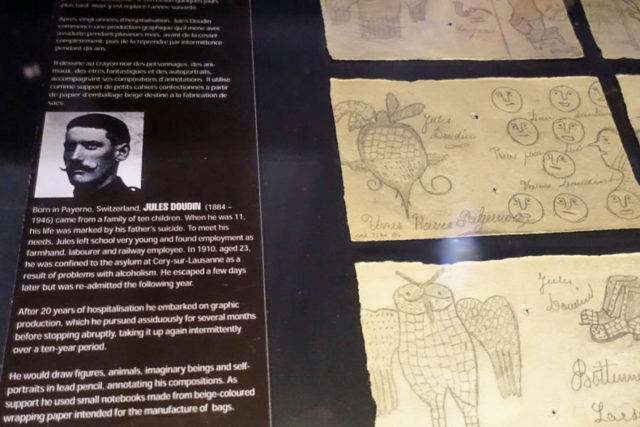
artist bio art

Known as the Olympic Capital, Lausanne has been home to the International Olympic Committee since 1915. The Olympic Museum celebrates the colorful history of the games, with a century’s worth of ceremonial torches and a look at how medals have changed over the years. Surveying gear from each sport (such as Carl Lewis’ track shoes and Sonja Henie’s ice skates), you can follow the evolution of equipment that was clearly state of the art — in its day.

statue with mountains

Back at my Lausanne hotel, my hotelier surprised me by pulling out a little stack of old Steves family Christmas cards. For nearly 20 years, we had a tradition of sending a family Christmas card to all our favorite hotels and restaurants in Europe. For Andy and Jackie, it was an annual chore they dreaded — signing their names to several hundred cards all spread out on the kitchen table.

Hotelier with Christmas cards

Thinking back on this tradition, it’s clear to me that this is a good example of how we have always enjoyed and stressed the people-to-people aspect of our work. To this day, we strive to build our huge gang of hoteliers and restaurateurs into an extended family of friends who understand that we are partners in helping our travelers enjoy the best possible experiences for the best possible price. If there is one aspect of our guidebooks that distinguishes us, perhaps it’s the esprit de corps between us, the legion of small businesses in Europe we recommend in our guidebooks, and our traveling readers.

(Next up on the blog, I’ll be bringing you along on a Mediterranean cruise…stay tuned!)


Switzerland’s Clear-Headed Drug Policy

If Jeff Sessions would like to learn about smart drug policy, I’ll pay for his trip to Switzerland. Like many of its neighbors, Switzerland has a progressive drug policy that aims to reduce the overall harm to its society, rather than focus on punishing users. It’s both compassionate and pragmatic. And it is effective.

syringe dispenser

When polls showed that more than 30 percent of Swiss people had used marijuana, the parliament decided to decriminalize the drug, rather than criminalize a third of its population. Hard drugs, however, remain absolutely illegal. Still, Swiss laws treat addicts as people needing medical help, rather than as criminals. Even in classy Zürich, you can see evidence of this policy. For instance, on the bridge across from the station, bolted to the railing, there’s a big, nondescript vending machine selling safe, government-subsidized syringes to heroin junkies. The basic idea: Hard drug addicts are sick people, not criminals. They need counselors and nurses…not police and lawyers. While Jeff Sessions might recommend “just say no,” the Swiss will be sure their people struggling with hard-drug addiction are not sharing needles and spreading diseases.

My Summer Adventures in the Great Swiss Cities

While most tourists in Switzerland head for the Alps, this year, I enjoyed touring the great Swiss cities: Zürich, Luzern, Bern, and Lausanne.

zurich cityscape

Perched on a rampart over Zürich, a couple of locals take a sun break.

After a long day of guidebook research, I decided to cap my day with a simple aimless stroll around Luzern. I had been wondering just how much people appreciated the tedious attention to detail we put into our guidebooks. And, as if sent by some angel, I met Don from San Francisco. He told me his wife gives him about a month a year for a personal adventure and for the last decade he’s enjoyed annual month-long trips through Europe completely immersed in Rick Steves guidebooks. He knew our work intimately and as we shared a delightful stroll together under the beloved covered wooden bridges of the city, he told me of his happy travels. I went home inspired and energized.

Rick Steves with reader

Luzern has a unique sight called the Depot History Museum. It’s filled with historic artifacts, like this chillingly modern and efficient guillotine. The collection is housed in one of Luzern’s oldest surviving buildings, which was long used to store military weapons and uniforms. Their collection is too big to display traditionally, so they’ve come up with an innovative and fun concept: throw all of their archived stuff together and display it on three crowded floors. You’ll wander through shelves of old weapons, stained-glass windows, sculptures, and old-fashioned tourism posters. Each shelf (sometimes each item) is labeled with a barcode — use your scanner (included with entry) on whichever one you’re interested in. You can then read about its history in English on your handheld screen. It works great. You can bet I scanned this.

Rick Steves with guillotine

This guillotine last decapitated a Swiss criminal in 1940.

Back in my hotel room, I filled the sink with what was one fine beard. Thanks for all the encouragement (both to keep it and to cut it). Your comments were a joy to read. I’ve grown lots of beards over the years, and this was the first time it actually felt like me. But my marketing team blew the whistle on my fun and the beard had to go.

Rick Steves clean shaven

Every few days I need to just stop, stay in my room all day, and input all the notes I’ve picked up in my research. When it’s rainy, my room is comfy, and I have a quiet and relaxing view like this (Luzern), it’s actually an enjoyable day. And it really feels good to have the notes thoughtfully incorporated into the next edition of my Switzerland guidebook.

Luzern

I hit Bern during its annual three-day Buskers Festival. If you like street music, it’s worth planning for. The downside — crazy music until the wee hours outside my window. When confronted by a festival outside your window, rather than gripe about the noise, sometimes you have to just stay up past your bedtime and enjoy it.

crowd

Hey! Stop looking!

Rick Steves at urinal

(Stay tuned for more from Zürich and Lausanne.)

Experience Urban Alsace in Strasbourg

Strasbourg is France’s seventh-largest city (with 275,000 people) and offers your best chance to experience urban Alsace. It feels like a giant Colmar with rivers and streetcars. Long a humanist and intellectual center, today it has a delightful big-city energy. Walking its people-friendly streets, you’ll find it progressive and livable, with generous space devoted to pedestrians and bikes, sleek trams, meandering waterways, and a youthful mix of university students, Eurocrats, and street people. With a name that means the “city of streets,” it’s the ultimate crossroads.

While the city dodged serious damage in both world wars, the people of Strasbourg have experienced a dizzying history. It was hit hard during the Franco-Prussian War, becoming part of Germany in 1870. After that, there was a period of harsh Germanization, followed by extreme Frenchification after World War I, a brutal period under Nazi rule during World War II, and then the strong need to purge all that was German after 1945. Now, while probably more definitively French than it’s ever been, you’ll feel a bi-cultural gentleness and see street names in both French and the Alsatian dialect. Bordering the west bank of the Rhine River, Strasbourg provides the ultimate blend of Franco-Germanic culture, architecture, and ambience.

After World War II, Churchill called for a union of European nations, with the goal of winning an enduring European peace by weaving the economies of France and Germany together. Noting that Strasbourg had changed hands between Germany and France so many times, it seemed logical that it be a capital (along with Brussels) of what would eventually become the European Union. And today, Strasbourg is home to the European Parliament.

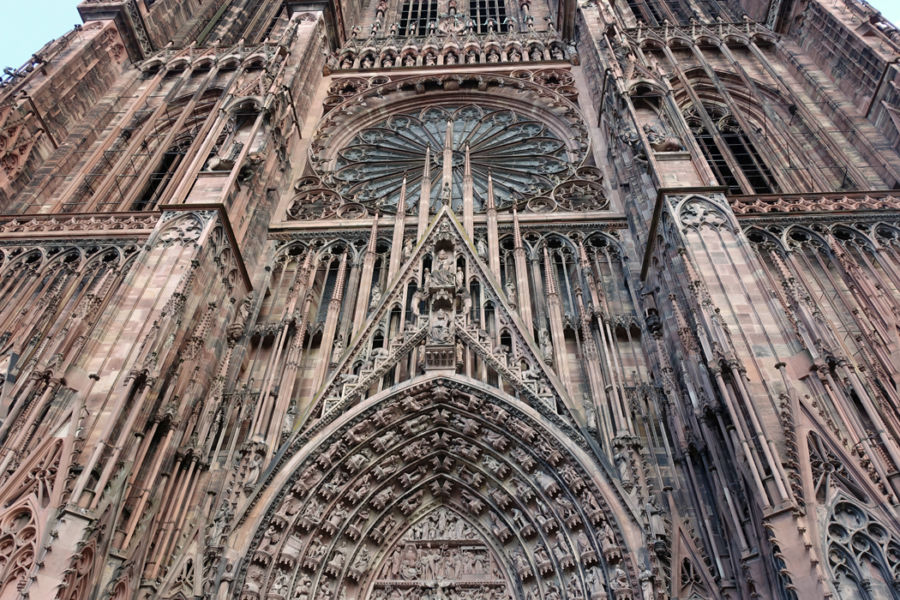
Most visitors come to Strasbourg to see its massive cathedral. Stand in front and crane your neck way back. I couldn’t fit it into my viewfinder. Noting how my jaw dropped, I tried to imagine the impact this unforgettable erection would have had on medieval pilgrims. The delicate Gothic style of the cathedral (begun in 1176, not finished until 1429) is the work of a succession of about 50 master builders. The cathedral somehow survived the French Revolution, the Franco-Prussian War, World War I, and World War II. Today, it’s the big draw of the city — and for good reason.