Afghanistan: Reflections from a “Trip of a Lifetime” (Literally) in 1978


While I know otherwise, I often find myself wondering if the name “Afghanistan” comes from some ancient word for “tragedy.”

Afghanistan is in the headlines yet again — swiftly, and with almost no resistance, taken over by Taliban overlords, who envision a medieval-style caliphate. To someone of my generation, this weekend’s events feel like déjà vu from a lifetime of watching that troubled corner of the world. First, in a decade of warfare that spanned nearly the entire 1980s, Afghanistan hobbled the USSR. And now — after spending two decades, nearly a trillion dollars, and thousands of American lives — the USA is learning the same lesson: This feisty land is reluctant to be ruled.

It’s easy to point fingers: Should George W. Bush have invaded the country in 2001? Should Donald Trump have made a deal with the Taliban in early 2020? Should Joe Biden have withdrawn American troops so quickly? But ultimately, nobody has the answers…which is exactly why we keep finding ourselves in this same place.

One thing is clear: The repeated failures of mighty nations to force our will on the Afghan people is a reflection of our ethnocentrism…our inability to understand what motivates them. And using Afghanistan to score political points with the American electorate ignores the horrifying human cost of the instability that has wracked the lives of everyday Afghans for generations.

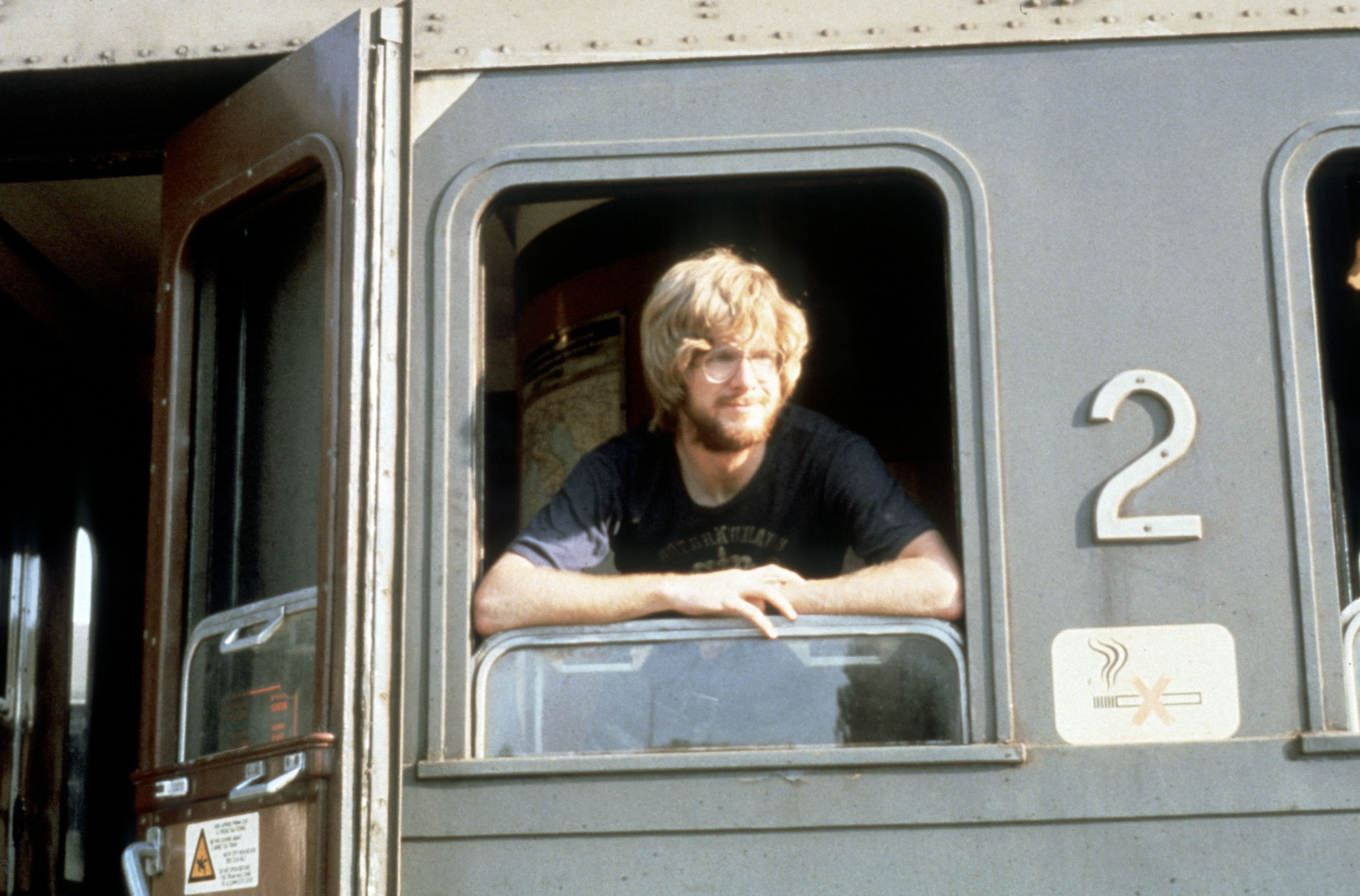
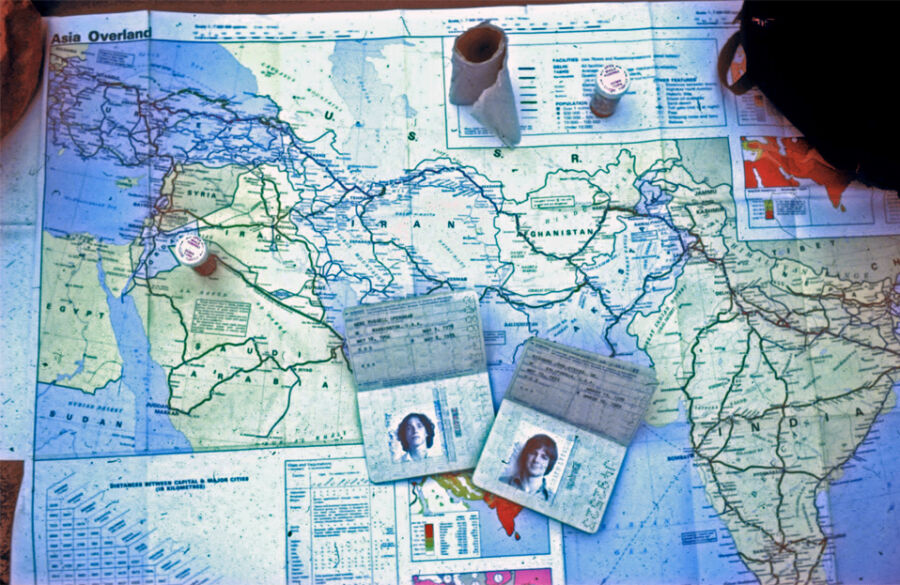
In my case, that tragedy is even harder to observe because I’ve been so moved by people-to-people contacts I’ve enjoyed in Afghanistan. Watching the news unfold, I find myself swimming through memories of my trip there in 1978, as a 23-year-old, on the “Hippie Trail” from Istanbul to Kathmandu. It was the trip of a lifetime — one that simply couldn’t be done now. Each border crossing was a drama, and every rest stop was a lifelong memory.

At the Iran-Afghanistan border — surrounded by abandoned VW vans that had been picked apart by guards looking for drugs, and gazing at dusty glass displays telling stories of European, Aussie, and American backpackers that were caught with drugs and doing time in Afghan jails — we kept our packs on our laps (so no one could plant anything illegal in them) and awaited the doctor to check our vaccinations. My travel partner, Gene, needed a shot, and I still remember the dull needle bending as it struggled to break his skin.

Once on the road in Afghanistan, heading for Herat in our packed minibus, the driver stopped, pulled out a knife that sparkled in the hot sun, and said, “Your tickets just became more expensive.” An Indian traveler calmed the righteous uproar from us Americans, and we all paid the welcome-to-Afghanistan supplement.

In Herat, the urban and cultural center of western Afghanistan, we stood on our hotel’s rooftop watching torchlit chariots charging through the night. Every day was an odyssey — not of sightseeing attractions as such, but simply wandering through markets and gardens and random neighborhoods. This was shortly after a communist coup backed by the USSR. A Soviet tank was parked on the main square, and restaurants had menus with prices literally marked down, and a note: “Thanks to Soviet liberation.”

Our bus ride across Afghanistan followed what must have been the only paved road across the country (a foreign aid project). The terrain looked like an arid wasteland. I remember the monotony of a roadside broken by cemeteries, dusty forests of higgledy-piggledy tombstones in the desert. Even with 50 passengers, toilet breaks lasted just a few minutes: The bus would stop in the middle of nowhere, the men would go to the left side of the road, and the women would gather on the right side of the road. Tenting out their big black robes, they would squat en masse.

Truck stops seemed designed to give the bus driver a chance to smoke hashish. At one, I remember a circle of men sitting on their haunches and passing around whatever they were smoking as they all watched a goat being skinned.

Kabul was the only real city in the country. It seemed like it existed only because a county must have one urban center to be ruled from — a sort of urban necessity in a land that didn’t really know what to do with a city. I eyed people in uniform who looked like, until today, they’d only ever worn a tribal robe.

As I sat eating at a backpackers’ cafeteria, a man appeared at my table. He said, “May I join you?” I said, “You already have.” He asked, “Are you an American?” I said, “Yes.”

And then he went into a well-worn spiel: “I’m a professor here in Afghanistan. And I want you to know that in this world, a third of the people eat with a spoon and fork like you. A third of the people eat with chopsticks. And a third of the people eat with their fingers. And we are all civilized just the same.”

This encounter turned out to be one of the most impactful in my life — like the entire rest of my visit to Afghanistan, it walloped my ethnocentricity and rearranged my cultural furniture.

A highlight of any overland trip to India was leaving Afghanistan by crossing the fabled Khyber Pass. We were scared little Westerners, sitting on the bus, luggage dutifully on our laps, understanding that we were nearly to India — which would seem, strangely, like coming home. Our bus ticket came with a “security supplement” to guarantee safe passage. This fee was paid to the autonomous tribes who “ruled” the region between the capital city and its border with Pakistan. Rolling under their stony fortresses, with wind-tattered flags (that had nothing to do with Afghanistan) and bearded sentries toting vintage rifles, I was more than happy to have paid that little extra fee.

Coming out of the harsh and arid mountains of Afghanistan, a wide-open and humid plain opened up. The stoniness of Iran and Afghanistan was behind us. And ahead stretched a billion people in Pakistan and India.

With this post, I’m kicking off a seven-day series featuring photos from my trip and excerpts from my 1978 journal through Afghanistan. (I wrote this essay from fuzzy memories; upcoming entries were diligently written each night, recounting that day’s adventures in this fascinating land.) Stay tuned, and let’s keep the Afghan people in our thoughts and prayers.

Tapping Into That Vagabond Magic

When you look back on your life as a traveler, which trip do you remember the most? For a lot of us, our happiest travels were the ones we did on a shoestring, slumming around with a backpack. Why? Because these were real adventures: riding serendipity like the wind, taking risks, and enjoying how having no money forced us into the arms of strangers.

I’ve been thinking today about 1973, when my friend Gene and I first experienced “Europe Through the Gutter.” In so many ways, this trip — starting the day after my high school graduation — established the foundation of our entire Rick Steves’ Europe program. Now that we’re adults, we travel with more money, comforts, and reservations than the vagabonds we used to be…but we still tap into the magic that made those early backpacking adventures the best trips ever.

You can hear the story of our 1973 trip in this 26-minute audio clip:

As you listen, consider how you can splice some of that vagabond magic into your next trip. Then, share your thoughts in the comments here or on Facebook, so we can inspire each other to travel with a youthful vigor at any age.

Ett Stort Skritt: My Moon Landing Memory

Fifty years ago today, I was a gangly 14-year-old, in Europe for the first time. I’d been dragged to the Old Country by a conspiracy of grandparents and parents solely to visit Norwegian relatives. I hadn’t wanted to go, and I’d arrived with a bad attitude. It was teen culture-shock: No Fanta. No hamburgers. But after a few days, I was wild about Solo (Norway’s orange pop) and addicted to pølser wieners.

I watched the Apollo moon landing with my cousins, sitting on the living room floor of the house where my great-great-grandmother was born. And as I heard them translate Neil Armstrong’s words (“Ett lite skritt for et menneske, ett stort skritt for menneskeheten“), it dawned on me that the first big step was more than just an American celebration. It was a human triumph.

Travel had walloped my ethnocentrism — and at that exact moment, I began to see the whole world differently.

Rooftopping, Anyone? Looking Back at the Best of Europe in 21 Days

I’m feeling a bit nostalgic, thinking back to the days when our “tour program” was just me driving a minibus with eight other travelers, and at particularly scenic spots — to enjoy the views to the absolute max — we’d take turns riding on the rooftop. (I’m back in Europe now, and I drove some of these same roads today. The views are beautiful as ever…but I stayed inside the car.)
 
We’ve come a long way since those early days — and these days, more than 30,000 free-spirited travelers come together each year to explore Europe on nice, big buses in a more comfortable version of the Rick Steves style. But some things have stayed the same: Our Best of Europe in 21 Days Tour still follows the route I drove in my minibus back in the ’80s, and we still have the same passion for maxing-out on the experience. The rich rewards of metaphorically “rooftopping Europe” remain unchanged.
 

Simply put, my 21-day tour still packs more unforgettable travel experiences than you can imagine into an amazing three weeks, covering all of Europe’s greatest hits. Check out the full itinerary — and save up to $700 per person this summer. (Or if you have only two weeks to spare, hop aboard a Best of Europe in 14 Days Tour.)

Happy travels!

In These Times of Change, Let’s Celebrate the Trusty Rail Pass

In 2019, European rail passes are undergoing the most sweeping changes in a generation. Gone are “Select” passes, where you can mix and match countries as you like to suit your itinerary. Now, it’s all of Europe, or just one country.

This time of change has me nostalgic for the glory days of rail passes. In my backpacker days, there were just two choices of Eurailpass: one month or two months, covering most of Western Europe, with a second-class option available only to people under 26.

Over the years, as rail passes became a must-have accessory for any trip, customization was in. The flexipass — valid only a certain number of days in a one- or two-month period — revolutionized the rail pass game. The Europass included just five core countries, rather than automatically including all of Europe; later, the Eurail Select pass let you choose exactly which countries you wanted. So, instead of paying for 30 straight days in 17 countries, you could save money by buying a pass for only five days (within a two-month period) in just France, Benelux, Germany, and Denmark. Gradually, even more spin-offs arrived: two- and three-country passes that seemed designed to suit any conceivable trip (and, frankly, some that were pretty inconceivable).

During their heyday, rail passes were a way of life for travelers in Europe. Savvy backpackers were rail policy wonks, and knew every trick in the book for stretching a pass. They knew that if you took a night train, it’d count only one flexi-day — the day of arrival — allowing you to sneak in some “free” onward travel the next day. (Now this has been flipped, counting the day of departure.) They knew that if you were going from Munich on a Germany rail pass, it’d take you as far as Salzburg — the first station over the Austrian border — but no farther. But if you were going from Munich to Venice on a pass that included only Germany and Italy, but not Austria, you’d have to pay separately for that Austrian segment. And yet somehow, it all worked — and provided travelers with fond memories of mastering the system.

Around this time, selling rail passes was a big part of my company’s mission. Travelers who did their homework could save plenty — but there were so many options, it was hard to know where to begin. We published an annual 64-page guide to European rail passes, along with an extensive rail website. We even produced a VHS tape about how to choose your rail pass, which we’d snail-mail to potential customers. And several experts on my staff — including our Rail Department Manager and train guru, Laura Terrenzio — advised travelers on their rail pass choices full-time.

With the arrival of budget airlines, things began to change. Premium, high-speed trains (like AVE in Spain and TGV in France) started requiring travelers to book ahead and pay a supplement. The loss of the ability to hop on pretty much any train, anytime, no questions asked, made the arithmetic required to choose the right rail pass even more complex. For the right traveler (and the right trip), a rail pass could still be a good choice…but it wasn’t an easy choice.

As of last week, Eurail has gone back to basics. Gone are the unwieldy combination tickets and the staggering array of à la carte passes. Now you can either get a single-country pass, or a Global Pass covering 31 countries. (I don’t think Europe even had 31 countries back when I bought my first rail pass.) While there’s been some loss of customization, I appreciate how the new approach is simplifying what had become a confusing selection process.

There are other changes, too. But a few things haven’t changed. There’s still a special magic to taking trains around Europe. We’re still selling rail passes, and helping travelers figure out which pass is best for their trip. And Laura Terrenzio is still the most knowledgeable person I know (and probably in the whole country) when it comes to rail passes. Anytime you visit the Rail section of our website, you can be confident Laura has everything up-to-date, like always.

What are your favorite memories of traveling with a rail pass?