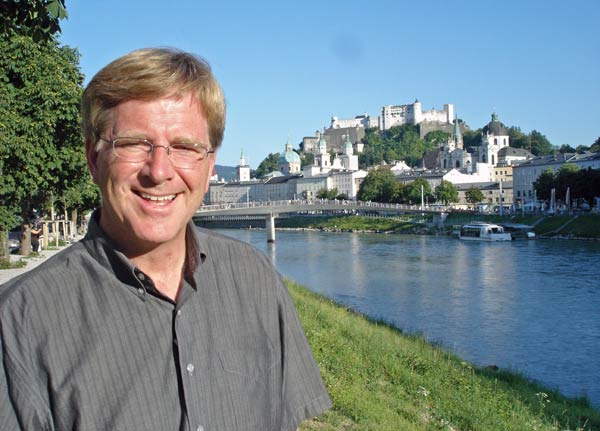
In the last two weeks in Austria, I noticed that every time I was truly struck by the conviviality of a place, I’d look up and see chestnut leaves.
An old-time vested waiter brings me a tall apfelschorle (apple juice with soda water…standard hot summer drink here for me) as I ponder the finest view in Vienna. Framed under chestnut trees in one direction, the majestic city of Vienna sits solidly on a grand bend in the Danube. And in the other…forested hills which kick off a mighty range of mountains that don’t stop until they tumble into the sea at Marseille in France…the Alps are born.
Days later, I’m in my favorite Austrian alpine village, enjoying a second helping of the sweetest saurkraut you can imagine (you can get loopy for good kraut over here…many do) at the lake-side restaurant in Hallstatt. (It’s forever etched in my mind for the wonderful evening Anne, Andy, Jackie and I enjoyed here a few years ago when we took our annual family Christmas photo–which I still see on the office and breakfast room walls of my favorite little B&Bs around Europe.) Swans, imported in the 19th century to please the Kaiser and his Empress, glide by for a little genteel begging. Rustic tables line up as if to provide a dinner concert of scenery…a peaceful lake interrupting the power of the alps. And all the action is under one massive chestnut tree.
The next day, in Salzburg we parked our bikes at the Augustinian monastery where, once upon a time, the monks (must have been the most popular monks in town) brewed a heavenly beer. Stepping into their beer garden, it seemed half of Salzburg had gathered (all generations, enjoying fish grilled on sticks, radishes artfully sliced into long delicate spirals–with salt they make the beer taste even better–and tall grey porcelain mugs drawn from old time wooden kegs)…under a chestnut tree orchard of conviviality.
There’s a unique Austrian word for that “under the chestnut tree ambiance”…gemutlikeit. A cozy conviviality that can make you dream in lederhosen and dirndls.