Lutherans Take Over Washington, DC

Today, Lutherans everywhere are commemorating Reformation Day — the 500th anniversary of the day Martin Luther nailed his 95 Theses to the door of Wittenberg’s Castle Church, kicking off the Protestant Reformation. I’m in Washington, DC, and I’ve been celebrating since Sunday.
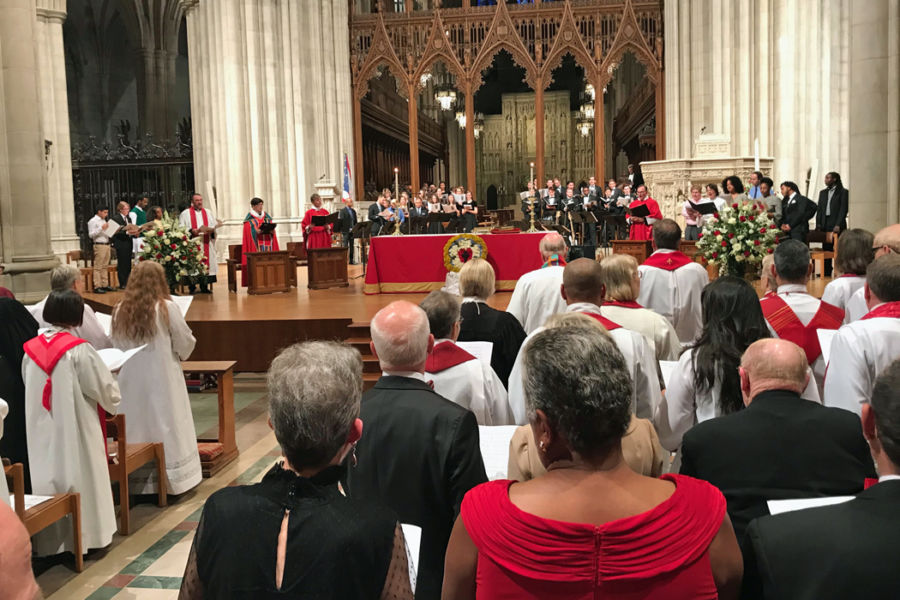
Washington National Cathedral interior

Whenever a big church event is held here, it’s likely to be at the Washington National Cathedral, a must-see attraction when visiting our capital. On Reformation Sunday, thousands of Lutherans filled the place. It was High Church at its best — lots of bishops, red scarves and ties everywhere, a celebration of many cultures, and amazing music. Being among so many Lutherans singing “A Mighty Fortress Is Our God” (our “fight song”) made it particularly unforgettable. And I got to enjoy a few lighthearted moments before the service with my friend, David Beckmann, President of Bread for the World (an organization we’ve supported for decades through our work at Rick Steves’ Europe).

David Beckmann and Rick Steves

After the service, I partied at the Mayflower Hotel with our wonderful Presiding Bishop, Elizabeth Eaton, and church leaders from far and wide. For the first time in my life, I wore a bowtie — thanks to some thoughtful friends who saw I was a bit underdressed and had neglected to wear the color of the day: red. Wearing a fancy little bowtie at the Mayflower Hotel…it just made perfect sense.
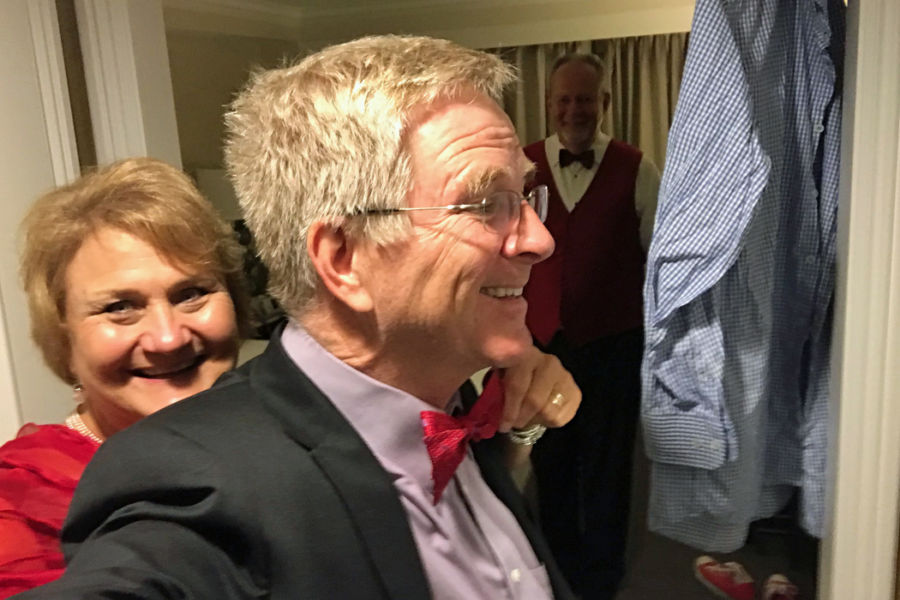
Rick Steves with bowtie

Together with Bishop Eaton, we celebrated diversity. We raised a glass to Elizabeth Platz, who became the first female Lutheran pastor in 1970, and we honored guests from around the world. Of course, my Lutheran heritage is as white as can be, but there are far higher proportions of Lutherans in several African countries — including Tanzania and Namibia —than there are in the USA. I’m also proud that the Evangelical Lutheran Church in America was a leader in welcoming gay members and clergy — even though that caused hundreds of congregations to leave, in search of less open churches.

Presiding Bishop Elizabeth Eaton and Rick Steves

Presiding Bishop Elizabeth Eaton

Today, we’re in the midst of an impressive capital campaign to make both our foundation and our reach stronger. And, while Luther managed to split the “one catholic and universal Church,” a big part of our 500th-anniversary joy is how, after five centuries — with leadership from both Pope Francis and Bishop Eaton — the Roman Catholic Church and the Lutheran Church have never been closer and healthier in their shared mission.

Yesterday, our group visited the delightful Folger Shakespeare Library (just a block behind the Capitol). The library has one of the world’s top collections of books and documents from the Reformation and the 16th century. They welcomed us with an amazing literary treat: a table of precious works from the age of Luther, including an actual papal indulgence — one of the things that riled Luther the most. These were coupons, printed up en masse and sold by the Roman Church, promising forgiveness and a quicker ride to Heaven.

Folger Shakespeare Library interior papal indulgence


What about you? I’d love to hear about how you are celebrating the the 500th anniversary of the Reformation.


Video: Rick Steves’ Luther and the Reformation

On October 31, 1517 — 500 years ago today — Martin Luther nailed his “95 Theses” on the door of Wittenberg’s Castle Church, kicking off the Protestant Reformation. This courageous stand by one man sparked a century of conflict, changing Europe and Christianity forever.

In Rick Steves’ Luther and the Reformation, you’ll learn the story of a humble monk who lived a dramatic life. I visit key sites relating to the Reformation (including Erfurt, Wittenberg, and Rome) and explore the complicated political world of 16th-century Europe — from indulgences to iconoclasts, and from the printing press to the Counter-Reformation. It’s a story of power, rebellion, and faith that you’ll never forget. To watch, check your local public television listings or stream the full hour right here:

Happy Anniversary, Martin Luther!

It’s Luther party time!

In 1517, the German monk Martin Luther collected 95 points to stoke discussion about the corruption of the medieval Church. He then nailed his famous “95 Theses” to the door of his hometown church in Wittenberg — unleashing a storm of change and kicking off the Protestant Reformation.

I’m honored and thankful to make a small contribution to the celebration of the 500th anniversary of the Protestant Reformation with a new documentary. Rick Steves’ Luther and the Reformation is airing now on public television (check your local listings) and streaming online for free. This is a story of power, rebellion, and faith that you’ll never forget.

Earlier this year, we sent free copies of the DVD to 8,000 Lutheran churches (ELCA) across the country. It’s been a lot of fun to hear about Luther viewing parties in many of these churches, from a “soup supper” viewing in Kempton, PA to a morning viewing with coffee in Douglasville, GA. (If you haven’t told me about your party yet, please share details in the comments below.)

If you’d like to host your own screening event for your friends, family, community group, or congregation, pick up a copy of the DVD and use this viewing party toolkit.

Enjoy the show!

Documentary Style à la Ken Burns

Rick Steves looking at a large bible

Ken Burns can enthrall me for hours on end with lavishly filmed, edited, and narrated history. It’s my hope that our hour-long special on Luther and the Reformation will be enthralling too. For me it was exciting to have access to actual documents, papal bulls, letters of indulgence, Bibles in both Latin and German, and pamphlets by Luther — all dating from the early 1500s. The Luther Haus in Wittenberg is the best single museum for Reformation artifacts and documents. We were given complete access to its treasures. We scouted one day to make a list and a plan. Then we filmed for four extremely efficient hours getting lots of great images to “cover” our script. As it was by far the most images we’ve ever shot in one location, I decided to be well-organized and catalog the clips. It’s like a puzzle, and at this single stop we got these 60 pieces. Here’s my list of camera shots:

Art shot in Luther Haus in this order: 1. Wittenberg townscape etching, 2. Frederic the Wise small color painting, 3. Luther with professor’s bonnet, 4. Indulgence etching scene with Tetzel, 5. Actual small indulgence (same thing filmed later in treasures room), 6. Tetzel on horse etching, 7. Pope Leo X, 8. Luther’s actual wooden pulpit, 9. First printed 95 Theses, 10. Luther with monk haircut etching, 11. Jan Hus etching, 12. Tiny color burning scene (big one later is much better), 13. Worms townscape color etching, 14. Booklet cover Luther at Worms in 1521, 15. Color painted Luther portrait, 16. Emperor Charles V, 17. Luther in disguise etching, 18. Cover showing three marriages, 19. Receipt for payment to city, 20. Money chest for community, 21. Latin Bible, 22. Etching of Luther and another reformer taking Communion, 23. Luther preaching etching, 24. Etching of fat usurer with good farmers, 25. Color portraits of two princes, 26. Life-size Frederic the Wise painting, 27. Portrait of Katie and Martin, 28. Wedding scene on book cover, 29. Katie portrait etching, 30. Locked metal box and coins, 31. Small painted portraits of Luther and Melanchthon, 32. Portraits of two princes, 33. Luther holding Bible (close up of hands on Bible), 34. Two-page spread with music, 35. First complete German Bible, 36. Tiny hymnal; Printing Press Room (37. Printing press, 38. Pope as Satan, 39. Color portrait of group of great Reformers, 40. Cranach illustrations on Luther booklets: 40. Grouping of several, 41. Cartoons of grinder, 42. Animal faces, 43. Big donkey, 44. Two anti-Jewish covers); Treasures Room — three 16th-century documents (45. Big one good for 100 days less in purgatory, 46. Small one with blanks to fill in, 47. Medium one with dingleberries), 48. Luther and Katie portraits young, 49. Martin and Katie in one painting, 50. Martin and Katie old, 51. Luther and swan etching, 52. Martin Luther fine color portrait, 53. Gathering of Reformers (with faces and the pope and company trying to blow out candle), 54. Big paintings of Diet of Worms (many shots), 55. Burning of papal bull, 56. Luther at Wartburg Castle fighting the devil, 57. Luther’s living room (with Rick walk through), 58. Luther’s first New Testament in German, 59. Pulpit room (with Rick walk through), 60. Rick walk into museum from outside — two versions, wide shot of the building exterior.

Coming in 2017: Rick Steves Public Television Special about Martin Luther and the Reformation

In 1510, a young monk from Germany named Martin Luther walked 700 miles to Rome on a pilgrimage. He returned home disillusioned, and in 1517, he raised 95 difficult theological questions at the university where he taught — and kicked off what became the Protestant Reformation. This year, my crew and I will be filming a public television special to celebrate the 500th anniversary of that event.

Most of the show will be filmed in Germany later this summer. But this week in Rome, we took time out from producing our upcoming Easter special (more on that soon!) to film a few segments about Martin Luther.

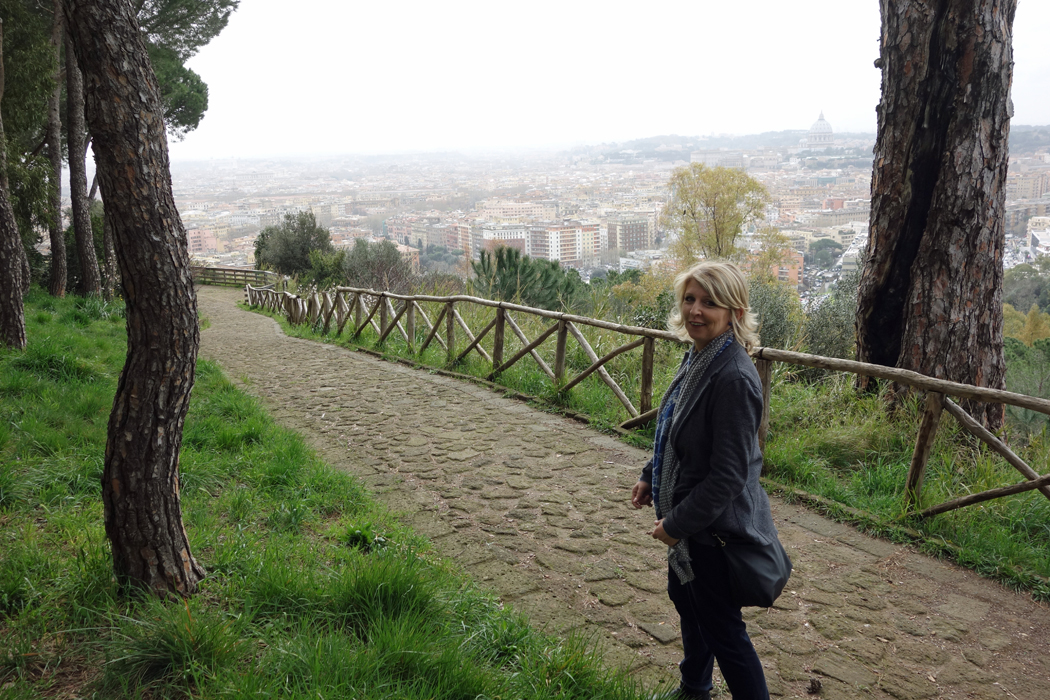
Luther trail.JPG

We were scouting for an evocative trail leading into Rome, to capture the awe that filled Luther as he approached the grand finale of his pilgrimage. Our local guide and good friend, Francesca Caruso, led us to the perfect setting, on Monte Mario.


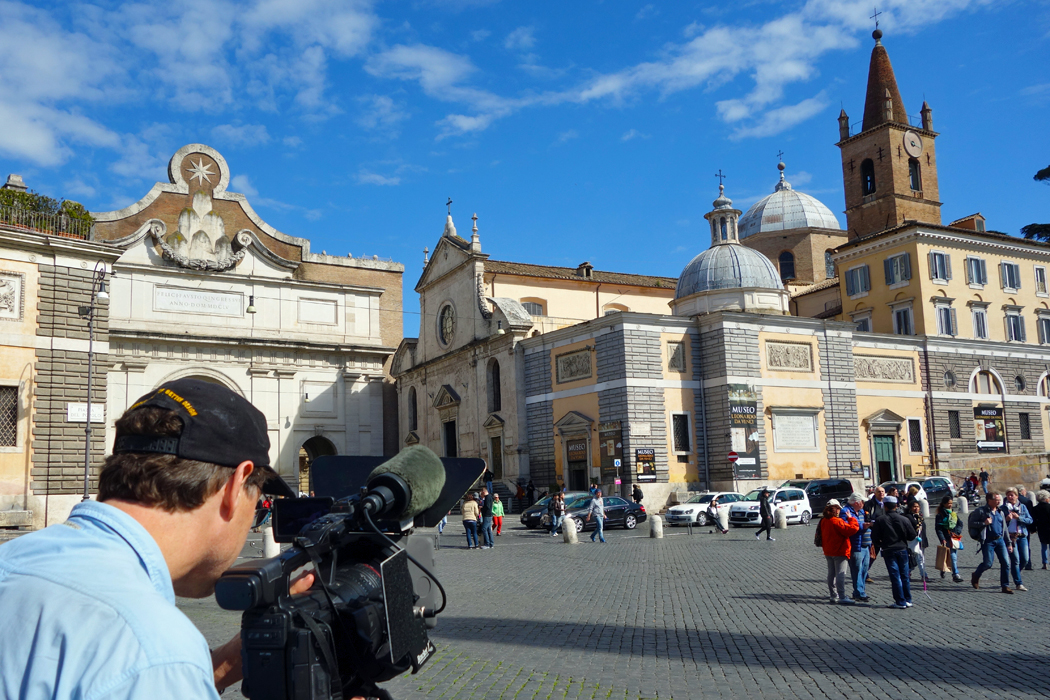
luthers church.JPG

Luther was an Augustinian monk, and just inside Rome’s city gates (at Piazza del Popolo) is the Augustinian church of Santa Maria del Popolo. Just as a hostel provides a needed bunk for a backpacker today, this church provided Luther a humble home upon his arrival in Rome.


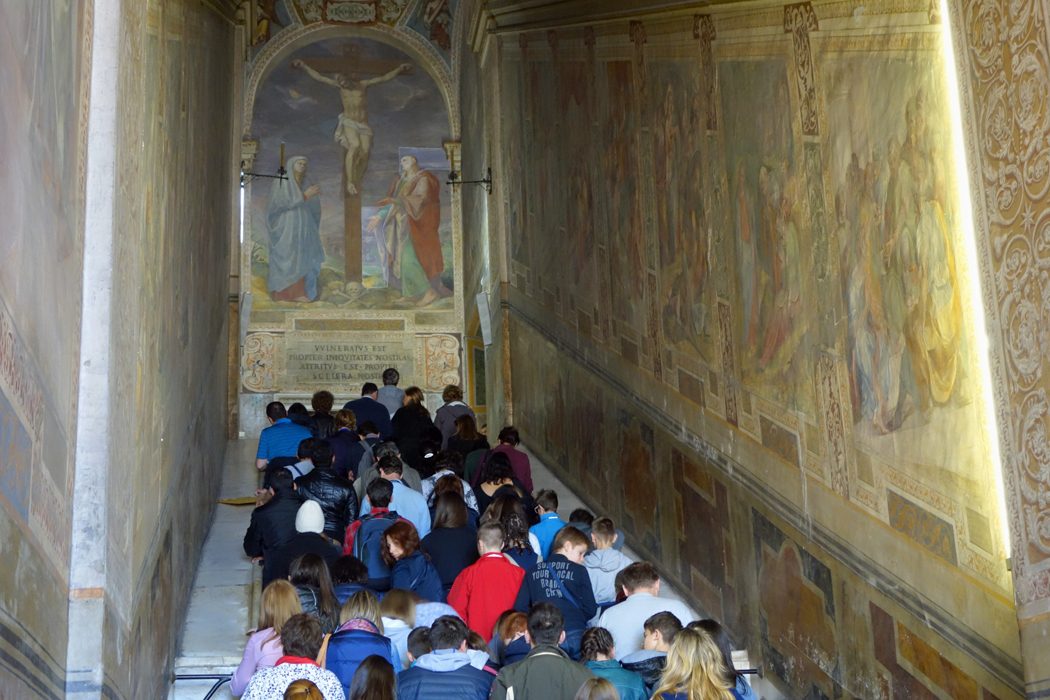
holy steps.JPG

After dropping to his knees and declaring, “Hail, holy city of Rome,” Luther did what pilgrims still do to this day: He worshipped at holy sites all over town. He climbed the Holy Stairs (Scala Santa) on his knees, just as our cameraman, Karel Bauer, did today. And upon reaching the top, Luther thought the same thing Karel did: “This just makes no sense to me.”


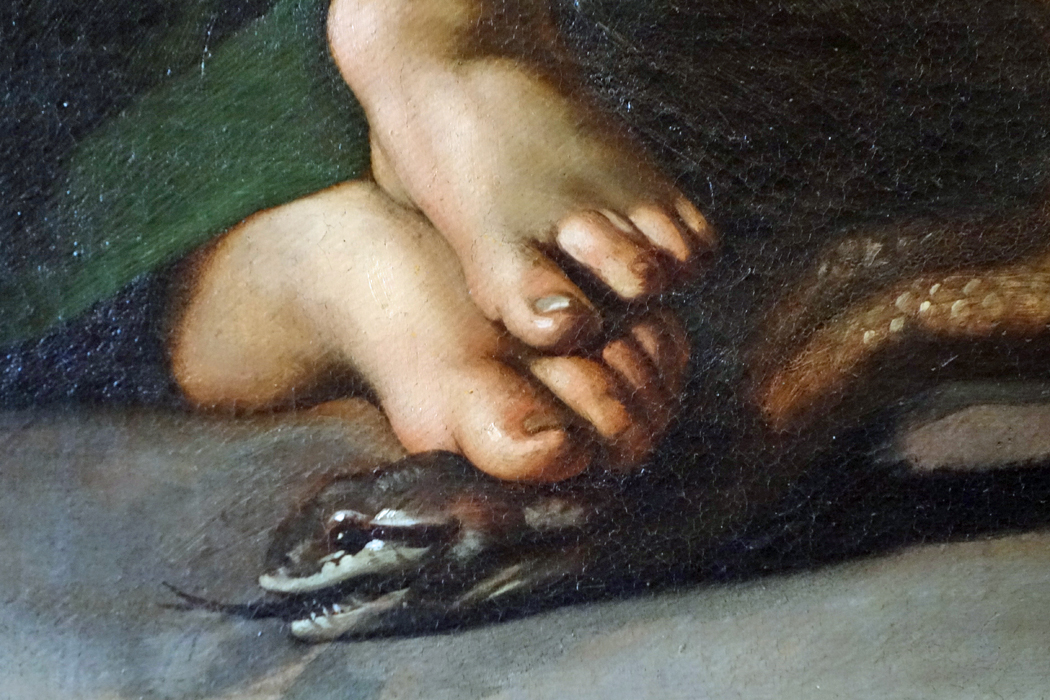
snake.JPG

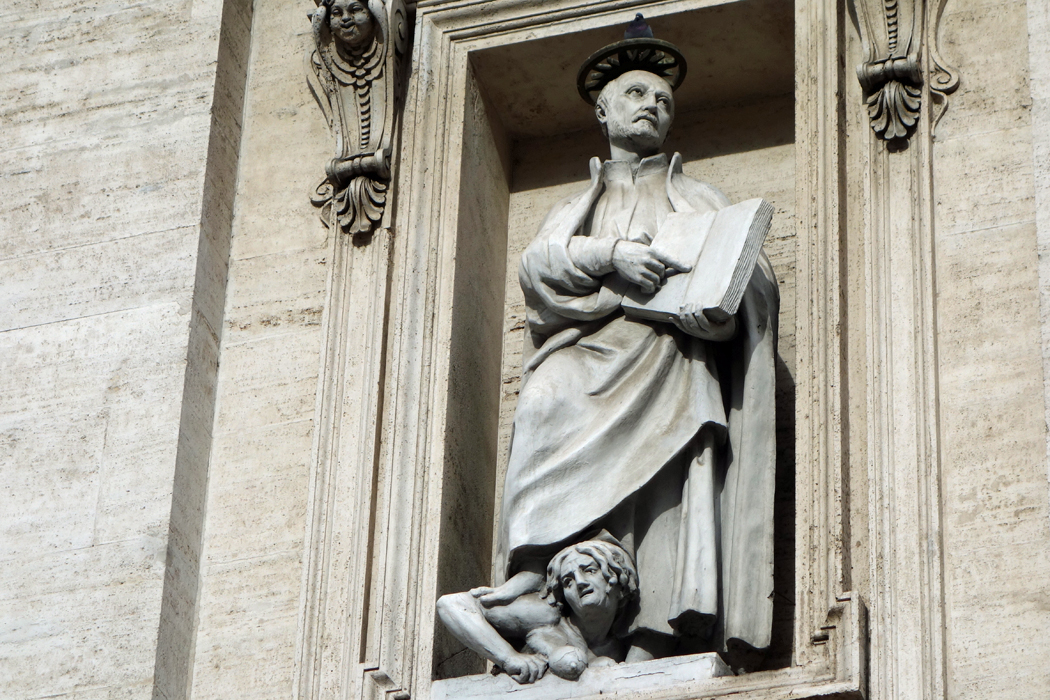
stepped on by saint.JPG
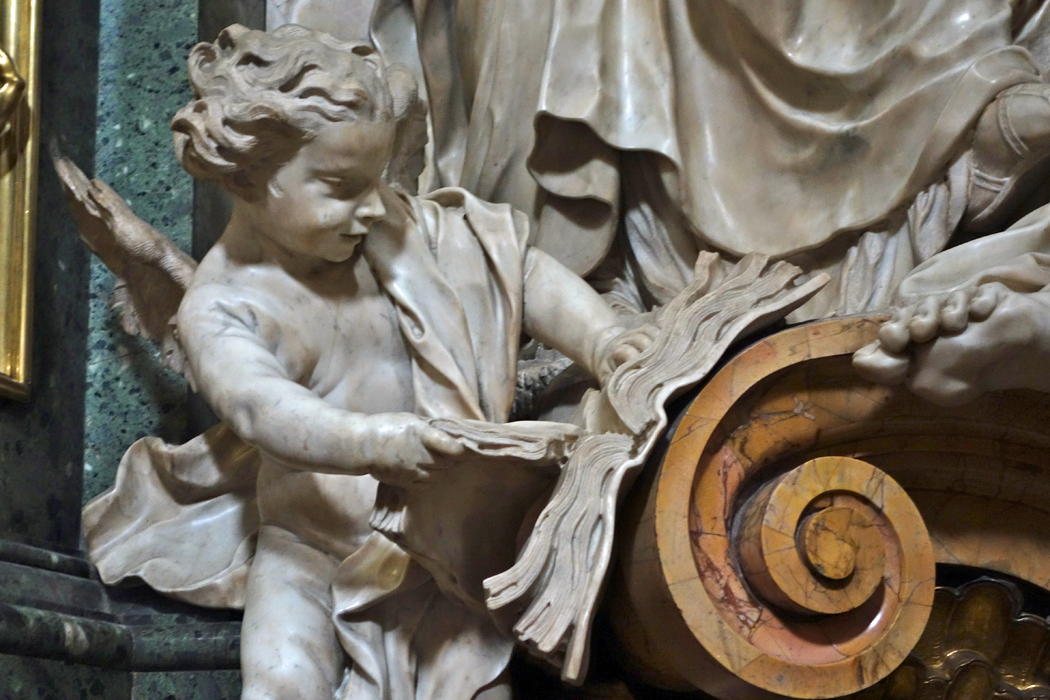
cupid rips book.JPG
By questioning corrupt Church practices — jumping through hoops to earn less time in purgatory, or purchasing relief from the consequences of your sins in the form of indulgences — Luther unleashed a torrent of public frustration and undercut the power of the Church. The Church fought back with the Counter-Reformation. If you know where to look, you can see Church-sponsored propaganda designed to make sure the Catholic (which means “universal”) Church remained the only permissible way to be a Christian: the Virgin Mary and toddler Jesus stepping on evil snakes; stony saints stepping on heretics; and angry cupids ripping up the pages of Bibles that had been translated from Latin into languages normal people could actually read. It was a tumultuous time for Christians of all stripes.