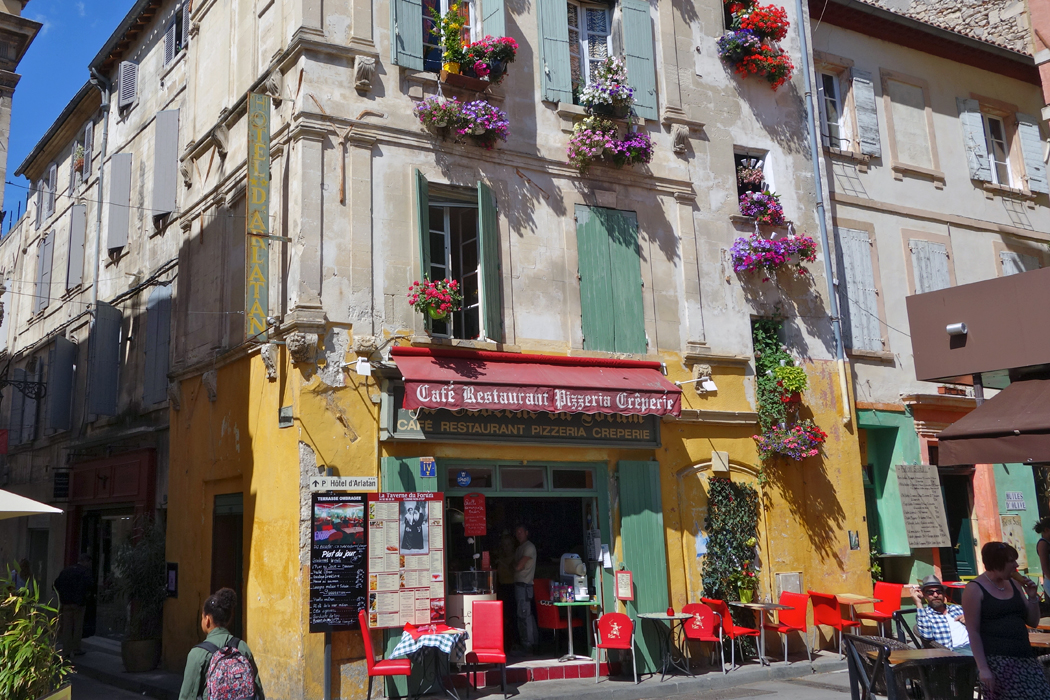
Arles, in the South of France, is not as rich as Avignon or as trendy as Aix-en-Provence. But it feels gritty and real, with a patina of life that I find very seductive. When I saw this gorgeous wall, as if awaiting a painter’s attention, I asked if it was an initiative of the town or tourist board. My guide said, “No, that’s just the way we like it.”
Also, Cameron is highlighting lesser-known Milan in my Travelers Café.
Marseille feels like Europe’s gateway to Africa. About a quarter of its population is from North Africa, and two million people ride its ferries across the Mediterranean each year (most shuttling from here to Algeria and Tunisia). Like Los Angeles or Miami, the city has its melting-pot challenges (and some immigrant-related crime). But it is vibrant, it is reality, and no trip to southern France is really complete without a stop here. In this little clip, walk with me for a moment through the North African market in the center of Marseille.
A great thing about traveling in France (I think even more than in other countries) is how the characteristic, family-run little hotels survive. Follow me as I greet my host, Patrice, and climb the spiral staircase in my choice in downtown Avignon, Hôtel Colbert. At about $100 for a double room with breakfast, it’s about half the price, double the rough edges, and double the memories of a more modern place.
Cities all across France now have modern and efficient “farmers markets” in practical indoor halls, with big parking garages overhead. These were built so this important slice of the local culture can survive the competition brought on by France’s hypermarchés (huge suburban shopping centers). As I’ll explain in this clip, at these markets you’ll find lots more than a charming and colorful people scene; you can also eat well and affordably. I find that in my guidebooks all across Europe, for lunch I’m recommending sitting down with the local shoppers at the traditional market. What’s your favorite market experience (or meal) in Europe?
A lot of things impress you when traveling through the South of France. One of my favorites is the ancient stone aqueduct called the Pont du Gard.
This region is called Provence because it was the first “foreign” conquest as ancient Rome set about to building its vast empire. Since it wasn’t Rome proper, they called it “Provincia Romana” (province of Rome) — and the name stuck.
The Romans left behind some impressive examples of engineering in their first province. The Pont du Gard is one of the most striking, and one of the most visited sights in all of France. And even after many visits, I’m forever impressed by the ability of the ancient Roman engineers. This structure, built with perfectly cut stones fitted together without mortar, was designed to slope ever so slightly — less than an inch every hundred yards — as part of a 30-mile canal system that let water flow effortlessly into the city of Nîmes.
The classic view of the aqueduct, from the river, is something every visitor sees. But here’s a peek at the actual stream the Romans created — on the top of that structure. Six times a day, for €4, you can follow a guide (like Michael, who you’ll meet in this clip) and actually walk the length of this ancient bridge…an experience you’d miss if you visited without a good guidebook.
Where have you been most impressed by Roman engineering?