Ending the Prohibition on Marijuana in Maryland, Delaware, New Jersey, and Vermont

Back in 2012, we voted to legalize, tax, and regulate marijuana in Washington State. I’m proud of that vote and what it has meant for social justice, civil liberties, and public safety in my state. And so, every election cycle since then, I’ve gone on a barnstorming tour to help other states end our country’s prohibition on marijuana. In 2014, it was Oregon (we won). In 2016, it was Massachusetts and Maine (we won). And this year, it was a whirlwind trip to DC, Maryland, Delaware, New Jersey, and Vermont.

The first eight states that passed laws to regulate the sale of marijuana were “initiative states,” where citizens can vote directly on proposed laws that are too hot for politicians to risk supporting. Now that those progressive initiative states have legalized, it’s time to take the state-by-state dismantling of prohibition to the legislatures — starting in states where this issue is polling strongly. The Northeast, where Massachusetts and Maine have already legalized, sees legalization as a rising tide that, sooner or later, all will have to rise with.

Yesterday, I posted about my time in DC, working the halls of Congress. Next up, I spent successive days in Annapolis (the capital of Maryland), Dover (the capital of Delaware), Trenton (the capital of New Jersey), and Montpelier (the capital of Vermont). At each stop, I was the “likable travel guy” — used as bait by local lawmakers spearheading legalization bills to get fellow lawmakers and the press to drop by and learn more. I can’t remember meeting so many hardworking public servants in one week. It was an inspiring and educational experience for me.

Plus, it was good travel. At the Maryland State House, the first peacetime capitol in our country, one proud lawmaker took me to a room — the Old Senate Chamber — which he described as one of the most important places anywhere for democracy. It was here that George Washington declared that he’d freely give up power rather than becoming a de facto king.

Hiking up the steps to the capitol building that evening, we passed through a big assembly of gun-rights activists, all with newly minted and uniform placards. (One was a fan of my TV shows. He tried to teach me why we need so many guns, and as I left, he hollered, “We Second Amendment guys like PBS, too!”)

Whenever forces oppose us, I wonder, “What’s the financial incentive?” There’s a lot of money to be made by keeping pot illegal. We’ve found that our opposition — what I call the “PPP” or “Pot Prohibition Profiteers” — is funded by pharmaceutical companies, big beer conglomerates, and even the pee-in-a-cup people who sell marijuana testing kits. In Delaware, I encountered opposition for the first time from AAA, which has expressed concerns about road safety. I would point out, respectfully, that those claims are pretty easy to debunk.

In New Jersey, the “Garden State,” we drove through a forest of billboards in an industrial wasteland (one of the biggest read, “Pray for loved ones in Purgatory”) to reach a press conference. For the first time, I heard someone make the case that we shouldn’t legalize marijuana because we’d have to retrain all the sniffer dogs. (And he was serious!)

My favorite stop was in snowy Vermont, the state that Ben & Jerry & Bernie all call the perfect place for their values. The tiny capital of Montpelier (7,000 people and, they brag, no McDonald’s) hosts the convivial historic statehouse. It felt like a big coffee klatch of lawmakers, press, lobbyists, and citizens — all working to keep Vermont, Vermont.

Just a few weeks before I arrived, Vermont became the first state legislature to legalize the possession of marijuana — but they still have not created a state marketplace for marijuana sales. I joined the Senate Judiciary Committee (led by the venerable Senator Dick Sears) in a plush little room — me and five senators at a grand, old, wooden table, with press and the public gathered around in a friendly and informal atmosphere. I was welcomed to give my 15-minute review of our experience in Washington State and my take on European drug policy and to entertain questions.

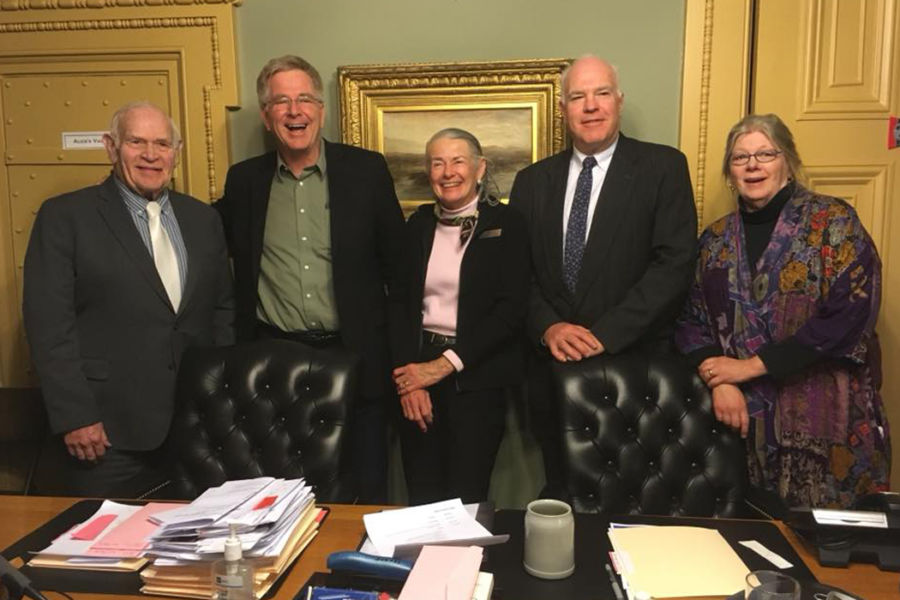
Photo via Matt Simon, Marijuana Policy Project

Afterward, Lt. Governor David Zuckerman took me into his office to talk travel and drug policy. Before I left, I noticed a big bean on his desk, which he picked up and eloquently compared to each citizen in his state. Without fertile soil, a bean is nothing — but in fertile soil, it can grow big, strong, and robust, reaching its God-given potential. And, like that bean, a child needs the fertile soil of a well-governed society to reach her potential. In Vermont, that just sounded so right.

Photo via Matt Simon, Marijuana Policy Project

If you would like to watch a sample of the message I brought to Maryland, Delaware, New Jersey, and Vermont, here’s a fun talk from the Skinny Pancake restaurant in Burlington, as well as a more in-depth interview I did with Heady Vermont.

https://www.facebook.com/headyvermont/videos/1997345780521212/ 

https://www.facebook.com/MarijuanaPolicyProject/videos/10155076604511816/


Join our traveling community — connect with me on Facebook and Twitter.

My Road Trip to Help Legalize Marijuana in the USA

Every winter, I take a road trip across the USA, giving talks along the way. This year’s trip is a big one: 25 cities in 30 days, which I kicked off with a full week dedicated to drug policy reform and helping to legalize marijuana.

Working the halls of Congress

I have embraced this cause for many years. I’ve been a board member of NORML, the National Organization for the Reform of Marijuana Laws, since 2003. In 2012, I was a co-sponsor, major funder, and leading spokesperson for I-502, an initiative that legalized, taxed, and regulated the recreational use of marijuana for adults in Washington State. On election day that year, Washington and Colorado became the first jurisdictions in the world to attempt to turn a thriving marijuana black market into a highly taxed and regulated legal market. Many others had decriminalized marijuana, but it was a historic first to entirely legalize it (to honestly sort out the complicated “back-end” issues of wholesaling and distribution).

When I talk to audiences about marijuana, I always say, “I’m not pro-pot. I’m anti-prohibition, anti-racial discrimination, and pro-civil liberties.” And I always remind my audiences that marijuana is a drug, it can be dangerous, and it can be abused. But we now know, after a five-year track record in WA and CO, that when you legalize smartly, adult use stays essentially the same, teen use does not go up, crime does not go up, and DUIs do not go up. What does go up are protections of our civil liberties — and tax revenue. Marijuana was once a thriving illegal market in Washington State (rivaling apples in sales) that empowered and enriched organized crime. Now, it’s part of the legal market – and, with $1.3 billion in yearly sales, it’s a big part. Marijuana generated $319 million in revenue for our state last year alone. And we’re no longer arresting about 8,000 (mostly poor and black) people each year.

Because I’m so proud of what we’ve done for social justice, civil liberties, and public safety in our state, each election cycle I dedicate a week or so of my time to share this information with other states. In 2014, it was Oregon (we won). In 2016, it was Massachusetts and Maine (we won). And in 2018, I’m preaching the gospel of legalization in Maryland, Delaware, New Jersey, and Vermont.

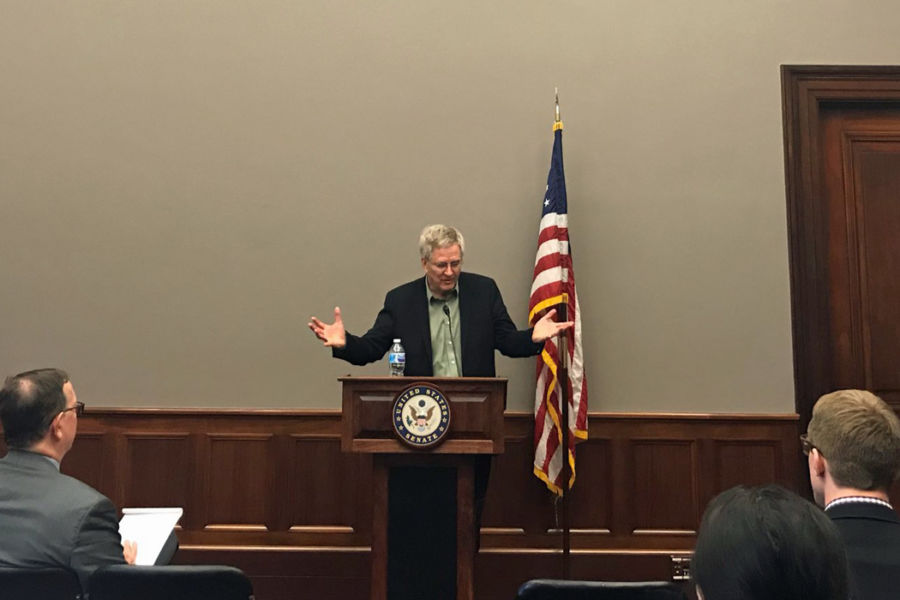
I started off the week in Washington DC, working the halls of Congress with lobbyists from NORML and the Marijuana Policy Project (and marveling at how omnipresent NRA lobbyists were). We dropped in on several Representatives and met Senators in the hallways, always sharing our experience, and we hosted briefings for Congressional aides in both the Senate and the House of Representatives. There’s actually a bipartisan Congressional Cannabis Caucus now — with scores of lawmakers on board. We’re making serious progress at the federal level.

Senate briefing
Photo: Natalie Fertig

House of Representatives briefing

And this was a first: An interview I did under the U.S. Capitol Rotunda was turned into an animated clip.

https://www.facebook.com/circa/videos/1714612898605428/

Video: Natalie Fertig, Circa.

Tomorrow, I’ll tell you about my stops in Maryland, Delaware, New Jersey, and Vermont.


Join our traveling community — connect with me on Facebook and Twitter.
Video: Happy Travels at the International Drug Policy Reform Conference

I’ve been working pretty intensely on Europe projects for five months nonstop. Now that I’m home, I’ve given myself a little two-day holiday. So where do I go for a break? To a convention about something not directly related to European travel! This little trip to Georgia is a vacation for a professional traveler.

I’m at the International Drug Policy Reform Conference in Atlanta, freshening up my tired mind with a different kind of stimulus. In this clip, I’m being drummed into the big hall with an amazing variety of people.

A few minutes after I recorded this clip, I was front row for Michelle Alexander’s keynote address. Michelle is the darling of the drug reform movement for her groundbreaking book The New Jim Crow, which explains how the drug war is, in a way, the slavery of our day. She gave a powerful and insightful speech about how the war on drugs, mass incarceration, and racism are intertwined…and not accidentally. This was the highlight of the conference for me.

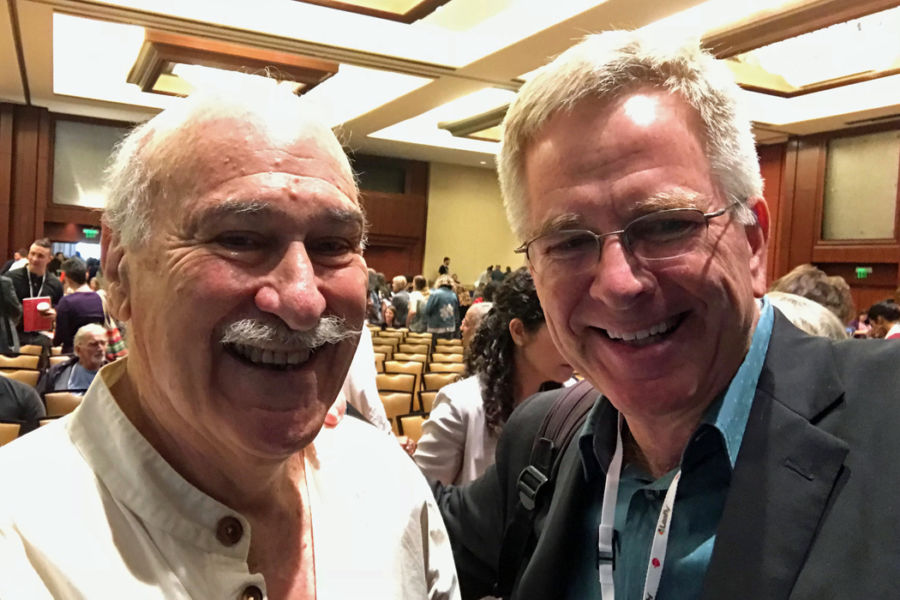
Ira Glasser and Rick Steves

At conventions like these, I get to reconnect with inspirational leaders like Ira Glasser (Executive Director of the ACLU from 1978 to 2001).

There’s an intangible value in being with a group of people who care. So many people complain about this or that. But there are ways to actually mobilize and make a difference in our society, and conventions like these are a good springboard. My point: While you may not get an invitation in the mail, groups like this one are eager to enroll newbies. For a couple hundred bucks, you can have your official nametag, your schedule binder, and a chance to connect with the leading movers and shakers in whatever cause arouses the activist in you. Along with this convention, I’ve enjoyed an affordable housing convention in Portland, a big agriculture and world hunger convention in Des Moines, a pharmaceutical industry gathering about medical marijuana in Everett, and others. Each one had an impact on my outlook, and each one was wide open to anyone who was interested.

If you care about good citizenship, I consider conventions like this one to be very good travel.

Switzerland’s Clear-Headed Drug Policy

If Jeff Sessions would like to learn about smart drug policy, I’ll pay for his trip to Switzerland. Like many of its neighbors, Switzerland has a progressive drug policy that aims to reduce the overall harm to its society, rather than focus on punishing users. It’s both compassionate and pragmatic. And it is effective.

syringe dispenser

When polls showed that more than 30 percent of Swiss people had used marijuana, the parliament decided to decriminalize the drug, rather than criminalize a third of its population. Hard drugs, however, remain absolutely illegal. Still, Swiss laws treat addicts as people needing medical help, rather than as criminals. Even in classy Zürich, you can see evidence of this policy. For instance, on the bridge across from the station, bolted to the railing, there’s a big, nondescript vending machine selling safe, government-subsidized syringes to heroin junkies. The basic idea: Hard drug addicts are sick people, not criminals. They need counselors and nurses…not police and lawyers. While Jeff Sessions might recommend “just say no,” the Swiss will be sure their people struggling with hard-drug addiction are not sharing needles and spreading diseases.

Video: Getting Mellow — But Not High — With Swiss Weed

Here in Switzerland, I’ve been noticing sterile, pharmacy-type shops that advertise themselves with marijuana leaves. Popping into several of them, I’ve learned about the Swiss approach to pot. In Switzerland, you can legally use marijuana with less than 1% THC to get relaxed…but not high. (To me, this notion is kind of like, “OK, you can sit in the boat…but you can’t pull up the anchor.”) In this video, join me on a visit to a Swiss “Hanftheke.”