5,000 Groups and Classes Showing Our Iran DVD

Enlarge photo

I recently sent the entertainment director of my parents’ retirement community — a bunch of snowbirds in Desert Hot Springs — a copy of my Iran DVD. A week or so later, he emailed me a huge thanks, saying 300 of his gang packed their theater to watch the program. That caused me to think, “Wow…imagine all the groups in the USA who could share this documentary.” So, I sent out the following letter to our entire e-list, and within a week we had received $5 from over 5,000 group leaders and teachers promising to share this video during a special “humanize Iran” event. That made me one happy tour guide. Here’s the communiqué and the deal:

Calling All Communities: Get Rick’s Iran DVD for $5Pull together a group of friends to watch my Iran DVD, and you can have it for $5. Our new Rick Steves’ IranDVD (the public television special which recently aired across the USA) is selling well at $19.95. But what’s really made me happy is how many teachers, pastors, church groups, book clubs, senior centers, university groups, neighborhood potlucks, and community leaders have told us they want to show it to their groups and have a discussion.

To encourage more of this, I’ve decided to contribute as many DVDs as it takes, for a very special price.

If you belong to ANY kind of group and want to show our Iran DVD to your gang, you can have a copy for $5 including shipping. You don’t need to be a “leader,” and “group” can be defined very loosely! Simply send us a $5 check. You’ll get your DVD in the mail along with a copy of my 48-page Iran Journaland a sheet of discussion ideas to get the conversation going.

Travel is fun, eye-opening, and sometimes life-changing. It can even help change the world. Thanks for being part of that community.

The offer still stands. Nothing would make me happier than to see this thing “go viral” — so please feel free to forward this information to anyone you think might be interested! If you’d like to share this with your class or group, go to ricksteves.com/iran and see how.

Tweaking Iran

I’m midway through an eight-cities-in-eight-days pledge drive tour (Seattle-SFO-LA-SD-Chicago-St.Louis-Boston-Cincy-Portland). I just got to talk to an enthusiastic crowd of travelers here in St. Louis, and then we did a little four-episode travel marathon on TV.

Watching the shows, I was so thankful to have the chance to actually finish the programs. In our early days of production, there was never the time or money to really lovingly polish the shows. That was back in the analog days, when it was closer to literally snipping and taping bits of footage (back when “footage” was actually measurable that way), rather than the economic and efficient editing of our digital age.

Each TV program we make has a rewarding final process. I get to take home a “fine cut” and suggest tiny fixes before we “lock it in.” My routine is to relax and watch the show with Anne. Then I stay up late and watch the show again with my finger on the pause button and a pencil in hand. Before going to bed, I transcribe my scribbles into an email to my editor (Steve) and director/producer (Simon). The next day they do the best they can with what we shot to get the show as I envisioned it. We review it in the editing room, and I am generally thrilled with the final version. Those teeny tiny tweaks make the show so much more satisfying for me.

Just last week, we finished our upcoming Iran special. I ran across my comments to Steve and Simon that might give you an insight into this part of the production process. These are my little gripes and wishes (keyed into script sequence numbers) as sent to the crew:

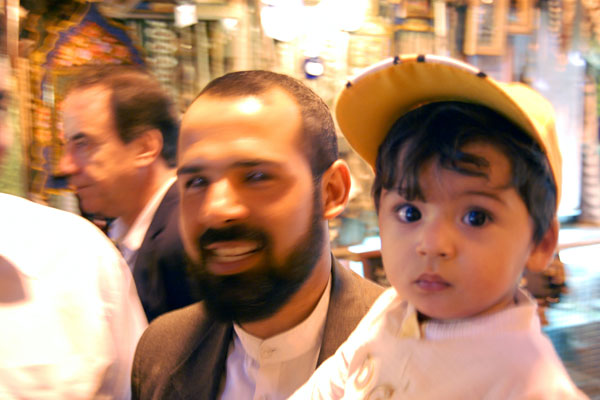
Did we use man and child on cart at Shiraz citadel? — great faces

.3 Should we lose the first sentence (Like most Americans, I know almost nothing about Iran.)?

.4 Are there any loose concepts we should write into the opening montage? (perhaps it’s an opportunity to make complex issues more clear)

.4 Let’s use the goofy pink girls and me at end of montage (with sound up)

.7 Is there a better clip of crew working at the start?

.10 Better example of “traffic direction ignored”…footage of someone actually driving upstream?

.10 Better shot of me on motorbike in traffic?

.14 Consider saving the shot of the beautiful women (first clip) to use later. We don’t need to spend that one here.

.17a Confirm that Farsi is actually a different script than Arabic.

.17 What about the clips of the girls outside the Shah’s palace?

.20 The music here is distracting to me.

.24 At “emboldened,” I don’t like the tight on the European vase — show something in the Shah’s palace that is Persian?

.28 Tighter on “Death to USA” mural with script more explicit and thorough…see new script.

.36 Stay on my snap shot a moment longer?

.39 Was there an interaction with women in bookstore that we could use? I remember her demonstrating how the book reads backward.

.46 Must we have a drive-by revealing the road sign that means nothing in our script?

.47 Do we have a shot of reflective roofs for that line (when I talk of how they insulate in the heat of summer)? I wouldn’t want to lose the clip we have here…it just would be nice to see reflective tops from above rather than looking up at eves.

.55 Can you finish the diplomacy painting with a tight on the watermelon, please? Also, for the last line (invaded India), I had hoped we actually shot a battle scene to cover that, not more banqueting.

.73 Where we say “blessings,” do we have another clip of teens on a date in the paddleboats? Also, I think we should not use the quick clip to paddleboats later, but move that later one to the first.

.75a Can you cut out my voice to hear “we love them” better from girl in the back? (Sorry I kept stepping on people’s lines.)

.76 I’d love a couple more Esfahan-at-twilight shots. This is so different and magically beautiful.

.80 Add just a beat to the end of the on-camera.

.81 Finish bakery sequence with the guy pulling away with fresh bread on motorcycle?

.89 Man on cell phone is a great shot, but not ideal when we say “meditative.”

.90 Can we show a bit of fish in the pond, then dissolve into bird tile after showing woman kneeling with lover at pond?

.91 First shot of two women at table is mediocre. They look in pain. Any happier alternative?

.93 Rick taking photo is a good shot but here it seems unmotivated and fakey. This could be used to introduce a series of snapshots at the end if we need a way to get into photos.

.96 Flip the tilt down of cuneiform in three languages with the close-up of the cuneiform to better fit the text.

.104 Do we have a good take with “May” proceeding the last line in the on camera? May peace be upon us. That’s what I intended to say.

My wishes were generally doable, and Steve and Simon have made the show just gorgeous. It’ll air through the USA in mid-January. I hope you can see it. For more on our Iran project (including a four-minute video clip), see our Rick Steves’ Iran website.

Celebrating Homecoming with a Good Cigar?

 finished my trip with a sprint — updating Bruges and Brussels in a frenzy and using the flight home to input my notes. Getting home was wonderful — seeing family after nearly two months away…finally catching up with Anne…enjoying the last days before empty-nesthood as Jackie, our youngest, is heading off to Georgetown University in three days…and Andy is heading back to Notre Dame in a week.

Our last nights with Andy were particularly fun, as he shared photos from his semester abroad. (I was envious of the fun he had — which we’ll be sharing in a series of entries here shortly.) He’s so excited about the experience, that he’s building a website to share and organize information for other students making weekend trips from their European study home bases.

Travel has gotten Andy into the ritual of appreciating fine cigars. It’s both strange and fun having a 21-year-old son sit on the deck and teach you how to appreciate a good Cuban cigar. Sophisticated as he was in explaining the qualitative differences in cigars from various Latin American countries, he admitted it was un-cool to smoke it right down to the very end. (And sophisticated as he was, I was struck by the fact that this 21-year-old cigar aficionado with the burny fingers had never heard of a roach clip.)

Andy’s youthful sophistication intrigues me. When we met up in London, I took him out to dinner and squirted oil all over my shirt while ripping the head off a shrimp. Andy looked at me and said something like, “Not staining your shirt when you’re eating out is a lifestyle.” Then he shared a highlight of his London stay with me — a cigar lounge. He took me into his favorite, and together we shopped for the best cigar money could buy. (He also showed me how willingly cigar salespeople can slip the ring off a Cuban cigar and slip the cigar into a tin from a country not weathering an American embargo, and suddenly you have no way of knowing where that tobacco actually came from.) Andy knows how to make that effete scene and feel like it’s not forced.

One great thing about doing my work in Europe is that I’m out of touch with the day-to-day challenges back in my office. My first few days back home are always spent getting briefed on things. Tim, my radio producer, announced that (in just our third year on the air) our radio show is now carried weekly by 99 stations. He gave me CDs of new shows (with guests like Salman Rushdie, David Sedaris, Lord John Alderdice, and others) that are just better than ever. We must have a party when we crack 100 stations.

The best news of my homecoming was about our Iran show. The network offered our one-hour special to the public television system and well over a hundred stations responded enthusiastically, saying they’d run our show. Only seven said, “No, thanks.” This means this January, we’ll have our Iran show running in nearly every major city in the USA. Now we set about finishing the show, and I am busy turning my Iran blog and photos into a companion booklet.

Within days of my return, our staff enjoyed a sunny, annual office picnic. It seems like just a couple years ago when there were 20 of us and only a few little kids. Now there are 70 — with probably 30 kids old enough to toss water balloons and whack a piñata.

Tight Pants, Necklines, Booze…and Freedom

Enlarge photo
Enlarge photo
Enlarge photo
Enlarge photo
Enlarge photo

For some reason, planes leave Iran for the West in the wee hours. My departure was at 3 a.m. My crew caught a flight two hours earlier. My guide went home. I was groggy and all alone. While eager to leave, I was savoring every last impression before flying exactly the opposite route the Ayatollah flew as he returned home to toss out the shah.

Walking down the jetway to my Air France plane at Tehran’s Ayatollah Khomeini Airport, I saw busty French flight attendants — hair flowing freely — at the plane’s door. It was as if they were pulling people symbolically back into the Western world. As though the plane were a lifeboat, people entered with a sigh of relief. Women pulled off their scarves…and suddenly we were all free to be what to us was so “normal.”

For ten days, I was out of my comfort zone in a land where people live under a theocracy — a land that found different truths to be god-given and self-evident. I tasted not a drop of alcohol (Islam is dry). I never encountered a urinal (Islamic men squat). Women were not to show the shape of their body or their hair (they were beautiful nevertheless). And people took photos of me, as if I were the cultural spectacle.

On my first day back in Europe, I noticed hair, necklines, and tight pants like never before. I sipped wine as if it were heaven-sent. And, standing before that first urinal, I was thankful to be a Westerner.

Paris seemed designed to accentuate the cultural differences. When I saw a provocatively dressed woman — tattooed breast barely covered by a black-lingerie top — I kind of missed the thrill of a little extra hair on the forehead of a chador-clad woman. University students sat at outdoor cafés, men and women mingling indiscriminately, discussing whatever hot-button issue interested them. Out of Iran and back in the West, I felt an energy and a volume and an efficiency that is cranked up. People — not on the valium of a revolution of values — are free to be “evil.”

Of course, I would never choose to live according to the Islamic Revolution. But I gained a respect for people who are living what they call a ‘values revolution” — a respect that I could only understand by actually traveling there. And I overcame a fear that plagues many who’ve yet to visit Iran.

What do I conclude from this experience? If I were to make any judgment on their theocracy, it would be to point out the irony of a society that is aggressively theocratic, yet actually seems less spiritual than a neighboring, secular Muslim nation — Turkey, where five times a day it’s hard to walk down the sidewalk because mosques are overflowing with people praying.

All the “death to America” and “death to Israel” posters Westerners fixate on are impossible to defend. But I will say they seemed very incongruous with the people I met. It made me wonder if the penchant for Iranians to declare “death” to so many things is not so different from Westerners who exclaim “damn those French” or “damn those cowboys” or “damn this traffic jam.” Even though this actually means “die and then burn in hell”…of course we don’t mean it literally.

There’s a lot of debate between our two nations about who’s right and who’s wrong. Many who comment on this blog seem to know. Some issues (such as the wrongness of denying the holocaust) seem clear-cut. But, as I leave Iran, I’m not convinced that everything is so straightforward. Politicians come and go…but people are here to stay. I leave thankful that I don’t live in Iran. Yet I believe the vast majority of Iranians — regardless of what they think of their current government — would choose to live nowhere else.

After this experience, I’m reminded of the fundamental value as well as the simple fun of travel. When we travel — whether to a land our president has declared part of an “Axis of Evil,” or just to a place where people yodel when they’re happy or fight bulls to impress the girls or can’t serve breakfast until today’s croissants arrive — we enrich our lives and better understand our place on this planet. It’s my hope that with people-to-people connections, we can overcome our fear and mistrust of each other, and, at a minimum, learn to co-exist peacefully. And that gives me and my partners here at ETBD meaning in our work. Thanks for traveling with me via this blog through Iran. I hope you enjoyed the journey.

Martyrs’ Cemetery: Countless Deaths for God and Country

In Iran, every city has a martyrs’ cemetery.
Enlarge photo
The tombs of the unknown soldiers give mothers whose sons were never found a place to grieve.
Enlarge photo
How has the loss of this boy’s father shaped his world view?
Enlarge photo
Could be anywhere: A mother and her son.
Enlarge photo

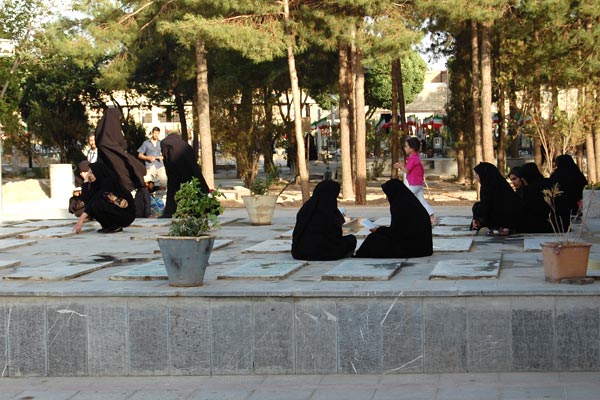
One of the most powerful experiences of our Iranian trip was a visit to a martyrs’ cemetery. War cemeteries always seem to come with a healthy dose of God — as if dying for God and country makes a soldier’s death more meaningful than just dying for country. That is certainly true at Iran’s many martyr cemeteries. While there are no solid figures, most estimates are that there were over a million casualties in the Iran-Iraq War. Each Iranian city has a vast martyrs’ cemetery.

Iran considers anyone who dies defending the country a martyr and a hero. At the Esfahan cemetery, tombs seemed to go on forever, and each one had a portrait of the martyr and flew a green-and-red Iranian flag. A steady wind blew on the day of our visit, which added a stirring quality to the scene. And the place was bustling with people — all mourning their lost loved ones as if it happened a year ago rather than twenty. The cemetery had a quiet dignity, and — while I felt a bit awkward at first (being part of an American crew with a big TV camera rolling) — people either ignored us or made us feel welcome here.

We met two families sharing a dinner on one tomb. (One of the fathers insisted we join them for a little food.) They met each other twenty years ago while visiting their sons — who were buried side by side. They became friends, their surviving children married, and they come regularly to share a meal on the tombs of their sons.

A few yards away, a long row of white tombs stretched into the distance, with only one figure interrupting the visual rhythm the receding tombs created. It was a mother cloaked in black sitting on her son’s tomb — a pyramid of maternal sorrow — praying.

Nearby was a different area — marble slabs without upright stones, flags, or photos. This zone had the greatest concentration of mothers. My friend explained these slabs marked bodies of unidentified heroes. Mothers whose sons were never found came here to mourn.

I left the cemetery sorting through a jumble of thoughts:

  • How oceans of blood were shed by both sides in the Iran-Iraq War — a war of aggression waged by Saddam Hussein and Iraq against Iran.
  • How this mighty and historic nation’s national museum of archeology in Tehran was so humble (when I asked about this, the curator explained that the art treasures of his country were scattered in museums everywhere but in Iran).


  • How an Iranian woman had crossed the street to look me in the eye and tell me, “We are proud, we are united, and we are strong. When you go home, please tell the truth.”


  • How this society — all the delightful little shops, young people with lofty career aspirations, gorgeous young adults with groomed eyebrows and perfect nose jobs, hope, progress, hard work, and gentle people I met over ten days in Iran — could so easily and quickly be turned into an Iraq-style hell of dysfunctional cities, torn-apart families, wailing mothers, newly empowered clerics, and radicalized people.


My visit to the cemetery drove home a feeling that had been percolating throughout my trip. There are many things that Americans justifiably find outrageous about the Iranian government — from denying the Holocaust and making threats against Israel; to oppressing women and gay people; to asserting their right to join the world nuclear club.

And yet, no matter how strongly we want to see our beliefs and values prevail in Iran, we need to understand the 70 million people who live here. What if the saber-rattling coming out of Washington (and the campaign trail) doesn’t coerce this country into compliance? In the past, other powerful nations have underestimated Iran’s willingness to be pulverized in a war…and both Iran and their enemies have paid the price.

In the coming months and years, I believe smart and determined diplomacy can keep the Iranians — and us — from having to build giant new cemeteries for the next generation’s war dead. That doesn’t mean “giving in” to Iran…it means war is a failure and we need to find an alternative. If this all sounds too idealistic, or even naive…try coming to Iran and meeting these people face-to-face.