Spiritual Awakening in One of the World’s Oldest Christian Nations


Ashley Sytsma, Rick’s publicist, is a guest writer this week. She’s reporting on her travels to Georgia (the one over by Russia).

Georgia is a Christian outpost in a largely Islamic part of the world. Despite living farther east than Syria, Egypt, and parts of Iraq, Georgians have a strong Christian tradition. It was the third state to convert to the religion (after Armenia and Constantine’s Rome) in the third century A.D., and since then has resisted many attempts at forced conversion by invaders.

The most recent threat to Georgia’s religious traditions came during the decades living under Soviet Union’s state-enforced atheism. However, since Georgia’s independence in 1992, Orthodox Christianity is experiencing a flourishing revival…one that I couldn’t help but get swept up in.

Dutifully following my guidebook’s walking tour, I slipped into a small cathedral famed to be the oldest in Tbilisi. Now, I enjoy a good European cathedral as much as the next traveler. But after many years of travel, church fatigue has set in. Another church is worth a peek, but not much more. Plus, I find myself feeling sorry for the few worshipers: Would you want to be photographed by hordes of tourists while conversing with your Lord and Savior? Heck, no! So my intention was to step inside, poke around, read about its history and continue on my walking tour. Instead I stayed for hours.

What first struck me was how busy the church was. Despite it being a Wednesday afternoon, it was packed. Mothers chased unruly toddlers. Husbands wandered arm-in-arm with their wives. Neighbors waved at each other from across the nave. Believers of all ages meandered from icon to icon — pausing to delicately touch the glass, whisper a prayer, light a candle, kiss the corner of the frame and rest their foreheads lovingly where they had kissed…all with the tenderness they would show a beloved grandmother.
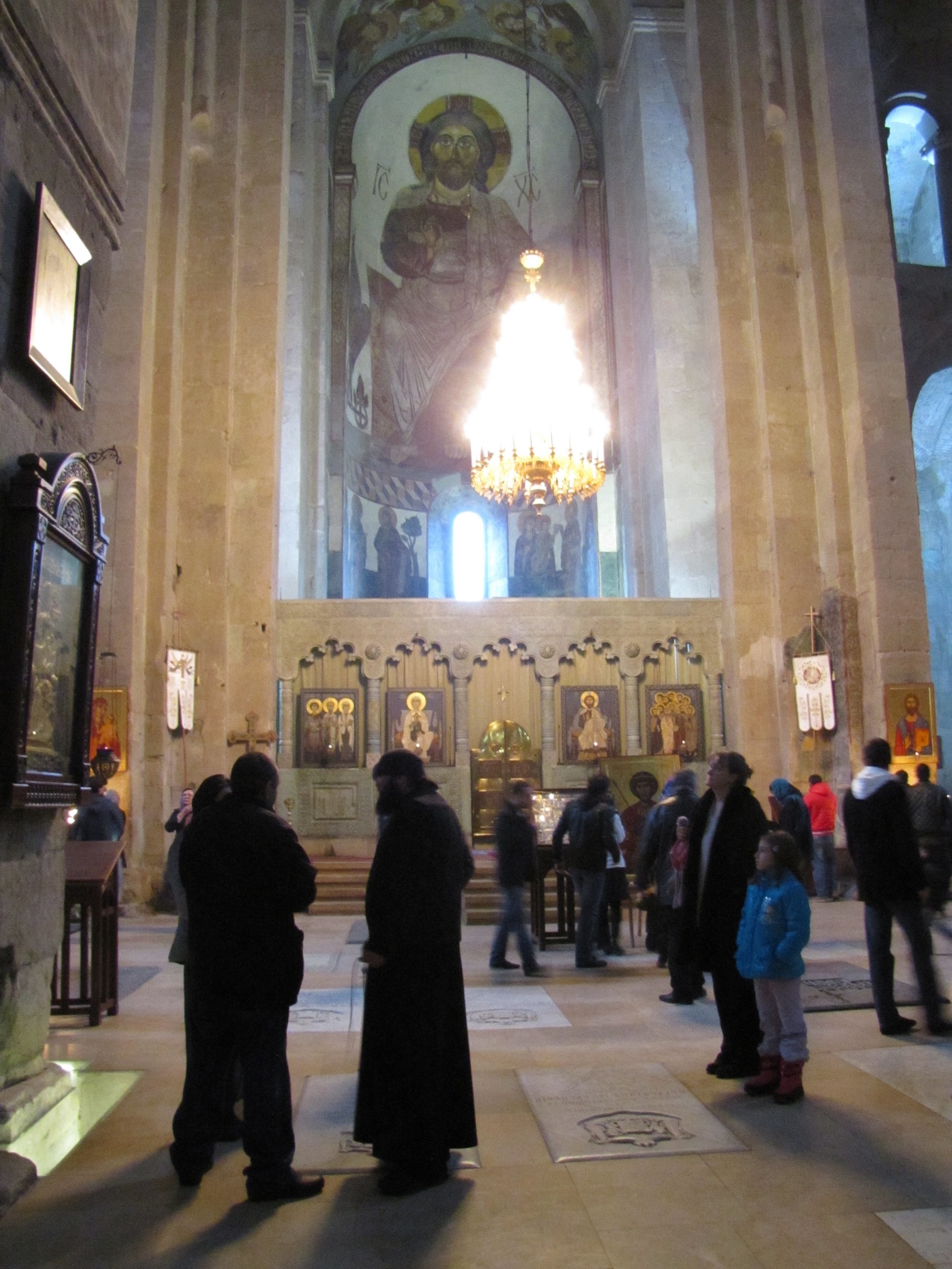
Georgia's cathedrals function more like community centers than places of worship.
Georgia’s cathedrals function more like community centers than places of worship.

A half-dozen priests busily performed ceremonies for small clusters of followers. On the right, a baptism for three babies: Priests-in-practice shuttled in holy water with large, green-plastic buckets. In the center, a casual wedding: Wearing street clothes, a young couple took their vows. During our trip, we even saw an open-casket funeral — dead body and all.

Nothing was private. Nothing closed to the public. It was community in its truest form.
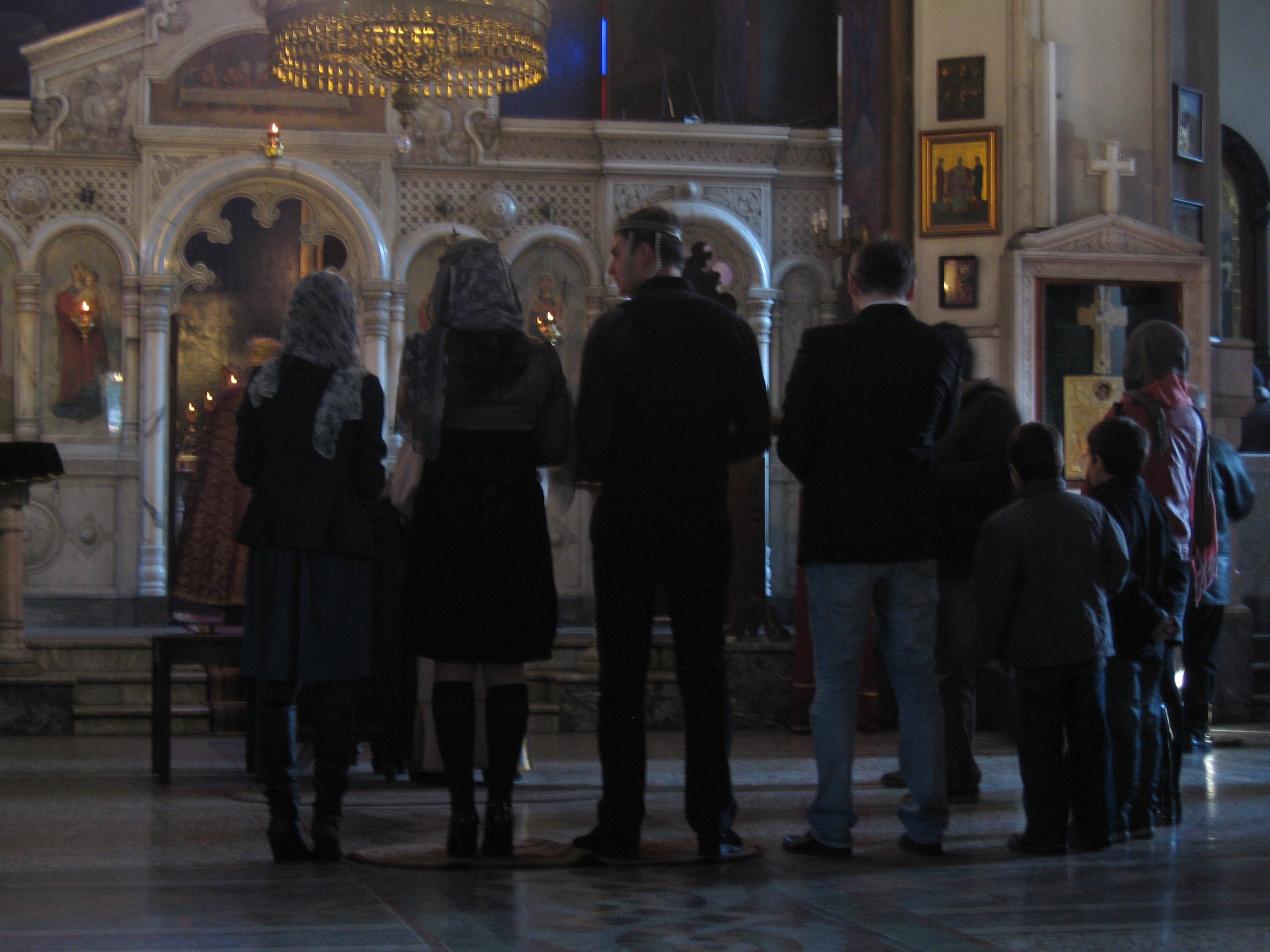
A simple wedding ceremony.

The pure, sweet love these believers had for their God was palpable. As I watched quietly from the corner, I was moved to tears by their tender devotion and strong faith.

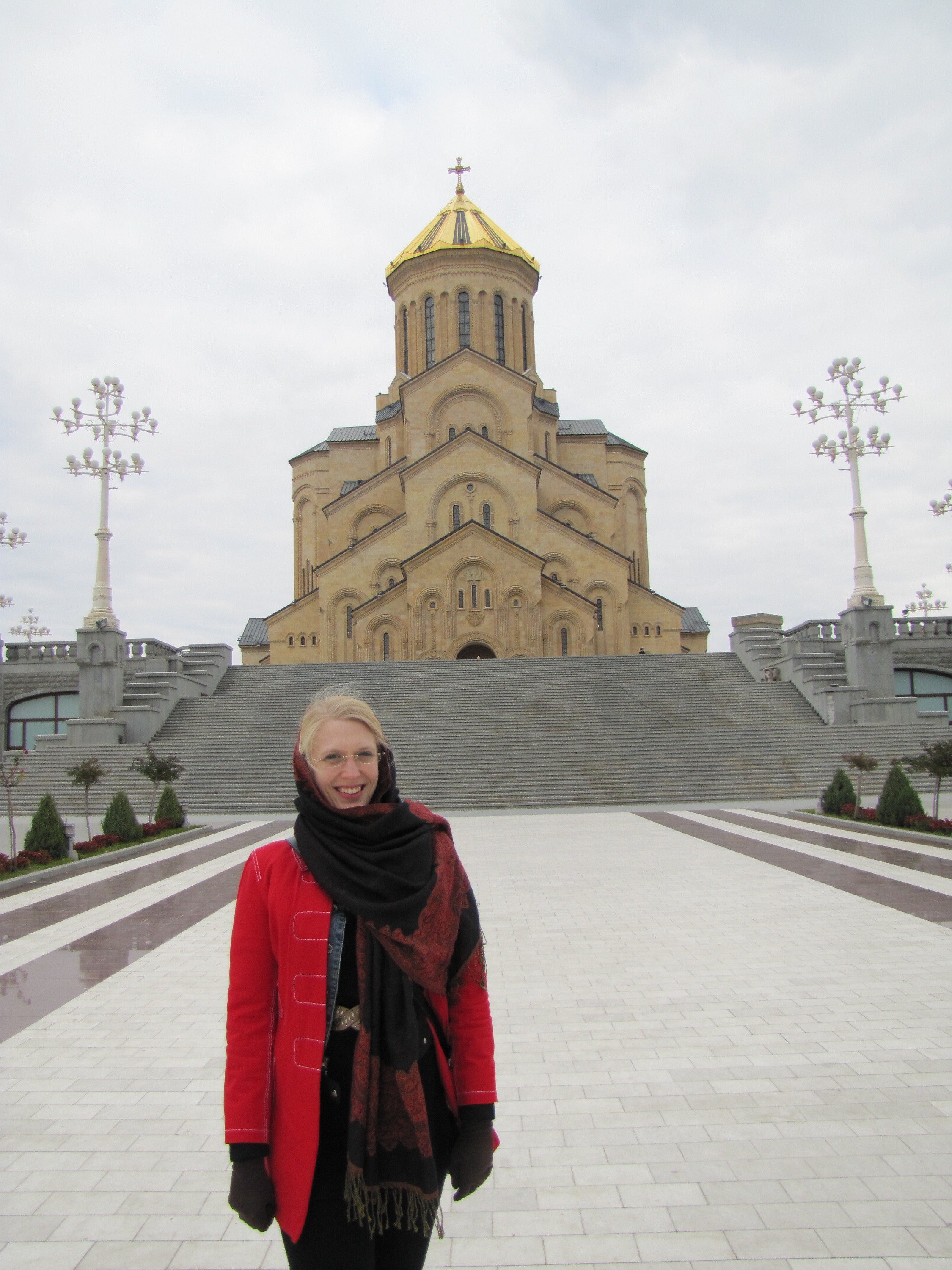
In every single church we visited, we found a similar scene. If you ever found Georgia’s streets empty, you could safely assume everyone was at church. In fact, there’s such a demand for space that in 2005, Tbilisi opened one of the largest Eastern Orthodox cathedrals in Christendom. It’s grand and beautiful, but its interior walls are still bare. They’ve started a collection to pay for a brand-new set of frescoes.
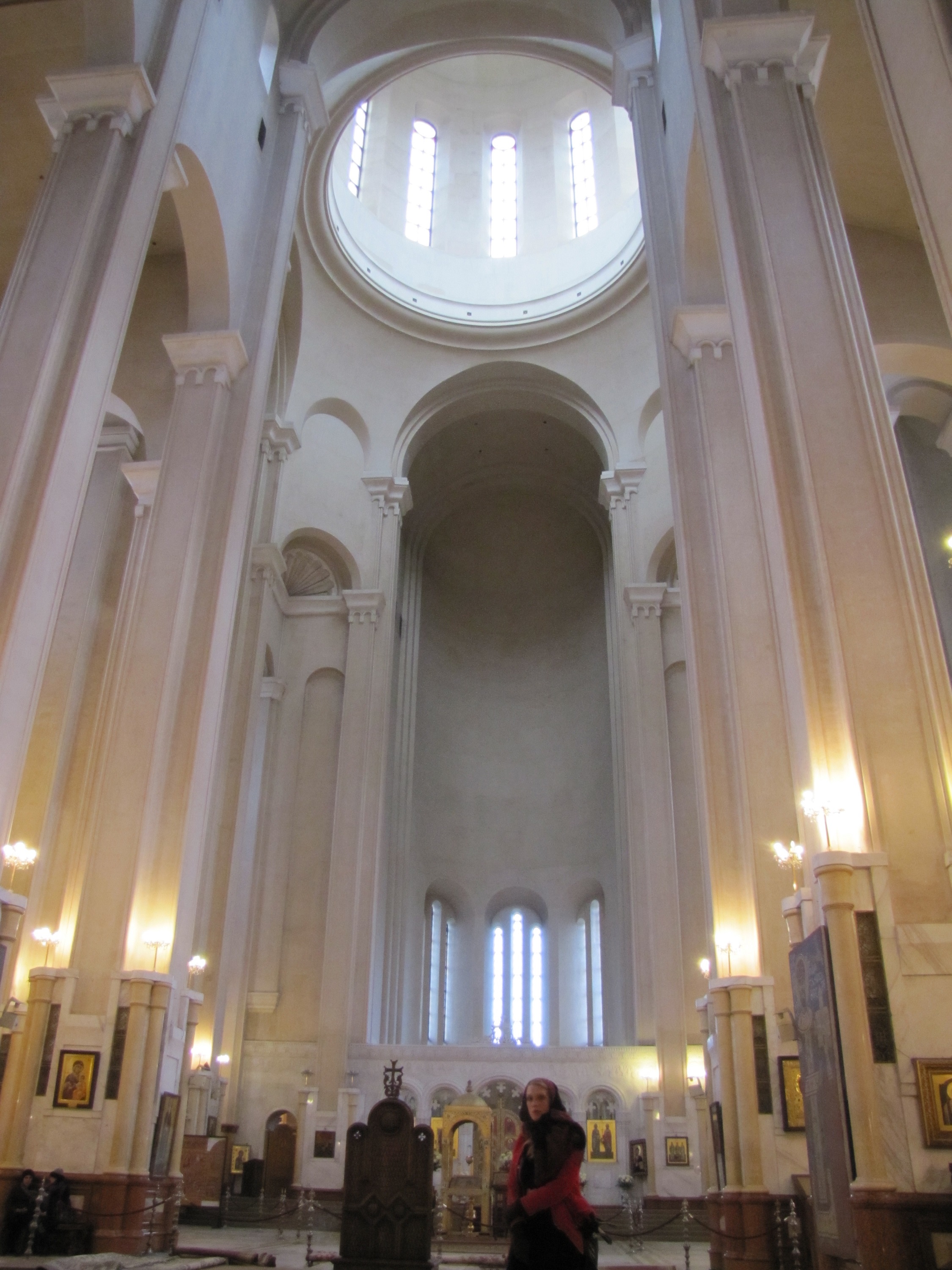
Tbilisi's newest cathedral is fundraising for frescoes.
Tbilisi’s newest cathedral is fundraising for frescoes.

Many people try to explain away this spiritual revival: Pent-up religious fervor being released after years of Soviet rule. A show of Christian religious strength in an Islamic world. An exhibition of national pride. They may be right. But above all else, what I saw was a deep and real love of God.
Georgia: Europe’s Ultimate Back Door


While most Americans refer to Central Europe (including the Czech Republic, Poland, Hungary, and Croatia) as “Eastern Europe,” the countries deeper into the former Soviet Union are the
real Eastern Europe. And lately, I’ve heard lots of rumbling that destinations like Ukraine, Armenia, and Russia are offering very rewarding travel experiences.

Ashley Sytsma, my publicist, is in Georgia on a mission to learn about its nascent wine industry for her family’s wine business. As I know nothing about this corner of Europe, I invited her to guest-host my blog for a week.

So, let’s all go to Georgia — the one over by Russia. Take it away, Ashley!

A while back, my husband asked me if I wanted to go with him to Tbilisi, Georgia to buy wine for our family business. Despite not knowing a thing about the country, I said, “Why not?” Knowing what I do now, my only regret is that I hadn’t visited Georgia sooner.

After a jolly nine-hour layover of beer-drinking in Munich, we flew east for four hours, landing bleary-eyed (and slightly hung over) at 3 a.m. in a bitterly cold and silently sleeping Tbilisi. Driving to our hotel, we quietly murmured in awe, “Where the heck are we? This is wild…”

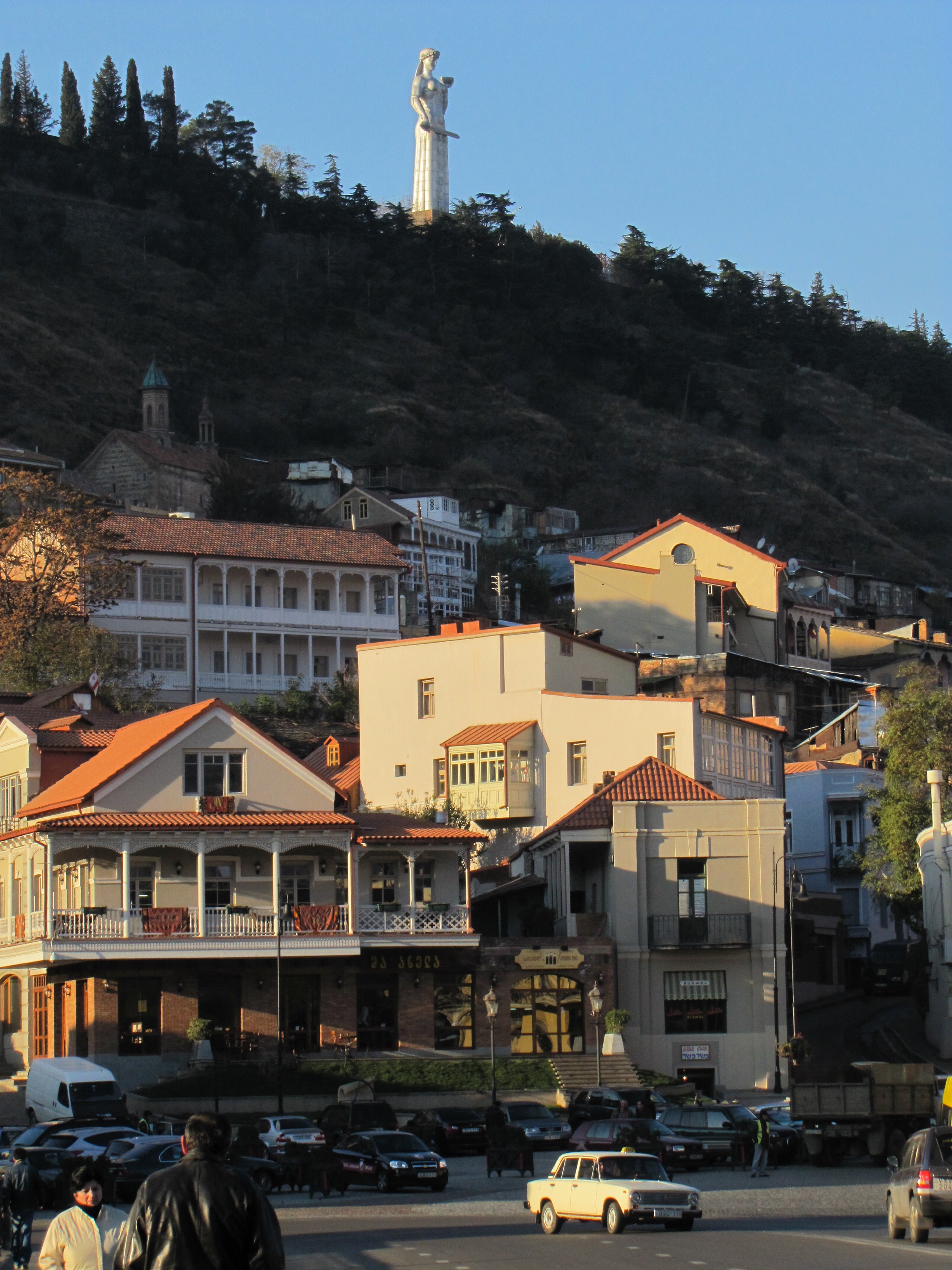
Colossal Soviet-built concrete apartment towers lined the George W. Bush highway (named after the first US president to visit independent Georgia). Orthodox cathedrals were illuminated with pink, blue, and yellow lights. Ornately carved wooden balconies (which the city is famous for) sagged on their building’s crumbling foundations. On one of Tbilisi’s many hills sat a television tower that looked like something from The Jetsons and glittered nonstop like the Eiffel Tower. On another hill stood a piercingly white 70-foot statue: Mother Georgia forlornly watching over her sleeping city, a bowl of wine in one hand for her guests and a sword in the other for her enemies.

Mother Georgia overlooking her city with a bowl of wine for her guests and a sword for her enemies.

Rick likes to discover Back Doors — special places where we travelers have our mental and spiritual furniture rearranged, and where we learn that other parts of the world consider different truths self-evident and God-given. During that ride from the airport, I knew we were about to explore the ultimate European Back Door.

By noon, we were hiking yet another hill to Tbilisi’s ancient Narikala Fortress, which is known for its spectacular city views.  Ascending the hill is like climbing up through time, as the fortress’ outer wall is a layered patchwork of different stones and building styles. In many ways, this fortress tells the history of the entire nation. Georgia sits at the center of a very profitable crossroads. Its strategic location and lush natural resources have (to the war-weary Georgians’ dismay) made it a target for countless invasions. The Romans, Persians, Ottomans, Arabs, Russians and even Mongols have all played parts in Georgia’s tumultuous history. With each invasion, the fortress was bombed. With each new victor, the walls were rebuilt on top of the destruction — the oldest layer being from the fourth century A.D., the newest being the fortress’ crown jewel: a small Orthodox church that opened only a few years ago.

As we caught our breath at the top, we gazed out over the magnificently beautiful city, marveling at the fact that our only company was a sleeping dog, the resident monk’s beehive, and an elderly Georgian man doing his daily exercises. As we listened to the cold wind whistle through the ancient rocks and trees, we giggled at our good fortune at having this place to ourselves.

For such a stunning place, where were all the tourists?

Join me as I travel in Georgia.