Meet Your Rick Steves Tour Group: The Name Game

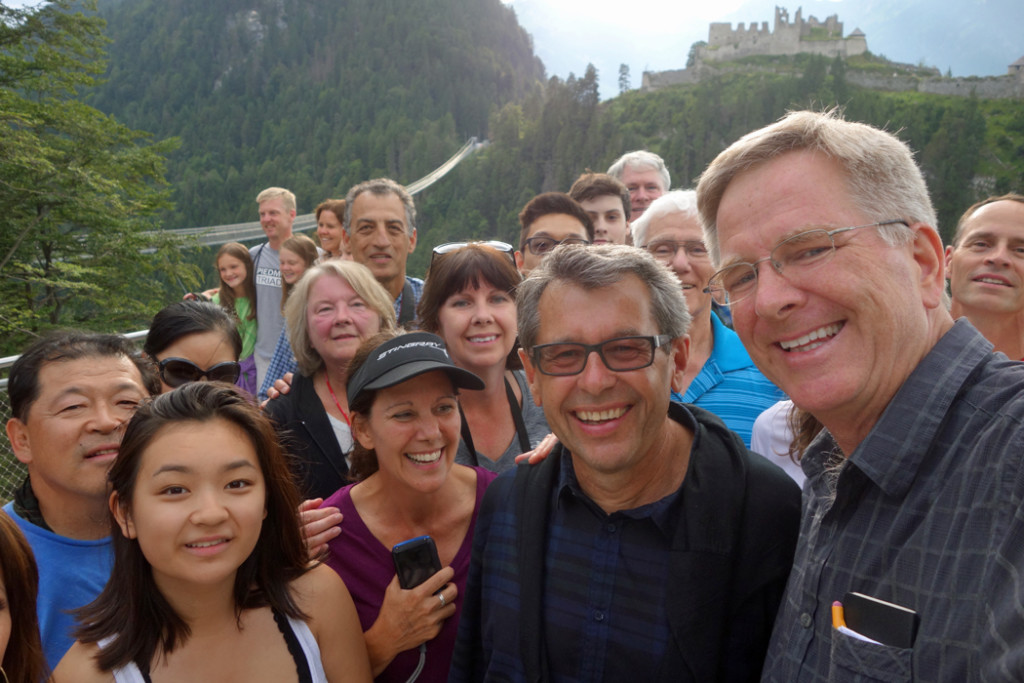
I just met 26 happy travelers and we’re well into our My Way Alpine Europe Tour. It’s so much fun to be personally leading our tours again. (Over the next 12 days or so, I’ll be reporting on the fun we’re having.) We lead about 900 tours each season. On our tours, we become like a family, and it’s important that we know each other’s names. Early on, we play a memory game to learn everyone’s name. Here, on the lakeside terrace of our Hallstatt hotel, watch as little Allison demonstrates how agile young minds are. You can see what a wonderful variety of people join a Rick Steves tour. That’s one thing I really enjoy about this work.

(My tour assistant, Trish Feaster, filmed this clip. She’s blogging about our tour at her website, The Travelphile.)


This is Day 57 of my 100 Days in Europe series. As I lead tours, research my guidebooks, and make new TV shows, I’m reporting on my experiences and lessons learned in Vienna, the Alps, the Low Countries, England, and beyond. Find more right here on my travel blog.

Back in the Tour-Guiding Saddle

37-rick-steves-my-way-alpine-europe-tour-group-2016

For 25 years, I personally led lots of Rick Steves Europe Tours. But for the last decade or so, I’ve preferred to just ride along as a tour member instead — enjoying the work of our hardworking and passionate guides. But this year I’ve decided to get back into the tour-guiding saddle and personally lead a couple of tours.

My first tour — a Rick Steves My Way Alpine Europe Tour — just kicked off in Salzburg, where I met my 26 happy co-travelers. (Our My Way tours are “un-guided,” designed to include ample free time. Rather than a tour guide, a My Way tour comes with a tour manager — that’s me — who gets tour members from point to point, orients them to their options, handles logistics, and answers questions.) It’s a joy to be leading our tours again. And over the next 12 days or so, I’ll be reporting on the fun we’re having, right here on my travel blog and on Facebook.


Floating in a Glass-and-Steel Bubble of Joy

For over 30 years I’ve been taking groups into the gondolas high in the Alps. Whether filled with skiers in the winter or hikers in the summer, there’s a happy energy in that glass-and-steel bubble of mountain joy–especially when the Swiss Alps are out in all their glory. The Schilthornbahn takes us effortlessly (in four stages) to the 10,000-foot summit of the Schilthorn in the Berner Oberland. For about $50 per person (there’s a double discount for the group rate and for an early morning departure) we ride up and down. Sure that’s a lot of money. But when you’re surrounded by cut-glass peaks and breathing fresh mountain air, it’s one of Europe’s great deals. From a value point of view, remember that–all over the Alps–early lifts are discounted and, because of weather patterns, the early birds enjoy the crispest views. The lesson: Pay less and see more by ascending early.

If you can’t see the video below, watch it on YouTube.

Convalescing in the Swiss Alps

With each television shoot this year, what could have been an easy job became demanding and stretched me to the max because the weather went south on us.

Mentally and physically fried after three weeks of guidebook research and TV production in Paris, I escape the big city, taking the train to the Swiss Alps. (En route, I email my editorial staff back home, saying I’m skipping Interlaken and that they’ll have to get someone else to update that city for our Switzerland guidebook. I need that Interlaken time to rest up.)

In Gimmelwald — a high-altitude village quaint and quiet as an Advent calendar — I check into the B&B of Olle and Maria Eggimann. Rustic and humble on the outside, perfectly cozy and charming on the inside, it feels made-to-order for the business at hand — convalescing and recharging.

Parked in my top-story window, gazing out at the village drenched in pristine nature, it occurs to me I’m part of an alpine cliché.  I marvel at how the best way to really enjoy the Alps is as a kind of cultural shock treatment — zipping here directly from Paris.

From my perch, I survey the village. Chocolate log cabins are buttressed by a winter’s supply of firewood lovingly stacked all the way to the eaves. Grassy fields radiate a vibrant green, as if plugged into the sun. Feeling part of the village — standing sturdy yet small under monster mountains — I marvel as nature puts my world properly in its place.

Leaving my shoes in the mud room and stepping into Olle’s slippers is like leaving my world and entering his. Now it’s purely people-to-people — the essence of travel — and we talk.

Appreciative of the hospitality I always receive here, I encourage Olle and Maria (as I do with each visit) to come to the States and visit. Maria says, “Now you’ve asked three times. We say you need three invites from an American before they really mean it. Now that our children are on their own, perhaps we will come.”

We talk about their experience as teachers in the village school. In the nearly 20 years they’ve been teaching here, the worldview gap between village kids and city kids has essentially vanished. A generation ago, village kids had more isolated views. Today they are as worldly as city kids — but you still know who’s who because city kids use umbrellas, while village kids just put up their hoods.

We talk of how running a B&B can try your patience. Olle recalls how one guest came to him distraught that her electronic noisemaker was burned out and wondered if they could loan her one. Olle asked, “What’s a noisemaker?” It makes nice sounds like birds and waterfalls so you can go to sleep. The need for such a device had never even occurred to Olle and Maria. We opened the door and stepped out onto the porch to enjoy a pianissimo lullaby of bird call, rushing water, and the calming rustle of leaves in the breeze. The same guests also needed an iron and ironing board, as their clothes were wrinkled. When preparing to go up on the mountain lift to the top of the Schilthorn, they asked how long the ride would be, and then, “Is the gondola car heated?”
Gimmelwald: Getting to that World Apart

Enlarge photo

To commemorate the Smithsonian Presents Travels with Rick Steves magazine — now on sale online, and at newsstands nationwide — Rick is blogging about the 20 top destinations featured in that issue. One of those destinations is Gimmelwald, in the Swiss Alps.

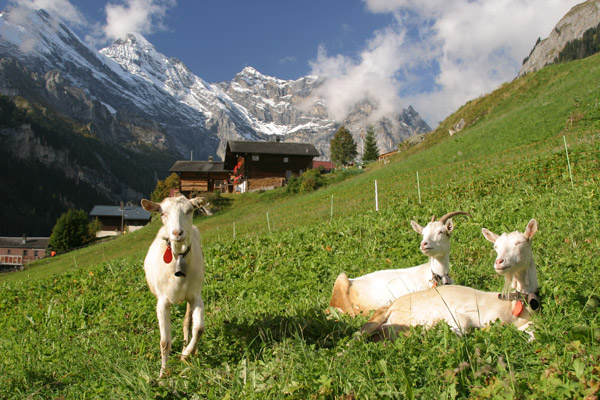
A great challenge in travel research is finding destinations that are a world apart. Gimmelwald, that remote and impossibly idyllic village high in the Swiss Alps, is a classic example. Parking you car in the valley floor and riding the cable car up is like going through a looking glass. You car shrinks, your stomach flip-flops, you look over the valley like a hang-glider, then suddenly you’re deposited — as if from a magical glass bubble — into another world. It’s a place where the air feels different — where the only noises are bees, bugs, and birds perusing alpine flowers, paddling water spilling from a hose into the hollowed-out log that keeps the cows watered, and gnome-like men sucking gnome-like pipes while chopping firewood.

Many of my “Back Doors” give this sensation. That’s probably why they appeal to me in the first place. It takes a little extra effort to reach them: Hallstatt (reached by lake ferry from the tiny train station buried in a forest east of Salzburg), Civita de Bagnoregio (you walk to it up a donkey path, then through a medieval gate, to enter a classic hill town an hour north of Rome), Salema (beyond the Portuguese resort of Lagos, near the far-southwest tip of Europe, at the end of a dirt road), Ærøskøbing (a traffic-free, ship-in-a-bottle dream town a ferry ride away from Svendborg in Denmark), and Inishmore (on the Aran Islands, off the rugged West Coast of Ireland). What place in Europe gives you that “world apart” feeling, and why?