Cinque Terre Flood Report

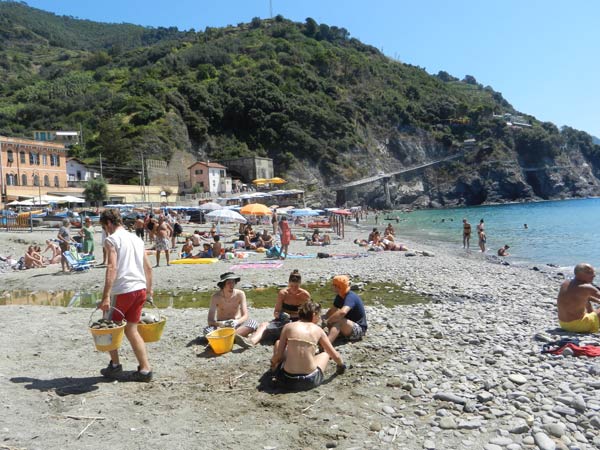
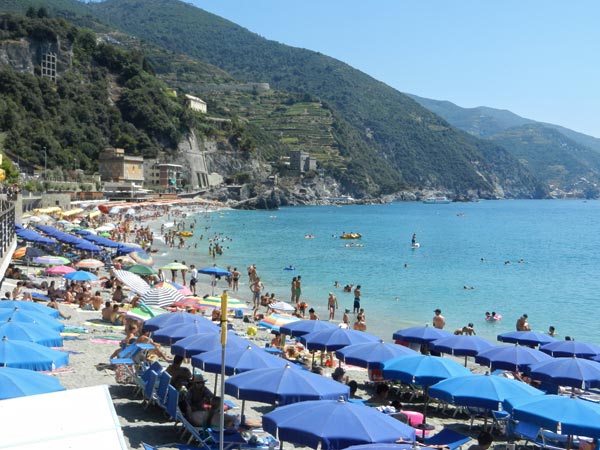
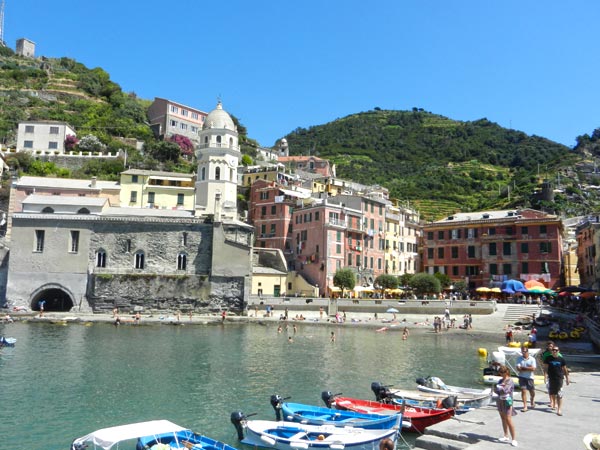
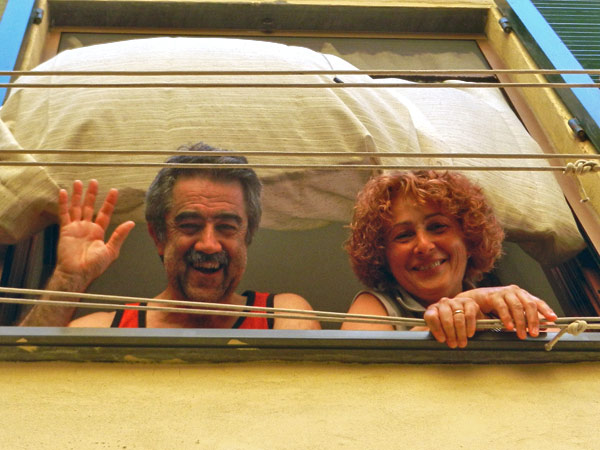
“What flood?” If you lived through it last October, that would be a crazy question about the deluge that devastated two of the five villages that make up the Cinque Terre (my favorite stretch of the Mediterranean). But today it’s easy for a visitor to have the impression that it never happened. We just finished a little filming in Vernazza and Monterosso (the two towns that were hit). Here are a few photos — one sad, six happy — showing the former flood zone today.

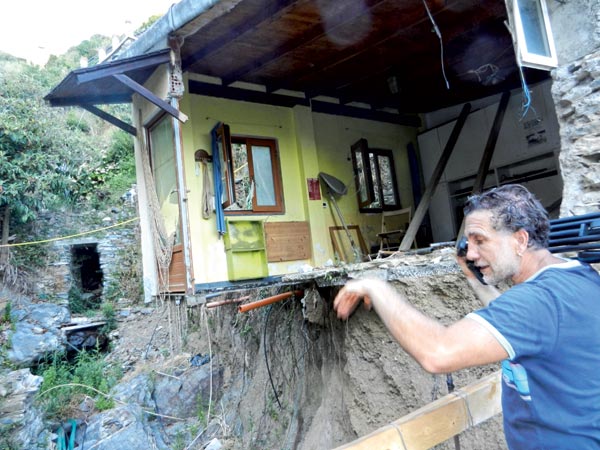
The trails are wide open. In fact, they're better than ever — as locals (like Giuliano Basso, the best dry-stone mason in Vernazza) are painstakingly rebuilding the stone walls and bridges that were washed out. Here Giuliano points out a house built over a ravine that, when the flood hit, was cut in half and left hanging.

The big problem was that the streams, which had been covered by modern pavement as the towns modernized, were clogged and unable to accommodate the flow of the flash-flooding that tore down the surrounding hillsides. Now the capacity to let water flow freely under the streets and down to the sea is much, much greater. And wooden boards on the main street through Monterosso’s old town allow easy access to the streams when necessary.

The entire population pitched in to dig out. Even today, you’ll see teenagers having rock-removal parties on the beach, clearing out flood debris to make the beach inviting for the people who fuel Monterosso’s economy: its tourists.

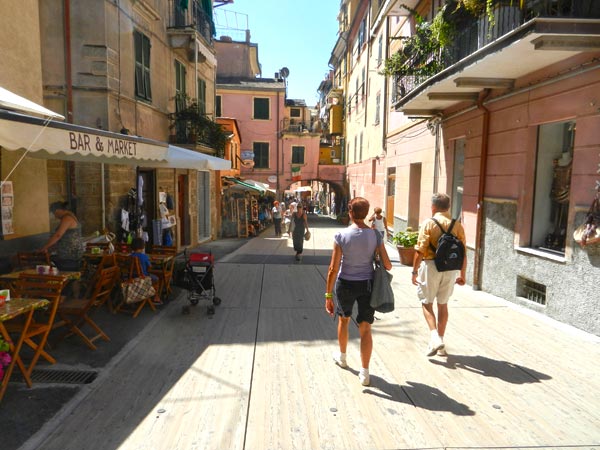
Here on Monterosso’s main beach, the flood is ancient history.

For the casual visitor, Vernazza — hit much harder than Monterosso — feels just fine. While the upper town is still essentially closed, the main drag is jammed with beachgoers.

Three months ago, I was walking on Vernazza’s harbor — over mounds of debris and in the shadow of tractors. Today, the beach is a delight, the small boats bob lazily at their buoys, and the restaurants are thriving.

The people of Vernazza are back in business and life on the Italian Riviera is, once again, very good.

Monster Ship Cuts Through Sinking City

If you’re involved in European tourism and are close to a big body of water, cruising is part of your livelihood. Cruising — on the Mediterranean, in the North and Baltic Seas, and on rivers — is huge. And so are the ships, which becomes clear if you’re standing on Piazza San Marco in Venice. The towering broadside of a 14-story-tall cruise ship — with hundreds of its 3,000 passengers gathered on its top deck to enjoy one last look at the Doge’s Palace — is a spectacle in itself. If you’re not expecting it, this scene can seem like a clip from a disaster movie. Venice is one of the three or four main ports of embarkation for the entire Mediterranean, so there’s a very good chance you’ll start or end your cruise here. The scene in this video — which happens several times most evenings — is one you wouldn’t have seen a few years ago.

If you can’t see the video below, watch it on YouTube.

The Quest for Signs

Twelve years ago, we made a three-part Travel Skills Special for public television. We did our best to make it timeless. (As you can imagine, this was tricky. For example, the euro currency was not quite in circulation back then, but posters were up hyping it — so we referred to the euro as if it were already in circulation, and were careful not to film any soon-to-be-retired coinage.) Now we are dedicating 18 days to producing an updated, three-part Travel Skills Special, which is part of our new 14-episode series that begins airing this fall. For me, as a travel teacher, it’s a delight to have reason to get down to the basic skills of travel.

Train Sign

Each Car Is Clearly Marked
Revisiting our Travel Skills Special, I’m impressed at how Europe has changed. Visually, there’s been a huge leap in sleek architecture, aerodynamically designed trains, and electronic signage. With this series, you’ll know to check outside the car: This one, going from Munich to Dortmund, is first-class, non-smoking, and quiet, and prohibits the use of cell phones.

Signs

Can’t Touch This: No, No, No, No, No.
While filming our new Travel Skills Special, we spent a couple of days looking for road signs to help teach the basic tips. It took time because people seem to enjoy defacing road signs with decals and graffiti. This fun bit of urban art in Antwerp might have made our work much easier. But talk about negative!

Your Language Always Makes the Cut
For thirty years, I’ve been taking photos of this kiosk in Bruges (where people buy tickets for a canal boat tour) to illustrate how, when it comes to the language barrier, anyone who wants your money will tell you how to spend it in whatever languages are necessary — and English always makes the cut. Another lesson: Even if you don’t speak the language of a sign, with a little logic and confidence, you and guess the meaning of most.
Old History Enters a Young Mind

One of the best evening hours north of the Alps is the Night Watchman’s Tour in Rothenburg, Germany. There’s a pub in town called Hell. Part of Georg Baumgartner’s tour is a predictable yet really funny joke ending with “Go to Hell.” With each visit to Rothenburg, I go to Hell with Georg for a drink and to catch up.

For about 20 years, Georg has given his tour in English, and then in German, every single night from Easter through October. The Cal Ripken Jr. of tour guides, he’s never missed a night. And, incredibly, his delivery is still as fresh as if he’s just coming up with it for the first time. On this particular evening, I was impressed with a cute little American schoolgirl and how enthralled she was with the stories Georg was weaving. Watching her watching Georg, I was seeing the impact of travel on each of us when we embrace experiences, open our childlike eyes really wide, and take it all in.

If you can’t see the video below, watch it on YouTube.

Back Door Productions at Work

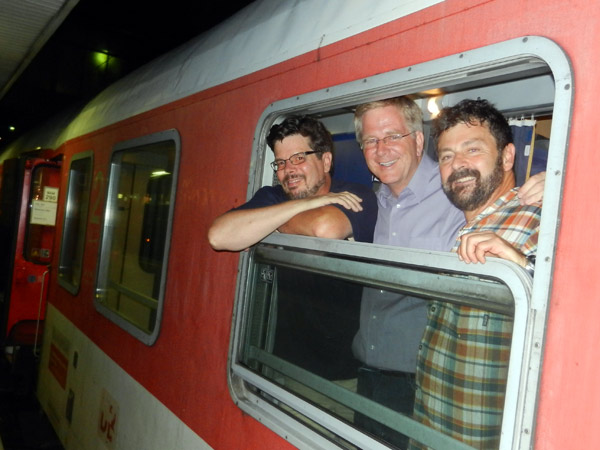
I’m deep into an 18-day shoot with my television crew:  producer Simon Griffith and cameraman Peter Rummel. Rather than focusing on lovely sights, in this shoot we’re updating our three-part Travel Skills Special…while surrounded by lovely sights.

Our Crew, Just Before Bedtime
Most of an entire episode of our Travel Skills Special is devoted to train travel. In this shot, we’re settling in for the overnight train from Munich to Venice.


Alcohol-Testing Our Cameraman
Before shooting in Bavaria, we have our cameraman, Peter Rummel, submit to a breathalyzer. These machines are found at German beer gardens in the countryside (like Andechs), where most people arrive by car. They’re handy for locals who love their beer, but know that Germany’s drinking-and-driving laws are strong and strictly enforced.


ICE Woman and the Bullet Train
For three days, we filmed the how-tos of train travel using Germany as our classroom. It’s a challenge to spend lots of time, hard work, and money producing three half-hour episodes on travel skills that will still be up-to-date in six or eight years. While most of Europe is not yet quite as slick, Germany’s train system is what they aspire to: Futuristic ICE (Intercity-Express) trains cut like bullets through the green and tidy German countryside. And in this photo, “ICE woman” is a clear reminder that they run a very tight ship.