Digging Out of a Hole in Vienna

Immediately after WWII Vienna was divided among the victorious allies into four zones — like Berlin. That created lots of intrigue which made for a thrilling movie: The Third Man.

When I’m researching in Europe, the challenge is to stop my in-the-street work while there’s still enough time to input what I ‘ve learned, and then fine-tune the writing. From the first day of this trip, back in early July, I’ve been in a hole. I’m still digging out, as I’ve had so much fun traveling that it’s been impossible to completely keep up on the writing end of things.

With a hard-working crew of editors back home — and a publisher awaiting their work — I am but a happy cog in a wonderful guidebook-creating wheel. And if I miss a deadline, it’ll mess up a lot of people. With my Vienna text due this week, I’ve finally finished those chapters. Here are a few major new additions:

The Third Man: A Movie, a Museum, and a Cultlike Following
The Third Man is a classic film set in post-WWII Vienna. There’s a fascinating museum dedicated to the film and the story it tells (open only Saturday afternoons). The movie still plays regularly in Vienna — or you can see it before coming to town.

This is not just another movie. The British Film Institute voted The Third Man “the best British film ever produced.” It’s set in 1949 Vienna — when it was divided, like Berlin, between the four victorious Allies. (After the war, Austria was divided between the U.S., France, Britain, and Russia until 1955.) With a dramatic Vienna cemetery scene, coffeehouse culture surviving amid the rubble, and Orson Welles being chased through the sewers, this tale of a divided city rife with smuggling and under the threat of Soviet rule is an enjoyable, two-hour experience. The movie plays at Vienna’s Burg Kino (€8, in English; 3-4 showings weekly — usually Friday evening, Sunday afternoon, and Tuesday early evening; a block from the Opera at Opernring 19, burgkino.at).

Gerhard and Karin Strassgschwandtner share their passion for The Third Man each Saturday at their museum.

The Third Man Museum is the life’s work of Karin and Gerhard Strassgschwandtner. They have lovingly collected a vast collection of artifacts about the film, Vienna in 1949, and the movie’s popularity around the world. (In 1999 Japan voted it the best foreign film of all time.)

Third Man fans will love the quirky movie relics, but even if you are just interested in Vienna at the start of the Cold War, this is worthwhile. Sections cover the 1930s when Austria was ripe for the Anschluss, the reality of 1.7 million “DPs” (displaced persons) in Austria after the war, the challenges of denazification after 1945, and candid interviews with soldiers. As a bonus, the museum also gives a fascinating look at moviemaking and marketing around 1950. Don’t be shy about asking for a personal tour from Gerhard or Karin (€7.50, Sat only 14:00-18:00, a long block south of Naschmarkt at Pressgasse 25, www.3mpc.net, Facebook: thirdmanmuseum).

Otto Wagner’s Postal Savings Bank
The Austrian Postal Savings Bank, built from 1904-1912, offers a fascinating look into the society as well as the architecture of that age. This was a bank for working-class people. The very concept of a postal savings bank makes storing your hard-earned income less intimidating for laborers than the palatial banks of the 19th century. The bank’s design makes the service it provides feel almost sacred. Wagner believed, “Necessity is the master of art.” He declared, “What is impractical can never be beautiful.” Everything about the design — so gray, white, and efficient — is practical. While it’s textbook “form follows function,” the form is beautiful nevertheless. A product of its age — so giddy with advancement — the building dignifies the technological and celebrates it as cultural.

Architect Otto Wagner helped kick off the 20th century in Vienna with a radical building housing a radical new concept: a bank for people who weren’t rich.

Study the sleek, yet elegantly modern facade: Angles high above — made of an exciting new material, aluminum — seem to proclaim the modern age. The facade, with unadorned marble siding panels held on by aluminum-capped bolts, gives the impression that the entire building is a safety deposit box. The interior is similarly functionalist. The glass roof lets in light while the glass floor helps illuminate the basement. Fixtures, vents, and even the furniture fit right in — strong, geometrical, and modern. The main building is open to the public and still functions as a savings bank. In the back, a fine little museum is dedicated to the architect Wagner with a slideshow providing a visual review of his work (free entry to main building, museum-€6, Mon-Sat 9:00-17:00, just off the Ringstrasse near the Danube Canal at Georg-Coch-Platz 2, www.ottowagner.com).

The Museum of Military History
While much of the Habsburg’s empire was built on strategic marriages rather than war, a big part of Habsburg history is military. And the Heeresgeschichtliches Museum, a.k.a. HGM — built in 1860 by Emperor Franz Josef as an arsenal — tells the story well with a thoughtful motto (apparently learned from the school of hard knocks): “War belongs to museums.” You’ll wander the wings of this vast museum practically all alone. On two floors you’ll see a rich collection of artifacts and historic treasures from Empress Maria Theresa to military genius Prince Eugene to Franz Josef. I found the 20th-century section particularly interesting. It includes an exhibit on Sarajevo in 1914 (with the car Archduke Franz Ferdinand was riding in — and the uniform he was wearing — when he was assassinated). For WWII buffs, there’s a look at Chancellor Engelbert Dollfuss (and the pre-Hitler Austrian fascist party), the Anschluss when the Third Reich absorbed Austria, and the devastation of World War II (€5, includes audioguide, daily 9:00-17:00, located inconveniently outside the Ringstrasse, a 10-minute walk behind the Belvedere Palace near the new Central Station at Arsenal Objekt 1, www.hgm.or.at).

In 1914 the Habsburg Archduke Franz Ferdinand took a trip to Sarajevo in Bosnia to assert his family’s reign on that hard-to-rule corner of Europe. He was assassinated in this car, setting off World War I.

Before Hitler brought the swastika to Austria, the country was ruled by Engelbert Dollfuss, a dictator whose fascist symbol tried to be swastika-like.

The Best and Worst of Europe

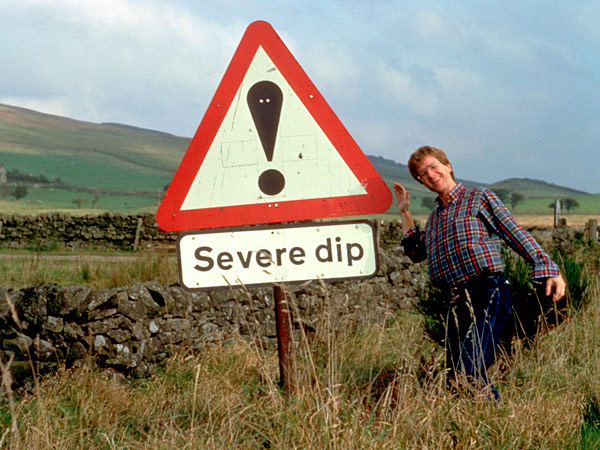
Some would call me a severe dip, but the area just north of Hadrian’s Wall is boring.

We Americans get the shortest vacations in the industrial world. With so little time, the pressure is on to make all the right choices when planning a trip. But how to select the right destination? It ultimately depends on your interests and your tastes — and what your experienced travel writer tells you.

It’s my job to sort through all the travel-industry superlatives and “top 10” lists. Readers naturally want to know the Best, but it’s just as important to know the Worst. With that in mind, I’ve pulled together a round robin of my candid opinions on the best and worst European destinations. Here goes:

Let’s start with the British Isles and its dullest corner, southern Scotland. It’s so boring that the Romans decided to block it off with Hadrian’s Wall. But don’t skip Hadrian’s Wall; it covers history buffs like me with goose bumps (or goose pimples, as the English say).

London, York, Bath, and Edinburgh are the most interesting cities in Britain. Belfast, Liverpool, and Glasgow are quirky enough to be called interesting. Oxford pales next to Cambridge, and Stratford-upon-Avon is little more than Shakespeare’s house — and that’s as dead as he is.

Extra caution is merited in southwest England, a minefield of tourist traps. The British are masters at milking every conceivable tourist attraction for all it’s worth. Stay away from booby traps like the Devil’s Toenail (a rock that looks just like a…toenail), Land’s End (you’ll pay, pay, pay), and cloying Clovelly (a one-street knickknack town selling useless goodies).

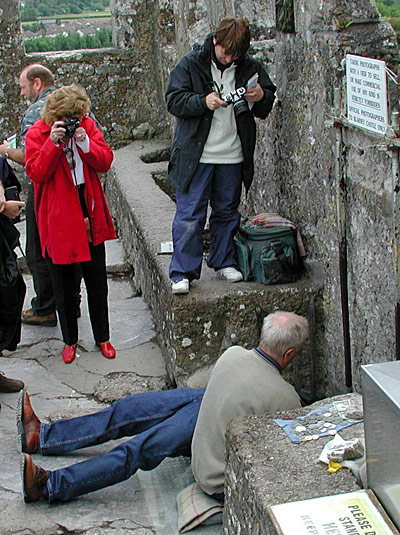
This is not a crime scene, unless you consider time wasted in the Emerald Isle to see Ireland’s ultimate tourist trap (the Blarney Stone) a crime.

Tune out the hype around Ireland’s Blarney Stone (slobbered on by countless tourists to get the “gift of gab”), Spain’s Costa del Sol resorts, and the French Riviera in July and August. These are among Europe’s most overrated spots.

Geneva, one of Switzerland’s largest and most sterile cities, gets the “nice place to live but I wouldn’t want to visit” award. It’s pleasantly situated on a lake — just like Buffalo is. While it’s famous, name familiarity is a rotten reason to go somewhere. If you want a Swiss city, see Bern or Luzern instead.

Germany’s famous Black Forest disappoints more people than it excites. If it were all Germany offered, it would be worth seeing. For Europeans, any large forest is understandably a popular attraction. But I’d say the average American visitor who’s seen more than three trees in one place would prefer Germany’s Romantic Road and Bavaria, or the Rhine and Mosel country — all high points that cut the Black Forest down to stumps.

After Prague, Kraków (Poland) and Budapest (Hungary) are Eastern Europe’s best cities. Bucharest, Romania’s capital, has little to offer. Its top-selling postcard is a view of the InterContinental Hotel.   Norway’s Stavanger, famous for nearby fjords and its status as an oil boomtown, is a large port that’s about as thrilling as…well, put it this way: Emigrants left it in droves to move to the wilds of Minnesota. Your time is better spent at Sognefjord, Norway’s most spectacular fjord. The most boring countryside is Sweden’s (yes, I’m Norwegian).

Europe’s most scenic train ride is the Glacier Express across southern Switzerland. The most scenic boat ride is from Stockholm to Helsinki — countless islands and blondes. Europe’s most underrated sight is Rome’s ancient seaport, Ostia Antica, and its most misunderstood wine is Portugal’s vinho verde (green wine).

Honeymooners should try these tiny towns: Beilstein on Germany’s Mosel River; Hallstatt on Austria’s Lake Hallstatt; Varenna on Italy’s Lake Como; Ærøskøbing on an island in south Denmark; and Gimmelwald, high in the Swiss Alps.

Pondering the vast wonder of the Cumbrian Lake District from the summit of Catbells can be a highlight — literal and figurative — of any visit to northern England.

The most pleasing French château is Vaux-le-Vicomte, near Paris. The best Gothic interior is found in Paris’ Sainte-Chapelle church. The top two medieval castle interiors are Germany’s Burg Eltz on the Mosel River, and northern Italy’s Reifenstein. Lisbon, Oslo, Stockholm, Brussels, and Budapest are Europe’s most underrated big cities.

I’ll close with a lightning round of “ultimates” (what travel writer can resist?): the ultimate medieval walled town in Germany (Rothenburg), prehistoric stone fortress in Ireland (Dún Aenghus), Italian Riviera port town (Vernazza), hike in England’s Lake District (Catbells above Keswick), neighborhood pub in London (The Anglesea Arms), castle in North Wales (nope, I still can’t pick just one)…and pedestrian market street in Paris (Rue Cler).

Having stuck my neck out to say all this, I must add that it’s always fun — and necessary — to reassess opinions (mine have certainly changed over the years). These are just my personal feelings after more than 100 months of European travel. As you sort through these “bests” and “worsts,” go ahead and disagree. (That’s what Facebook comments are for.) And, of course, don’t let any travel writer limit your freedom to find your own ultimates.


London’s Anglesea Arms Pub

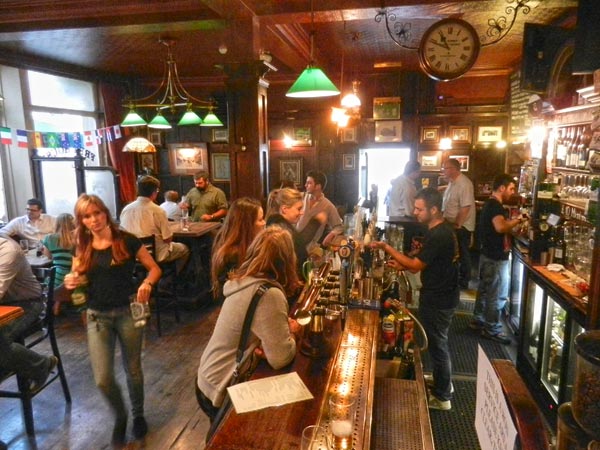
When in London, I like to stay in South Kensington. It’s a classy neighborhood — so elegant, my hotel is not allowed to put out a sign. It also has a quintessential British pub, the Anglesea Arms.

Along with beautiful Georgian architecture, the Anglesea Arms is filled with classy Londoners.


The Anglesea Arms Pub is everything a British pub should be, in my mind. Musty paintings and old-timers, beautiful people backlit, dogs wearing Union Jack vests, a long line of tempting tap handles advertising beers available, and flower boxes spilling color around picnic tables perfect for a warm summer evening. That’s why I recommend the Anglesea Arms in my London guidebook.


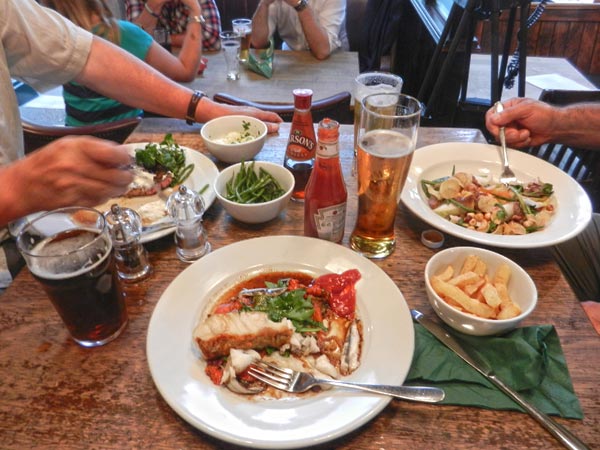
And for me, eating in a pub that takes its cooking seriously is the best deal in town. For £15 (just under $25), you get a delightful meal. When you consider the high cost of dining in London, the joy of immersing yourself in a neighborhood pub, and the quality of this dinner, this is a great value.

To top it off, we filmed an on-camera for our Travel Skills Special here. After a pint of beer, I was thankful I remembered my lines. Looking up from my meal and into the lens, I drilled home my point: “Unification does not threaten Europe’s diversity. In fact, that diversity is both as vivid as ever, and more accessible. Imagine: Today for lunch, it was quiche and fine French wine under the Eiffel Tower; for dinner, it’s pub grub and a hearty ale in a classic London pub. Here’s to diversity.”

Bulleting Under the English Channel

I still get excited about the Eurostar train trip from Paris through the English Channel Tunnel (a.k.a. “Chunnel”) to London. But the routine at the station has become, well, routine: Show your ticket and passport. Wait in a lounge until it’s time to board. Cross over the tracks on a secure sky bridge to a secure platform where your bullet train awaits, and follow the crowds as security officials make sure everyone gets on the right car. Within minutes, you’re zipping at 180 mph across the French countryside. Now that the new tracks are complete on the English side, you go just as fast there — and within about 2.5 hours, you’re in London.

When the tracks parallel the highway, we pass cars like they’re standing still (the train is going 100 mph faster than the speeding cars). When the attendant offers wine, it isn’t the cheap stuff they serve on American airlines — it’s a fine French Médoc.

And then, suddenly, there’s darkness for 20 minutes. Whenever I ride my bullet train down through the tunnel deep below the English Channel, playful thoughts fill my head.

If you can’t see the video below, watch it on YouTube.