A Tour Guide’s Experience with Health Care Phobia in France

I believe that, especially with a good guide, travel can be transformative and richly experiential…both a political act and a spiritual act. It forces people to grow, to deal with others who see things differently, to get out of their comfort zones, and to grapple with their own ethnocentricity and hang-ups. While people don’t generally sign up for a tour thinking they are investing in the growing pains of a broader perspective, I encourage my guides — like a loving parent who works to broaden a child’s palate — to thoughtfully set up experiences that can pry open a little wider the hometown blinders of an American traveler. Recently, one of our guides (who happens to be an American) shared this fascinating experience relating to health care in France. Here’s her report:

When I’m leading a tour in France, I always give a talk on the French tax, education, and health care systems. When speaking to a tour group — many of whom are relatively well-off, middle-aged Americans — these subjects can be a little controversial…even taboo. But I believe these issues are essential for anyone hoping to understand contemporary French society and culture.

The French pay lots of taxes for social programs. These taxes allow for “free” universal health care (not socialized medicine, but rather a quasi-private system overseen by the government — rated #1 in the world by the World Health Organization) and “free” education through the university level for all French citizens. Of course, health care and education are not free — they are paid for collectively by the entire society through taxes.

The French, in general, believe this is a good system. As is the case with other Europeans, they are not eager to pay high taxes (the French pay about 30 percent income tax, plus about 20 percent sales tax). But they have high expectations for the programs their taxes pay for, and they generally embrace the system. The French see their tax dollars at work each time they go to the doctor of their choosing and pay only a small co-pay (about $20); when they don’t have to worry whether they can afford their cancer treatment; and when they don’t have to ask, “How will I pay for higher education for my child?” No one in France is in debt because they have cancer or because they went to school to become a teacher.

When I explain this to my tour members, I let them know that I don’t think the French system is perfect, and neither do the French.  It’s expensive. There is abuse. And some people fall through the cracks. But I believe that when our tax, health care, and education expenses are added together, we Americans end up paying more for less. The French, by their communal nature, prefer the collective approach — life with more taxes and without the economic stress that we treat as normal. I graduated from the University of Washington owing $30,000, and my parents owed even more. My 30-year-old brother, who is self-employed with no insurance, fell off his bike and had to wait more than six hours to be seen in the emergency room. He was billed $7,000 for that visit. My underinsured father had quadruple bypass heart surgery and had to file for bankruptcy because he couldn’t pay his medical bills.

Rick Steves groups are filled with people of all political stripes, but nearly everyone is rational, open-minded, and willing to respect (if not agree with) the opinions of others. But on a recent tour, a few of my tour members were angered that I would “talk positively about socialism” (as they put it). One couple (I’ll call them Jane and John) said they vehemently disagreed with everything I said — not just my opinions, which I could understand, but even the facts and statistics I had cited, and the personal French accounts I’d collected. Jane insisted that no one could be happy living in a system where one is responsible for carrying the weight of their neighbor.

The next morning, when I went down to breakfast, Jane and John weren’t anywhere to be found. Finally John appeared looking like he’d seen a ghost — like he hadn’t slept all night. Turns out he hadn’t. Jane had suffered a severe medical problem the night before, but she wouldn’t let John come get me to help — she refused to see a doctor in France. I went to see Jane and convinced her to go to the hospital. When we got there, she was seen within two minutes of walking through the door, they were giving her tests within five minutes, and after ten minutes, she felt comfortable enough with the quality of care that she told me I didn’t need to stay.

I went back when it was time for Jane to be discharged. Fortunately, her condition had not caused long-term damage, and with medication she’d be able to return home to follow up with her own doctors. But John was struggling to sort things out with the discharge nurse. I translated the nurse’s explanation that she couldn’t accept their US insurance information — in fact, there was nothing to pay. John turned to me and said, “Do you know how much this overnight stay would cost in the US? This is crazy! Are you sure I don’t have to pay?” Determined to “pay their own way,” John and Jane took out their credit card. After some convincing, I persuaded the nurse to charge them a small “donation” of about $200.

I’m so thankful Jane was able to walk away from the incident. And I also hope that maybe their experience opened their minds a bit. We don’t need to embrace European social ethics. But we should be open to learning about them and respecting people who choose to design caring societies a little differently than ours.

Road Trip Washington: Spreading the Word about I-502, a New Approach to Marijuana

I’m in the midst of an unforgettable road trip, packed with vivid experiences. So far, I’ve shared an inspirational message at a Unitarian church in Spokane, hiked across a farm to see a huge “Hemp for Washington” sign overlooking a freeway with the farmer who posted it, and sipped wine in a trendy Walla Walla winery with a skeptical Republican legislator (Maureen Walsh, whose emotional speech about marriage equality just went viral on YouTube).

It’s all part of our 10-stops-in-7-days road trip with my team to talk up I-502, the Washington State initiative to legalize, regulate, and tax marijuana for adults. (If you’d like to know more about why I support this initiative, read my recent editorial.) Working diligently on our laptops and cellphones as we drive, and determinedly lobbying legislators, mayors, and city council members each lunch and evening, it occurred to us as kind of funny how different we are from many of the people whose civil liberties we are defending.

Last night we enjoyed the odd experience of talking up marijuana law reform in the cute little faux-Bavarian town of Leavenworth — while tipsy revelers there were spilling out of the bars and into the streets as the entire place was celebrating a sloppy and boisterous Oktoberfest. The only vigorous opposition we’ve encountered was at the Washington State Capitol—from people who claim our law doesn’t go far enough. An angry gang who thinks our initiative is too restrictive and too strict in its DUI limits tried to shout us down. When I wonder who was behind that rumble at the rotunda, I have a hunch it was what I like to call the PPP (Pot Prohibition Profiteers).

Doing radio and newspaper interviews in the car as we roll, dining with a 27-year FBI veteran (the former special agent in charge of the Seattle division, who now understands that our nation’s war on marijuana is an expensive disaster), and sharing the stage with a Baptist minister whose African American community is taking the brunt of a war on drugs he considers racist, we find the days jam-packed with both learning and teaching.

We’re being trailed by a film crew making an hour-long documentary on the story of our historic-if-we-win initiative, which is on track to make our state a leader in deconstructing this prohibition one state at a time (which is how the earlier Prohibition was ended). We read about our events the morning after in small-town papers at truck stops. The national media is starting to pay attention to what’s about to happen in Washington State.

We’re four days down…and just over halfway through. And it’s a lot more than talks and politics. I’m seeing our state as never before, getting up early and marveling at the beauty of our “Inland Empire” in the sunrise light. Driving along the Columbia River Gorge from Vancouver, Washington, towards Kennewick, and then cutting through the Palouse from Walla Walla to Spokane, and driving over Blewett Pass through the turning leaves of fall — it’s all been a joy. (Well, all except for the speeding ticket two of our SUVs got — from a very friendly cop who liked my TV show…but not quite enough — near the Idaho border.)

It’s a heady mix of beauty, exhilaration, exhaustion, and fun, all pushing forward our strong belief that the truth is on our side. We believe that, ten years from now, our country will look back and be thankful that Washington State finally stood up to Washington, DC, and voted to take the crime out of marijuana: treating its abuse as a health and education challenge; ending a massive black market that has enriched and emboldened gangs and organized crime; and finally accepting its use by mature and responsible adults as a civil liberty.

Follow the rest of our tour on Facebook at – Yes On WA’s Marijuana Initiative 502, “Like” us and imagine helping this happen in your state. Or visit New Approach Washington. Thanks.

Pondering Fascism in 1930s Europe

Robert Kennedy Jr. wrote these words in 2003:

“Corporate capitalists do not want free markets, they want dependable profits, and their surest route is to crush competition by controlling government. The rise of fascism across Europe in the 1930s offers many informative lessons on how corporate power can undermine a democracy. In Spain, Germany and Italy, industrialists allied themselves with right-wing leaders who used the provocation of terrorist attacks, continual wars, and invocations of patriotism and homeland security to tame the press, muzzle criticism by opponents and turn government over to corporate control. Those governments tapped industrial executives to run ministries and poured government money into corporate coffers with lucrative contracts to prosecute wars and build infrastructure. They encouraged friendly corporations to swallow media outlets, and they enriched the wealthiest classes, privatized the commons and pared down constitutional rights, creating short-term prosperity through pollution-based profits and constant wars.”

I’ve been aching to make a TV special studying the story of Fascism in Europe during the 20th century. Now that our latest series is finished, I need to huddle with my crew and decide what we’ll produce next. Stumbling upon this quote got me thinking of lacing all the Nazi, Fascist, Holocaust, WWII, and Neo-Nazi sites together into an hour in hopes that we can learn from those difficult times… and never go there again.

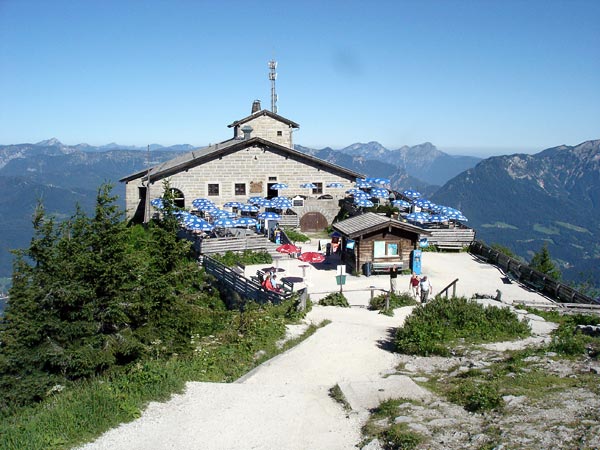
Hitler's Eagle's Nest

Congratulations, Europe, on Winning the Nobel Peace Price

To all my European friends–from Portugal to Germany to Finland, and from Bulgaria to Slovenia to Ireland–I’d just like to say: Nice job!

Today the Nobel Committee awarded its prestigious top prize to 500 million people who have, for the last 65 years, made a conscious decision to live together in peace and harmony: the European Union (EU). In the words of Nobel Committee Chairman Thorbjoern Jagland, “The Norwegian Nobel Committee wishes to focus on what it sees as the EU’s most important result, the successful struggle for peace and reconciliation and for democracy and human rights. The stabilizing part played by the EU has helped to transform most of Europe from a continent of war to a continent of peace.”

Who could possibly be more deserving of a peace prize? When your grandparents were kids, Europe had been wracked by 500 years of virtually uninterrupted warfare. Today Europeans are mocked for their pacifistic ways. Wow. What a transformation.

In my 2009 book Travel as a Political Act, I wrote:

For the EU’s founders, money took a backseat to their primary motivation: peace. Even the biggest Euroskeptic recognizes that, in weaving together the economies of former enemies like France and Germany, everyone has become so interconnected that Europe will never again suffer devastation from a major war as they did twice in the last century. The French and the Germans still don’t agree on most things. But now they’ve become too financially interdependent to take up arms over their differences. Minimizing the possibility of an intra-European war is the triumph of the EU.

When boots do hit the ground in a war, Europeans believe it’s because they have failed to prevent it. They prefer endless diplomacy to once-in-a-while war. Europe’s reluctance to go to war frustrates some Americans. I believe their relative pacifism is because Europeans know the reality of war, while most Americans do not. Of course, if you have a loved one who has fought or died in Iraq, Afghanistan, or Vietnam, you know what a war is. But as a society, the US can’t remember actually hosting a war. Europeans have told me that they believe Americans were more willing to use cluster bombs and napalm to pacify Fallujah because in the age of modern warfare, no American city has ever been wiped from existence like Coventry, Dresden, Rotterdam, or Warsaw. It’s easier to feel detached when a war is something you watch on the nightly news, rather than something that killed your grandfather or destroyed your hometown.

Europe knows what a war is. It ripped itself to shreds twice within my grandparents’ lifetime. Consider France in World War I. France (with one-quarter as many people as we have) lost as many people as we’ve lost in the entire Iraq War—over 4,000 people—in one day…many times. They lost as many people as we lost in Vietnam (60,000) in one month. And then it happened again and again until, by the end of World War I, an estimated half of all the men in France between the ages of 15 and 30 were casualties. When some Americans, frustrated at France’s reluctance to follow us into a war, call the French “surrender monkeys,” I believe it shows their ignorance of history. …

In 1947, in the rubble of a bombed-out Europe, Euro-visionaries assembled and agreed that they needed to overcome the hell that they were bringing upon themselves every couple of generations with these wars. Their solution was to unite. Of course, a union is nothing without people giving up some measure of real sovereignty. Since 1947, proponents of a European Union have been convincing the people of proud and independent nations to trade away bits and pieces of their independence. It’s a tough sell. But in a fitful evolution—two steps forward and one step back—over the last sixty or so years, they have created a European union.

Yes, Europe has had its economic woes the last few years. (Who hasn’t?) But a bold and ambitious experiment like the European Union is bound to have some growing pains, as member states with starkly different lifestyles, priorities, and fiscal philosophies are now sharing one big pot. Spain and Greece get all the press for their 25 percent unemployment and isolated riots, but more than half of the 27 EU members are currently not in recession–and several (Poland, the Baltic States) are enjoying impressive growth. Remember: Europe still has the biggest economy on earth (2011 GDP: $17.33 trillion in the EU vs. $15.09 trillion in the US), and as any traveler who has recently experienced sticker shock abroad can tell you, the euro currency is still mighty healthy. Europe’s vast investment in infrastructure has laced together a remarkable free-trade zone of superhighways and bullet trains that make it easier than ever to get around. The fact is, while some of its members are struggling, most EU citizens are much better off today than they were five, ten, twenty, or fifty years ago.

Naysayers continue to predict the imminent collapse of Europe. But what these people don’t understand is that European unity is not just a convenient political talking point that’s easily abandoned in tough times. It’s a way of life that most Europeans deeply believe in. While “Euroskeptics” complain loud and hard about the many failings of the EU–just as American politicians wrangle over differing viewpoints–ultimately Europeans believe as fiercely in unity, cooperation, and celebrating diversity as Americans believe in life, liberty, and the pursuit of happiness.

I’m sure many stateside critics will scoff at this prize. They’ll say that the Europeans are rewarding themselves for their “failing” system. (This misses the fact that the Norwegians who awarded the prize are not, themselves, EU citizens.) These critics, blinded by their own agenda, are missing the historical long view, which tell an astonishing success story. Sixty-seven years ago, Europe was rubble and millions were dead. With the generous kick-start of the Marshall Plan and visionary leaders pushing a pacifistic, economy-growing agenda, Europeans transformed their continent. Today there are few more prosperous and more peaceful places on earth. War between its members is unimaginable. Even the most hardened cynic can’t deny…Europe is doing something right.

I’ll end with more words from Thorbjoern Jagland and the Nobel Committee:

The union and its forerunners have for over six decades contributed to the advancement of peace and reconciliation, democracy and human rights in Europe. … Since 1945, that reconciliation has become a reality. The dreadful suffering in World War II demonstrated the need for a new Europe. Over a seventy-year period, Germany and France had fought three wars. Today war between Germany and France is unthinkable. This shows how, through well-aimed efforts and by building up mutual confidence, historical enemies can become close partners.

Again, Europe–nice job! You deserve it.


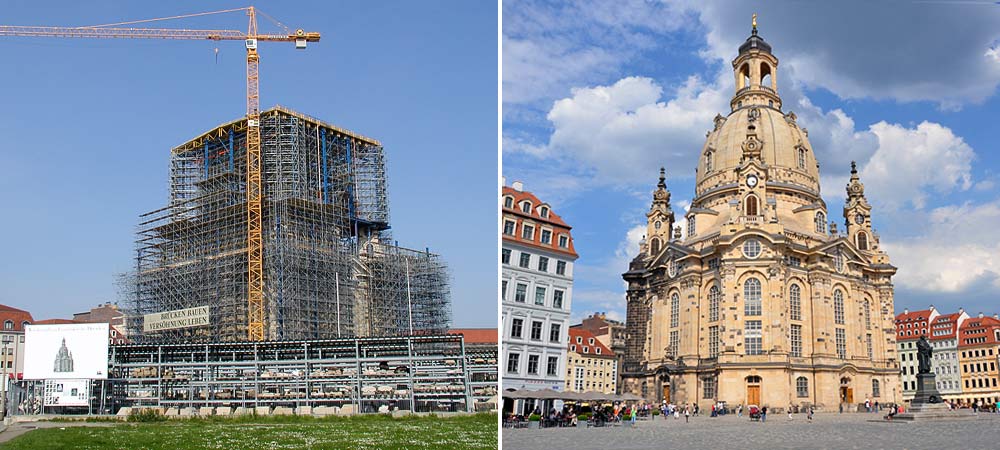
Not long ago, Europe was bombed flat, but–like Dresden’s iconic Frauenkirche–it has been rebuilt and is determined to have peace.

La Vita È Bella

I’ve been lucky to spend a good part of 2012 in Italy, researching my guidebooks and filming shows for this fall’s new television season (debuting across the USA this week). Several times a week, by chance, I’d run into our tour groups and their amazing guides. Their enthusiasm was contagious. Squinting (I don’t wear sunglasses) at the energy in their smiles, surrounded by dazzling sunshine, it struck me that the sun in Italy seems to have a special glint to it — as though it’s telling visitors: Life is good; let’s embrace it.

Especially in Tuscany (as our guides are experts at revealing), lifelong travel memories are like low-hanging fruit…yours to harvest. At a favorite new trattoria, the chef cut open a cantaloupe-sized rock of aged pecorino cheese, sniffed it like a fine wine, and then passed it to me. The dank, rustic smell took my mind straight to an agriturismo barn I had visited — where random rays of sun cut between the weathered boards, filtered by floating dust from the hay, and bathed the sheep in a timeless Tuscan light. The next day, I returned…needing again the fragrant ritual splitting of the pecorino.

On that same trip, in Florence — on the wrong side of the river, in the crusty Oltrarno district — an artisan drew me into his shop as if inviting me on a journey. Under a single dangling light bulb, he hammered gold leaf into a dingy halo, breathing life back into a faded saint that was originally crafted by a neighbor of his… five centuries ago.

A few days later and an hour’s drive away, I was inspired by the simple joy of watching an old man bicycling with his granddaughter atop the wide, fortified wall that once protected proud Lucca from its enemies (and now seems to corral the town’s Old World charm). Then, on rented bikes — with those same energetic smiles, the steady leadership of their guide, and that persistent sun glinting off everything in sight — another Rick Steves tour group frolicked by…embracing life in Italy.

Without ignoring the plight of people in turmoil or who are struggling, for the vast majority of us, I believe it is important to be mindful of what a relatively wonderful, peaceful, affluent, and stable (if not sustainable) age we life in. I’ve produced about 140 TV shows in the last 20 years. Shooting each show is a six-day scramble that ends with great relief when we’re finally done. For the first forty or so, I signed off with “I’m Rick Steves. Until next time, happy travels.” For the last hundred episodes, I’ve finished the show saying, “I’m Rick Steves. Until next time, keep on travelin’.” This summer, on a gondola, surrounded by the watery majesty of Venice, I was moved to change it up a bit. Script covered and show in the can, I looked at the camera and said, “I’m Rick Steves. Life is good. Be thankful. Ciao.”