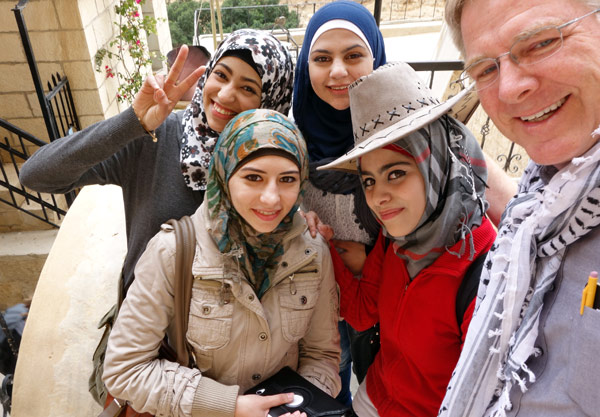
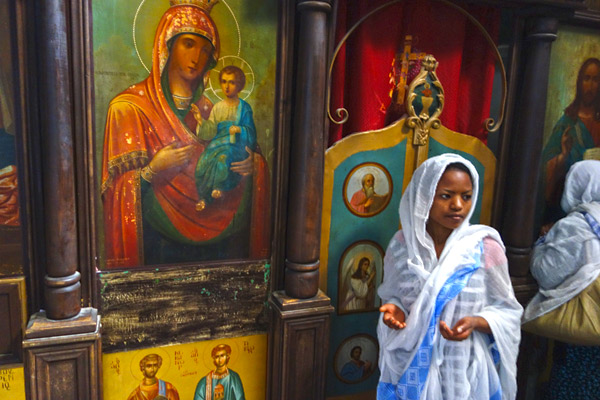
During my week in Palestine, I was in the care of three great guides: Husam Jubran (hjubranus@yahoo.com), Kamal Mukarker (kamal_mukarker@hotmail.com), and Iyad Shrydeh (iyadsh_2004@yahoo.com). Each is a proud Palestinian who works routinely with American tourists. They are all licensed guides (charging $300 a day, possibly with a car) who work like any guide in Europe. The big difference is that most of their clients are religious or political tourists. Frankly, I can’t imagine enjoying a trip here without the help of professional guides like these. With Kamal, Iyad, and Husam, I felt safe and got the absolute most learning out of each day.

Traveling through the Holy Land, my heart is a shuttlecock, swinging from sympathy with Israel to solidarity with Palestine. I’m saddened by the people — like some who post on this blog and on Facebook — who are so hardened on one side or the other that they cannot allow themselves to find empathy with the society they consider the enemy. Even if one side is the enemy, it’s not the entire society but just its powerful or just its extremists. And the young generation on each side is simply living with the history it inherited. As is so often the case in tough situations like this, most people would be willing to find a way to coexist peacefully but extremists can only get traction by blasting out the middle and making things more radical.

When I consider the challenges facing the Holy Land, I think of the importance of Israelis and Palestinians having ways to connect. I’m haunted by the devastation the people of France and Germany suffered in World War I, and I’m equally haunted by the fact that few Germans and French on the front lines had ever met someone from the other country in 1914. I believe if they had met, studied, drank, and danced together, they would have found a way to avoid the slaughter.
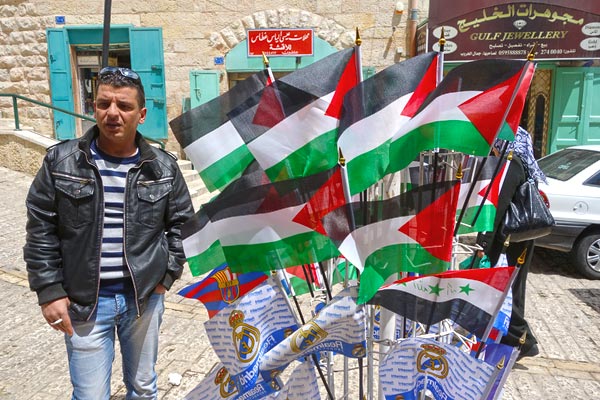
Whichever side of the separation wall your heart resides on, you should be concerned that — as a result of the wall — people on both sides will not get to know each other. They will not understand that they all root for the same soccer teams. Israelis and Palestinians who are soccer fans, curiously, root for the Madrid and Barcelona teams — but they don’t even know the other side does the same thing. There’s no way mutual fans of Real Madrid could be mutual enemies.
There’s a place on the Palestine side of the wall where passengers can conveniently change from a Palestinian car to an Israeli one. When I left Palestine, my Israeli driver waited there for my Palestinian driver to drop me off. I’ll never forget their handshake — in the shadow of an ominous Israeli watchtower painted black by the flames of burning tires and with angry Palestinian art on the wall. These men were each beautiful, caring people, caught in a problem much bigger than either of them. The exchange was little more than a suitcase shuttling from one back seat to the other. I watched as they quietly shook hands, looked into each other’s eyes, and said a solemn and heartfelt “Shalom.” After my week in Palestine, driving 300 yards through that security gate into Israel was like driving from Guatemala to San Diego. And I thought, “With all these good people, on both sides, there has got to be a solution — and a big part of it will be grassroots, people-to-people connections.”