I’m excited that we are embarking on a 12-day shoot to produce two shows in the Netherlands.
Ten years ago, we made one episode combining Amsterdam with side trips into the Dutch countryside. In this shoot, we’ll retire the old show and replace it with two episodes: one just for Amsterdam and the other just for the Dutch countryside. This will let us share double fun in Holland.
For example, doing two shows instead of one makes room for Haarlem, a charming small town a quick train ride from Amsterdam. We enjoyed filming an organ concert in Haarlem’s church. I only get 3,200 words per script, so each word needs to earn its place. Here’s that part of the script—5 sequences out of 70 in this half-hour episode (OC means “on camera” — a part I say to the camera):
[38] Haarlem’s Grote Kerk, or Great Church, towers over the market square as if to bless all the business that takes place below.
[39] Inside, you find a towering Gothic nave, which was whitewashed and purged of its Catholic ornamentation when the Reformation arrived in 1566. Small frescoed sections, revealed when the whitewash was cleaned off, show how the entire church was originally decorated. Ships hanging in the nave remind parishioners to pray for all the men at sea. If you know where to look, carvings can be whimsical: crazy little characters supporting the roof…and what were called “pillar biters” mocking people who were overly devout.
[40 OC] And as was the case in many Protestant countries, rather than huge preachy works of visual art — like frescos and statues promoting the message of the Church — the artistic emphasis was put on music.
[41] Protestant churches invested in mighty pipe organs. Haarlem’s towering organ has been giving worship an inspirational soundtrack since 1738.
[42 beauty sequence of Jos van der Kooy playing Cornelis J. Bute Gavotte I & II] And visitors can enjoy free concerts weekly. [Fade to black]
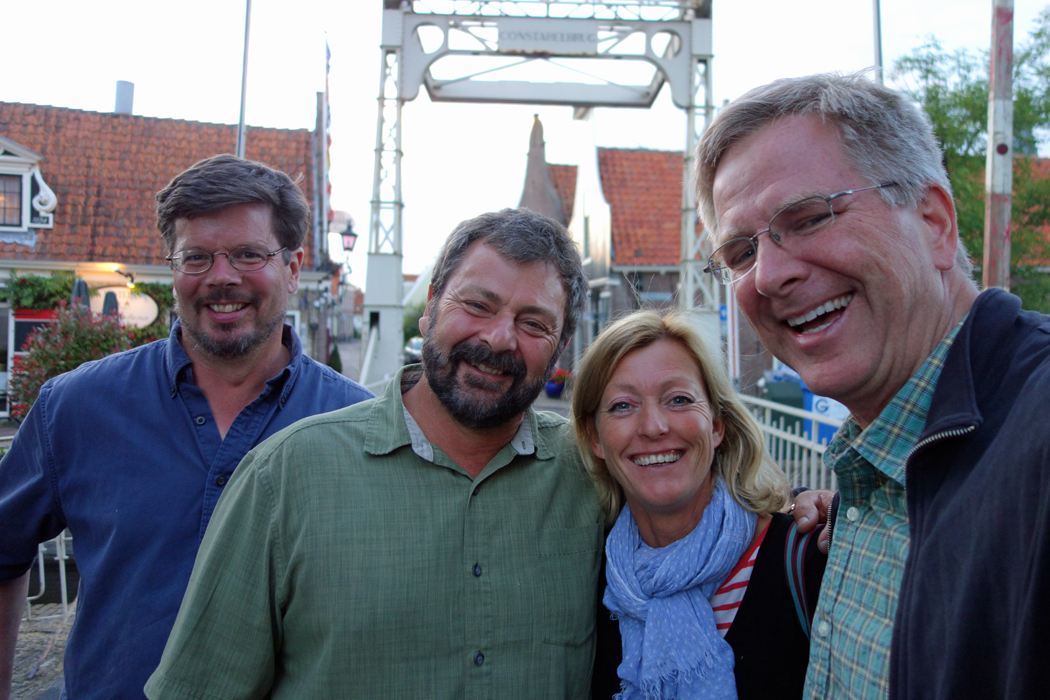 Our core filming crew, as always, is three of us: me, the producer (Simon), and our cameraman (either Peter — pictured here — or Karel). Lately, I’ve enjoyed adding a local expert to be sure we’re communicating clearly and to smooth the way behind the scenes. My friend Rolinka Bloeming, who has led tours for us for nearly 20 years, had to be rescheduled from one of her Rick Steves tours so she could be our “fixer.” Rolinka speaks Dutch, knows her country expertly, has a way of opening doors, and is a delight to work with. She’ll be on her iPad and on her phone making sure we know where the windmills are turning and where herring’s in the smoker.
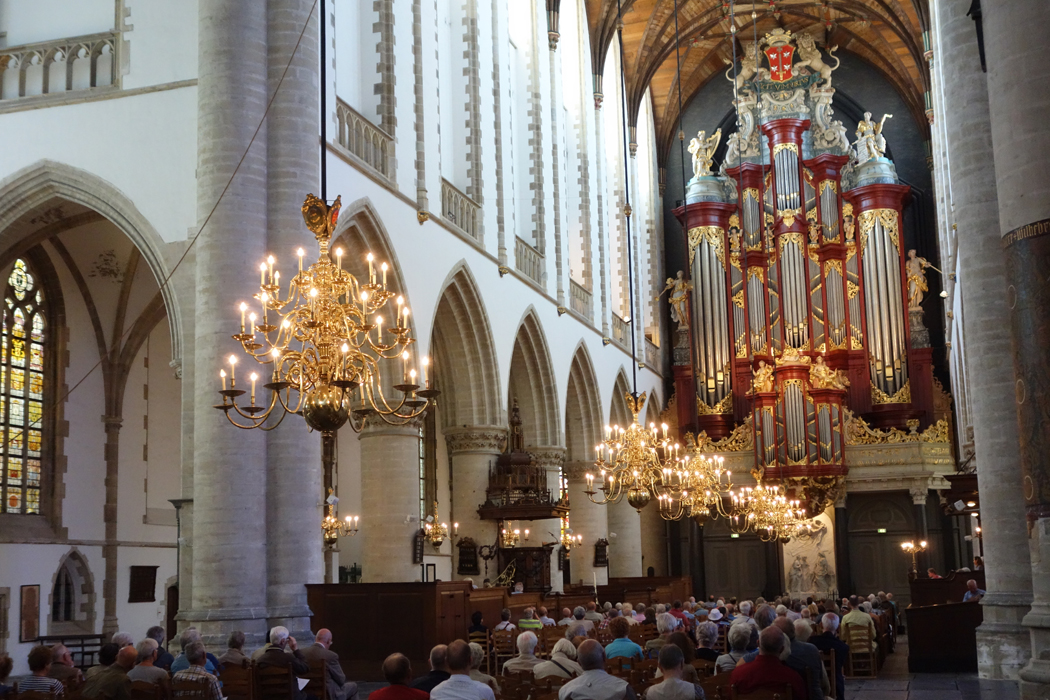 In Haarlem’s Great Church, we climbed up into the organ loft and filmed the organist playing the most spectacular pipe organ I’ve ever seen. I got to simply sit with the audience and enjoy the concert while my crew filmed a beautiful segment.
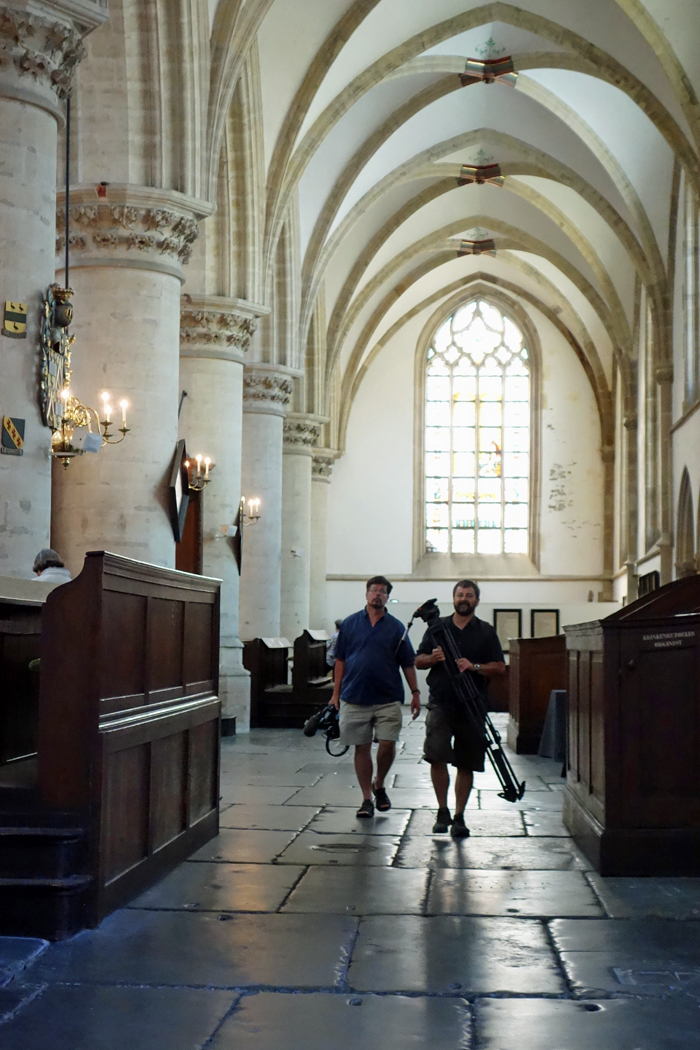 When filming, we have to be super-organized to get what we need in the time we have. When the crew was in the loft with the organist, I was surveying the church like a little mouse, making a list of things to shoot to “cover the script.” Then I took Simon on a quick walk to show him my shot list. With the crew organized and at work, I got to sit down and enjoy the rest of the concert.
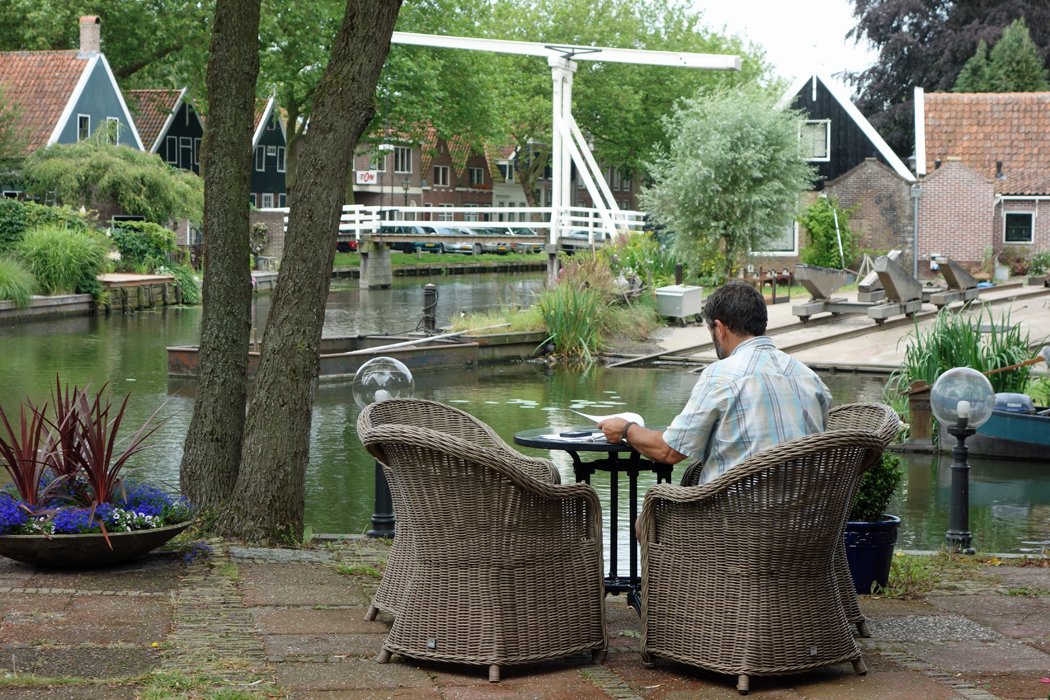 We settled down for four nights in the cute-as-a-bunny town of Edam. Our home base, Hotel Fortuna, is nestled on a canal in a garden kind of world. (It made me nostalgic for a family visit here 25 years ago, when toddler Andy was enthralled by the box turtles in the hotel garden.) My room opened up onto a quiet perch over the canal, where I would go out after filming in the 11 p.m. twilight and just be still with the water and the birds. Across the way was in industrial dry dock…yet even that was cute. Here, I snuck a photo of producer Simon reviewing our latest script immersed in Dutch beauty.