Siena is filled with sightseeing tourists oblivious to everyday (yet delightful) realities of life just down the street. For our Easter television special, we dropped by a retirement home where little kids just learning about the meaning of Easter were entertaining people who had celebrated it eighty times. This is what I love about travel: Experiencing something that feels familiar, but in a different hemisphere — reminding me how touchingly similar people are, all around the globe.
Rick Steves’ European Easter — Coming to Public Television in 2016
In 2007, we produced the Rick Steves’ European Christmas public television special, which has become a mainstay on the public airwaves during the holiday season. This year, we’re filming a bookend to that special: Rick Steves’ European Easter, which will air across the USA next year. Click the images below to learn more about our shoot in Italy this Holy Week.
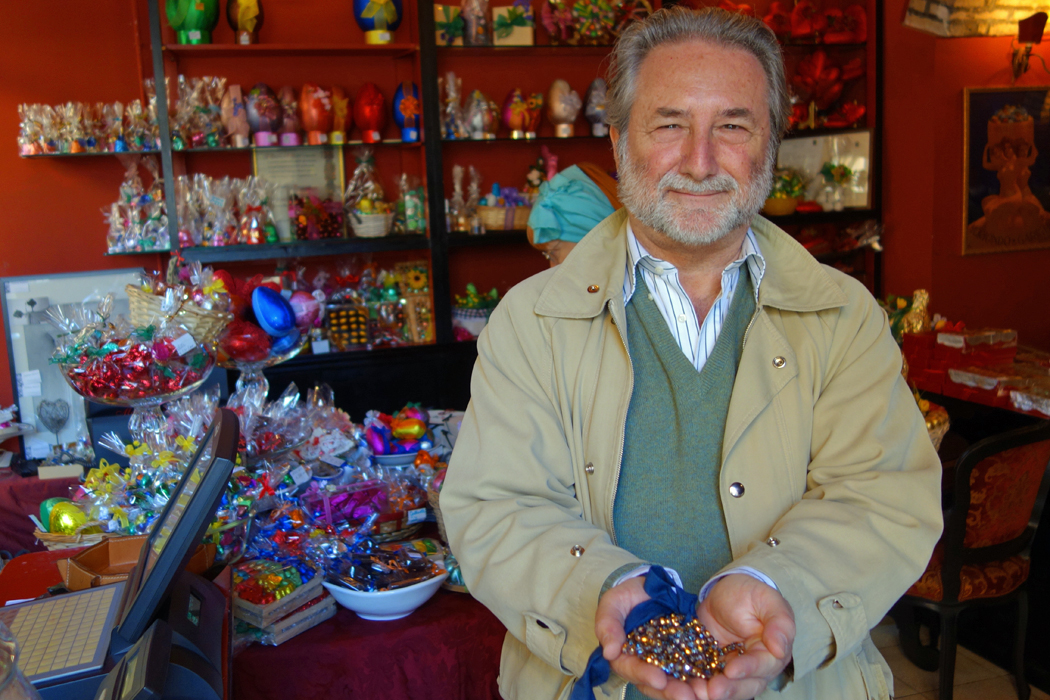
We’re learning that Europe celebrates Easter in ways both familiar and delightfully exotic. For example, a charming tradition in Rome is that a man will bring a small treasure for his loved one (like this necklace) to the local chocolate shop, where it will be encased in a big, decorative chocolate egg. Later, he’ll pick up his completed gift, which is certain to add cheer to someone’s Easter morning.
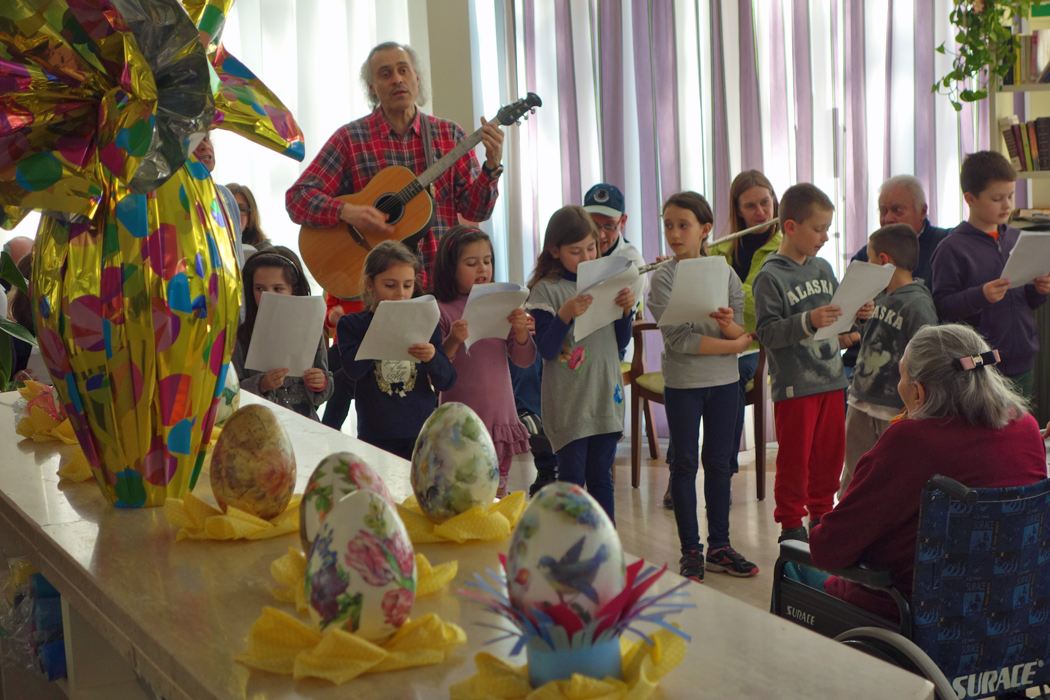
The thought of preschoolers brightening the day of seniors in a retirement home with music, dance, and homemade gifts touches my heart. And to experience that in a different hemisphere reminds me of how much we all have in common. For our Easter special, we dropped by a senior center in Siena just in time to witness an ambush of eight-year-olds-meet-eighty-year-olds fun.
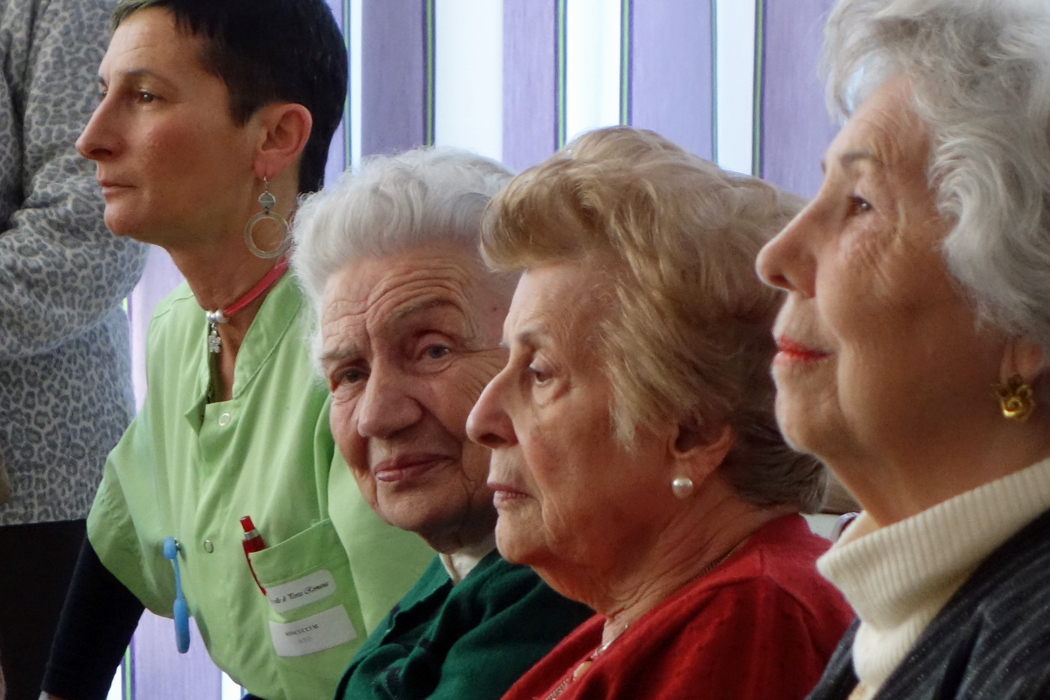
Many of my friends are at the same stage of life as I am, with a surviving parent in assisted living. Seeing such joy on faces that have lived through so much history added an extra dimension to my Easter.
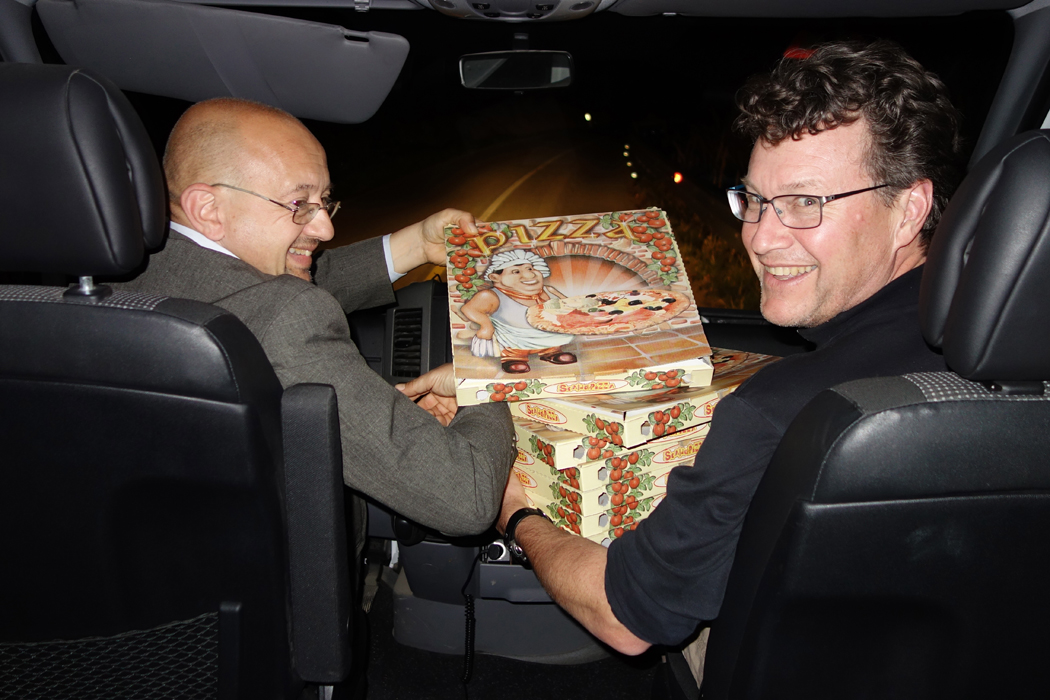
My favorite Tuscan guide, Roberto Becchi, is our “fixer” for this Easter-in-Tuscany shoot. After a long day of blessing olive branches, filming sumptuous art telling the story of Christ’s Passion, making Easter pasta, and watching kids chop open big eggs, we drove home with dinner. I never considered “pizza to go” in Italy — from a small-town pizza chain based in Romania.
Coming in 2017: Rick Steves Public Television Special about Martin Luther and the Reformation
In 1510, a young monk from Germany named Martin Luther walked 700 miles to Rome on a pilgrimage. He returned home disillusioned, and in 1517, he raised 95 difficult theological questions at the university where he taught — and kicked off what became the Protestant Reformation. This year, my crew and I will be filming a public television special to celebrate the 500th anniversary of that event.
Most of the show will be filmed in Germany later this summer. But this week in Rome, we took time out from producing our upcoming Easter special (more on that soon!) to film a few segments about Martin Luther.
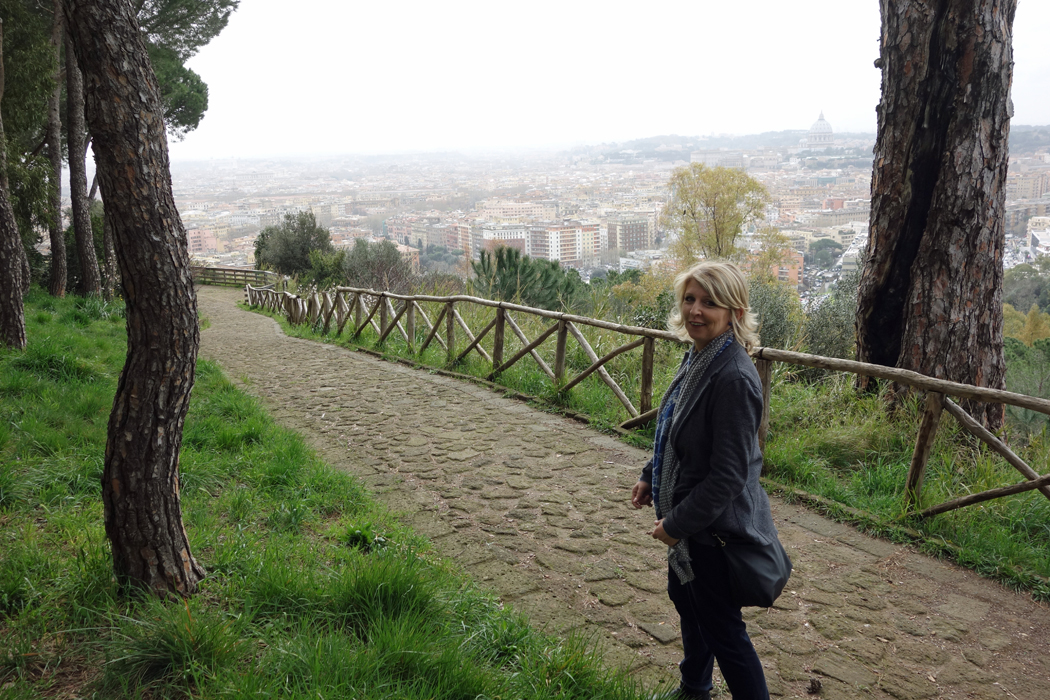
We were scouting for an evocative trail leading into Rome, to capture the awe that filled Luther as he approached the grand finale of his pilgrimage. Our local guide and good friend, Francesca Caruso, led us to the perfect setting, on Monte Mario.
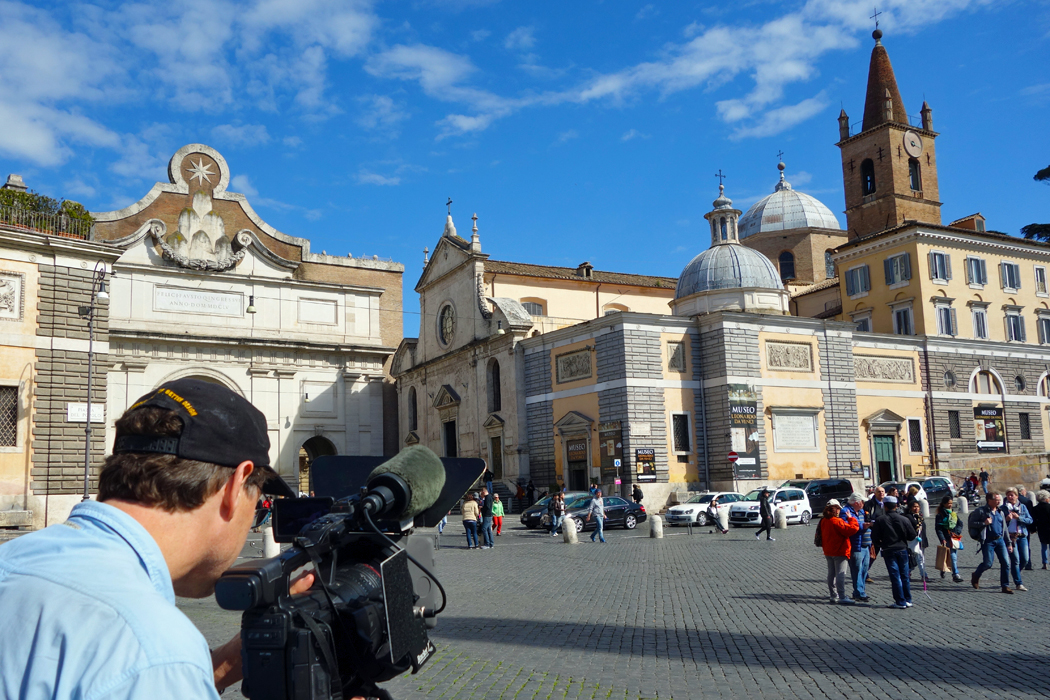
Luther was an Augustinian monk, and just inside Rome’s city gates (at Piazza del Popolo) is the Augustinian church of Santa Maria del Popolo. Just as a hostel provides a needed bunk for a backpacker today, this church provided Luther a humble home upon his arrival in Rome.
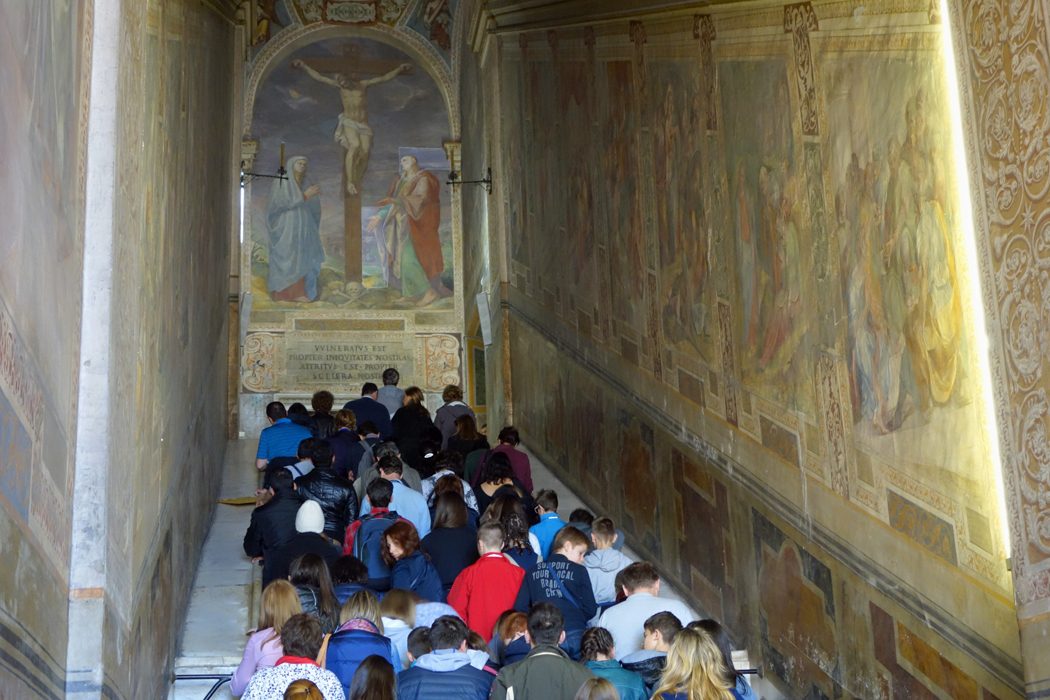
After dropping to his knees and declaring, “Hail, holy city of Rome,” Luther did what pilgrims still do to this day: He worshipped at holy sites all over town. He climbed the Holy Stairs (Scala Santa) on his knees, just as our cameraman, Karel Bauer, did today. And upon reaching the top, Luther thought the same thing Karel did: “This just makes no sense to me.”
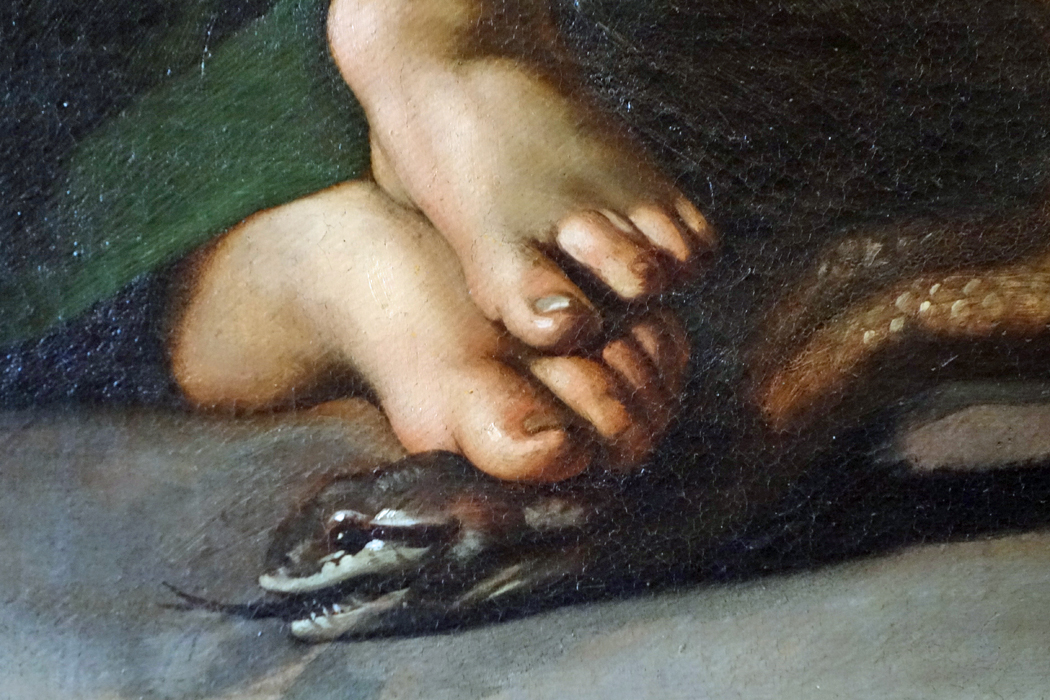
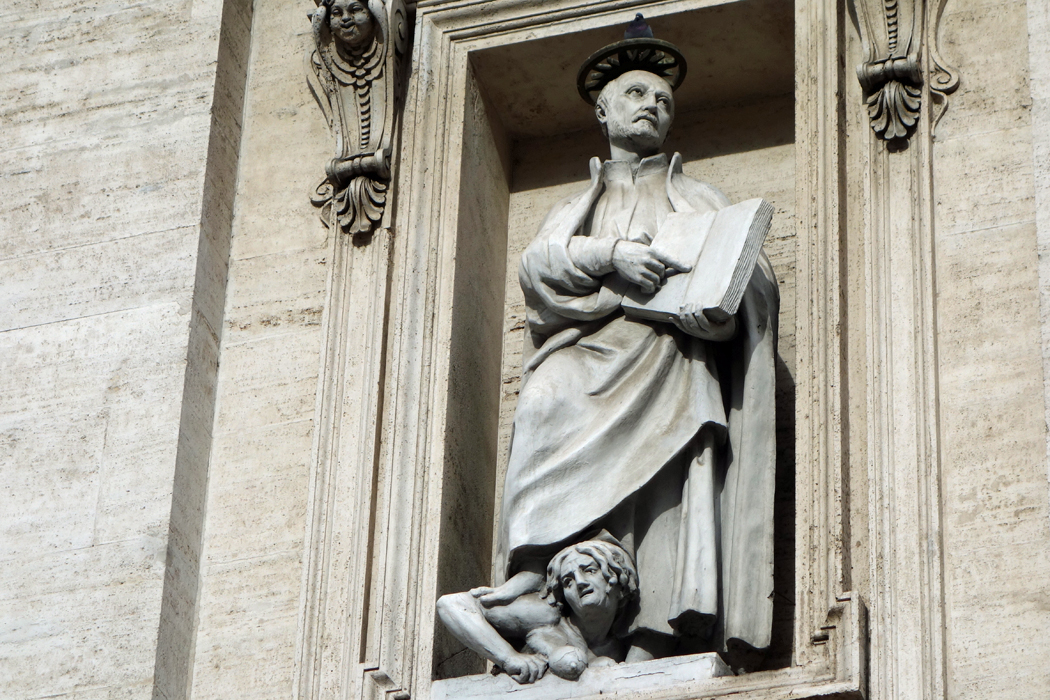
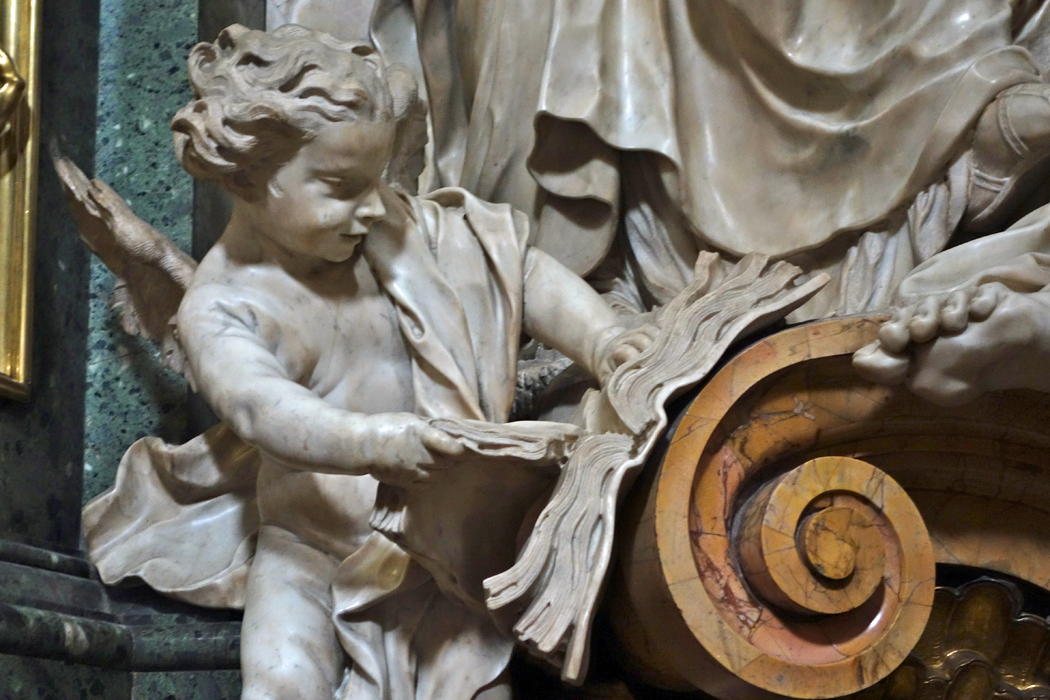
By questioning corrupt Church practices — jumping through hoops to earn less time in purgatory, or purchasing relief from the consequences of your sins in the form of indulgences — Luther unleashed a torrent of public frustration and undercut the power of the Church. The Church fought back with the Counter-Reformation. If you know where to look, you can see Church-sponsored propaganda designed to make sure the Catholic (which means “universal”) Church remained the only permissible way to be a Christian: the Virgin Mary and toddler Jesus stepping on evil snakes; stony saints stepping on heretics; and angry cupids ripping up the pages of Bibles that had been translated from Latin into languages normal people could actually read. It was a tumultuous time for Christians of all stripes.
Tossing a Coin in Rome’s Trevi Fountain…Sort of
Rome’s beloved Trevi Fountain is drained and covered with scaffolding. But so many people come to Rome to do the fabled “coin toss over your shoulder to guarantee a return to the Eternal City” that the city has provided a small temporary pool…which, I’m sure, has the same magical powers.
When we travel, we need to celebrate the fact that 10 percent of what we’re going so far to see will be closed or out of sight for restoration. Try to see this as a blessing — it’s the reason why everything else is looking so beautiful these days. Keeping Europe’s patrimony in good shape is a big and ongoing job.
Day 1 of 100: I’m in Rome, Kicking Off My Trip with Some Photos
I just landed in Rome to embark on a 100-day trip. And already, I’ve learned so much.
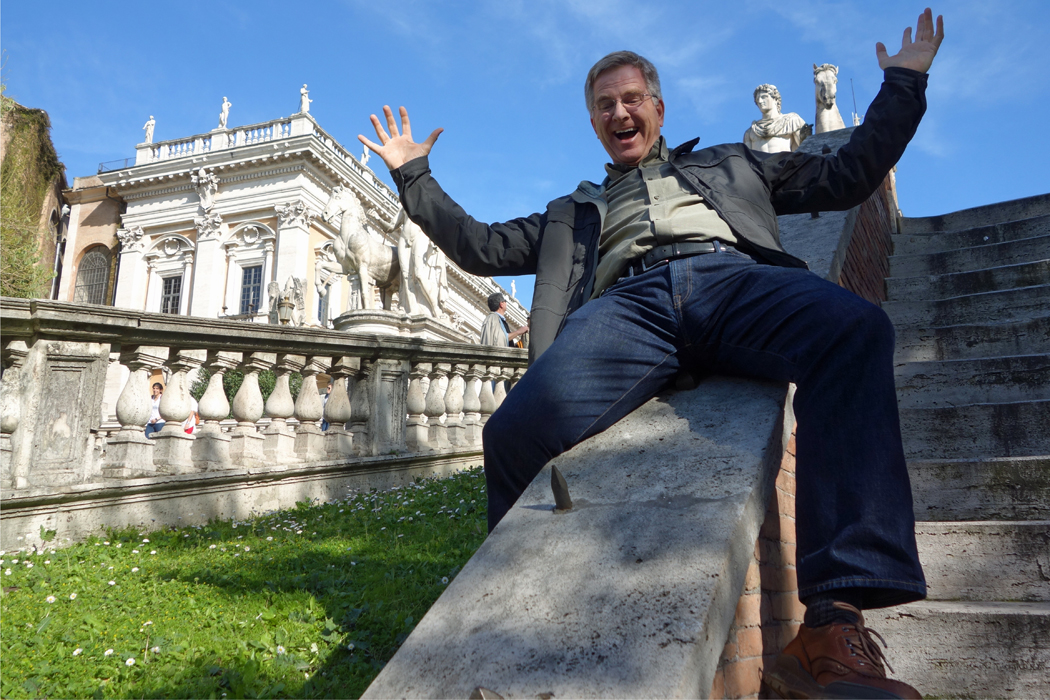
Join me, if you dare, on what I have a strong hunch will be an unforgettable ride. My goal: to make mistakes (painful as they may be), learn lessons (the hard way, if necessary), and share my experience on this blog. I’ll be posting daily from now on. Be sure to invite your traveling friends to join in the fun.
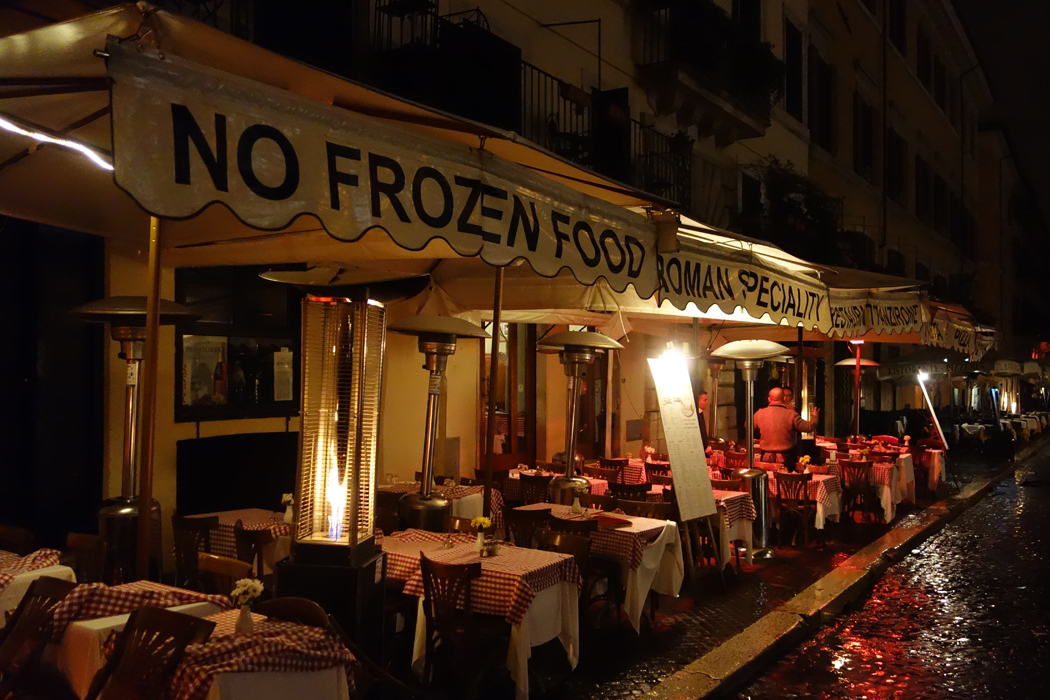
A big part of travel is eating well. And the last place you want to dine is a place on the most high-rent square in town, with a printed menu in five languages (clearly designed for tourists and serving edible clichés regardless of the season — bad news all around) and a big, if hard-to-believe, promise in English: “No Frozen Food.”
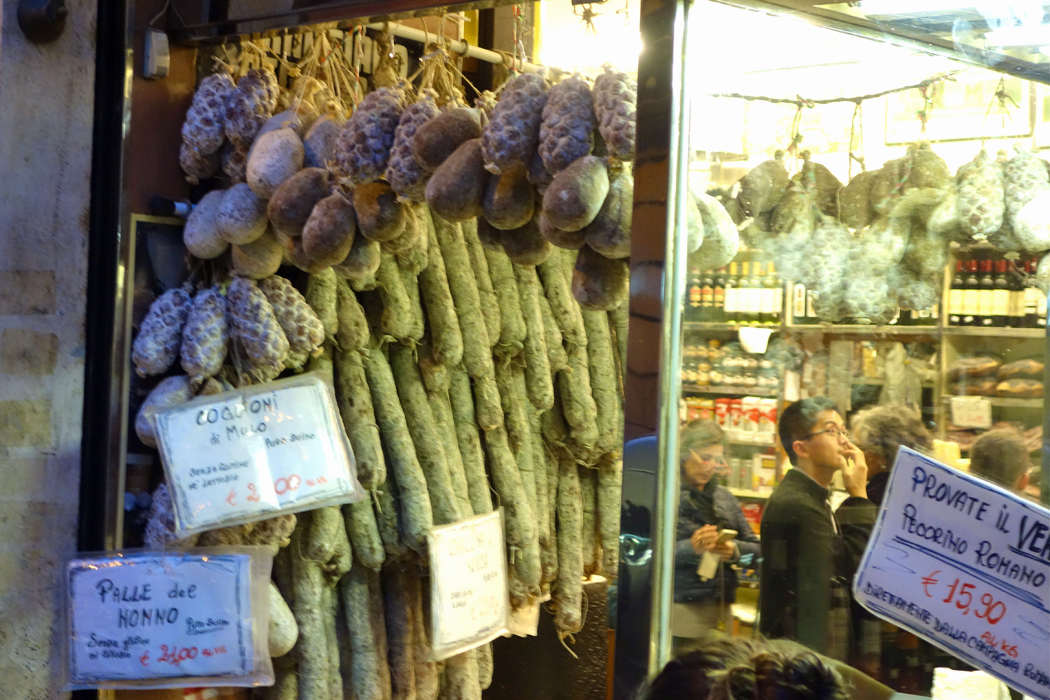
Italians aren’t really into “foreign” or “ethnic” restaurants because, as they see it, each region of Italy provides a distinct local cuisine. Especially in Italy, a smart eater will go for the local specialties. Lasagna is simply not a Roman dish — it’s better farther north. Rome is more about hearty, working-class food, such as beans and lentils. And the neighborhood butcher sells favorite salamis such as coglioni di mulo and palle del nonno. (Pardon the crudeness, but that’s “donkey’s balls” and “grandpa’s balls.” Can you guess which is which?)
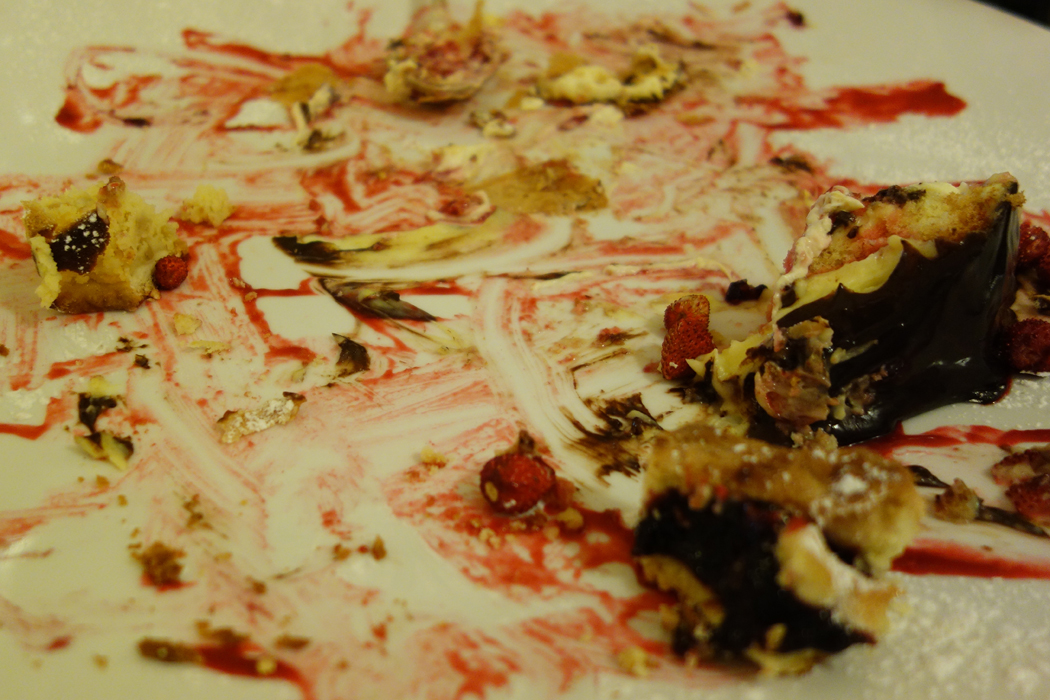
I’m noticing that a nice dessert plate, when properly enjoyed, leaves you with a lickable Jackson Pollock-style masterpiece. I will be eating very well in the next few months. Why? Because of my devotion to your travel guidebook needs.
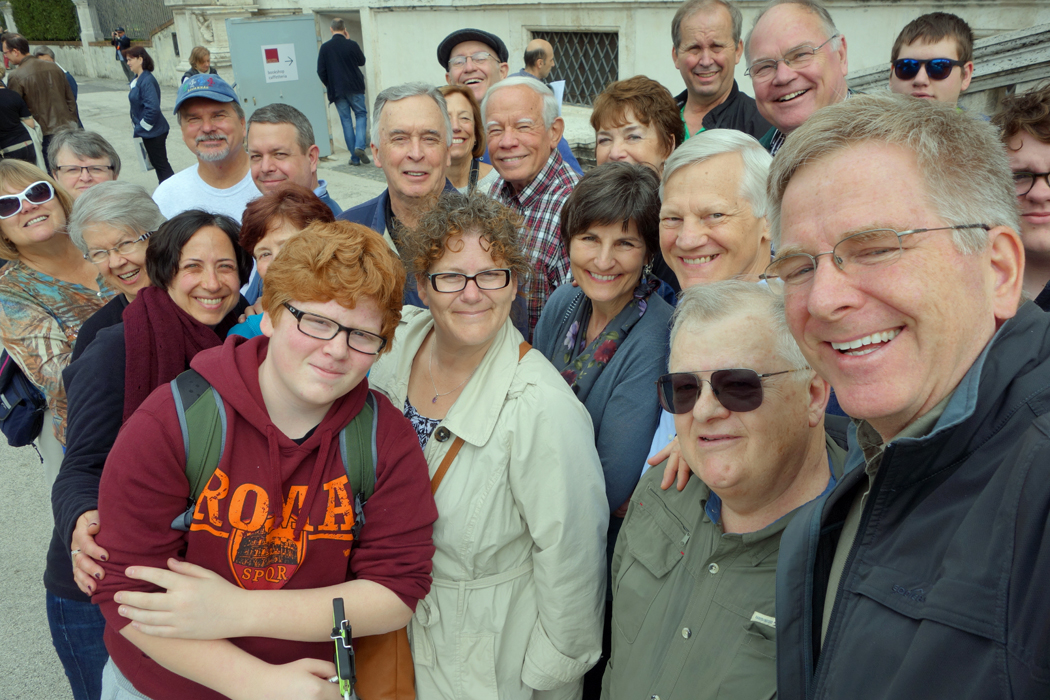
This year at Rick Steves’ Europe, we’ll be leading about 900 tour groups around Europe on 40 different itineraries. Whenever one of our groups is in town, I enjoy surprising them with a visit. When possible, I join their group for a little sightseeing. I crashed this group’s Villa Borghese tour.
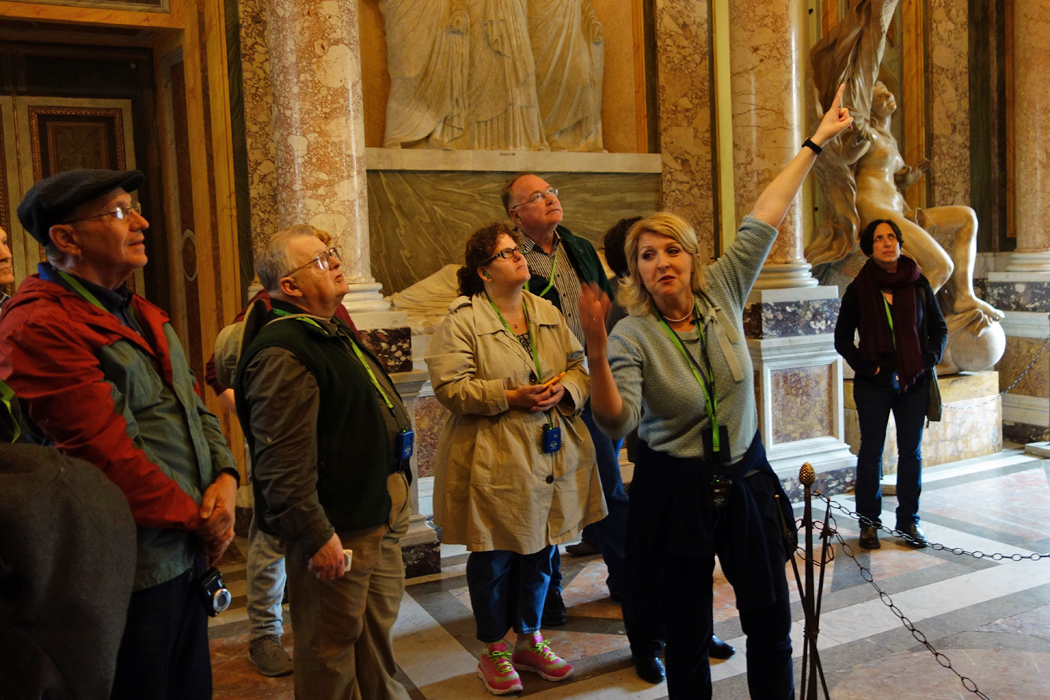
Our tour groups have great guides, who manage the tour from start to finish, and equally great local guides, who meet us at the top sights to be sure we are properly wowed. Unlike standard tour groups, we don’t just hire just the next guide on the list. Our local guides are friends, like Francesca Caruso (shown here explaining Bernini’s David), who teach history, art, and cultural insights with a skill for bringing the sights to life and giving them meaning in ways our tour members never forget.