By Rick Steves for The Seattle Times
All I was trying to do was share a little happiness from my trip on my Facebook page.
So when someone responded with, “Seems out of place with what’s happening in the news,” it made me think. And my first thought was, “Yes, like Baltimore. And Nepal. And ISIS, and climate change, and a dozen other serious issues.”
When you’re on the road, tuning into the news can be troubling and sobering. It can make a vacation seem trivial and elitist.
 But if my years rubbing shoulders with world travelers have taught me anything, it’s this: going abroad doesn’t blind you to the world’s problems; if anything, it makes you more acutely aware of them. Traveling thoughtfully, especially in challenging times, is one of the best ways to put current events in perspective. It forces you to see that victims of poverty and natural disasters — whether across the sea or across the street — aren’t just faceless statistics in a newspaper, but human beings. You can’t help but feel empathy. In my travels, I’ve stood on the steps of sacred temples in Katmandu, bowed my head, and said “Namaste” to people–perhaps some of the very same people–who are now homeless and whose temples are now rubble.
Travel also helps me better appreciate the unrest in Baltimore. The violence that shook that city should surprise no one who’s traveled in the Developing World.
I’ve seen “Baltimore” in Central America. In many Latin American countries, the gap between rich and poor is Grand Canyon-esque. Big corporations and the landed gentry call the shots. Governments have armies not to protect themselves from foreign enemies but from angry and hopeless people within their own societies. (Back in the 1980s, Costa Rica–headed by President and Nobel Peace Prize winner Oscar Arias–drew the suspicion of the USA by simply not having an army. His country had the most equal distribution of wealth in the region, and didn’t need a military force to protect its elites from its own citizens.)
Today in the USA, we too have a widening gap between rich and poor. Our friendly neighborhood cops-on-the-beat are becoming more like an occupying military force—seemingly necessary in a “democracy” where corporations are considered “citizens” and money is “free speech.”
When you’ve traveled the Third World, the violence that erupted in Baltimore should come as no surprise. It’s the symptom of hopelessness. When people feel the system is rigged and they are victims of structural poverty in a world of obscene wealth, they don’t navigate life by the rules others would expect of them. They attack symbols of authority. They burn corporate icons. They support demagogues. They believe wild promises. They join ISIS.
So when people question how I can enjoy a great vacation while horrible things are happening, I say “Sure, horrible things are happening. But what good does staying home do, especially when I find being on the road gives me a better understanding of the challenges our society will be confronting for a long time to come and help me better respond.” It’s not whether you are at home or abroad during challenging times. It’s what you are learning and what you are doing that matters.
I’ve learned in my travels that, while the day-to-day news comes and goes, some problems live on. After the cameramen go home, earthquake victims still need food and shelter. It’s made me more committed than ever to finding long-term solutions to deeper problems, whether it’s disaster relief, wealth inequality or climate change.
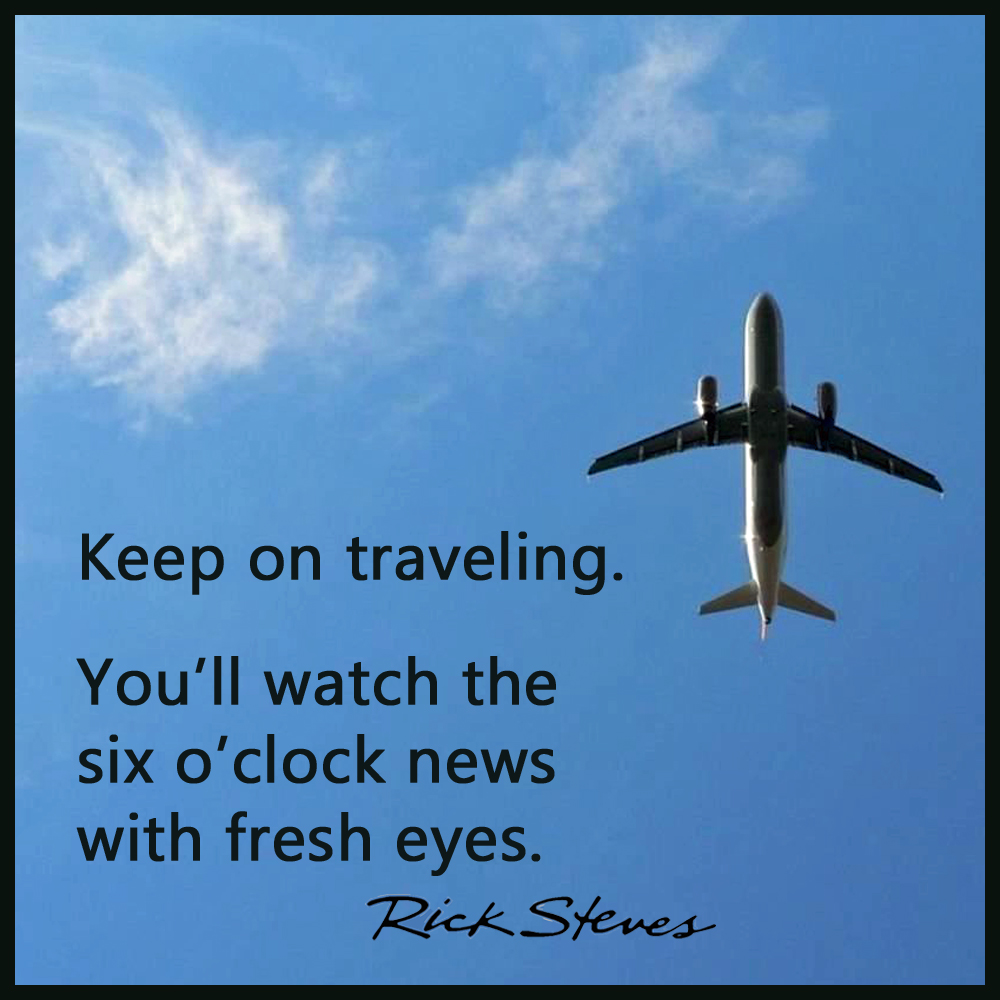
To those on the road right now or planning a trip, I say “Keep on traveling.” Stay in touch with the news if you so choose. Or wait till you come home, when — I guarantee — you’ll watch the six o’ clock news with fresh eyes. Then act with your renewed energy and global perspective. Empower those public leaders who honestly address the hopelessness that angers America’s poor. Send a donation to your favorite organization. Help mend buildings, bodies and souls in Nepal, where beautiful people are still clasping their hands gently together and saying Namaste — “I salute the divine good within you.”