Debunking Braveheart in Stirling

I’m done traveling for the year, but other members of my staff are still in the field. While I regroup from 100 days in Europe, I invited my frequent collaborator Cameron Hewitt to share some posts from his blog. Cameron has traveled about as much as me this year, updating our guidebooks in Italy and France, and turning our already strong material in Scotland into a stand-alone Rick Steves Scotland guidebook (due next spring). While Cameron and I are in perfect sync in terms of travel styles and priorities, he gives voice to the next generation of Rick Steves travelers. If you like Cameron’s insights, you can read much more on his travel blog, and you can also follow Cameron on Facebook. — Rick

Debunking Braveheart in Stirling

by Cameron Hewitt

It’s fun to tie recreational viewing to your travels. Here in Scotland, I’ve been watching everything from Highlander to Outlander. In Stirling, I re-watched Braveheart for the first time in two decades. And do you know something? It’s terrible. Mel Gibson’s much-assailed Scottish accent may very well be the most authentic thing about the film.

CH15JulStirling_028

The town of Stirling has strong ties to the real William Wallace. From Stirling Castle, you can see Abbey Craig, the knob of land where Wallace and his troops surveyed the battlefield the night before they clashed with the English. Today it’s capped with a Romantic-era monument celebrating Wallace, filled with insightful exhibits that tell the real (non-Braveheart) version of events.

CH15JulWallaceMt_013

Looking out from the Wallace Monument, you can see the almost 360-degree bend in the River Forth, including a newer stone version of the original, wooden Stirling Bridge. In the Battle of Stirling Bridge, William Wallace and his ragtag Highlander forces hid out in the forest overlooking the bottleneck bridge until the perfect moment to ambush. Thanks to the tight quarters and the element of surprise, the Highlanders won an unlikely victory.

Watching Braveheart, you get an entirely different version of events: armies lining up across an open field, with blue-faced, kilted, berserker Highlanders charging at top speed toward heavily armored English troops. The filmmakers left out the bridge entirely, calling it simply “The Battle of Stirling.” Oh, and the blue facepaint? Never happened. A millennium before William Wallace, the ancient Romans did encounter fierce fighters in Caledonia (today’s Scotland) who painted their faces (the Picts). But painting faces in 1297 would be a bit like WWII soldiers suiting up in chain mail.
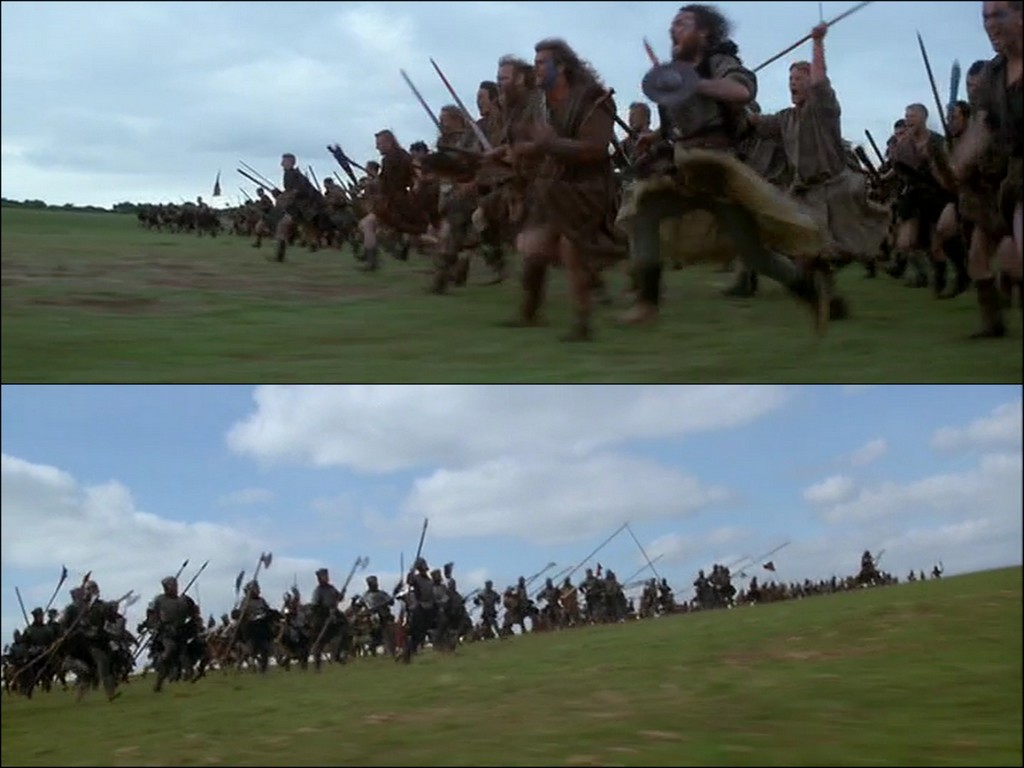
Braveheart Stirling Battle

Braveheart takes many other liberties with history. William Wallace did not vengefully kill Andrew de Moray for deserting him at Falkirk (Moray fought valiantly by Wallace’s side at Stirling, and died from battle wounds). Robert the Bruce did not betray Wallace to the English. And William Wallace most certainly did not impregnate King Edward II’s French bride…who was 10 years old, not yet married to Edward, and still living in France at the time of Wallace’s death. (Entire websites are dedicated to outlining the many other inaccuracies in the film.)

Also, the modern notion of national “Freee-dooooom!” was essentially unknown during the divine-right Middle Ages. Wallace wasn’t fighting for “democracy” or “liberty”; he simply wanted to trade one authoritarian, aristocratic ruler (from London) for another authoritarian, aristocratic ruler (from Scotland).

Even the film’s title is a falsehood: No Scottish person ever referred to Wallace as “Braveheart,” which was actually the nickname of one of the film’s villains, Robert the Bruce. After his death, Robert’s heart was taken (in a small casket) on a crusade to the Holy Land by his friend Sir James Douglas. During one battle, Douglas threw the heart into an oncoming army and shouted, “Lead on, brave heart, I will follow thee!” Apparently, Mel Gibson must have heard this story and appropriated it. It’s a bit like if Stephen Spielberg, when making the film Lincoln, said, “I know that nobody actually called Abraham Lincoln ‘Old Hickory.’ But it sure has a nice ring to it…”

Gibson Freeeedoooom.png
“They can take our land, but they will never take…my Oscars!”

The Scottish people I talked to have mixed feelings about Braveheart. They appreciate the boost it gave to their underdog nation’s profile on the world stage — and to its tourist industry — juuuust enough that they’re willing to look the other way when it comes to the liberties the film takes.

I’m not saying to skip Braveheart, or other fact-based fictional movies. I’m just saying don’t assume that you really understand the history just because you’ve watched Mel Gibson’s Hollywood version of it. For an armchair historian, one of the joys of travel is going to places like Stirling and getting the real story.
The Soggy, Sunny Highland Games of Taynuilt

I’m done traveling for the year, but other members of my staff are still in the field. While I regroup from 100 days in Europe, I invited my frequent collaborator Cameron Hewitt to share some posts from his blog. Cameron has traveled about as much as me this year, updating our guidebooks in Italy and France, and turning our already strong material in Scotland into a stand-alone Rick Steves Scotland guidebook (due next spring). While Cameron and I are in perfect sync in terms of travel styles and priorities, he gives voice to the next generation of Rick Steves travelers. If you like Cameron’s insights, you can read much more on his travel blog, and you can also follow Cameron on Facebook. — Rick

The Soggy, Sunny Highland Games of Taynuilt

by Cameron Hewitt

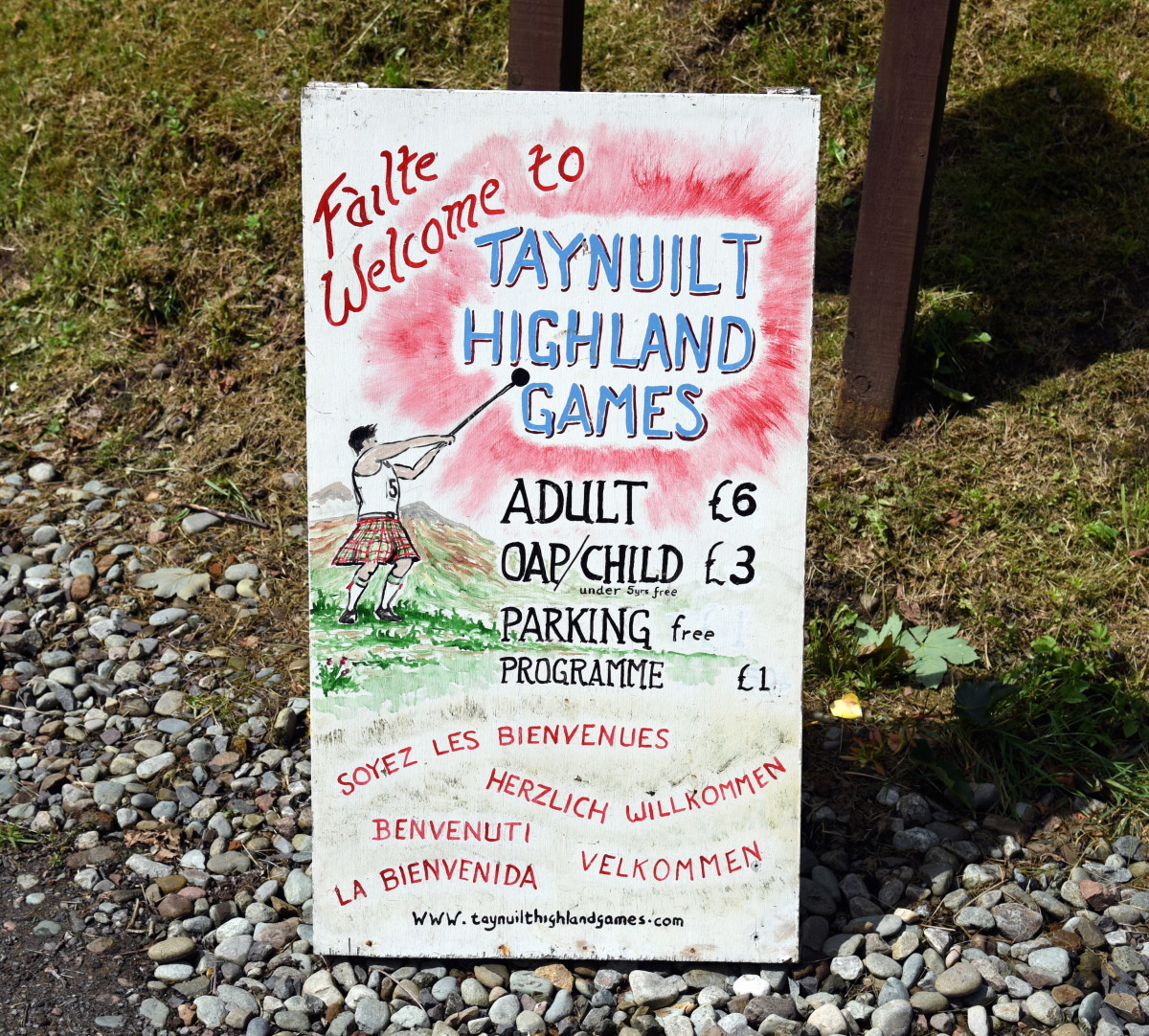
Pulling off of the humble main street in the Scottish village of Taynuilt, I feel my tires shimmy on the saturated turf. I follow muddy ruts to where a waterlogged attendant stands in front of a little green shack.

“Is this the parking for the Highland games?” I ask. “Yes,” she says, peering out a narrow slit formed by her rain hood. “Six pounds, please.”

Games Sign

Taynuilt may have picked the wrong date for its annual celebration of Highland culture. Even though it’s July, bone-chilling gusts of North Atlantic air swirl mist across the vibrant-green playing field. I park my car, bundle up, and feel my feet squish through the wet sponge of a lawn — wringing out peaty brown water with each step. I’m considering bailing out and returning to the warmth of my B&B lounge.

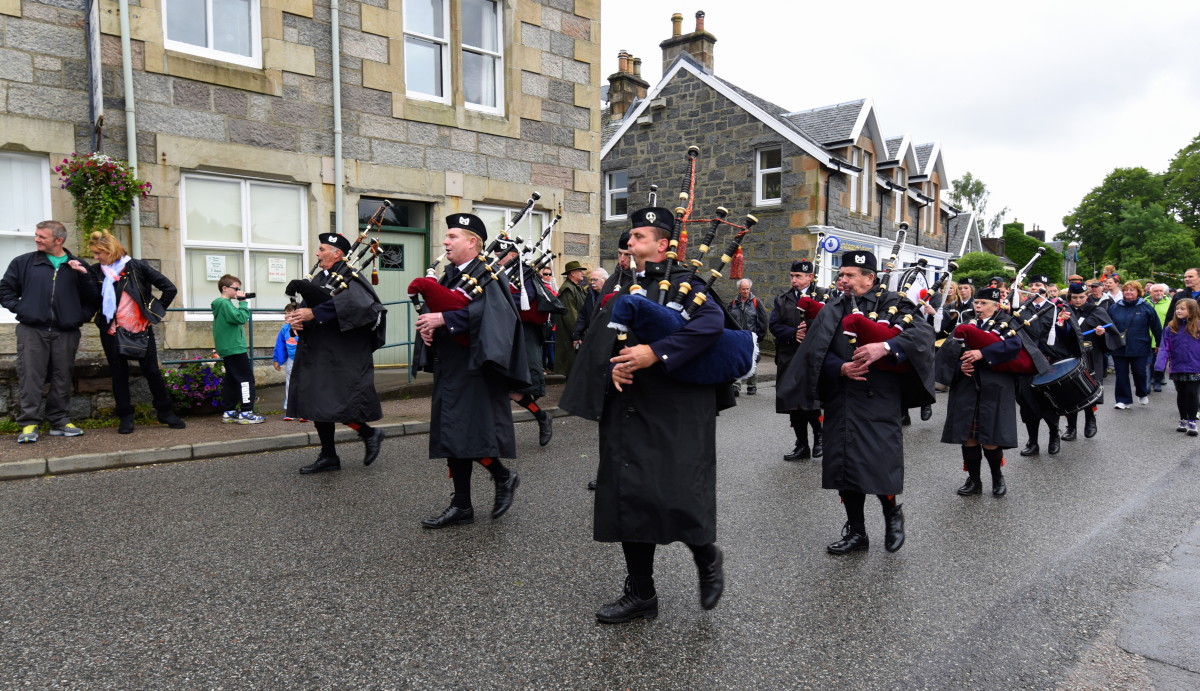
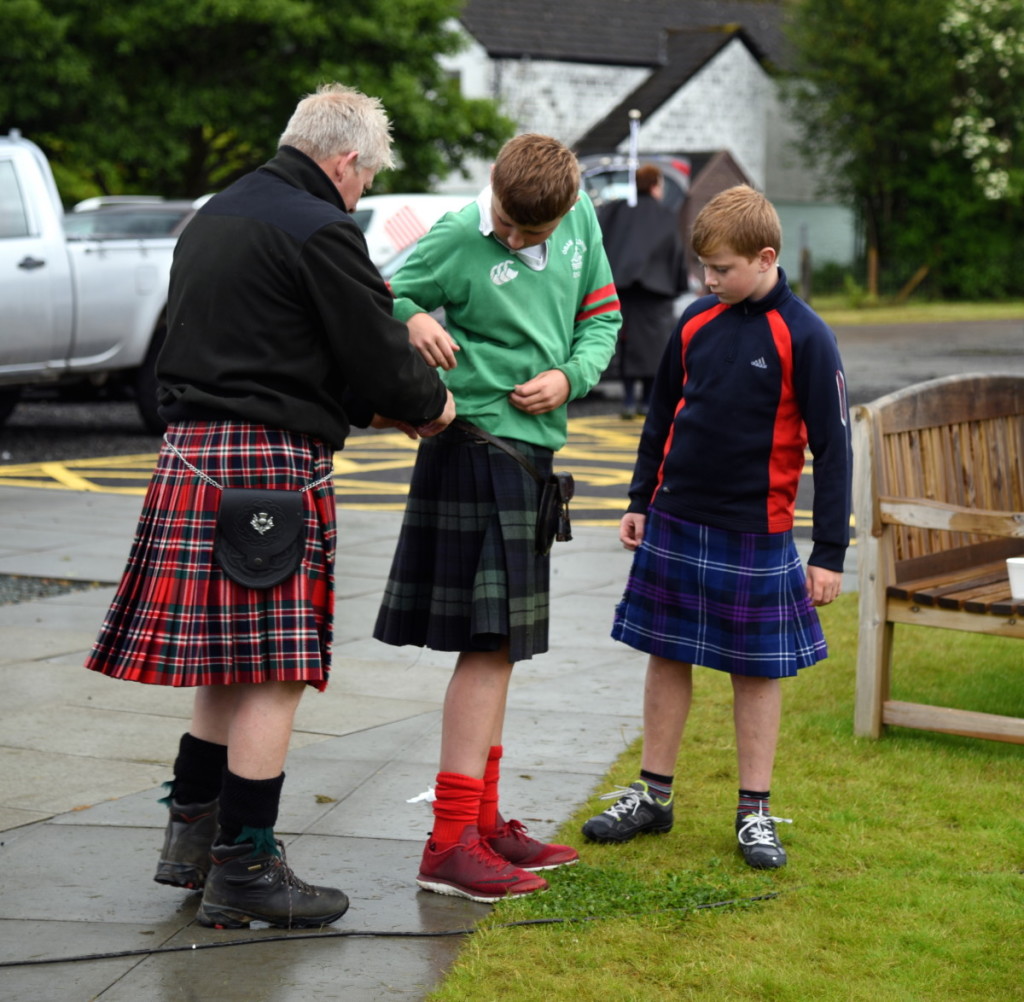
But then a delightful scene unfolds before me: Rural Scotland is putting on their show, rain or shine. Everyone’s wearing their Wellies (rain boots). A traditionally clad family piles out of their minivan, and dad helps his young sons adjust their kilts. And then bagpipes begin droning from every corner of the field: The pipe band is tuning up.

Kilt Adjustment

The loudspeakers crackle to life, and a lilting Scottish accent cuts through the foggy air. “If you’d like to join the pipe band in their parade through the village, you can follow them on up to the Taynuilt Hotel in a few minutes.” She proceeds to list off the day’s events. And she explains the rain plan: There is none (except for the Highland dancing, which has been moved into the village hall).

Noticing the pipe band — about eight bagpipers and a half-dozen drummers — starting up the village’s lone street, I decide to tag along. I ask the bass drummer where they’re from. “Strathearn, in Perthshire. We came a long way for this. And according to the weather map, it’s the only part of the country in rain.”

Passing the village hall, I peel off from the pipers to peek inside. Fiercely focused lassies, done up in their finest Highland finery, are dancing their hearts out. They’re hoping the weather will improve as the day goes on, so they can head outside.

Clan Chief

I catch up with the pipers and drummers, who stand huddled in the alley next to the town’s lone hotel/restaurant. They’re getting in one more round of practice before the big show. A crowd of about thirty people gathers across the street, waiting patiently. Finally the clan chieftain shows up with this family. Shivering in their kilts, they line up in front of the pipe band.

And suddenly, it’s time to begin. The band springs to life, and the ragtag parade marches proudly through the village to the playfield. Ponchoed pipers and drummers play their hearts out, filling the damp air with the drone, whine, and peal of bagpipes. They’re trailed by villagers — and a few visitors from around the world — scurrying around them to snap photos.

Piper Parade

By the time we arrive back at the park, it’s a different scene. While still cloudy, the worst of the rain has passed, and — like ginger-haired earthworms — the villagers have tentatively emerged to scope out the scene. The clan chieftain’s family and pipe band take a lap around the field before announcing the Taynuilt Highland Games of 2015 officially open.

Piper Lap 2

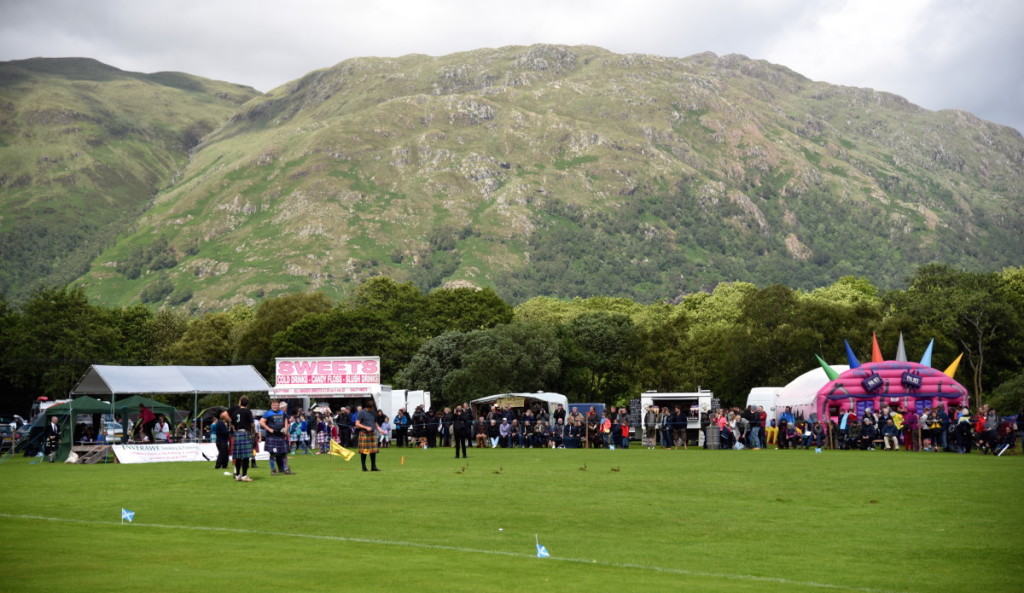
Scottish Highland games are like a track meet and a county fair rolled into one. The infield hosts the kilted, macho feats of strength. Ringing that is a running track for the footraces. And surrounding the whole scene are junk food stands, a few test-your-skill carnival games, and fundraising local charities selling hamburgers, fried sausage sandwiches, baked goods, and bottles of beer and Irn-Bru.

Games grounds

In the center of the field, eight brawny athletes assemble for the feats of Highland strength. They’re all wearing kilts, with track pants underneath and hoodies over top to protect against the howling wind.

The emcee, who has a marvelously dry wit and seems to revel in how folksy it all is, introduces the competitors. “Gary’s wife tells me he’s the most handsome man in Scotland. That’s her over there watching Gary adoringly from the sideline… Stuart is our youngest participant, at just 16 years old. He just started a new job this week, and already he’s getting high marks. They say he can lift anything.” (We have a word for guys like Stuart back in the States: linebacker.)

The events are all variations on the same concept: hurling objects of awkward shape and size as far as possible.

Weight Toss

Things kick off with the weight throw, where the stocky competitors spin like ballerinas before releasing a 28- or 56-pound ball on a chain into the sky. The weight quickly changes course, plummeting decisively to embed itself deep in the wet earth. The hammer throw involves a similar technique with a 26-pound ball on a long stick.

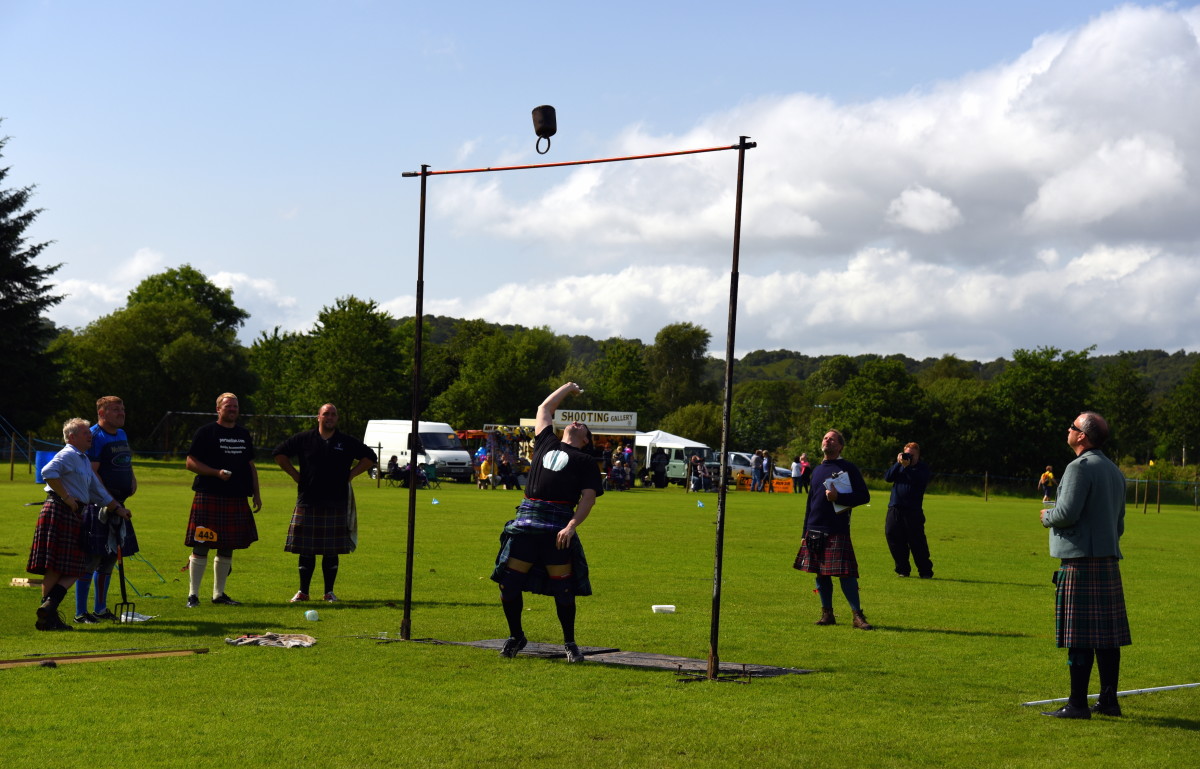
Weight over bar

In the “weight over the bar” event, the Highlanders swing a 56-pound weight over a horizontal bar that begins at 10 feet high, and ends at closer to 12 feet. As our emcee keeps reminding us, “That’s like tossing a five-year-old child over a double-decker bus.”

Caber Toss

And, of course, there’s the caber toss: Pick up a giant log, take a running start, and release it in an end-over-end motion with enough force to (ideally) make the caber flip all the way over and land at the 12 o’clock position. (On this day, most of the athletes wind up closer to 6. I doubt I could lift the thing to begin with.)

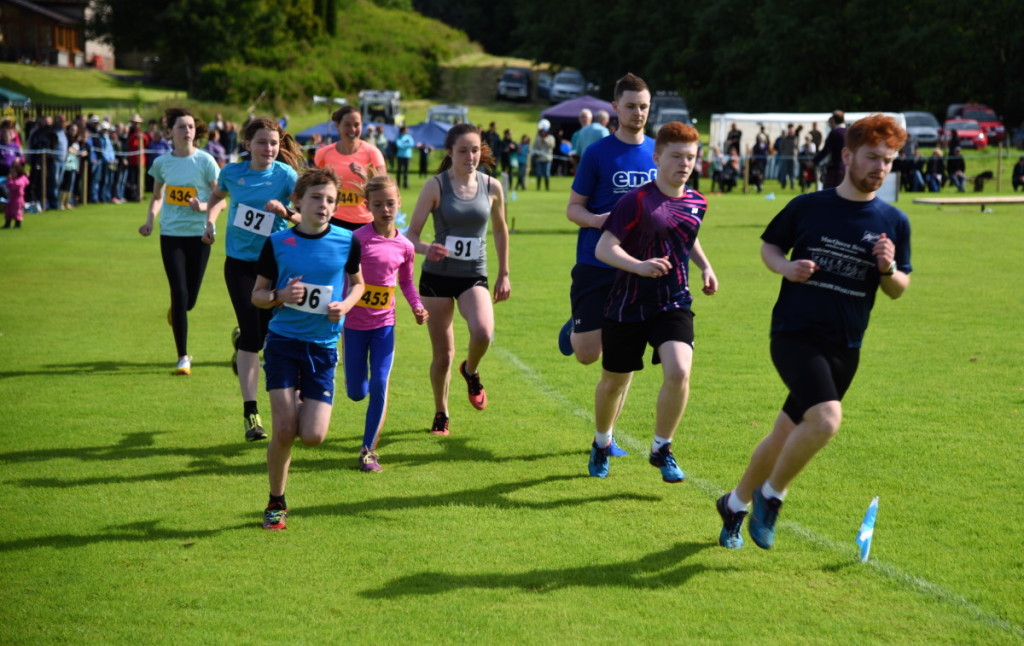
Meanwhile, the track events are running circles around the musclemen: the 100-yard dash, the 1,500 meters, and so on. Trying to fabricate an exciting narrative out of the tiny turnout for the women’s 400-meter, our emcee dramatically intones, “Currently there are only two runners in this race. They are sisters. And they are competitors.”
Footraces

The most impressive event is the hill race, which combines a 1,000-foot mountain ascent with a six-mile footrace. The hill racers begin with a lap in the stadium before disappearing for about an hour. After several minutes, you can begin to faintly see their colorful jerseys bobbing up and down a distant peak. By the time they start trickling back into the stadium, they’ve been gone long enough that even the emcee seems to have forgotten about them.

Finally the sun emerges. People shed their Gore-tex and bask in the hard-earned rays. At one end of the field, the Highland dancers have escaped from the village hall and are dancing on a covered stage. While one set of little girls carefully toe their routines for the judges, others practice on the sidelines. The youngest lassies, with less control over their swinging limbs, work hard but lack grace. But the older dancers are graceful and poised.

Dancers 2

At one point, crossed swords are set on the stage for the performers to delicately dance over. As an indication that the feats of strength may be more my cup of tea, I keep waiting for the dancers to pick up the swords and start fencing. (They never do.)

By the day’s end, the brief breaks of sun have turned into steady sunshine. Cotton-candy clouds echo the candy floss that kids gobble as they watch the final few events, including the village-wide tug-of-war. A good time is had by all…rain or no rain.

Heading back to my car, I realize this may have been the most satisfying, most culturally enlightening, most affordable, and least touristy experience I’ve had in Scotland so far. Taynuilt puts on a great Highland games. But so do dozens of other villages. If you’re heading to Scotland in the summertime, be sure to check the schedule and, if you can, fit one into your itinerary.

It’s Market Day in Sarlat

I’m done traveling for the year, but other members of my staff are still in the field. While I regroup from 100 days in Europe, I invited my frequent collaborator Cameron Hewitt to share some posts from his blog. Cameron has traveled about as much as me this year, updating our guidebooks in Italy and France, and turning our already strong material in Scotland into a stand-alone Rick Steves Scotland guidebook (due next spring). While Cameron and I are in perfect sync in terms of travel styles and priorities, he gives voice to the next generation of Rick Steves travelers. If you like Cameron’s insights, you can read much more on his travel blog, and you can also follow Cameron on Facebook. — Rick

It’s Market Day in Sarlat

by Cameron Hewitt

Twice a week, the normally traffic-free lanes of Sarlat are clogged with a human traffic jam of shoppers. Wednesday and Saturday are the town’s market days. And in all my travels, I’ve rarely seen a market better than Sarlat’s.

Sarlat Market OV1

As the day dawns, Sarlat’s sun-baked streets are jammed with tables, each one a cornucopia overflowing with Dordogne Valley products. Strolling the cobbles, I survey the array. Produce is delicately arranged on a rickety wooden table — little more than a rough plank resting on sawhorses, piled high with lettuce, artichokes, leeks, potatoes, garlic, onions, carrots, tomatoes, eggplant, cucumbers, and radishes.

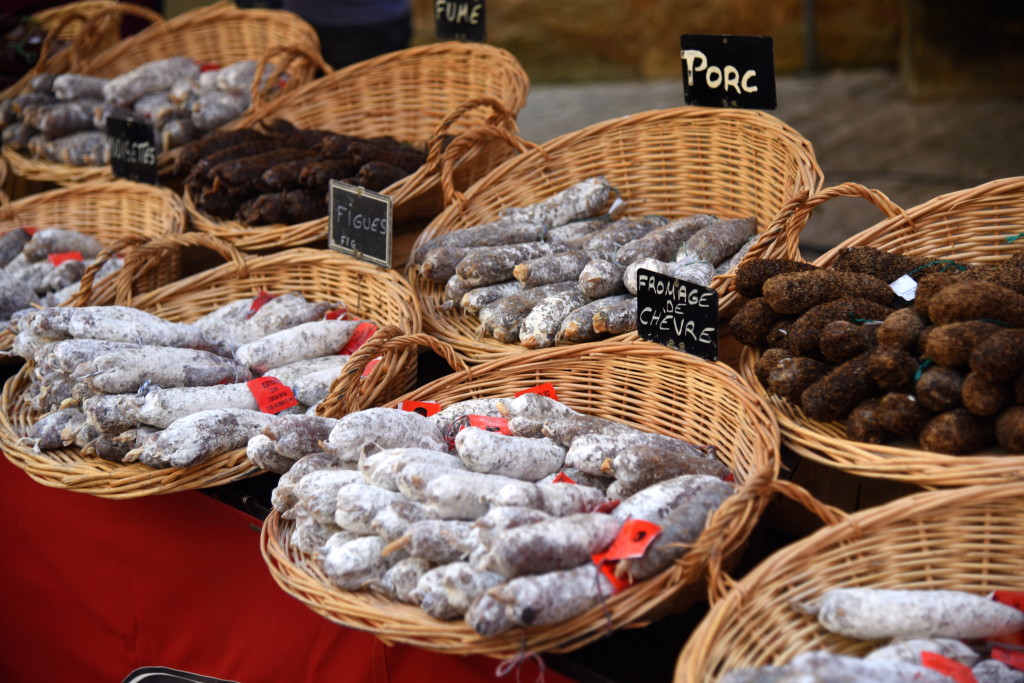
Plunging deeper, I’m immersed in a vibrant world of sights, smells, and sounds. Baskets neatly filled with oddly shaped sausages. Mountains of olives. Carefully sealed bags of dried mushrooms. Loaves of rustic breads. Refrigerated trucks displaying meats, fish, and tiny wheels and pyramids of goat cheese. A vivid festival of flowers. Tree stump-sized wheels of mountain cheese. Kitchen tools, from newfangled walnut crackers to a huckster demonstrating the sharpness of his kitchen knives. Snail shells already pre-filled with garlicky-green butter, ready for escargot. Mammoth hunks of nougat the size of car tires. Tidy rows of jams, jellies, preserves, and walnut oil. A young, dreadlocked farmer selling more different types of onions than I realized even existed. Bowls of colorful, intensely flavored tapenades. Giant slabs of fruitcakes — nut, orange, fig — waiting to be sliced up and sold by the weight. A rainbow of colorful little beanies used to cover your fruit or bread basket. And, of course, cans of artisanal foie gras and other duck and goose products.

Sarlat Olives 1

Sarlat Sausages

Sarlat Cheese

CH15MaySarlat_130

Sarlat Covers

The longest line is at the strawberry stand — a good sign. You smell the strawberries before you see them. I try to stake my claim in the queue, but quickly learn that no-nonsense French grannies are shameless about butting in line. Elbows up! I trudge patiently to the front and am given a choice: charlotte or gariguette? I splurge on the pricier, rounder, more pungent charlotte style, at €3.50 a basket, instead of the cheaper, torpedo-shaped gariguette style, at €2.50.

It’s a good thing I got my shopping in early. Shortly after the noon bell tolls, everyone starts packing up. Shoppers disperse — instantly filling up the town’s many al fresco café tables — while merchants crate up unsold goods for tomorrow’s market in Domme. They’ll all be back in Sarlat on Saturday — just like they have been, twice a week, for decades. By then, I’ll be in Normandy, halfway across the country. But I’ll still be tasting those strawberries.

Cool, Cool, Collioure: Vive La France!

I’m done traveling for the year, but other members of my staff are still in the field. While I regroup from 100 days in Europe, I invited my frequent collaborator Cameron Hewitt to share some posts from his blog. Cameron has traveled about as much as me this year, updating our guidebooks in Italy and France, and turning our already strong material in Scotland into a stand-alone Rick Steves Scotland guidebook (due next spring). While Cameron and I are in perfect sync in terms of travel styles and priorities, he gives voice to the next generation of Rick Steves travelers. If you like Cameron’s insights, you can read much more on his travel blog, and you can also follow Cameron on Facebook. — Rick

Cool, Cool, Collioure: Vive La France!

by Cameron Hewitt

I specialize in Eastern Europe, but for a change of pace this year, I’m swapping research chores with the co-author of our Rick Steves’ France guidebook, Steve Smith. (Rick was recently singing Steve’s praises on his blog…and deservedly so. Steve’s France book is the best in print, hands down.) Steve is picking up a couple of weeks updating Croatia for me, and I’m covering some of his territory in France: Languedoc-Roussillon, the Dordogne, and Normandy. It’s a fun switcheroo.

To begin my France swing, I had to get from Milan to Collioure, on France’s Mediterranean coast. Planning my itinerary a few months back, I came up with what now seems like a foolishly Rube Goldberg route between two points: Wake up early in Milan. Subway to the train station. Train to the airport. Fly to Barcelona. Commuter train to the main train station. High-speed TGV to the first French town over the border, Perpignan. Taxi to yet another airport to pick up my rental car. And finally, drive that last 40 minutes to my hotel. Amazingly, everything came off just right. Phew!

At the end of that long day, my reward is the postcard-perfect town of Collioure. After so many years of traveling around Europe, I start to think that I’ve seen it all. But then I pop into a place like Collioure and realize that there’s much more of Europe that I haven’t seen than what I have.

Collioure is a largely undiscovered gem of a resort town just a 45-minute drive from the Spanish border. (From there, it’s just another couple of hours — past trippy Salvador Dalí sights and world-famous Costa Brava restaurants — to Barcelona.) Collioure is the perfect size for being on holiday. It has five beaches, each with its own distinct personality (from party/pebbly to sandy/serene). And its town center, with atmospheric restaurant-lined pedestrian lanes, is an utter delight. It’s settled: I need to come back here on vacation.

It’s overcast today — the Friday afternoon of a long holiday weekend — so the cafés are full and the beaches are empty. But people are in high spirits, enjoying being on a mini-vacation, perfectly content to lick ice-cream cones and socialize rather than sunbathe and swim. They’ve read tomorrow’s perfect weather forecast…and they’re willing to be patient.

Collioure is one of those South of France towns that’s famous for its light, which draws great artists like moths. Shutterbugs love it, too. I pull out my camera and enjoy a photo safari.

Collioure Crayola

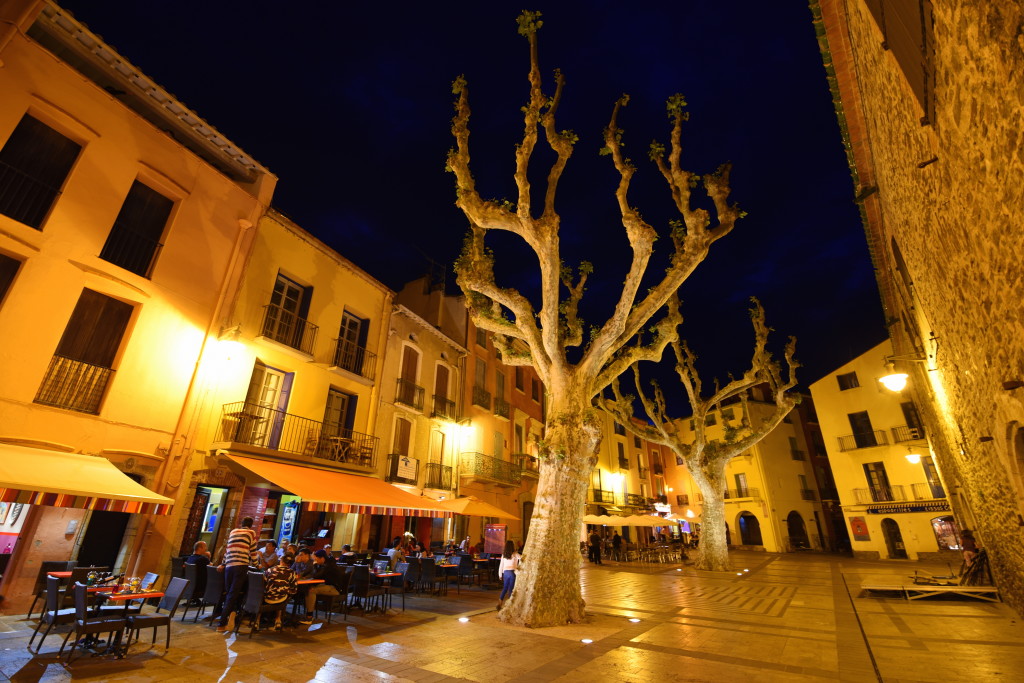
Turning a corner, suddenly I’m in an almost fantastical square. Two scrawny but determined plane trees — their leaves still just coming in — yawn and stretch their knobby limbs over inviting café tables. Behind them is a Crayola box of houses, each more vivid than the last. In that instant, I know that, for the rest of my time here, I’ll fabricate excuses to circle back through this square as often as possible.

Collioure Church

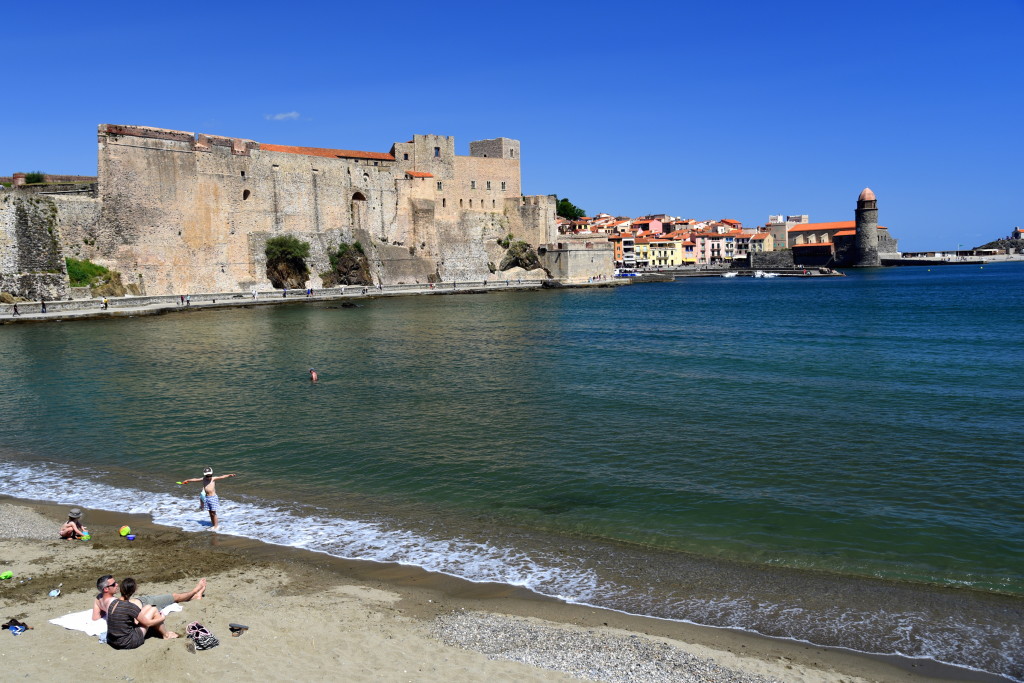
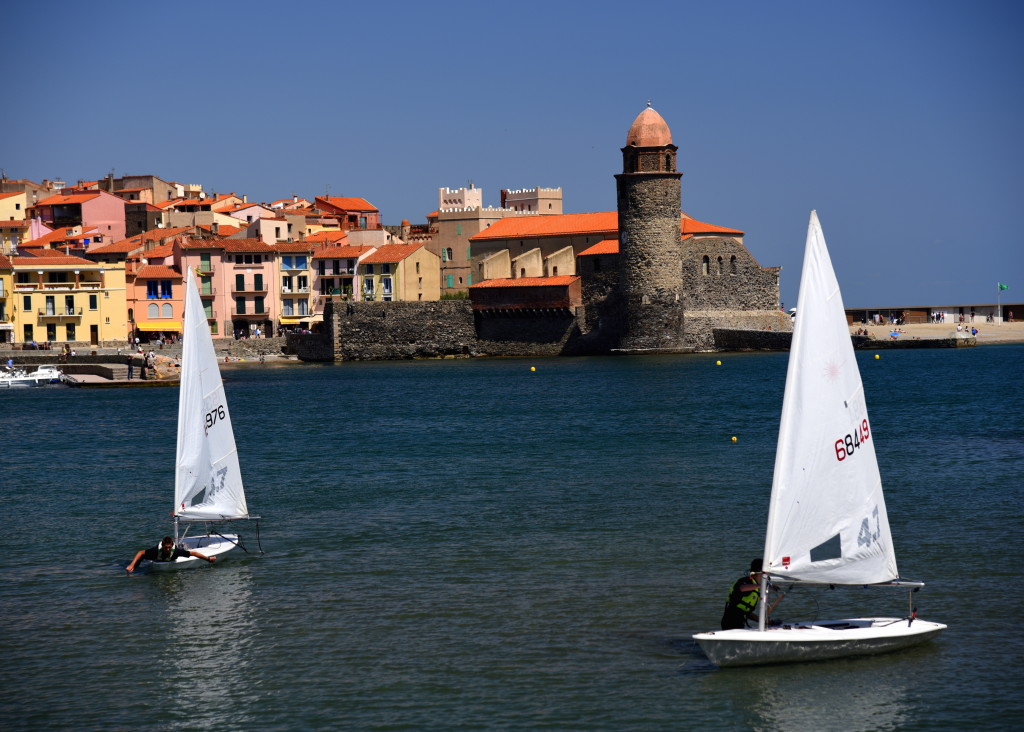
Continuing past Collioure’s perfect place, I approach its formidable church. The bell tower isn’t a bell tower: It’s a fortified lighthouse, providing direction to passing vessels even as it reminds would-be invaders that this town is no pushover. (The town’s stern and sprawling château — just across the beach — completes this thought.)

Finally I reach the pebbly beach, protected by a long, beefy jetty. I pause at the beach bar, whose owner is very proud of his homemade sangria. I’m intrigued by the daily special — fresh-caught turbot — and wind up returning later for dinner. As I eat my first-ever turbot (a flat, muddy-colored bottom feeder with a crumbly, almost rubbery flesh made flavorful with abundant herbs), the setting sun finally breaks through the clouds and washes the far side of the harbor in a rich, golden light — promising a sunnier day ahead. Strolling back to my hotel, I linger at the illuminated church and at my favorite square.

Collioure Sunset

Collioure Night

Sure enough, the next day I awake to brilliant sunshine and bright blue skies. My research chores take me all the way around the harbor, and I’m glad they do, because it forces me to walk past two more fine beaches.

Collioure Beach

Collioure Sailboats

At the biggest beach — whose curve is defined by the stout fortress — chest-deep novices struggle to board their mini-sailboats. Nearby, a topless sunbather catches some rays, while a nubile teenage couple makes out, just steps from where kids build sandcastles. Vive la France!

Stick with me for the next couple of weeks, as I explore France’s Languedoc-Roussillon, Dordogne, and Normandy regions. There’s a lot to see, a lot to experience…and a lot to eat. Allons-y!

On My Last Nerve at The Last Supper

I’m done traveling for the year, but other members of my staff are still in the field. While I regroup from 100 days in Europe, I invited my frequent collaborator Cameron Hewitt to share some posts from his blog. Cameron has traveled about as much as me this year, updating our guidebooks in Italy and France, and turning our already strong material in Scotland into a stand-alone Rick Steves Scotland guidebook (due next spring). While Cameron and I are in perfect sync in terms of travel styles and priorities, he gives voice to the next generation of Rick Steves travelers. If you like Cameron’s insights, you can read much more on his travel blog, and you can also follow Cameron on Facebook. — Rick

On My Last Nerve at The Last Supper

by Cameron Hewitt

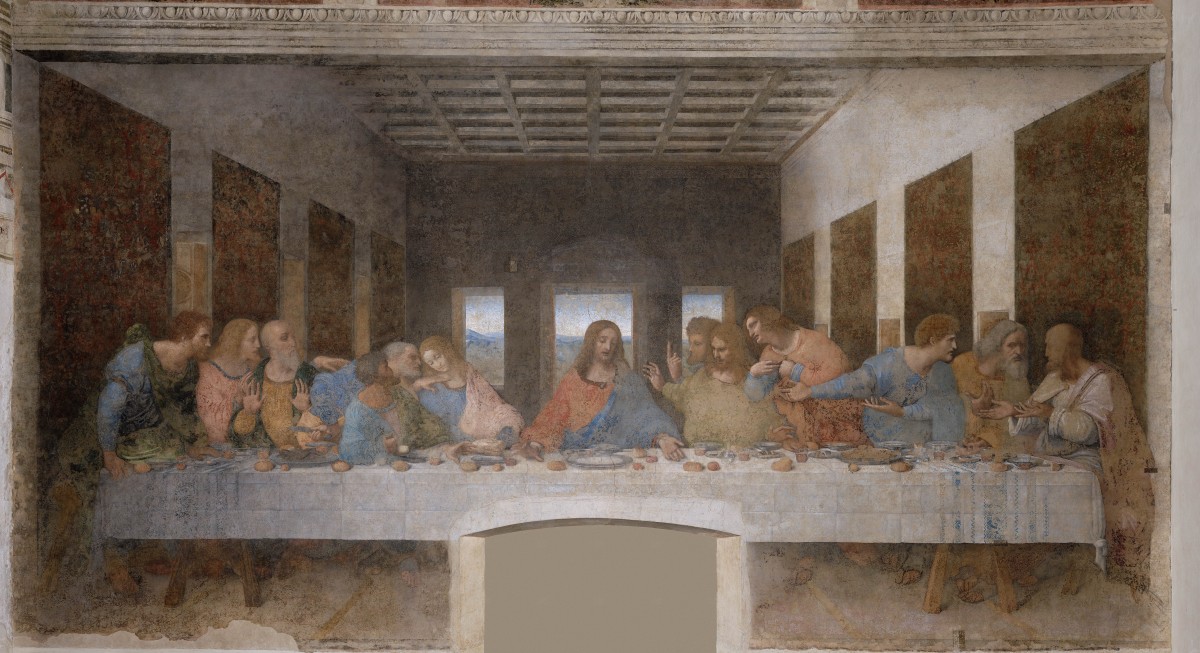
Last Supper

Sometimes, guidebook research doesn’t feel like work at all. A sunny day spent tooling around Lake Como, touring sumptuous villas and sprawling gardens? That’s not work.

But on one particular day in Milan, I really had to work. I packed about three days of sightseeing into one very busy day. It was interesting, and fun at times, but exhausting. Especially this exchange.

I walked into the ticket office for Leonardo da Vinci’s Last Supper. Spaces are severely limited, and reservations are mandatory — and book up weeks in advance. We devote nearly an entire page in our guidebook to explaining this system, and I needed to confirm everything with the woman at the information desk. She greeted me with a permanent snarl, close-cropped, died-blonde hair, and steely, cruel eyes. Before I opened my mouth, she didn’t like me. (I don’t take it personally. She doesn’t like anyone.) After I explained I was updating a book, she allowed me to continue talking, which is probably her version of tacit approval. Here are some highlights of our actual conversation. (I am not making this up.)

“So, we explain here in our guidebook that you need a reservation.”

“Yes, that’s correct. You can call or go on our website.”

“And we say that you can make a reservation three months ahead.”

“On our website, you can reserve three months ahead. At our call center, you can reserve, maybe, ten days ahead.”

“So tickets are available online three months before, but by phone only ten days before?”

“Well, you can get tickets anytime you want.”

“Yes, but if someone wants to book very early, they can try three months before?”

“On our website.”

“Not by calling?”

“No! Of course they can get a ticket by calling. Ten days before.”

“So by phone, tickets are only available ten days before?”

“It depends.”

“Well, we say here you can start trying to get a ticket three months before. More or less. Is that about right?”

“Yes.”

“Online and by telephone?”

“Yes.”

Phew. “OK, so we also explain that if you don’t have a reservation and really want to see The Last Supper, you can try to come on the same day to see if there are any cancellations.”

“No! Not possible.”

“Oh, so you…”

“Reservations are mandatory!” [Holds up sign that says “Reservations are mandatory”]

“Yes, I understand that. What I’m saying is, let’s say someone did not make a reservation. And now they are in Milan and they really want to see The Last Supper. We say that sometimes there may be a few cancellations…”

“No! You must reserve.” [Eyeing me suspiciously] “Huh. Do you write in your book that you don’t need a reservation?”

“Oh, no, we do explain that very carefully!” [Showing her several paragraphs in the book explaining that reservations are mandatory]

“But you write in your book that you do not need a reservation!”

“No, we don’t say that. We say that in case you do not have one, sometimes it’s possible…”

“It’s never possible!” [She’s really starting to blow up now] “People come here, all day, and complain to me because they do not have a reservation! And you are telling them to do this in your book!”

“But I…no, wait, look. It’s the opposite. You see, I’m trying to help people understand how this works. I want to make it very clear so people are not disappointed.”

“Huh.”

“So if you can help me now for five minutes, I can try to make sure it’s very clear in our book, so those people won’t bother you anymore — so they will understand how it works.”

“I don’t care!”

“You don’t care? You mean you don’t care if people are disappointed?”

“No! I don’t care. People come here all day and are disappointed anyway, so what does it matter what you say in your book?”

“Yes, but I’m trying to reduce the number of…” [I decide to give up on that point] “OK, sorry, I’m almost done. I just want to confirm that it is not possible to buy tickets on the same day.”

“No, it’s impossible!”

“So you never have any cancellations and tickets that are available last minute?”

“No! Well, maybe one or two tickets each day. But almost none! It’s very difficult. You must take this out of your book!”

“OK, I’ll take that out, if you say it’s not possible.”

“Yes, not possible.” [grumbling to herself] “I don’t know why you tell people in your book they don’t need a reservation…”

“OK, well, thanks for your help. By the way, I know this is very unlikely, but do you maybe have any tickets available for today?”

“You want one ticket?”

“Yes.”

[Checks computer] “OK, we have a reservation available for 5:15.”

By the way, The Last Supper was magnificent…well worth the painful conversation.