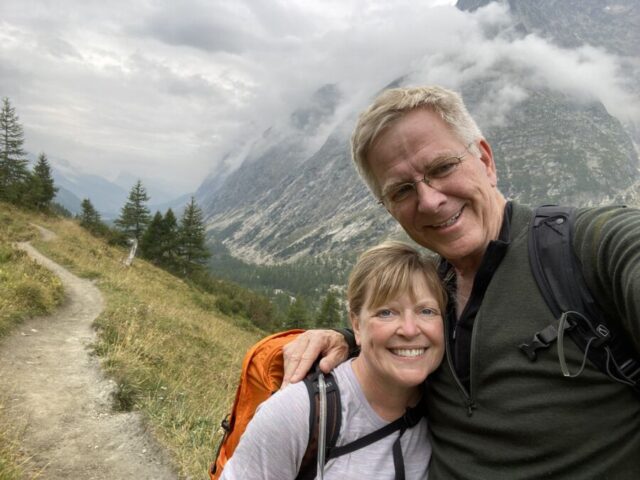
The Tour du Mont Blanc: Some Tips I Learned Along the Way


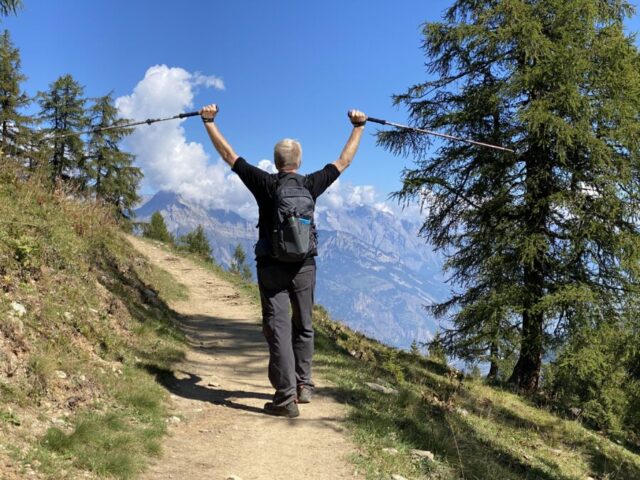
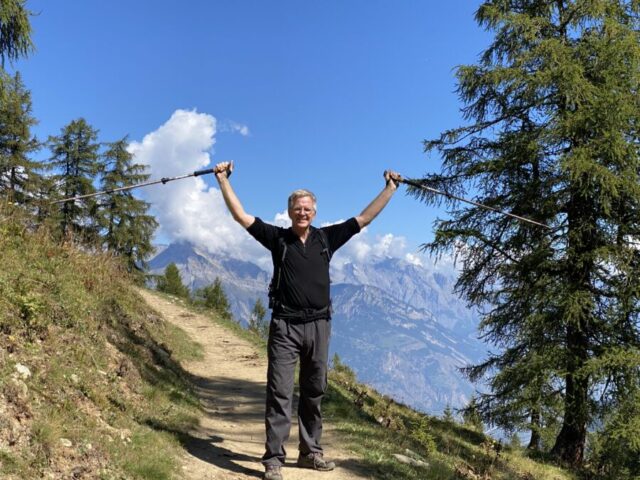
At 66, I felt a bit like the father of the hiking community when I hiked around Mont Blanc earlier this fall. But the Tour du Mont Blanc is doable for any reasonably fit hiker, and there were plenty of people on the trail who were older than me.

For total novices like Shelley and me, it’s wise to be proactive about health and safety. Here are some tips I learned along the way:

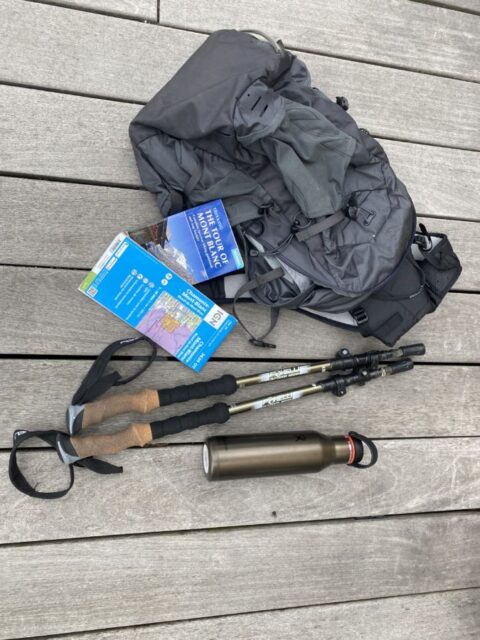
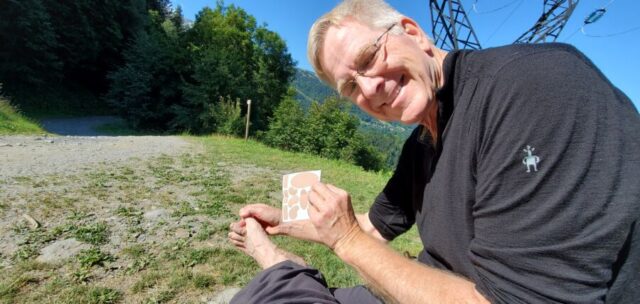
Good boots, liner socks, slippery powder, and moleskin for tender skin are essential. We kind of became gear geeks — investing in good day bags (Osprey), woolen clothes (socks, underwear, shirts), and great hiking shoes. I was never so thankful for a wool cap in Europe.


I was skeptical about a lot of “good ideas,” but two things I eventually appreciated were a daily baggie of trail mix and my metal water bottle. (I complained about its steep $40 price tag…but soon came to recognize it was a great value).


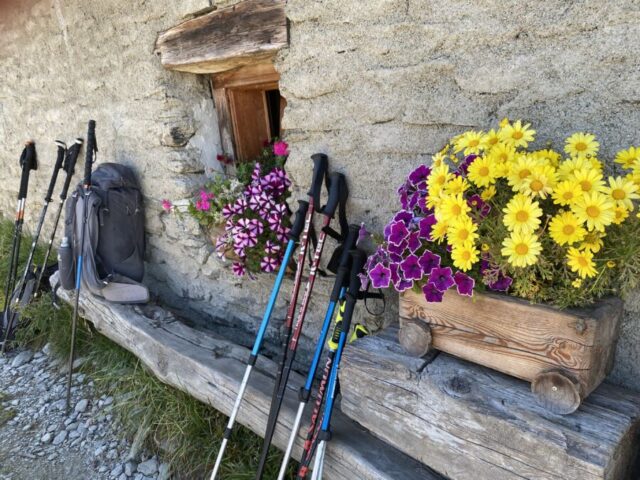
I must say, if the weather turned bad and it rained hard, I think much of the trail would become no fun at all. In fact, it would be dangerous. Hiking poles are essential, and even in perfect weather, I would have been worried about a stumble without my own trusty set.

Eat a solid breakfast. The one day we had breakfast with no protein, climbing was tougher.

Put on sunscreen, even if the weather’s bad.

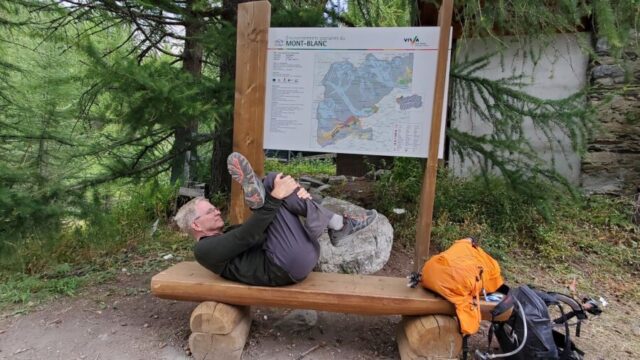
After learning my lesson on other long hikes, I decided to be religious about stretching on the Tour du Mont Blanc from the start. I had a routine of six stretches and spent time throughout the day making sure I didn’t tighten up. Very important!


Don’t be a hero. If skin is getting hot, wrap it up. I did the entire TMB hike without a blister — and then just got one on purpose in the last two hours.


Good gear, smart and proactive ways to stay healthy, stretching, and taking it easy… it all worked just great.

I’ll be sharing more photos, stories, and tips from Mont Blanc on the Nov. 29 edition of Monday Night Travel. Want to come along? Register now for this fun — and free! — event.

The Mont Blanc Esprit de Corps


Hiking Europe’s Tour du Mont Blanc was a totally different slice of European culture for me: Coming upon a remote farmhouse-turned-thriving-cafe serving wonderful lunches…flowers and cows (with classic bells) scenically sprinkled throughout…and an esprit de corps where everyone is like family.


Our trail went through three countries — France, Italy, and Switzerland — before returning to our starting point in France. This cow is totally Swiss.
One of the delights of the TMB is coming upon an old farmhouse on a mountain alp (or pasture) that, these days, is a thriving little restaurant for hungry and thirsty hikers. Prices are reasonable, service is friendly, the food is great, and the vibe is one of joy.

As nearly everyone hikes in the same direction (counter-clockwise), you become friends with fellow hikers. It seemed like half the people on the trail were from the US, and I met lots of Seattleites.

It was easy to pass long stretches of the hike immersed in deep conversation with people we met along the way.
I enjoyed meeting this fan of my books and TV shows, who was celebrating his 60th birthday by hiking the TMB with his son.

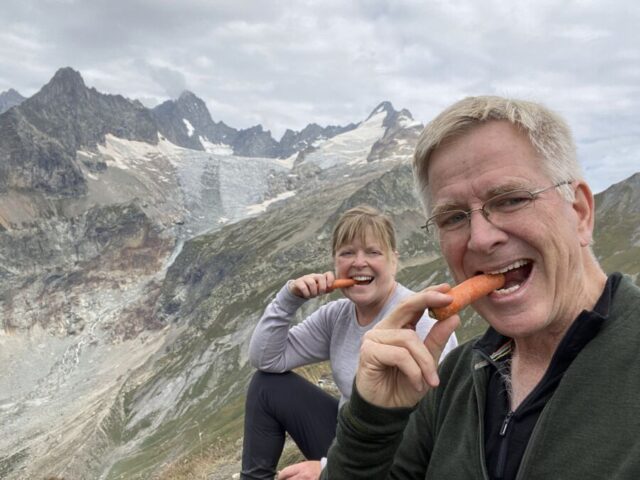
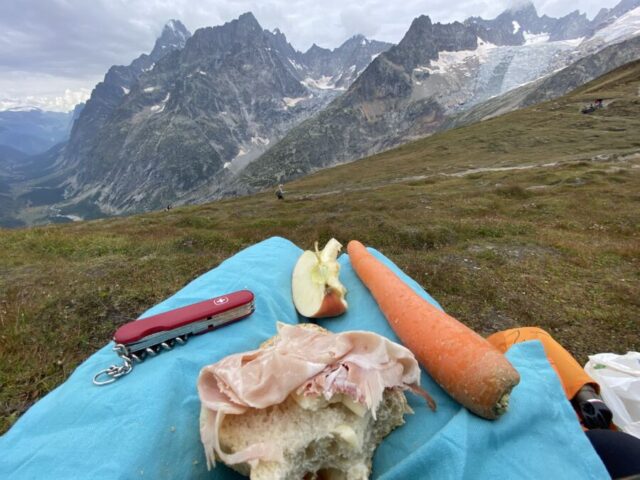
And in the interest of hiking light, lunches were very simple — just a sandwich from the hotel, maybe a carrot, a piece of fruit, and water. But upon reaching the mid-day summit, lunch was a marmot’s banquet. (Speaking of marmots, we saw no wildlife except a couple of mice that had been squished under hiking boots on the trail.)

The Best Hike of my Life: The Tour du Mont Blanc

Earlier this fall, four of us — total novices at long-distance treks — hiked around Europe’s highest mountain. (On the first day, big birds of prey circled high overhead. My hunch: They were vultures just waiting for one of us to drop.)

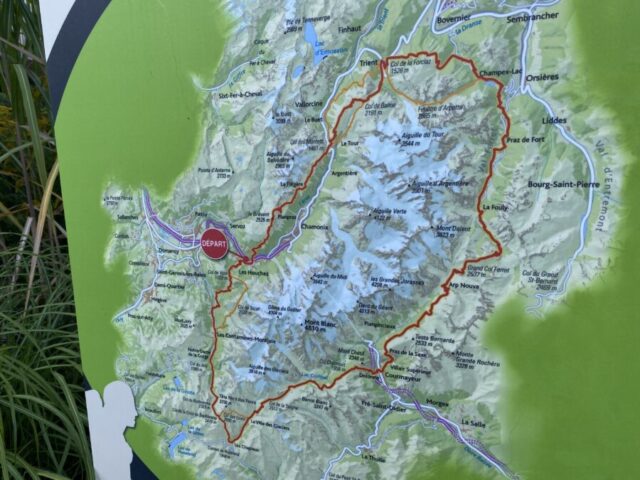
The Tour du Mont Blanc is a 100-mile, ten-day hike — but we cheated a bit, hiking the best 60 miles in six days from mountain lodge to mountain lodge, catching local buses through the less exciting parts, and letting a “sherpa service” shuttle our bags each day through France, Italy, and Switzerland, from Chamonix to Chamonix.

The Tour du Mont Blanc is a 160 km (100 mile) circle around Europe’s tallest mountain. We did the most rewarding 100 km (60 miles) connecting the segments with public buses.
I love the sherpa service offered on Mont Blanc: You leave your big bag in the hotel lobby or at your mountain refuge and trust the shuttle bus to pick it up and deliver it safe and sound to your next accommodations. Every day, our bags were waiting happily for us at check-in.
An array of buses and mountain lifts are available to hikers to help them along, as they choose, on the Tour du Mont Blanc. But the season is short, and most of the lifts and buses were shutting down by mid-September.

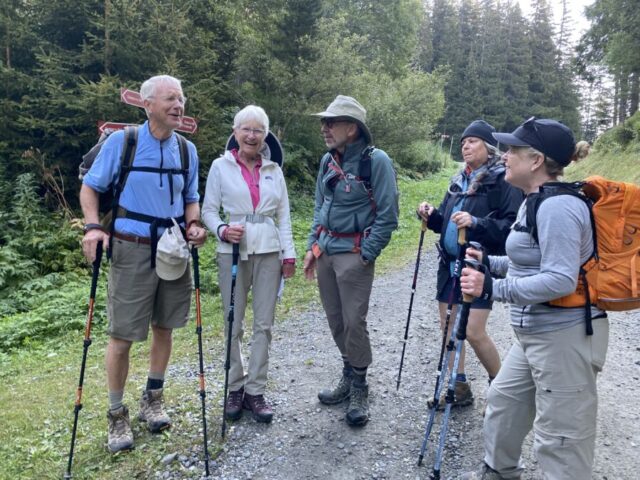
This was the first time I’d enjoyed a slice of Europe with my girlfriend Shelley, and we were joined by Sue and David from Minnesota. (I’ve worked with David Preston for 20 years at TPT – Twin Cities PBS. In the public television world, he’s considered the “pledge drive guru.”)

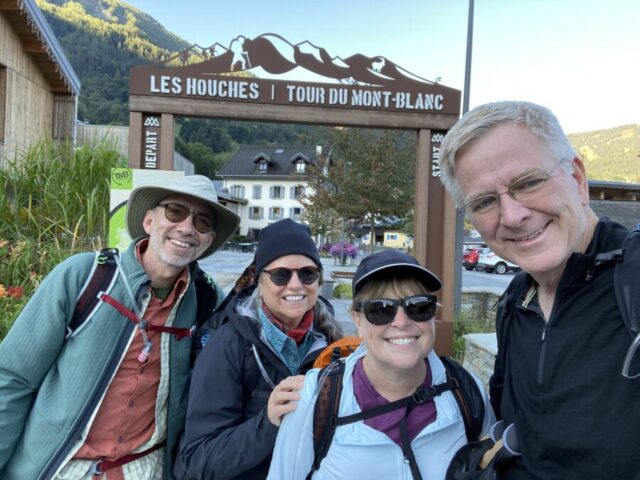
It seems everyone hikes the Tour du Mont Blanc in a counter-clockwise direction, starting from the ceremonial start point in the village of Les Houches, just outside Chamonix. And this arch is always good for a happy, pre-blister group shot.

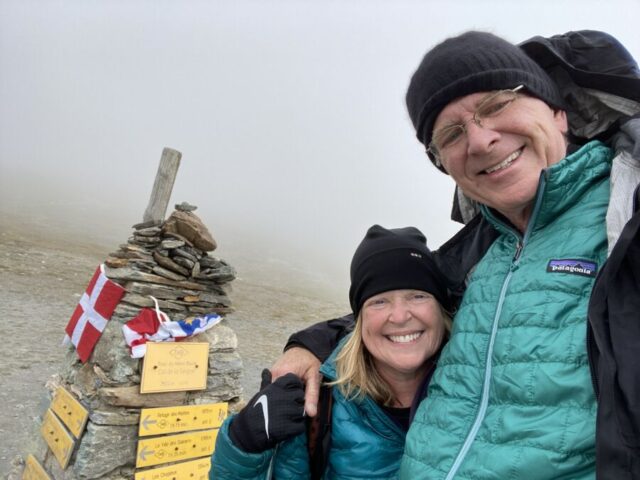
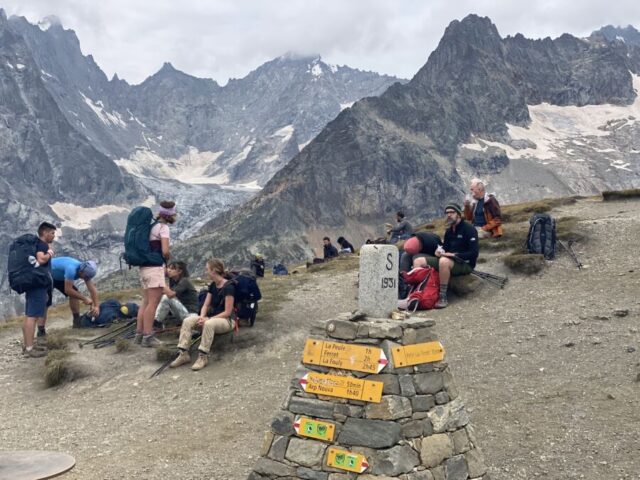
Each day, we’d hike what the trail signs said would be a five-hour hike — that took us six or seven.  Our mantra: “Take our time. This is why we’re here.” Generally, the day would start at a 3,000-foot climb to a pass (or “col”) 8,000 feet above sea level. Each col was a little triumph, with its cairn of rocks arranged in a pile, dramatic weather blowing across, commanding views, and congratulatory selfies.

Part of our pre-trip training was taking steep hikes closer to home. As a typical day’s climb on the TMB is a thousand meters (or roughly 3,000 feet), I’d recommend choosing a practice hike with a 3,000-foot elevation gain so you can use it as a reference point. Ours in Washington State was the Mount Si trail. We even had a term for a 3,000-foot altitude gain: “a Mount Si.”

Every morning on Mont Blanc, we’d do our hard work, generally climbing a 3,000-foot elevation gain. It seemed to last forever…but it didn’t. And reaching the pass (generally around 8,000 feet above sea level) was always a lunchtime celebration.

Daily Dose of Europe: Dangling from a Swiss Cliff

Simply going back to Europe right now would be a thrill. But for an added thrill, I might head to the Swiss Alps for a via ferrata course.

Even though we’re not visiting Europe right now, I believe a daily dose of travel dreaming can be good medicine. This week I published a collection of my favorite stories from a lifetime of European travels. My new book is called “For the Love of Europe” — a fun-to-read, “greatest hits” collection, and this story is just one of its 100 travel tales.

Dangling from a sheer cliff a thousand feet above the valley floor, I pause and look down at my boots, each numbly clinging to a rebar step — which, like giant staples, are tacked across the rock face. Between my legs, like little specks on the valley floor, I see tiny cows doing their part for the Swiss cheese industry. To my left, my mountain guide patiently waits, keeping a wary eye on me. To my right, my Swiss friend Simon laughs, saying, “Hand me your camera.”

I know I need a photo to capture this amazing scene. But I don’t want to have anything to do with grabbing my camera or posing. I am terrified.
I’m back in my favorite corner of Switzerland: the Berner Oberland. When I arrived, it occurred to me that I’d already ridden the lifts and hiked all the trails in the area. But there was one experience that I had yet to do: traverse the cliffside cableway called the via ferrata. This morning, Simon and I pulled on mountaineering harnesses and clipped our carabiners onto the first stretch of a nearly two-mile-long cable, setting off with a local guide on the “iron way” from Mürren to Gimmelwald.

The route does not follow the top of the cliff that separates the high country from Lauterbrunnen Valley. It takes us along the very side of the cliff, like a tiny window-washer on a geological skyscraper. The “trail” ahead of us is a series of steel rebar spikes jutting out from the side of the cliff. As I make my way, I alternate my two carabiners from segment to segment along the sturdy steel cable. For me, physically, this is the max. I am almost numb with fear. After one particularly harrowing crossing — gingerly taking one rebar step after another — I say to the guide, “Okay, now it gets easier?”

“No,” he says. “Now comes Die Hammer Ecke! ” Translated into English, this means “The Hammer Corner.” This name does not calm my fears.
For a couple hundred yards, we creep across a perfectly vertical cliff face — feet gingerly gripping rebar steps, hands tight on the cable. Miniature cows and a rushing river are far below me, the cliff face rockets directly above me, and a follow-the-cable horizontal path bends out of sight in either direction.

As I inch along the cliff, my mind flashes back to my many adventures with Simon over the years. Living high on the peaks of Europe, the Swiss are experts at living with nature — and Simon is always eager to share with me the Alps in all their moods. On recent visits, a new theme has emerged: the clear impact of climate change on their world. To people like Simon, who live so close to nature, the physical changes resulting from strange and changing weather is an increasingly troubling reality.

On one of my visits, we rode the early-morning lift to Männlichen, high on the ridge above Grindelwald and Lauterbrunnen, and stepped off and into a visual symphony: Before us towered the mighty Eiger, Mönch, and Jungfrau. Simon, who’d worked at Männlichen’s mountaintop restaurant as a kid and still bikes here a couple of nights a week, spoke of the subtle changes he’d noticed here. Walking by a glacial pond, he recalled how, during his childhood, there would be hundreds of frogs singing. Now there are none.

At one time, a ski lift required just a few towers. Now, a swath is cut right up the mountain as each lift is plumbed with snowmaking gear. Big water pipes stick out of the concrete foundations, seeming to trumpet a new age. You won’t have ski resorts in the future without artificial snow. Today, the Swiss ski industry is in crisis: A third of the lifts are losing money, a third are in trouble, and only a third are good business. Simon gave me a trick postcard. Wiggling it made the glacier come and go. The valley in 1900…filled with ice. The same valley today…dry, with a shrunken glacier hanging like a thirsty dog’s tongue over the top of the valley high in the distance.

On another hike, as we gazed up at the North Face of the Eiger, Simon told me of speed climbers leaving Interlaken on the early train to the base, scaling this Everest of rock faces, and getting back to Interlaken in time for a late-afternoon business meeting. But as the permafrost thaws, there are more falling rocks, and mountain guides are abandoning once-standard ascents that are no longer safe.

With Simon, I’ve experienced calm, cool mornings giving way to freak afternoon hailstorms. One time, nervous locals scrambled like squirrels as the sky got dark and then…bam! Typhoon in the Alps. Flower gardens were hammered into pulp. The road became a river of flowing hail balls, leaves, and petals. Fifteen minutes later, the storm was over, leaving behind casualties: Fabric on chairs was ripped, an entire wall of old windows was left jagged, birds were stripped of their feathers and knocked silly. Car rooftops were blanketed in dents, and windshields were alligatored. With a black humor many Europeans have about climate change, Simon joked, “It’s no problem — we Swiss are the most insured people in the world.”

Back up on the via ferrata, I reach the end of my terrifying journey. Taking that last step, I triumphantly unclip my carabiner for the last time and hug our guide like a full-body high-five. Vivid experiences like this one are a hallmark of travel in the Swiss Alps. I only hope that future generations can enjoy this glorious landscape, too.

This story appears in my newest book, For the Love of Europe — collecting 100 of my favorite memories from a lifetime of European travel. It’s available today in our online Travel Store and in bookstores across the US. Pick up a copy and enjoy 400 pages of happy travels. You can also find clips related to this story at Rick Steves Classroom Europe; just search for Switzerland.

Daily Dose of Europe: Gimmelwald — The Swiss Alps in Your Lap

Need to get away? The tiny Swiss alpine village of Gimmelwald is about “away” as you can get.

Because of the coronavirus, Europe is effectively off-limits to American travelers through at least mid-April. But travel dreams are immune to any virus. As we work through these challenging days, I believe a daily dose of travel dreaming can actually be good medicine. Here’s another one of my very favorite travel dreams-come-true…a reminder of what’s waiting for you in Europe on the other end of this crisis.

On the train heading south from Interlaken into the high country, the Swiss woman sitting across from me asks where I’m going. When I say “Gimmelwald,” she assumes I mean the famous resort in the next valley, and says, “Grindelwald, that’s very nice.” When assured that Gimmelwald is my target, she leans forward, widens her eyes, and — with her sing-song Swiss German accent — asks, “Und how do you know Gimmelvald?”

The traffic-free village of Gimmelwald hangs nonchalantly on the edge of a cliff high above Lauterbrunnen Valley. This sleepy village has more cow troughs than mailboxes. Gimmelwald is an ignored station on the cable-car route up to the spectacular mountain peak, the Schilthorn. The village should be built to the hilt. But, led by a visionary schoolmaster, the farming community managed to reclassify its land as an “avalanche zone” — too dangerous for serious building projects. So, while developers gnash their teeth, sturdy peasants continue to milk cows and make hay — enjoying a lifestyle that survives in a modern world only by the grace of a government that subsidizes such poor traditional industries.

Gimmelwald is a community in the rough. When I arrive, I take a quick “welcome back” walk—a tour of the whole town takes about 15 minutes. Its two streets, a 700-year-old zig and zag, are decorated by drying laundry, hand-me-down tricycles, and hollowed stumps bursting proudly with geraniums. Grandpas, like white-bearded elves, set aside hand-carved pipes to chop firewood. Children play “barn” instead of “house.” And a little boy parks his toy car next to his dad’s tank-tread mini tractor — necessary for taming this alpine environment. Stones sit like heavy checkers on old rooftops, awaiting nature’s next move. While these stones protect the slate from the violent winter winds, in summer it’s often so quiet that you can hear the cows ripping tufts of grass.

Traditional log-cabin homes line the lanes. Their numbers are not addresses, but fire insurance numbers. The troll-like hut aging near the cable-car station is filled with rounds of Alp cheese, also aging. Small as Gimmelwald is, it still has daily mail service. The postman drops down from neighboring Mürren each day (by golf cart in summer, sled in winter) to deliver mail and pick up letters at the communal mailbox. Most Gimmelwalders have one of two last names: von Allmen or Feuz. I’m told that to keep prescriptions and medical records straight, the doctor in nearby Lauterbrunnen goes by birthdate first, then the patient’s name.

Watching two schoolboys kick a soccer ball just a few steps from the cliff’s edge, I enjoy the thought that there’s nothing but air between Gimmelwald and the rock face of the Jungfrau directly across the valley.

Over there, small avalanches look and sound like distant waterfalls. Village kids have likely learned the hard way: Kick that ball wrong and it ends up a mile below on the Lauterbrunnen Valley floor. My Gimmelwald walk comes with the sweet smell of freshly cut hay. The townspeople systematically harvest the steep hillside, with entire families cutting and gathering every inch of hay. After harvesting what the scythe can reach, they pull hay from nooks and crannies by hand. Half a day is spent on steep rocks harvesting what a machine could cut in two minutes on a flat field. It’s tradition. For locals, cutting the hay is like breathing… and there’s one right way to do it.

Climbing from zig to zag, I witness a first for me: A farmer at the top of town has filled his big blue tarp with a mountain of hay the size of a small car. Directly below him is his barn with a bridge leading to its loft—the door open like the mouth of a hungry child. Nonchalantly, as if he does this every day, the farmer climbs onto the hay and rides it like a sled steeply down the field to the little bridge where his son awaits. Together, they drag the load into the loft and close the door.

To inhale the Alps and really hold it in, I sleep high in Gimmelwald. Poor but pleasantly stuck in the past, the village has a creaky hotel, happy hostel, decent pension, and a couple of B&Bs. Walter Mittler’s Hotel Mittaghorn, sitting at the top end of Gimmelwald, has long been my favorite. The weather-stained chalet has eight pint-sized balconies and a few tables shaded by umbrellas on its small terrace. Everything comes with huge views. Sitting as if anchored by pitons in the steep, grassy hillside, the hotel is disturbed only by the cheery chatter of hikers

and the two-stroke clatter of passing mini tractors. On Walter’s terrace, I grab a table next to a group of Alp-aholics from the village’s youth hostel. While they compare notes on nearby hikes and team up for tomorrow’s adventures, I sip a coffee schnapps and watch rays from the setting sun warm the mountaintops as the moon rises over the Jungfrau.

Suddenly, the bright modern cable car swooshes by with 30 tourists gawking out the windows. Walter joins me with a drink and tells me a local tale illustrating how the Schilthornbahn is good for more than tourism. In Gimmelwald, the modern world began in 1965 with the arrival of the cable car. Before that, mothers ready to give birth had to hike an hour downhill to the valley floor for a ride into Interlaken. Many mothers didn’t make it all the way to the hospital. Just outside of Interlaken, a curve in the road is named for Zita, a Gimmelwald baby… born

right there. Today, the Schilthornbahn remains the all-powerful lift that connects Stechelberg on the valley floor with the mountain communities of Gimmelwald and Mürren on its way to the 10,000-foot Schilthorn summit. This lift shuttles life’s essentials — mail, bread, and coffins — plus skiers, hikers, schoolkids, and hang gliders, along with all those tourists—to and from each community.

The next morning, I decide to start my day by riding the cable car up to the summit of the Schilthorn, which is capped by a restaurant called Piz Gloria. Lifts go twice hourly, involve two transfers, and take 30 minutes. Inside the gondola, watching the altitude meter go up, up, up comes with a soundtrack: my ears popping.

Reaching the top, I head to an unforgettable breakfast. Every table in the revolving restaurant comes with a thrilling and eventually 360-degree view. The experience never gets old. I sip my coffee slowly to enjoy one complete circle. Then, I drop into the theater to see clips from the James Bond movie On Her Majesty’s Secret Service, in which it seems that this same restaurant is blown up. Finally, I go outside for the real thrills . . . to frolic on the ridge. A combination of the thin air and watching hang gliders jump into airborne ecstasy always stokes my pumping heart.

Now it’s time to head back down the mountain. While it’s possible to hike down from the top, I’ve found that the first gondola station below the summit, Birg, is the best jumping-off point for a high-country hike. Leaving Birg, I hike down toward Gimmelwald. Within a couple minutes, I’m surrounded by a harsh alpine world. After skidding through a patch of loose shale, I stop for a moment — just to hear the sound of the tumbling pebbles eventually grow silent and be replaced by the distant tinkling of cowbells and a cascading stream. As I hike gingerly along the edge of a ridge, dramatic valleys stretch to my left and right while, high above, icy Alps pop against a brilliant blue.

If the quality of a church is a matter of how close you feel to God, being high in the Alps just might be Europe’s ultimate cathedral. A day like today, with a perch like this, has holy rollers doing cartwheels and even Lutherans raising their hands.

After a steep descent, I step out of the forest and reach the village I call home. The finish line is a bench that sits where the trail hits the tiny paved lane that marks the high end of Gimmelwald. This bench is one of my favorite “savor Europe” spots: the right place to just sit still and take it all in. Cows munch, ignoring the view. The little resort of Mürren crowns a bluff above me on the left, keeping all the fancy tourists where they belong. Directly across the valley, a river bursts out of a glacier. Below that, in a lonely meadow, an alpine farm that has intrigued me for years still sits high above the tree line, forever alone amid distant flecks that must be cows and goats. Below me, the village schoolyard comes with the happy noise of children at play. Suddenly, Christian, a farmer (and the town’s go-to accordion player), rumbles by. He’s coming back from the fields in his mini truck towing a wobbly wagonload of hay. His kids bounce on top like happy cartoons.

Enjoying this alone is a delight. But sharing this bench with the right travel partner, the sun of a daylong hike ruddy on your smiling faces, is even better. There are many peaks and ridges in Switzerland offering high-elevation thrills…but at the end of the day, I love kicking off my boots in storybook-perfect Gimmelwald.
(This story is excerpted from my upcoming book, For the Love of Europe — collecting 100 of my favorite memories from a lifetime of European travel, coming out in July. It’s available for pre-order.)