I always say, “If heaven isn’t what it’s cracked up to be, send me back to Gimmelwald.”
Thirty-five years ago, as a young tour guide, I brought my groups to a remote and impossibly idyllic village high in the Swiss Alps — and I’ve been going back ever since. Gimmelwald is a classic “Back Door”: an off-the-beaten-path place where travelers can get away from soulless resorts and big-time tourism. This is a place where the air feels different — where the only noises are bees, bugs, and birds perusing alpine flowers, paddling water spilling from a hose into the hollowed-out log that keeps the cows watered, and gnome-like men sucking gnome-like pipes while chopping firewood.
I am filled with great memories of this intoxicating place, and I know many of you are, too. And now we all have a chance to give something back. The villagers are working together to save the last public building in Gimmelwald, and they need our help. You can find out more here — and you can pitch in here. (If you do, please let me know in the comments below or on Facebook. It would fill me with joy to see Rick Steves travelers come together to support a special place we all love. Thank you!)
To celebrate the season, I’m sharing clips, extras, and behind-the-scenes notes from Rick Steves’ European Christmas. Today we travel to the Swiss Alps, which seem to shout the glory of God. Up here, where villages huddle under towering peaks, Christmas fills a wintry wonderland with good cheer. Traditions are strong and celebration comes with families, friends, and fun. It may be cold outside, but as the sun sets, it’s impossible not to linger in this cozy setting.
Through the seven countries where we filmed our the special, six were snowless. The Swiss Alps were our one last hope for a white Christmas — our worst-case weather scenario backup. I simply had to get snow in the Alps…and just barely did.
My key support person in the fairy-tale village of Gimmelwald was Olle, the village schoolteacher. He had emailed me photos of his beautiful, snow-covered village a month before. But that December was unseasonably warm, and on the days leading up to our arrival, the town was bare and wet. Thankfully, a strong snowfall hit the day we came to town, giving us the white Christmas of our prayers. By the time we were leaving, it was all but melted.
Gimmelwald was a folk festival of Christmas traditions. Olle arranged everything. He planned a sledding expedition to cut down the tree, arranged a cozy fondue in a remote hut, and lit our torches as we skied and sledded back down the mountain into his village. Olle’s parents came by (Grandpa even grew an old-fashioned big white beard for the filming) as they pulled out all the stops to celebrate a traditional Swiss family Christmas Eve…on December 21.
The Alps would also be a great place to rendezvous with my family. (Other holiday shows I’d watched, where the host was without family, seemed almost mournful.) My family flew in for just three days and performed heroically (especially considering the jet lag).
After 15 years of blink-and-you’ll-miss-it cameos in our TV shows, my son Andy got a serious part. This year he was Samichlaus — that’s Swiss German for “St. Nick.” Andy’s sidekick, the black-clad henchman Schmutzli, was Olle’s son, Sven. And the donkey played himself. We filmed Gimmelwald’s children enjoying the annual visit from this dynamic Christmas duo. This year, Schmutzli translated because Samichlaus spoke only English. Ignoring the language barrier, the cute little village children just promised they were nice and not naughty, sang their Swiss Santa a Christmas carol, and eagerly dug into his big burlap bag to get their goodies.
That night we filmed a hot-spiced wine party in the frigid open-air gathering around flaming tree trunks with villagers — one of the coldest evenings I’ve ever experienced. And it didn’t make the show. But it was a delight to play the piano as the family sang (they have the same kind of piano as me… a wonderful German make called Sauter, from the Black Forest). And I just love the shot of Grandpa’s weathered fingers on the dog-eared family Bible — beautiful as a Rembrandt painting, but real and now.
My favorite bit of the entire Christmas special was the joyful sleigh ride with the entire gang frolicking down the mountain with torches. Again, this was a nerve-wracking afternoon and evening, as we had lots of elements to film: tramping around in snowshoes, cutting the tree, having fondue in the mountain hut, and then — just as twilight was upon us — romping down the mountain. The crew ran ahead at intervals, catching us as we frolicked by. I got to ride the comedic wooden snow bicycle, and our laughs and giggles were honest joy. No acting there!
At Rick Steves’ Europe, we have two things in abundance: a passion for providing practical information for better travels, and talented people on our staff. And you’ll see what I mean on the Rick Steves Travel Talks page, where you can watch more than 60 travel classes for free.
Here’s some big news: Our latest free, streaming travel videos are…language classes! If you’ll be traveling to lands where people speak German, French, Italian, or Spanish (or just want to hone your language skills a bit because it’s fun), grab your favorite travel partner, pour yourselves an appropriate beverage, and join us for a fast-moving and instructive hour.
We offer travel classes throughout the year at our Edmonds headquarters, and this is our chance to send our great teachers into your world. Good luck — or perhaps I should say, “Viel Glück…bonne chance…in bocca al lupo…buena suerte!”
It’s Mardi Gras! In this clip from my public television special Rick Steves’ European Easter, we visit Switzerland and Slovenia to join local celebrations of Fat Tuesday.
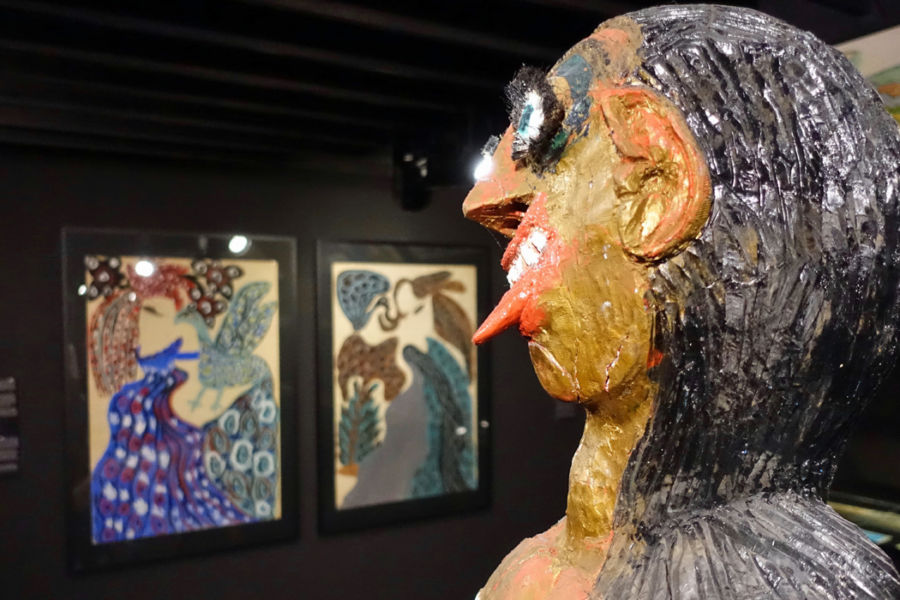
Lausanne is an elegant town on Lake Geneva with a fine old town, towering cathedral, and charming lakeside promenade. While I was there this summer, I made a point of visiting its two main museums, the Olympic Museum and the Collection de l’Art Brut. Both are unique and worth a look.
The Art Brut Collection is like nothing else you’ll see in Europe: a museum filled with art produced by untrained artists, many labeled (and even locked up) by society as “criminal” or “insane.” Read thumbnail biographies of these outsiders, and then enjoy their unbridled creativity.
In 1945, the artist Jean Dubuffet began collecting art he called “brut” — created by untrained, highly original individuals who weren’t afraid to ignore rules. In the 1970s, he donated his huge collection to Lausanne, and it has now expanded to 70,000 works by hundreds of artists: loners, mavericks, people on the fringe, prisoners, and mental ward patients. Dubuffet said, “The art does not lie in beds ready-made for it. It runs away when its name is called. It wants to be incognito.”
About 800 works are on display at any given time. As you tour the thought-provoking collection and learn about the artists, ponder the fine line that separates sanity and insanity when it comes to creative output.
Known as the Olympic Capital, Lausanne has been home to the International Olympic Committee since 1915. The Olympic Museum celebrates the colorful history of the games, with a century’s worth of ceremonial torches and a look at how medals have changed over the years. Surveying gear from each sport (such as Carl Lewis’ track shoes and Sonja Henie’s ice skates), you can follow the evolution of equipment that was clearly state of the art — in its day.
Back at my Lausanne hotel, my hotelier surprised me by pulling out a little stack of old Steves family Christmas cards. For nearly 20 years, we had a tradition of sending a family Christmas card to all our favorite hotels and restaurants in Europe. For Andy and Jackie, it was an annual chore they dreaded — signing their names to several hundred cards all spread out on the kitchen table.
Thinking back on this tradition, it’s clear to me that this is a good example of how we have always enjoyed and stressed the people-to-people aspect of our work. To this day, we strive to build our huge gang of hoteliers and restaurateurs into an extended family of friends who understand that we are partners in helping our travelers enjoy the best possible experiences for the best possible price. If there is one aspect of our guidebooks that distinguishes us, perhaps it’s the esprit de corps between us, the legion of small businesses in Europe we recommend in our guidebooks, and our traveling readers.
(Next up on the blog, I’ll be bringing you along on a Mediterranean cruise…stay tuned!)