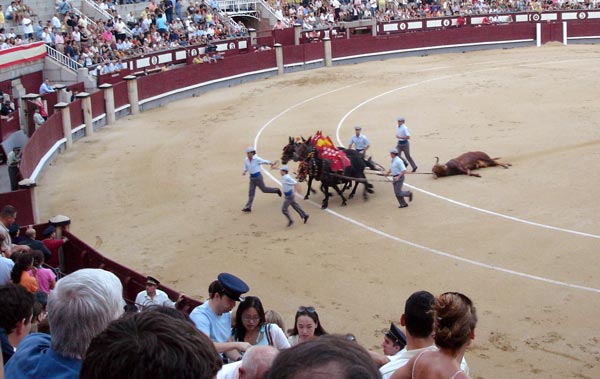
Things are so hot in Spain, that they’ve moved the times of bullfights two hours later…to 9pm. No more sun and shade tickets…everything’s the same (hot in the shade). And that’s where I’m heading.
The last stop of the metro line is Madrid’s Plaza de Toros–the biggest bull arena in Spain. From the metro station, the escalator pumps the crowd directly to the front of the arena. It’s all peanuts and crackerjacks…like going to a baseball game. All tickets are only €6 ($8) today as the line up is 3 novice bullfighters (2 bulls each…six fights…two hours of medieval man vs. beast madness). The man in front of me in the ticket line negotiates aggressively for a good seat. I simply say “uno por favore” and end up sitting right next to him. The ramshackle band seems to be directed by the cymbal player who claps a relentless rhythm.
At 9:00 sharp, 500 angry and disoriented kilos of bull charges into the arena. Simple old men sit attentively like season pass holders, girls flutter their fans as if aroused by picadors prancing in tight pants. You can tell who’s local and who’s not. Tourists uselessly discharge flashes on their cameras. Local man croak “ole” like old goats and the Spanish women wave their white hankies with the kill.
The ritual killing lasts 20 minutes. Then another bull romps into the arena. Of course, even attending a bull fight is controversial among animal rights enthusiasts. I’ve always been ambivalent about the spectacle, thinking as a travel writer I need to report what is here (not judge it and support a boycott). When the event is kept alive by the patronage of tourists, I would then reconsider my reporting.
With this visit (my first bullfight in 5 or 6 years), the killing seemed more pathetic and cruel than ever and the audience seemed to include more tourists than ever. I left after two bulls (feeling a bit wimpy as I passed the ushers at the door). Walking from the arena back to the metro, there were the other biggest light weights in the stadium–about 20 people out of several thousand, leaving after only a third of the action: all Asian travelers and American families. I stood next to a Mid-West family–mom holding daughter’s hand and dad holding son’s hand at the subway platform. I said, “Two bulls enough?” The parents nodded. The 12 year old boy summed it up in three words: “That was nasty.”