I’ve spent over 30 summers in Europe, lovingly updating my guidebooks. It’s kind of funny…I just can’t stop. It’s what I do, and I find it endlessly challenging and rewarding. This year, I’ve already spent 60 days researching.
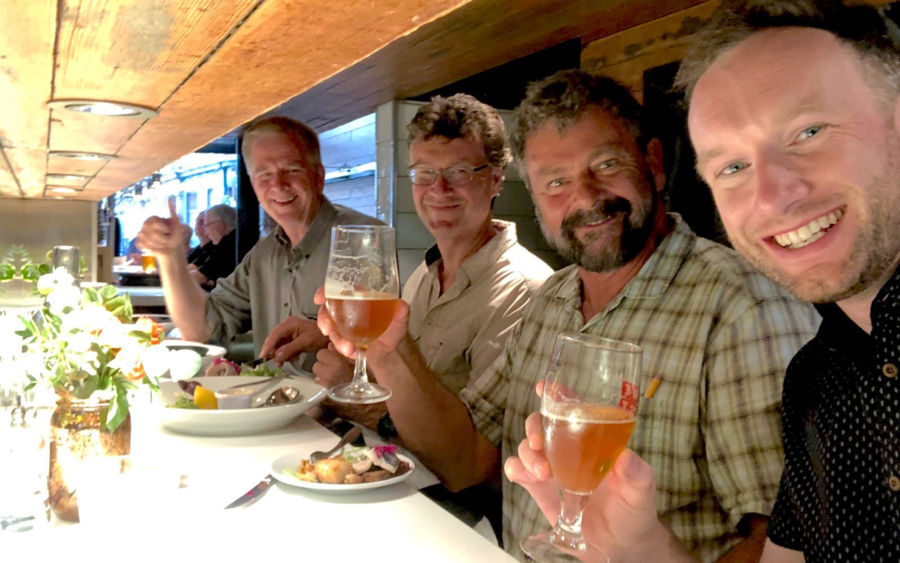
As I encourage my fellow researchers, “We need to live the book as we do our research.” And a big part of the work is finding new restaurants to recommend to our readers. I was just enjoying a place a Scottish friend told me about, and I thought I’d share a few off-the-cuff thoughts on what makes a good Rick Steves restaurant. I’m no fancy food critic. I just have a strong sense of what kind of place my readers will find enjoyable. Here’s a peek at a lunch I just enjoyed at Edinburgh’s Fishers in the City Restaurant — and why it’ll make its debut in my Rick Steves Scotland guidebook next year.
Hello from Edinburgh! I’m in Scotland’s most important church: St. Giles’ Cathedral. This place is filled with Scottish history and pride — and today, it’s also filled with the sounds of a visiting choir from America (Capriccio Columbus, from Ohio).
Edinburgh is packed with tourists who all seem to stick to the touristy zones. This clip illustrates how to fill your days with fun travel memories. You just need to take a few steps away from the crowds, know the context of what you’re looking at, and take advantage of local information — so you’re there when the choir sings (or for whatever is slated to happen).
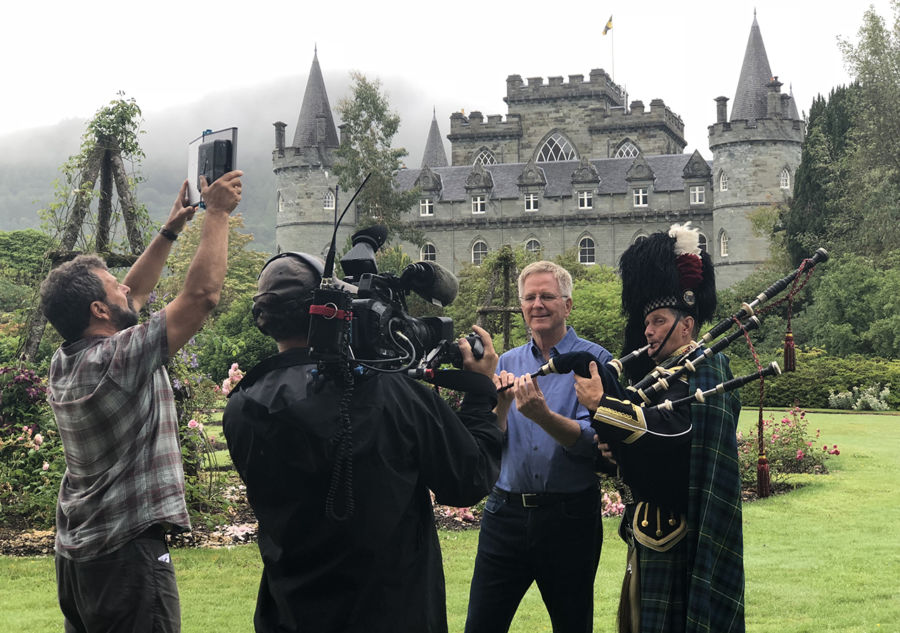
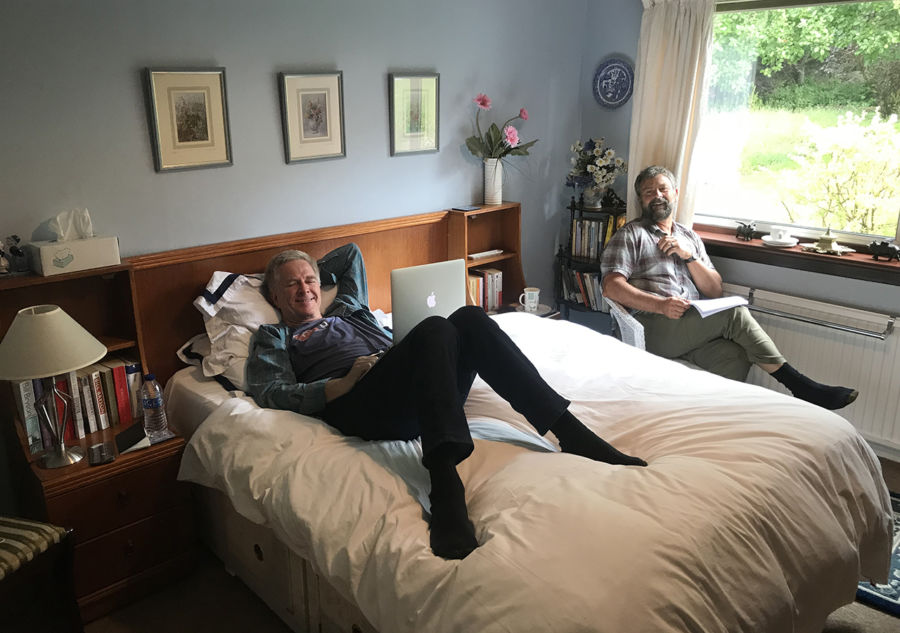
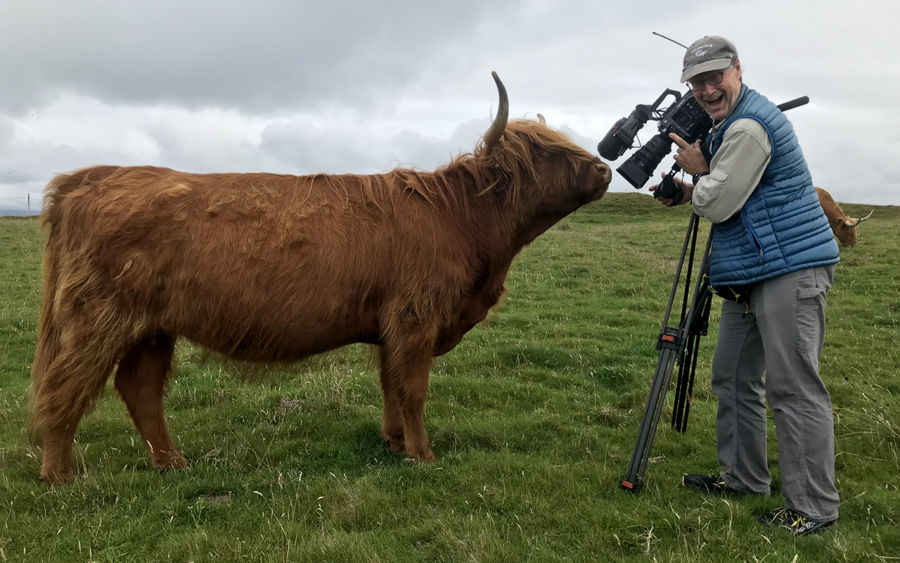
I work with a really small TV crew — just me, my producer, and one cameraman. And after shooting about 140 episodes over the last 20 years, we have a great filming process. These photos from our Scotland shoot give a few peeks at how we work.
While you can shoot an “on camera” just about anywhere, we search out beautiful and meaningful settings for me to talk directly to the camera.We only shoot “on cameras” for material we can’t cover well with images of locations — generally heavy history. Here on the Isle of Iona, I’m recalling a horrible act of Viking plunder.I love working on scripts with my producer Simon while we’re on a shoot. In the field, we debate and fine-tune each sequence as the situation unfolds.Back in the hotel or B&B, we “scrub” the script. Our final text couldn’t be more lovingly crafted. Each word earns its keep.My producer Simon and cameraman Karel routinely climb like mountain goats up rock faces or do other heroics to get the right camera angle, making me a nervous wreck.I often try to replicate on camera an experience I had on a previous trip. Last year, on the Isle of Skye, a seagull stole my fish and chips. I decided to make that a fun bit for TV, and we shot me trying to eat my lunch without another cod-napping.I am grateful for my small and mighty crew: cameraman Karel Bauer and producer Simon Griffith.
My three new Scotland episodes are airing now on public television across the country. Check your local listings for Season 10 of Rick Steves’ Europe — and keep on travelin’!
I love making TV — because it means I can share my love of Europe with millions of travel partners all across America. And I’m especially excited about Season 10 of Rick Steves’ Europe, which is airing now on public television throughout the country. Over the last few months, we’ve taken you to Portugal, England, the Greek Islands, and Sicily — and now we’re wrapping things up with three full episodes about Scotland.
Cameraman Karel Bauer
We spent 18 days filming these episodes, and we never stepped foot in Edinburgh. We started off with Glencoe, Inverness, the Culloden battlefield, and Loch Ness (“Scotland’s Highlands”). Then we wandered across the isles of Iona and Skye and set sail for Orkney’s wartime harbor at Scapa Flow (“Scotland’s Islands”). And we finished things up with trips to Glasgow and Stirling Castle — enjoying a taste of whisky and a sheepdog demonstration along the way (“Glasgow and Scottish Passions”).
With my friend and fellow tour guide, Colin Mairs.
I’m really excited to be able to share 90 minutes of pure, hardcore Scotland with our traveling viewers. Check your local listings — and keep on travelin’!
When it comes to our TV show, I tend to overpack. I love each corner of Europe — but there are only 30 minutes, or 3,000 words, in each episode. Invariably our episodes come in at 32 minutes or so, and I need to make the hard cuts. While it’s painful to lose bits I really like, the tighter shows are better without them.
Many of you have been watching Rick Steves’ Europe for literally decades, and I thought, as we celebrate the arrival of our tenth season (12 all-new episodes debuting next month on public television throughout the USA), I’d share with you the kind of footage that ends up on our cutting room floor.
In this little clip, you’ll see what we cut from our upcoming Scottish Highlands episode:
The Inveraray Castle, which houses clan mementos that are precious to Campbells.
McCaig’s Tower, a silly “folly” in Oban. (Beautifully filmed mediocre sights in bad weather are the first to go.)
Me sharing a tip for road-trippers to get out of the car and take little hikes. (Fun asides are easy to cut when we’re running long because they don’t impact the structure of the script.)
The town of Fort William. (This was an entire module — like pulling a tooth, it only hurts once to lose it…but I hated to delete the great sound bite from our guide Colin, with his nice dig at English imperialism.)
Much of the Scottish Crannog Centre. (This was just too much information, so we used a much shorter version.)
A juvenile clip of me searching for the Loch Ness monster (which was not too juvenile to end up in our bloopers).
Thanks to all our travelers, whose viewership has kept us on the air for so long, and to public television, which continues to be a lonely bright spot in the broadcast media landscape of America. Stay tuned for lots of Rick Steves’ Europe this fall — including episodes on Portugal (Lisbon and the country’s heartland), the heart of England, Greek islands, Sicily (Best of Sicily and Sicilian Delights), Scotland (Glasgow, Highlands, and islands), cruising travel skills, and two special episodes on Europe’s greatest festivals. Check your local listings for air dates.