Wherever you’re traveling in Europe, you can search online for a local food tour. I took one in Porto and had a great time…and a great meal. Here, at the end of a delicious tour, our guide, Andre (of Taste Porto Food Tours), recaps what we did.
If you can’t see the video below, watch it on YouTube.
Every country has its hot dog-like gut bomb. And if you’re going to sample one of these local grease treats — and you should — it’s best to find a bar with character (and characters) that honors tradition and uses the freshest ingredients. Of course, that’s easiest to accomplish with the help of a local guide… or a guidebook written by a guy who uses these guides for several months every year as he updates and broadens his information.
This little stop, in Porto, is Cervejaria Gazela, next to the national theater and midway between breakfast and lunch. Warming a stool, chatting about the struggle of traditions in a rapidly modernizing world, and watching the bartenders assemble and grill these wonderful snacks — simple as they might be — was a highlight of my Porto morning (and cost only about €3 with my beer).
If you can’t see the video below, watch it on YouTube.
All over Europe, main shopping streets are pedestrianized. Rather than dodging cars, holding your breath while buses go by, and yelling above the sound of rumbling trucks, you live in a world of pause-a-moment buskers, where jaywalking is impossible and the only thing you have to dodge are the tripwires of locals taking their dogs out for a stroll. Here’s just a moment on Porto’s Rua de Santa Catarina, as a local school choir is out raising money for a concert tour.
If you can’t see the video below, watch it on YouTube.
I am really into “second cities” these days. For generations, several European Industrial Age powerhouses (Antwerp, Hamburg, Glasgow, Bilbao, and so on) were what we would call “rust belt,” as their elegant “first city” counterparts enjoyed the luster of the Information Age. But over the last decade or so, the rust has become an accessory, bohemian can be chic, and places where people once joked “the shirts are sold with the sleeves already rolled up” are in vogue and bursting with creative energy. The obvious example in Portugal is Porto, three hours north of Lisbon by train. Here are some photos from my fascinating time in Portugal’s second city.
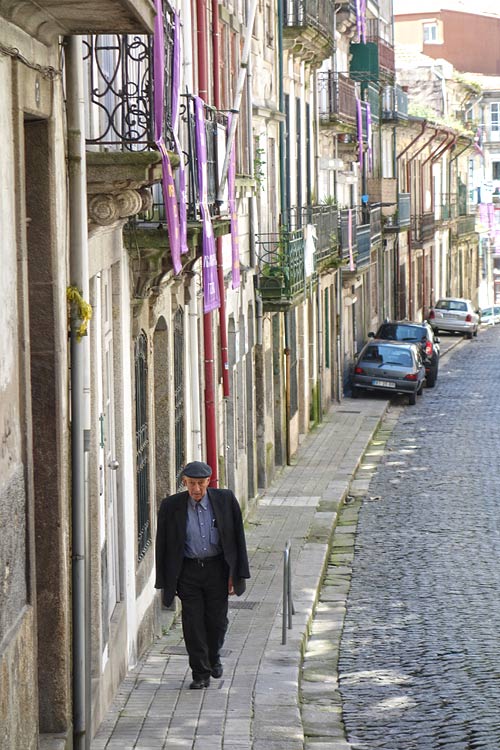
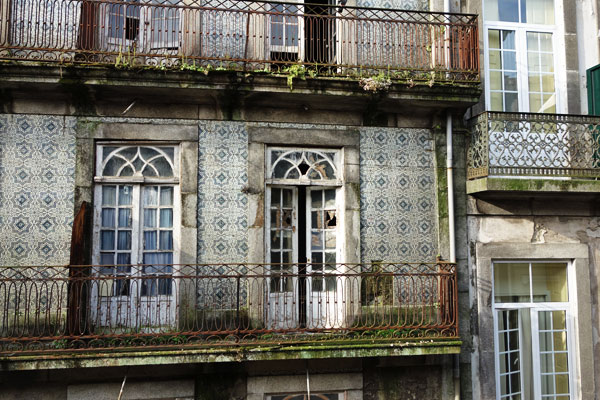
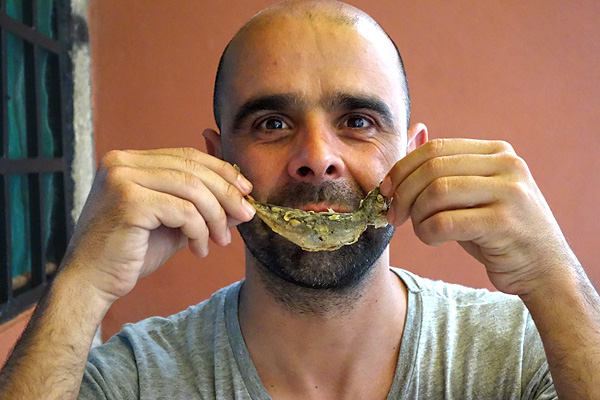
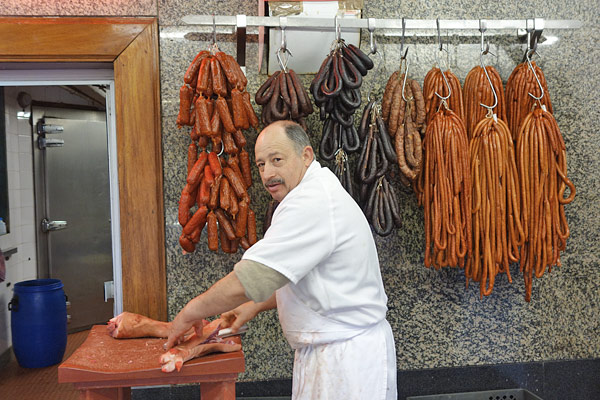
Ribeira View with a Port Buzz Lens Porto ages happily on the Douro River, along with the most of the world’s port wine. The harborfront, called the Ribeira, faces Porto’s sister city, Vila Nova de Gaia, just across the river, where traditional boats that hauled the wine to the port lodges for aging and distribution decorate the scene. After visiting a couple of port lodges for a tour and tasting (as is the ritual for visitors to Vila Nova de Gaia), this view across the Douro of Porto’s Ribeira looks even better.Porto Life Cobbled Together When exploring the back streets of Porto, depth, light, well-worn people, and once-dazzling facades ferment into a nice glass of port for the eyes.A Room with a View My choice of hotels, restaurants, cafés, and bars in a city like Porto are places where the patina of the past comes with a little broken glass and rusty edges. Opening the window of my hotel room, I saw a view some would complain about. But this is why I come to Porto. Authenticity and heritage are the swizzle stick of my Porto experience.Something Fishy About His Smile Hardworking tour guides (like Ricardo Brochado) know how to make your stroll through their hometown memorable. Porto is a city with a steady sea breeze, a seagull soundtrack, and sardine smiles.Sausage Man in Porto Old Industrial Age markets (like Bolhão in Porto) are busy with activity under 19th-century glass-and-steel rooftops. You can be on a diet, but your camera will eat this up — sausage man and all — with gusto.Porto Food Tour — For an Edible Education All over Europe, food tours are trendy. They cost between €50 and €100, go at an early lunch or early dinner time, last around three hours, come with over a mile of walking, and include four to eight stops. The style varies: Some are standing and sharing a plate of little bites, while others feature more sit-down dining experiences. All will fill you up, and should be considered a meal as well as a tour, wrapped up in one (making the splurge easier to justify). Here, André of Taste of Porto Food and Wine Tours brings on dessert.
Each time I visit Lisbon, one of my projects is to review the many fado opportunities so those with my Rick Steves Portugal guidebook get the best late-night memory. Fado is traditional folk music that reflects Portugal’s bittersweet relationship with the sea. You can go to a fancy show in a fancy upscale restaurant for lots of money. But I like the free shows, deep in the characteristic and rough-edged neighborhoods. Here (at Restaurante A Baiuca in the Alfama, listed in my guidebook) the woman who owns the place is joined by her cooks, while the headwaiter sings at the door (along with a neighbor in the middle of the restaurant who dropped by tonight for the open mic). And they even invite the tourists to sing along “in English”…la, la, la, la, la.
If you can’t see the video below, watch it on YouTube.