The Cinque Terre’s Affordable Oasis for Backpackers is on the Ropes

Cinque Terre town of Manarola
The beautiful Cinque Terre town of Manarola may lose its youth hostel. Photo by Rich Earl.

It’s funny how many people on my cruise ship have fond memories of backpacking and youth hosteling through Europe when they were students. And enjoying the Mediterranean from a ship, I’ve been thinking about a little crisis percolating in my favorite stretch of Italian Riviera that I’d like to share with you. I know we have lots of Cinque Terre fans among our traveling readership. And the region that many of us consider a little paradise has been in turmoil lately — after a horrible episode in which the corrupt president of the national park colluded with a corrupt local mayor, bankrupting the Cinque Terre National Park and putting many of its services and projects on hold. It was a big step back for the region and now, in good Italian style, the government has stepped in to try to sort things out. In the middle of this mess, the wonderful Hostel Cinque Terre (housed in a building owned by the town of Manarola) faces non-renewal of its lease. I’ve been very impressed by how this hostel gives backpackers and students (just like me when I first visited the place back in the 1970s) a safe and affordable place to sleep. In case you are interested, here’s the letter I sent to the local authorities at the request of my friend Nicola (who runs the hostel). If you are so inclined, you are welcome to share your thoughts with the president of the region (links below).

Thanks,

Rick

Dear Michela Fossa, Patrizia Cavanna, and others concerned,

For twenty years I have been promoting the Cinque Terre as the finest opportunity for American travelers to experience the Italian Riviera. I can’t imagine how much my travelers have contributed to your local economy, and the joy your communities have given our American travelers. I have produced two TV shows on the Cinque Terre which have aired throughout the USA many times. These days, the typical American going to Italy dreams of seeing “Rome, Venice, Florence, Siena — and the Cinque Terre.” And many of the travelers who stay in nice hotels and eat in the finest restaurants of your region first fell in love with your region by staying in hostels.

Ages ago, a traveler had to choose between B&Bs, the Lucca hostel, and the notorious Mamma Rosa’s. I was so happy when the Cinque Terre gained the excellent hostel in Manarola, and I’ve been even happier with the passionate, creative, and energetic leadership and management that Nicola Bordoni has brought to the hostel. Now I hear that the hostel is having trouble with its relationship with the community and that its future is in question. Please understand from me, the most effective promoter of the Cinque Terre in the USA, that losing the Manarola hostel would be a terrible mistake for the region, for both the short term and the long term.

I understand the problems you and the park have had recently. But please do not lose sight of the value of having one of the best hostels on the Mediterranean coast between Turkey and Spain. I will continue to promote the Cinque Terre with all my energy — especially when the region takes care of the next generation of travelers…those who first fall in love with the Cinque Terre from the front door of the Hostel Cinque Terre. Thank you for supporting the survival of the wonderful hostel in Manarola.

Sincerely,

Rick Steves

The owner of the Hostel Cinque Terre would like readers to send emails to Claudio Burlando, the president of Liguria, here: presidente.giunta@regione.liguria.it; or comment on his Facebook page, here: http://www.facebook.com/pages/Claudio-Burlando-Presidente.

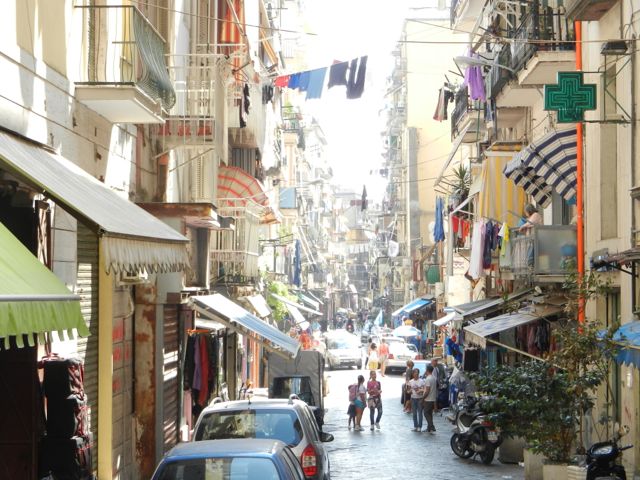
A One-Street Tour Shows Why I Like Naples

This little video tour is a rapid-fire look at the cultural wonders that await anyone who can venture into the backstreets of Naples. Living in the streets (called “Basso living”) is quintessentially Neapolitanpeople here seem perfectly adept at enjoying life with their domestic worlds tumbling right out onto the gritty streets of this fascinating city.

If you can’t see the video below, watch it on YouTube.


Naples — Where the Ship Drops You Off at the Front Door

When you dock in Naples, you don’t have to worry about how to take a train or taxi into town to see the sights. A tourist information desk near where you disembark can give you a map, answer your questions, and send you walking on your way to explore this gritty city.

Here in Naples, the ship docks right in the town center. As in every port we visited, there’s a non-cruise-sponsored, tourist-information desk there staffed only when the cruise ships arrive. While the cruise companies are a bit conflicted about providing information to enable independent travelers to do their own thing smartly, these city tour desks are generally enthusiastic about providing practical info to help independent travelers figure out what to do and where to go. With the help of a city map and a felt pen for taking notes, you can walk into a city within minutes of disembarking.

Some friends that I made on board were new travelers. They walked 100 yards off the ship, went through the cruise-shop terminal, and peered into the urban jungle of Naples. They decided it was too much, turned around, and spent the day on the ship enjoying the pool. They even had a poolside pizza in honor of the city they were missing. Had they kept on walking for fifteen minutes, they would have found themselves in a classic Neapolitan world like this…without a hint of tourism.

Naples is a delight, even without the traditional sightseeing. Skipping Pompeii, Capri, and Naples’ great museums, I spent most of my day simply wandering the streets of perhaps the most gritty and colorful city in Europe. As I found on several occasions, within minutes of disembarking, I was immersed in the wonders of this port town — without a hint of the mass cruise industry. The main downside to cruising: Limited time in each port. Still, you can accomplish a lot in eight hours.

Docking in Livorno — Florence’s Port

Here are some of my photos of Livorno, along with some tips cruise travelers might consider to save money or time (or both) while visiting a port.

Each morning our ship arrives in a new port — today we’re in Livorno, the port for Florence. I stood on my little deck and surveyed the scene as buses, taxis, and security forces waited for the cruisers to disembark. When you’re on vacation and in a cruising mind-set, it’s easy to be oblivious to the fascinating economic metabolism of the cruise industry.

Aggressive cabbies smell easy money when a ship docks — but it’s still a competitive business and taxi drivers are eager to deal. Plus, more and more local governments are regulating taxis since rip-offs give a city a bad reputation. If you can organize a group from the ship ahead of time, a good plan for a day in Florence is to hire a mini-bus taxi that holds eight people and split the (otherwise high) cost of hiring a taxi. While spending 400 euros for a day trip into Florence from Livorno is costly for two, for a group of eight, it’s just 50 euros per person — which is a steal. While you could certainly go cheaper by bus or train, with a shared taxi you’re dropped off in Florence in an hour (twice as fast as the train), picked up at an agreed-upon time, and zipped back to the port.

While the initial cost of a cruise vacation may seem too good to be true, cruise operators earn their gravy with extra profit centers: mostly drinks, gambling, onboard shopping, kickbacks from shops on land, and excursion tours to places of interest within an easy bus ride from the port. I was struck by how most cruisers are happy to pay the inflated prices ($150 to $200) for an excursion. Anyone willing to hop the shuttle bus to the main square of the port town and survey the options for local sightseeing tours could easily plan their own day trip — and save around 50 percent. Here in Livorno, right on the main square where the shuttle buses drop off passengers going ashore who aren’t taking the cruise excursions, is a tourist info kiosk staffed with an English-speaking person happy to explain your options. In most ports, there are nearly always local buses, shared taxis, and small tour operators offering plenty of good options to those who want to see a lot without spending a lot.

I found that the various ports (Civitavecchia for Rome, Livorno for Florence, and Toulon for Provence) had their own surprising charm. While all three are generally panned as boring industrial ports, I found each had a gritty harbor character, a long maritime history, were substantially bombed in World War II, and are legitimate urban representatives of their respective regions — just without the famous sights. In other words, if you’ve already seen Florence’s famous art treasures, save yourself three hours of bus time and just enjoy slice-of-life Italy in Livorno.

Cruise travelers generally stampede through Livorno to head for nearby Pisa (20 minutes away by train), Lucca, or Florence. But the city of Livorno has a rough charm with a “Little Venice” district that is built around canals. A €10 hour-long boat tour leaves from the port’s tourist info center, right where the cruise shuttle buses drop off visitors.

It’s 6:30 in the Morning: Welcome to Civitavecchia — the Springboard to Rome

Massive cruise ships keep a graceful rhythm at sea: sailing through the night, docking in major ports at dawn, and letting their passengers off to frolic on land until about 6:00 p.m. and return to enjoy evenings on their floating home at sea. This video shows the view from my little deck as we arrived in Civitavecchia, the port of Rome. Rather than going into Rome, I spent today nailing down all the details of this port and figuring out good travel strategies. Rome is an important cruise port because many cruises start or end here, and many travelers just get a single day in the Eternal City during their cruise.

As is the case in so many great ports, at first it seems complicated to get into the main city (an hour away by train), but actually, it’s really easy. From the huge dockyard in Civitavecchia, you take a free shuttle bus from your ship to the cute little gateway to the port, walk ten minutes to the Civitavecchia train station, and then catch the train into Rome (1-hour ride, 2/hour, €4 ticket). My challenge in fine-tuning this book is to find the smartest plan (for example, a €9 day pass covers your round-trip train ticket into Rome — plus all your bus, tram, and Metro travel within the city). Once you reach Rome, get off at the Ostiense train station and then hop on the subway; in two stops, you’ll land on the Colosseum’s front door. After you do some frantic sightseeing for the day, walk from St. Peter’s Basilica to Rome’s San Pietro train station and catch your train back to Civitavecchia. Do it once and it’s a snap. My hope is that with my guidebook, it can be a snap for you on your very first time.

If you can’t see the video below, watch it on YouTube.