 |
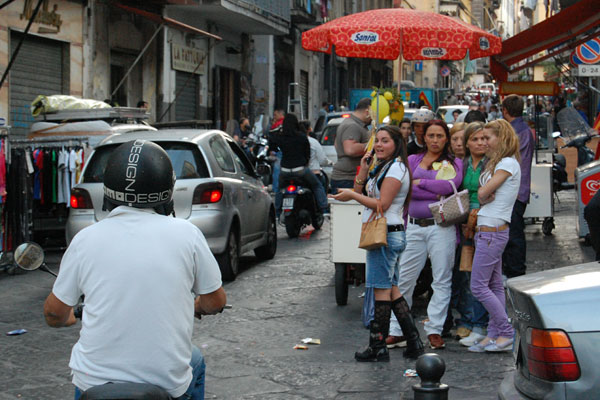
Girls flirt with passing motorcyclists in Naples’ Spaccanapoli District.
Enlarge photo |
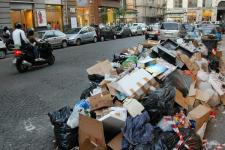 |
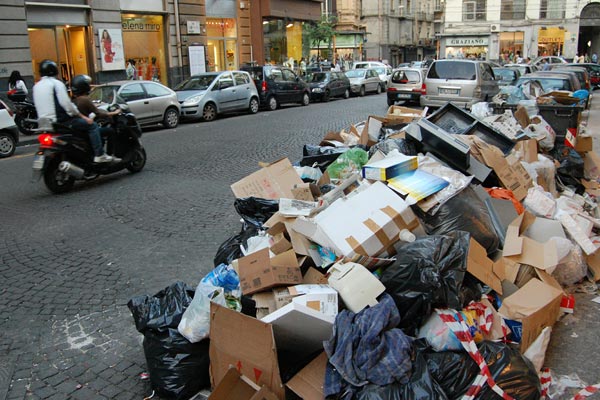
Garbage takes up valuable parking real estate.
Enlarge photo |
All my life, Naples has been the symbol of chaos, stress, and culture shock for European travel. I remember my first visit (as a wide-eyed 18-year-old). Gene and I stepped off the train into the same vast Piazza Garibaldi that 35 years later still strikes everyone who visits as a big paved hellhole. On that first visit, a man in a white surgeon’s gown approached me and said, “Please…we need blood for a dying baby.” Gene and I made a U-turn, stepped back into the station, and made a beeline for Greece.
Now I’m flying here from Iran (after a quick change in Paris). And, coming from Tehran, Naples is a model of order and sanity.
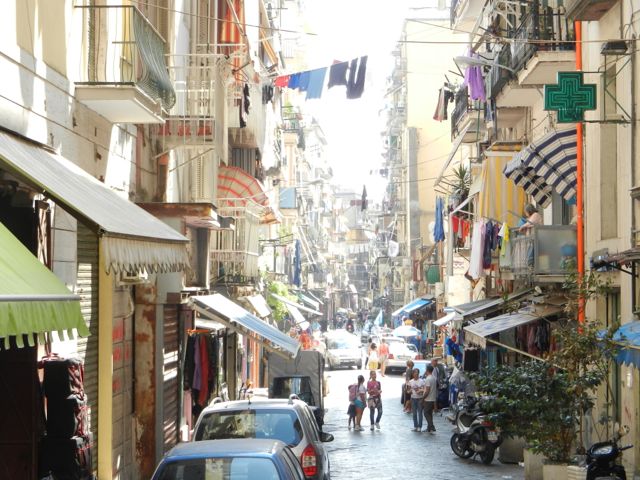
But coming from anywhere else in Europe, Naples remains uniquely thrilling. One of my favorite sightseeing experiences anywhere in Italy is simply wandering the streets of Naples. I spent an hour and probably a hundred photos just observing the teens on motorcycles in the vertical neighborhoods of the Spaccanapoli district.
Every few steps, a couple of James Dean-cool guys lean against lampposts while three or four girls straddling the same motorbike would cruise by as if playing Neapolitan Idol.
Everyone who knew I was going to Naples seemed to be obsessed with the garbage strike. Minibus-sized mountains of garbage were parked on the curb every couple blocks. It’s easy to make a big newspaper stink about it, but locals seemed to just hold their noses and know that someday this little piece of Naples chaos, too, would be dealt with. I smelled nothing.
In the spirit of finding cheap eats near major sights for my guidebook readers, I walked behind the Archaeological Museum in Naples and met exuberant Pasquale — owner of the tiny Salumeria Pasquale Carrino. Rather than do the cheapskate “how much?” question, I just let fun-loving and flamboyant Pasquale make me his best sandwich. He turned making a sandwich into a show, and I watched, enthralled.
Demonstrating the freshness of his rolls as if squeezing the Charmin, laying a careful pavement of salami, bringing over the fluffy mozzarella ball as if it were a kidney transplant, slicing a tomato with rapid-fire machine precision, and then lovingly pitting the olives by hand and then hanging them like little green paintings on a tasty wall, he finished it all off with a celebratory drizzle of the best oil. Five euros (less than $8) and a smile later, I had my cheap lunch. Saying goodbye to Pasquale, I tried to explain to him that he’d be giving this sandwich show to lots of American visitors next year, and stepped outside to look for a suitable bench upon which to enjoy my lunch.
(Salumeria Pasquale Carrino is 100 yards from the Archeological Museum–as you leave take two rights and a left to Via Salvator Rosa 10, tel. 081-564-0889, closed Sun.)