Dining Discovery in Athens Dishes Up a Positive Vibe

Stepping out of my hotel during my first hour in Athens, I stumbled onto a great restaurant. This video clip illustrates perfectly how Athens is regaining some positive energy. Here’s my guidebook write-up:

Karamanlidika by Fanis, close to the Psyrri neighborhood and near the Central Market, is my favorite in the area. It’s a quality meat and cheese shop that doubles as a restaurant. Delivering authentic Byzantine and Cappadocian tastes, aged cheese, and cured meats, it’s a tasty testament to the many Greek Turks expelled from Turkey in the 1920s who settled in Athens — bringing their Anatolian cuisine with them. With friendly service by Maria and her gang, you’ll enjoy delicious plates for €5-7 (Mon-Sat 12:00-23:00, closed Sun, a block off Athinas at Evripidou 52, tel. 210-325-4184).

Stay tuned for a new and much-improved edition of my Rick Steves Greece guidebook. (Every year we invest literally hundreds of days lovingly researching our guidebooks to ensure that they are the most accurate and up-to-date guides available.)

It’s All Greek to Me

Greece is a feast for the senses. While the country’s sunshine, amazing food, friendly people, and love of life leave a lasting impression on me, there are also the little, unexpected scenes I come across that tickle my imagination.

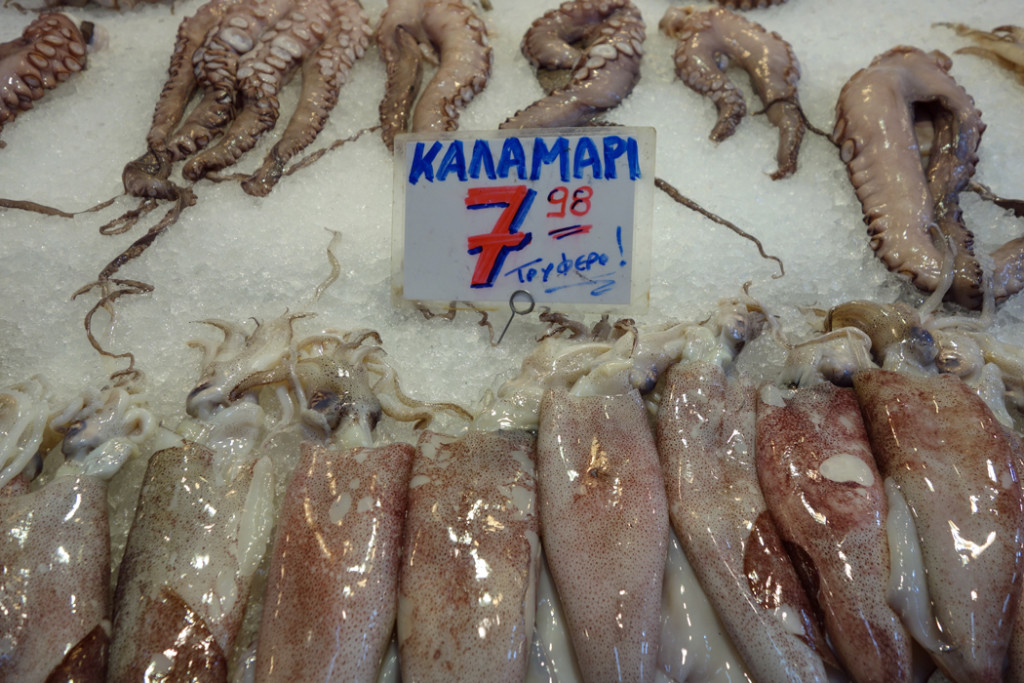
kalamari.jpg

In Athens’ very fishy central market, you can bone up on your Greek letters with the help of some tasty-looking squid.

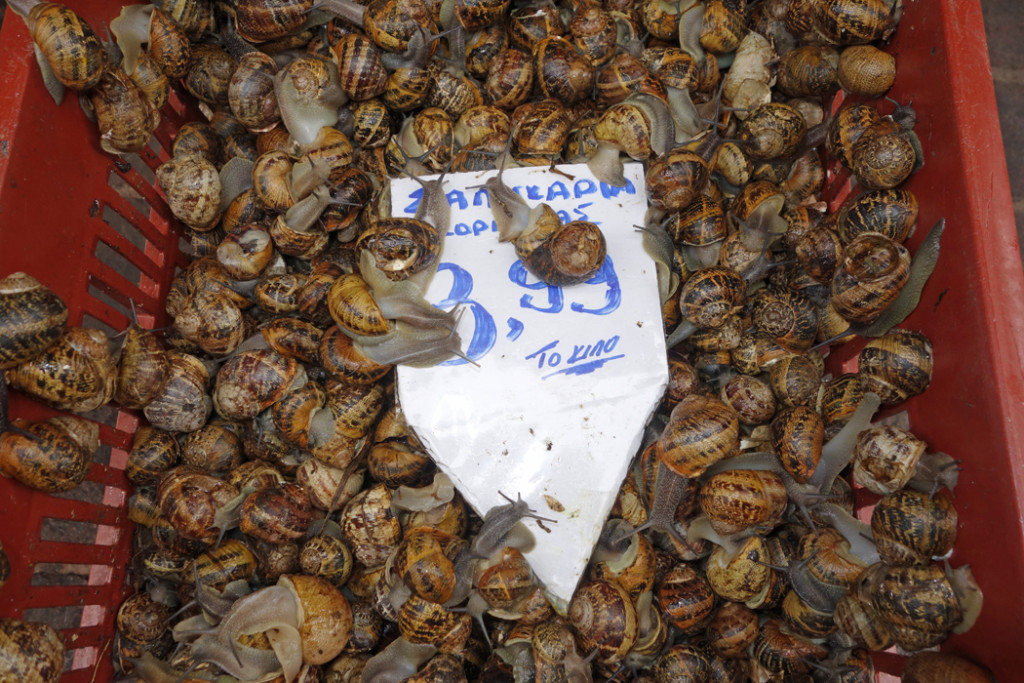
snails.jpg

These tasty treats are so fresh, they crawl over their name.

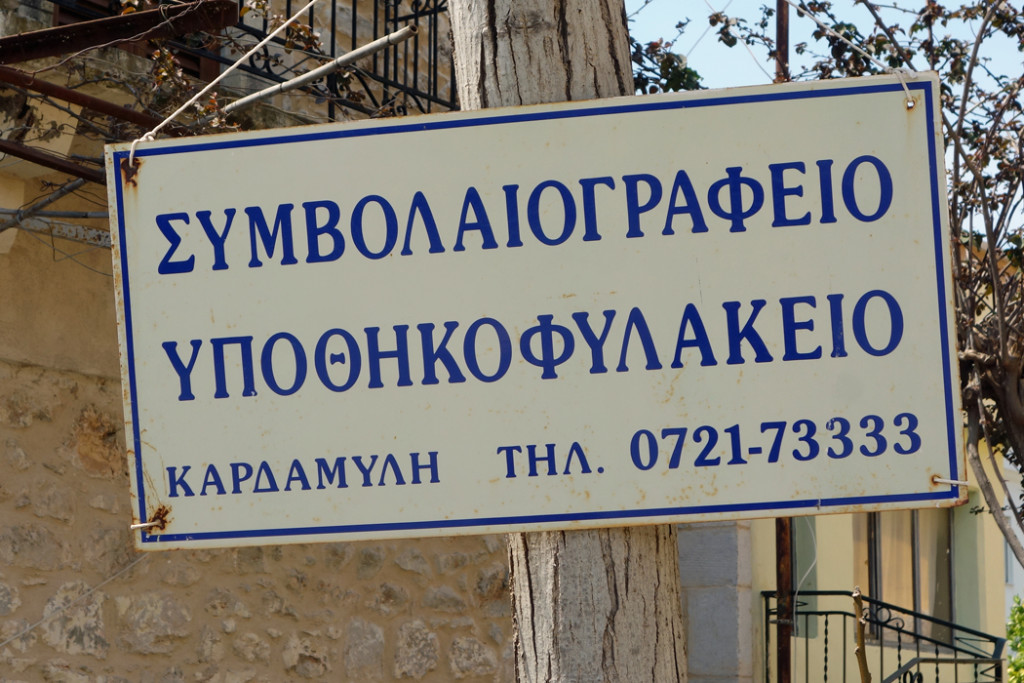
greek-long-words.jpg

I am hopeless with the Greek language. But that’s part of the fun of being here.

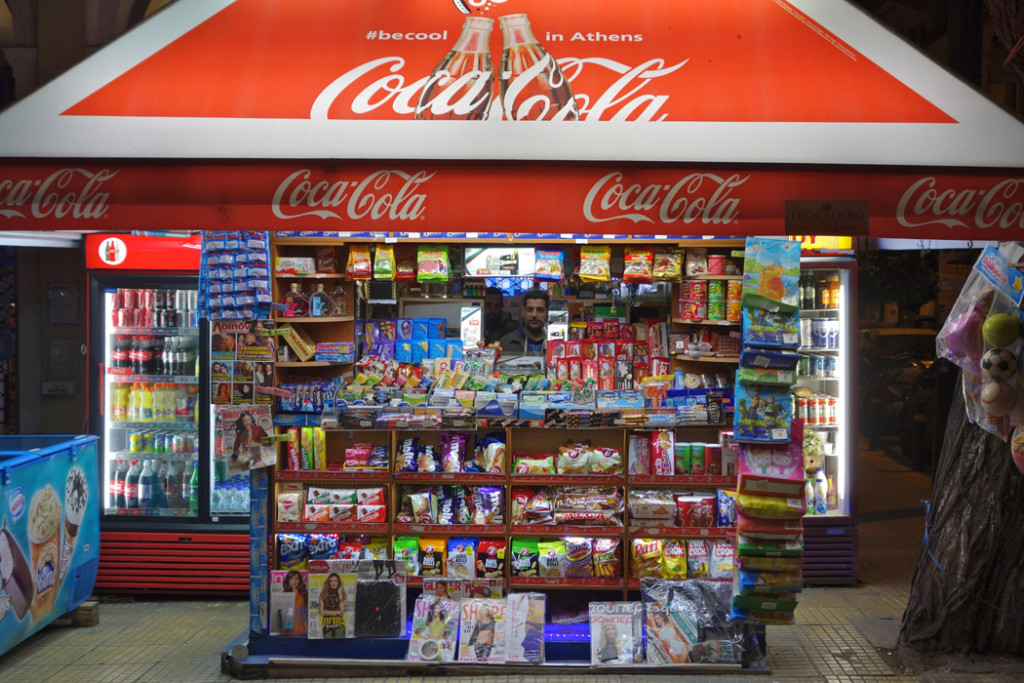
kiosk.jpg

Kiosks here in Greece remind me of magnets and hoarders. And buried way in the middle of all that clutter is a tiny-looking person who sits there all day selling things. By the way, by law, a half-liter bottle of water cannot cost more than €0.50. Whether you’re at the fanciest rooftop bar or at the lowliest streetside kiosk, you can always get a cold bottle of water cheap.

Sharing the Wonder of My First Solo Trip in 1973: Greece

Rick Steves 1973 postcard from Athens

On my first solo-trip to Europe, in 1973 — just after high school graduation — I wrote postcards home nearly every day. I packed so much information onto each card it was a challenge to read them without a magnifying glass. Looking back on these exuberant little reports back to my family (42 years later!), I can see a travel writer in waiting. While the writing is pretty goofy, the passion for experience was solid. Here’s a card from Greece.

8-17-73

My dear folks back home. This is the roving reporter writing. How’s everything with you? That’s a stupid question ‘cause you can’t possibly answer it. Right now I’m sitting on the bow of a rather small boat heading from the Island of Salamis back to Athens. I’m alone, have a stuffed stomach, I’m hot with a tan + I’m in great spirits. I guess I left you in Delphi. OK. I slept fine on the roof + then I had a breakfast in the rough with a nice view. I caught the bus to the small port of Itea on the Bay of Corinth. The town really wasn’t much but I had a restful time + a nice swim. I love to swim down here. Well, I caught the 12:45 bus back over the mts, past Delphi + Arachova + on to Lavadia where I spent 3 hours doing my standard wander trick + I really got up to my neck in Greece. The place was like a ghost-town with chickens running around everywhere. I met these 2 girls from France + at the station I had a neat chat with a bloke from Britain + his girlfriend. He was a real neat guy. After a while the bus took me to Lavadia’s station (out in the hicks) + I began my standing up 20 drachma train ride to Athens. It seemed I was in for a long ride but at the next stop, my British buddies got on (They were kicked off their train) + we had a blast talking about the Queen, Heath, Nixon, Agnew + comparing British + American cops, cars, politics, music, laws, lifestyles + so on. It was really neat + before I knew it we were back in Athens. Still looking for action (to salvage a somewhat blah day) I caught the bus to Dafni + went to the wine festival. For 30 drachs ($1.00) I got all the wine I wanted, plenty of neat people + fantastic interesting meal! There were kegs everywhere labeled + over 60 local Greek wines to taste! It was really an experience. I found a great sweet wine called Moschato that I like more than any others. I spent an hour talking with a New Zealander who traveled all across southern Asia + I really learned a lot. While watching Greek folk dancers I met a great group. Then I decided to dance a little + had great fun. The funniest thing is watching all the “sloshed” Greeks dance + goof around. I slept in a forest by the Daphni Monastery, it was great ‘cause it was free + in the morning, after taking in the Monastery, I caught the bus + it just happened to be going to Piraeus the port, not Athens like I thought so at the port I bought some bread, fruit + olives + took a boat to the Island of Salamis which is amazingly rural for how close it is to Athens. After 45 minutes I landed + took the bus to the other side of the island + looked for a nice beach. I asked this girl named Maria + her friends where a good beach was + they showed me. I had a great sleep in the sun, swim + picnic. It was weird ‘cause everyone stared at me but I didn’t mind. One lady from Athens invited me to her house, to sleep free! On the way back I stopped by Maria’s looking for a little Greek hospitality. Boy did I get it. We talked + goofed around for a while + her mom brought me a drink + lots of chocolates. Then I met all the relatives, there were lots of them + just when I was about to leave, I was invited to stay for dinner! That was great. I had a fantastic meal (soup, fresh fish, Canadian salmon, raw clams, wine, salad, cake + chocolates) with Maria translating, we all had great conversation. It was really a cool evening. I took everyone’s picture, gave Maria one of me + they took me to the bus stop. After goodbyes I bussed back to the port, looked around + caught the boat back to Athens. I’ll meet Gene + the Hanbys either tonight or tomorrow. Bye, RICK.

Ports of Embarkation

Here are four photos (with captions) relating to Athens and Istanbul. Do I understand correctly that nearly all Mediterranean cruises start and stop in these ports: Barcelona, Rome, Venice, and Istanbul?


Athens' port, Piraeus, is busy with both ferries and cruise ships. It is well-connected to downtown and all the ancient Greek sites by subway. But Greece is dealing with a bit of economic chaos these days, and on the day we were there, all the public transit was on strike. To show their support, the taxis went on a solidarity strike that day, too. So anyone planning on going into town on their own was in a fix. Shore excursions sold out that day. While I was impressed with Athens' cruise port, apparently it's not big enough to work as a place for cruises to start or finish, so officials are scheming to build a big new one. With Greece's economic challenges, no one knows when — or even if — that will actually happen.
 

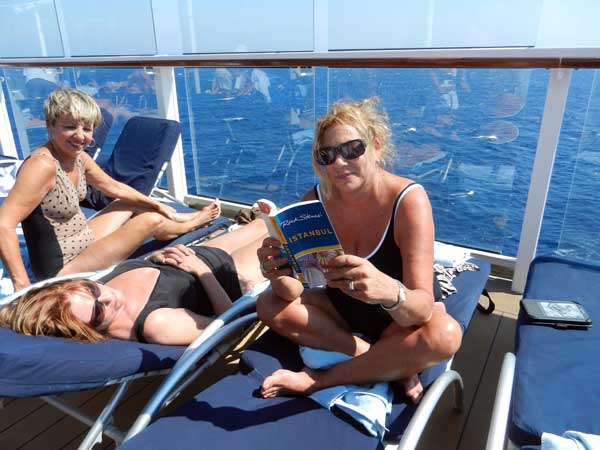
While for many on the ship, the cruise experience was just a floating Vegas, lots of people were on board to mix the fun of cruising with some serious sightseeing. I was impressed by how many people were packing our new Mediterranean Cruise Ports guidebook or one of our city guidebooks. While working on their tans, travelers were prepping for their next port of call. I'm learning so much on this trip; I can hardly wait to huddle with my staff and fine-tune our cruise ports guidebook for its second edition. I'll admit that I've gained a greater appreciation for cruise travelers — from a book-sales point of view — on this trip.
 

Istanbul is my vote for the most exciting port on the Mediterranean. Ships tie up right in the center of town. It's a 10-minute walk to the Galata Bridge and just a few minutes to the tram that'll jostle you just about anywhere you want to go. And from so many places in this fanciful urban jungle, you can peer out and see your big, shiny ship in the distance.
 

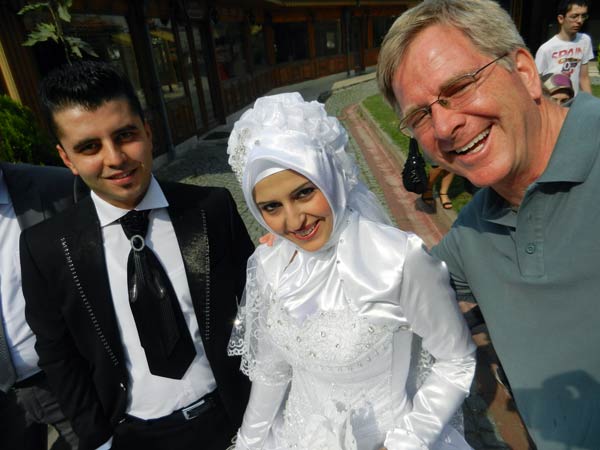
In Istanbul many ships spend the night in dock, giving you a day and a half in Istanbul — and a chance to really enjoy the after-dark scene. Getting away from the touristic crush is easy. At a café over looking the Golden Horn a bit from the center (and therefore without much international tourism) we met a happy Turkish couple who invited us into their photo shoot and wedding album.

Greece’s "Economic Crisis" and Its Effect on Travelers

Enlarge photo

I just got back from eight days in Greece — Athens and the island of Hydra — updating my guidebook there. Before my visit, people were concerned that my trip would be complicated by the country’s “economic meltdown.” (A magazine I write for didn’t want to run my article on Greece, fearing that it would inspire its traveling readers to venture into trouble.) As has been my standard operating procedure lately, I wanted to go to Greece to get beyond the media hysterics and see for myself the truth — to experience firsthand the effect of Greece’s economic problems on travel there. Greece remains an enjoyable place to travel, but it does help to have some background in what’s going on there.

There’s no doubt that Greece has its economic problems. It has lived beyond its means, worked too short, retired too early, consumed too much, produced too little, enjoyed too much job security, created a real-estate bubble with overvalued properties, and funded too much on a growing deficit. Many other countries (including the United States) are plagued by these same problems, but Greece is an extreme case, with extreme consequences.

The Greek government is scrambling to salvage their economy. They’re getting more serious about collecting taxes. And those taxes are higher: From the beginning to the end of 2010, the Greek VAT (Value Added Tax, a national sales tax) will incrementally rise from 19 percent to 25 percent. This means everything people consume will cost more, because 25 percent of what they pay is going to the government to rescue the economy. Complicating matters: Many businesses have gone bankrupt because of the crisis, so there’s less competition — which means higher consumer prices.

What about all that violence in the streets? Strikes and demonstrations have long been a way of life in Greece. Most Greeks see a general strike as an excuse for an impromptu holiday. But there is a tiny anarchist fringe element that knows a peaceful demonstration or rally by teachers or doctors at Athens’ parliament building will have media coverage. And a handful of troublemakers will “come out to play with their friends” (as locals term it), and things become violent. Like back home, when it comes to TV news, “if it bleeds, it leads”; Greek and international media outlets embrace anything violent and exaggerate it. People who don’t get out much overreact, offering anarchists behind those actions huge rewards.

What’s the future? Greeks are optimistic by nature. They realize they’ve dug themselves into a pretty deep hole. But they also know they’ll get through their “tough economic times.” And they understand that a reality check — which will come with some brutal belt-tightening — is necessary. The biggest culprits of Greece’s notorious largesse are government employees. They have cushy jobs, 100 percent job security, and great benefits. In the public’s eye, they get in, make too much money, and — because they know they can’t be fired — just luxuriate away their work lives in worry-free comfort. There’s a huge anger about economic scandal and corruption, as maddening cases fill the news almost daily.

Simply put, Greece’s adjustments to its new economic reality won’t be fair. For instance, if you turned 60 in 2009, you’re comfortably retired. If you turned 60 in 2010, you’ll need to work seven more years. People are angry about that, but there’s nothing they can do. Young, well-educated, multilingual people feel that they’re overqualified for what Greece has to offer, and are tempted to go abroad for employment to match their skills. This potential “brain drain” of bright young people is yet another of the many challenges the new Greece will be dealing with.

What about the practical effect on tourists? Strikes are nuisance strikes — just a day or two here and there, and generally not prolonged. Regardless of the economic challenges, people still need to get to and from the islands, and they still need services once on those islands.

There will be destructive attempts to grab headlines and express anger at corporate and government sources of local frustration. (Anarchists burned two Starbucks in Athens. Other branches, realizing they were targeted, closed up shop.) But, as of this writing (August 2010), the violence is relatively easy to avoid. Unlike the frightening, random “suicide bombings” of marketplaces that we hear about in the Middle East, in Greece, any violence has been done with notice and generally at off-times — they’ll call the newspaper at 4 o’clock in the morning, just before they bomb an empty bank building (their target is the institution itself, not the people inside). And virtually all demonstrations or acts of violence have taken place solely within one small, high-profile area of central Athens, and have not affected the main tourist attractions (islands and ancient sites) elsewhere in Greece.

I had a great visit to Greece. Based on my mid-2010 experience on the ground in Athens and out in the islands, Greece is the same old place. My company is taking more tours through Greece then ever (our 2010 program is particularly hot), and they’re bringing home happy customers. The museums are still open. When I asked a Greek friend about his, she responded, “Why would we close the Acropolis? It would make no sense. Tourism is an important part of our economy. People pay to see it. That’s why they are here.”

In my mind, the biggest impact of the crisis on anyone considering visiting Greece is the satisfaction you’ll get from contributing to the economy of a nation dealing with tough times, and the joy that comes with a tourist industry that really appreciates your presence.

If there’s a positive outcome from all of this, it’s that Greece’s economic irresponsibility has inspired politicians and political movements across Europe to get real with their economics. In the US, throughout Europe, and elsewhere, the cautionary tale of Greece has sparked a sweeping realization that government pork, corporate corruption, and personal production relative to consumption needs to be re-calibrated.

As many American travelers are nervous about visiting Greece, I plan to put a version of this blog entry in the 2011 edition of my Athens guidebook. Please share your thoughts on this issue. What’s the impact of the crisis on tourism in Greece, and how should this impact our plans to travel there in 2011?