Hamburg: Mighty Harbors, Repurposed Bomb Shelters, and Designer Embankments

My last stop in Europe this year is Hamburg. After weeks of filming in scorching heat, heavy rains finally slammed us — and after three socked-in days, I had to change my flight and hope for better weather. I’ve never had to do this before, but it gave us a gorgeously sunny day to finish our show and continue our deception that it is always sunny in Europe. (By the way, it cost me $310 to change my flight one day before on British Air.)

In spite of the rain, we found ourselves enamored with Hamburg. It’s one of the great unvisited cities in Europe.

hamburg harbor

Hamburg’s harbor is mighty, historic, and welcoming. A harbor boat tour gives an intimate look at the massive container industry. The huge warehouse district shows how important Germany’s top port was in the 19th century. And the new Elbephilharmonie concert hall is not quite open to the public, but it looks that way — which was great for filming.

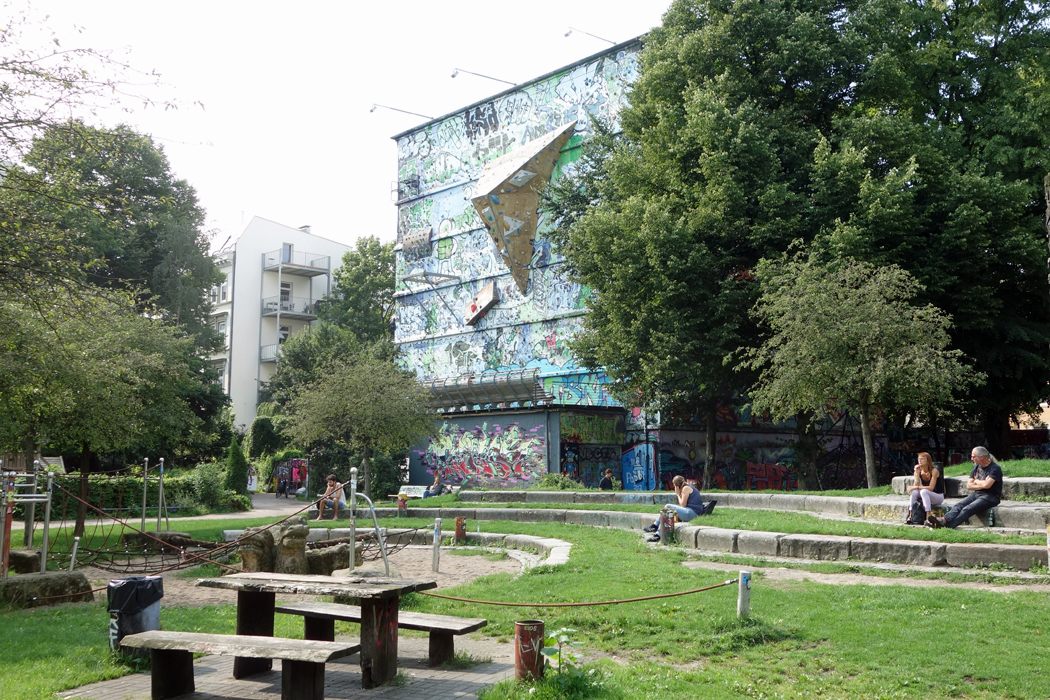
Bomb shelter

Hamburg was a strategic target in WWII. The Nazis constructed literally hundreds of beefy bunkers, using mountains of concrete and almost unlimited slave labor. This is one of many — too big to demolish economically — that are simply incorporated into the everyday cityscape. This one is a colorfully painted rock-climbing wall in a neighborhood park. Standing tall and ugly-yet-colorful, with children lining up to climb all over it, it is emblematic of the poignant contrasts I see when traveling thoughtfully through today’s Germany.

Flood embankment

A theme that keeps crashing into my reporting on Europe is how real climate change is, and how tragic it is that some people deny it just for their own economic convenience. Everywhere I go in Europe, I see the results of literally billions of dollars being invested in infrastructure changes that will allow Europe to live in the future that we are creating. Europeans (with a fatalistic acceptance of the momentum created by reliance on fossil fuels and the values of many international corporations) just shrug their shoulders and take a pragmatic view: It’s a reality, and there’s not much we can do to change it — but we can prepare for it. Situated just up a big river from the sea, and therefore in danger of storm surges, Hamburg has raised 60 miles of embankments…and artfully designed the ones in the city center to be inviting people zones like this.

Pretzel Love in Germany

When I’m in Germany, it just feels right to have a pretzel lying beside my main dish, or to enjoy a big, frosty lager with a big, salty pretzel close at hand. The pretzel culture is near and dear to Germans, as you’ll find in your travels.

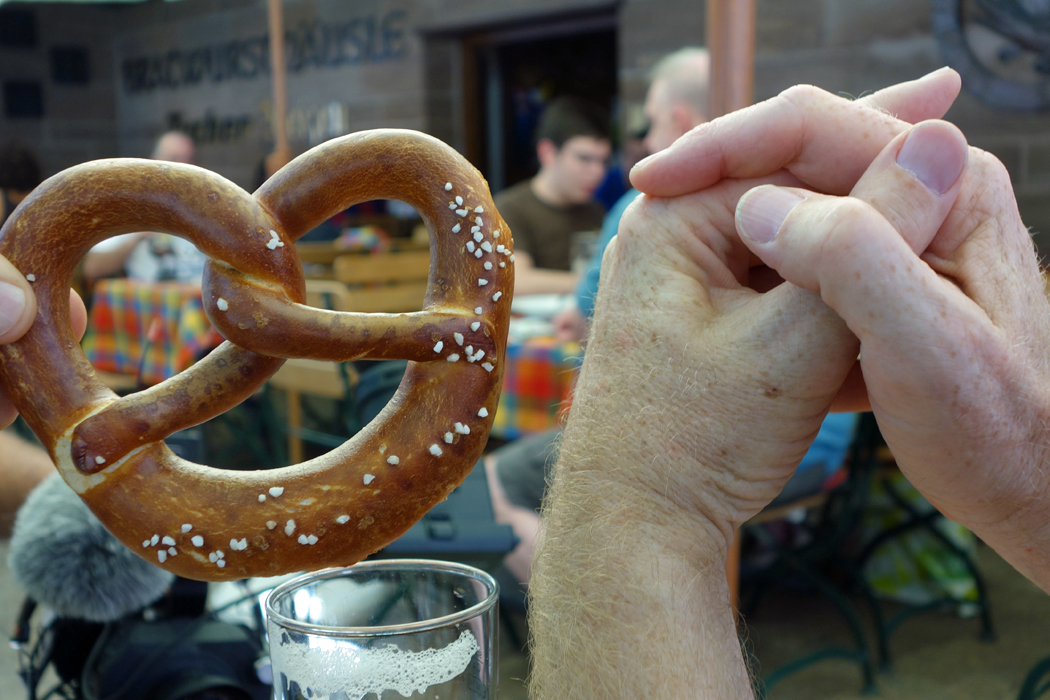
Pretzel and hand with crossed thumbs

Even after decades of travel, it’s so fun to still be learning fun little factoids about the cultures we visit. It never ends! In Dresden, my German friend explained that the dough woven into a pattern in a pretzel represents the way our thumbs cross when we fold our hands in prayer.

pretzel drive-thru

Most of our work is in the old centers of great cities. Staying here, you can miss entire dimensions of a culture. For example, driving out of a German city you may see a big drive-in pretzel place — fast food with a German touch.

Germany’s Complex, Tumultuous History

I’m just wrapping up three weeks of filming in Germany, and I’m impressed by the souvenirs of its tumultuous history. Doing TV shows on Frankfurt, Nürnberg, Dresden, Leipzig, and Hamburg, you can’t avoid the flipside of Germany’s greatness. Here are a few historical artifacts that have stuck with me.

War Memorial

Outside of Leipzig is the wildest war memorial I’ve ever seen. This is the 300-foot-tall Völkerschlachtdenkmal. Just saying it makes you think “huge casualties.” It is the Monument of the Battle of the Nations, built in 1913 to commemorate the biggest battle of its day: when Prussia, Austria, Russia, and other allies teamed up to beat Napoleon in 1813. Half a million men were involved, and there were about 100,000 causalities. The powerful art and symbolism inside makes you weep and salute at the same time. Do you have a personal “most impactful war memorial” in Europe?

Statue in Leipzig

This statue, on Leipzig’s main drag, recalls the dual dictatorships — first from the far-right, then from the far-left — that Germany lived under in the 20th century. It features the flat-palmed Sieg Heil! Nazi salute and the proletariat’s raised communist fist at the same time. Meanwhile, the poor fellow who has little choice but to raise his arms scrunches down under his collar, hoping to somehow get through it all.

Luther statue in front of church

After spending ten days filming our upcoming public television special on Martin Luther and the Reformation, we were tuned into statues of Martin Luther. He seems to be on squares and in front of churches all over Germany. Here in Dresden, in front of the Frauenkirche, we met another Luther — hand on his Bible, as if reminding people of his mission to translate the Word of God from Latin into the people’s language, so all could read it for themselves.

Nazi Gold Room

At the Nazi parade grounds in Nürnberg, we stood on the tribune platform where Hitler stoked the fears and hatreds of 200,000 assembled Nazis. And then our guide took us inside the structure, through several huge, stark, gold-veneered rooms with massive dishes for devilish flames. As these rooms aren’t open to the public, we didn’t film them (because we have an ethic of not showing things on TV that our viewers can’t personally experience). But it was a chilling little side-trip.

Millions of German Americans Sailed From Here

Being in Hamburg, I kept thinking, “I love this city.” And one highlight was seeing the place from where millions of Germans emigrated to the New World. Imagine the fun of filming this city with a local guide to help locate the best angles. We’ve just filmed three great shows on six underrated German cities: Hamburg, Leipzig, Dresden, Nürnberg, Würzburg, and Frankfurt. These will be released as a part of Season Nine of our public television series, in the fall of 2016. Stay tuned!